You don’t have a corporate security department. You have a store, a shop, or a small warehouse, a tight budget, and a nagging worry about the hours you’re not there. Small business security guards can absolutely be worth it — but only if you buy the right amount of coverage for your actual risk, and only if you get real reporting instead of a mystery charge on your invoice.
This is a plain-English guide for the owner who wants protection without overpaying for it.
Start with your actual risk, not a sales pitch
Before you talk to anyone, spend ten minutes being honest about where and when you’re exposed. Is your problem daytime shoplifting? After-hours break-ins? A dark parking lot that makes staff nervous at close? Loitering that scares off customers? A provider that quotes you a full-time guard before asking any of this is selling a package, not solving your problem.
The right coverage matches the risk. Most small businesses don’t need a 24/7 uniformed presence. They need the right person at the right hours, plus proof it happened.
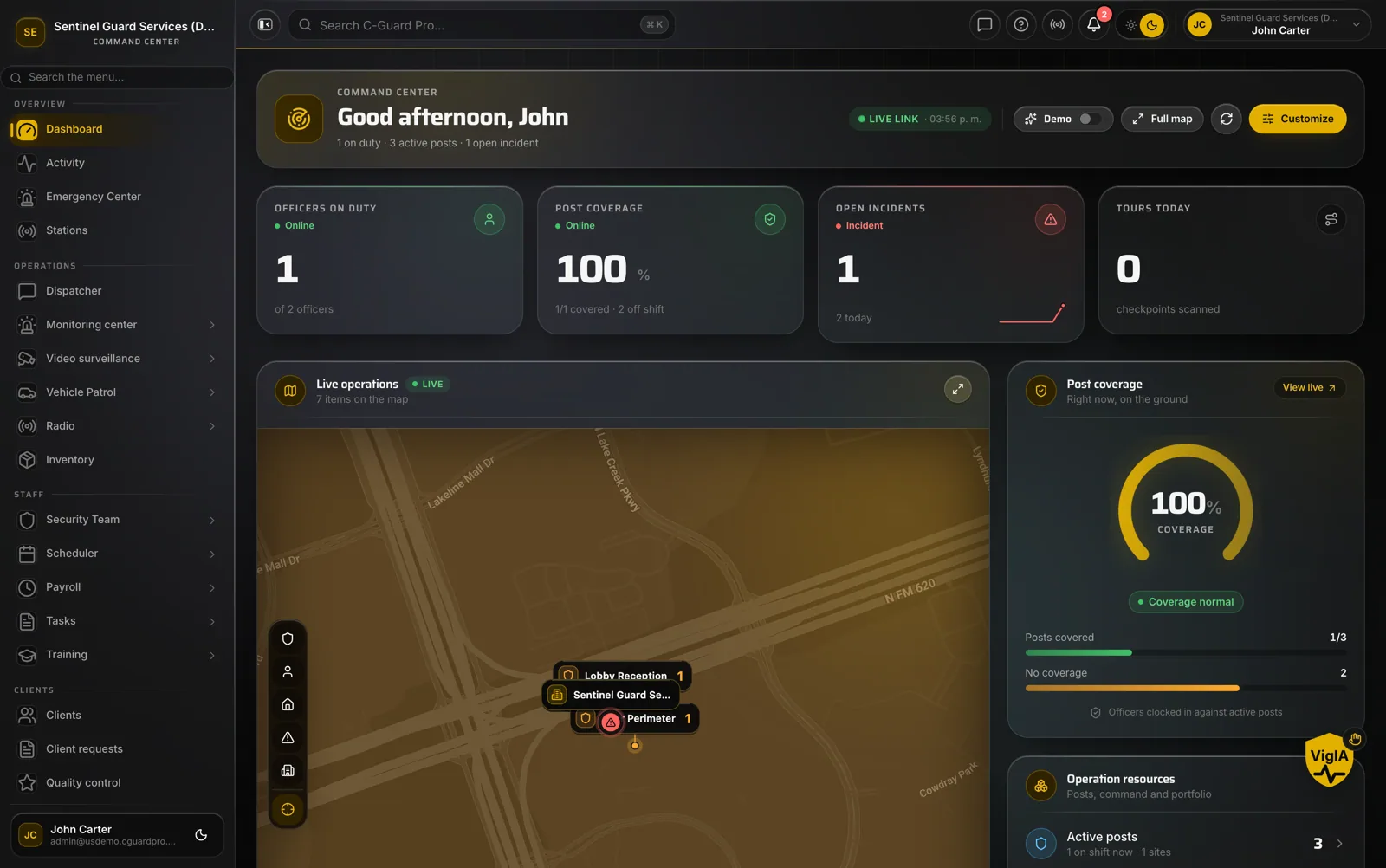 Even a small account should get a clear view of when a guard was on site and what got done.
Part-time vs. full coverage vs. mobile patrol
For small business security guards, there are usually three sensible options, and the cheapest one that covers your risk is the right one.
- Part-time / peak-hours coverage. A guard during your highest-risk window — open, close, or the busy evening — rather than around the clock. Ideal for retail with a shoplifting or closing-time concern.
- Full-time dedicated coverage. A guard on site throughout your hours. Makes sense when you have steady foot traffic, cash on hand, or a safety concern for staff and customers.
- Mobile patrol. Instead of a guard who stays put, a marked vehicle checks your site several times a night on an unpredictable schedule. Often the most cost-effective option for after-hours break-in risk — you get visible presence and deterrence without paying for a body standing in an empty building all night.
Ask each provider which they’d recommend and why. A good one will sometimes talk you out of the more expensive option because it doesn’t fit your risk. That’s the provider you want.
When a mobile patrol is enough
If your daytime is fine and your worry is overnight, a mobile patrol is often all you need. The key is that the visits are randomized (so they can’t be timed) and proven. Require GPS-verified stops so you can see the patrol actually walked your perimeter, not just drove past. Tools like GPS guard tracking and a guard tour system with QR checkpoints exist so a small buyer can verify every visit instead of trusting the invoice.
Reporting you can actually read
The biggest complaint small owners have about security is simple: they pay every month and have no idea what they’re getting. Fix that up front by requiring plain, no-nonsense reporting.
You should get, without asking:
- A record of when the guard or patrol was on site.
- A short log of what was checked and anything unusual.
- Photos and a timestamp for any actual incident.
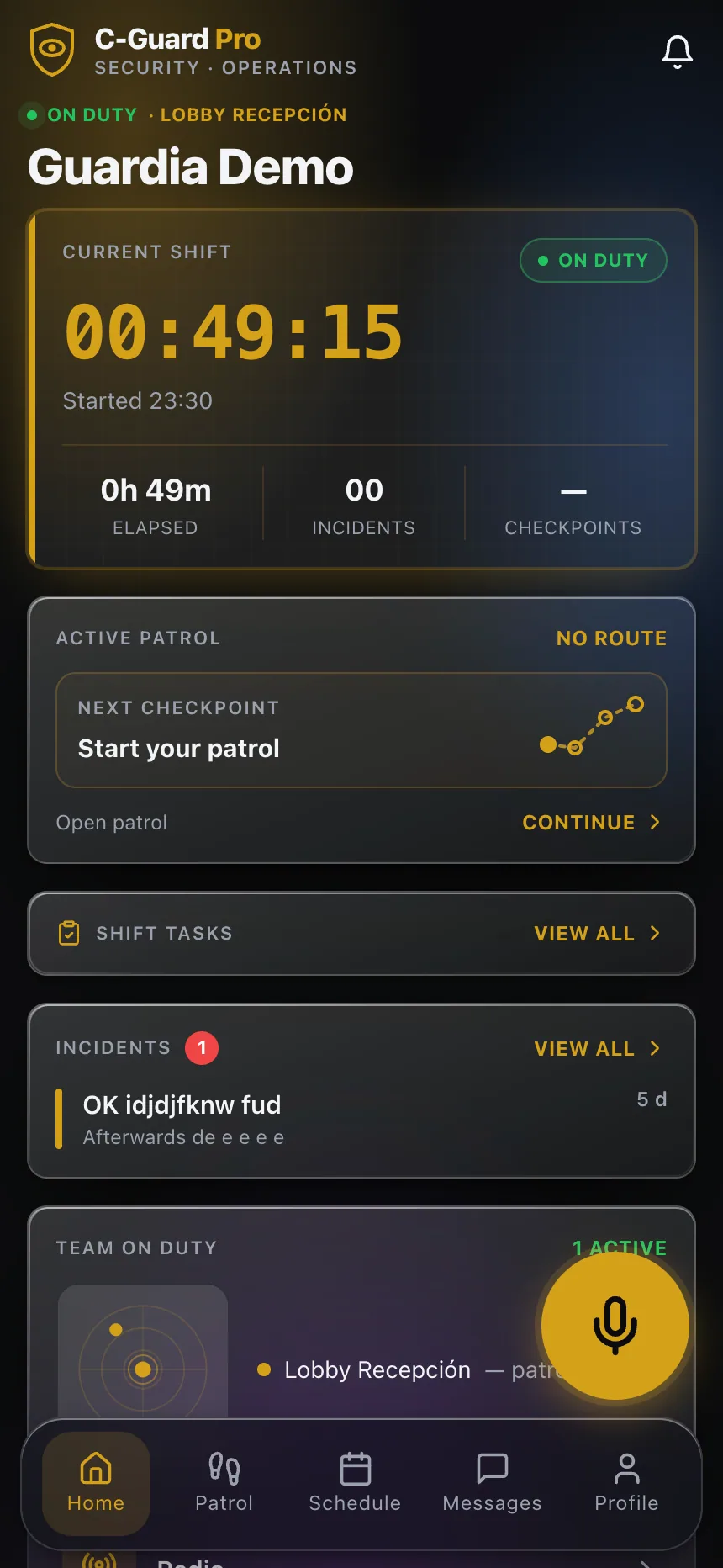 The guard’s app should turn each visit into a simple record you can glance at, not a report you have to chase.
A daily activity report you can pull up on your phone beats a paper log you never see. When you interview providers, ask to see a sample. If they can’t show you one, or if it’s just “we’ll text you if something happens,” keep looking — you’ll never really know what you’re paying for.
Don’t overbuy the technology, either
You don’t need an enterprise system. You need proof of presence, a way to reach the guard, and clear incident records. That’s it. If a provider is bundling in features you’ll never look at, push back and ask what you’re actually paying for. The point of the tools is to give you visibility, cheaply — not to pad the bill.
A note on the rules
Licensing and what a guard is permitted to do vary by state, and armed vs. unarmed coverage carries different requirements. Confirm specifics with your local authority — this isn’t legal advice. But whatever you buy, the principle holds: match the coverage to the risk, and insist on proof.
What to require before you sign
- A recommendation tied to your risk and hours, not a package.
- The least expensive option that genuinely covers your exposure.
- Randomized, GPS-verified patrols if you go the mobile route.
- Simple, timestamped reporting you can read on your phone.
Small business security is about spending smart: the right hours, the right method, and honest proof you got what you paid for.
To see what that proof looks like from the client’s side, take a look at the client portal built for security companies and hold your provider to it.