Most first-time owners looking into how to start a security guard company in North Carolina start where they’d start any business — the Secretary of State, a business license search, maybe a call to their county clerk. They eventually find the right office, but not where they expected it. Security guard and patrol licensing in North Carolina runs through the North Carolina Private Protective Services Board, which sits inside the state’s Department of Adult Correction and its public safety apparatus rather than under any general business-licensing agency. That placement isn’t trivia — it tells you the regulator’s frame of reference is public safety and law enforcement adjacency, not commercial licensing, and it shapes what the application process is going to ask of you.
Because requirements, fees, bonding amounts, and processing timelines change and are set by the Board itself, none of that is covered here — this is not legal advice, and anyone starting a company should confirm current requirements directly with the Private Protective Services Board and with counsel before committing time or money to the process.
How to start a security guard company in North Carolina: two license categories, not one
The detail that catches owners off guard is that North Carolina doesn’t run a single, general security-guard license. The Board issues distinct categories, and the two most relevant to a new guard-and-patrol operator are a general Security Guard & Patrol license and a separate, more limited category commonly referred to as a Special Limited license. The general category is what most contract guard companies — the ones bidding on commercial, residential, retail, and similar accounts — will need, since it covers standard armed and unarmed guard and patrol services across client sites.
The Special Limited category exists for a narrower scope of work and isn’t automatically the right fit just because it sounds like a lighter application. Owners sometimes assume “limited” means “starter” and apply for it thinking they’ll upgrade later, only to find it doesn’t authorize the breadth of work they actually intend to sell. Figure out which category actually matches your business plan before you file anything — not which one looks easier to get. If your plan includes any ambiguity about scope (say, you’re not sure yet whether you’ll take on patrol contracts versus fixed-post-only work), that’s a conversation to have with the Board directly rather than a guess to make on the application.
What the application actually tests
Strip away the state-specific detail and licensing boards in this industry are almost universally testing for the same things: that the company’s principals and qualifying individuals meet background and suitability standards, that the business carries adequate insurance and, in many states, a surety bond, and that whoever holds the license understands the legal boundaries of guard authority. North Carolina’s process will have its own specific documentation and any required qualifying-agent arrangement, and those specifics are exactly the part to verify directly with the Board rather than infer from a general industry pattern — state requirements diverge on details that matter, like who within the company must personally qualify for the license and what continuing obligations attach to it.
Building the operation the license assumes you have
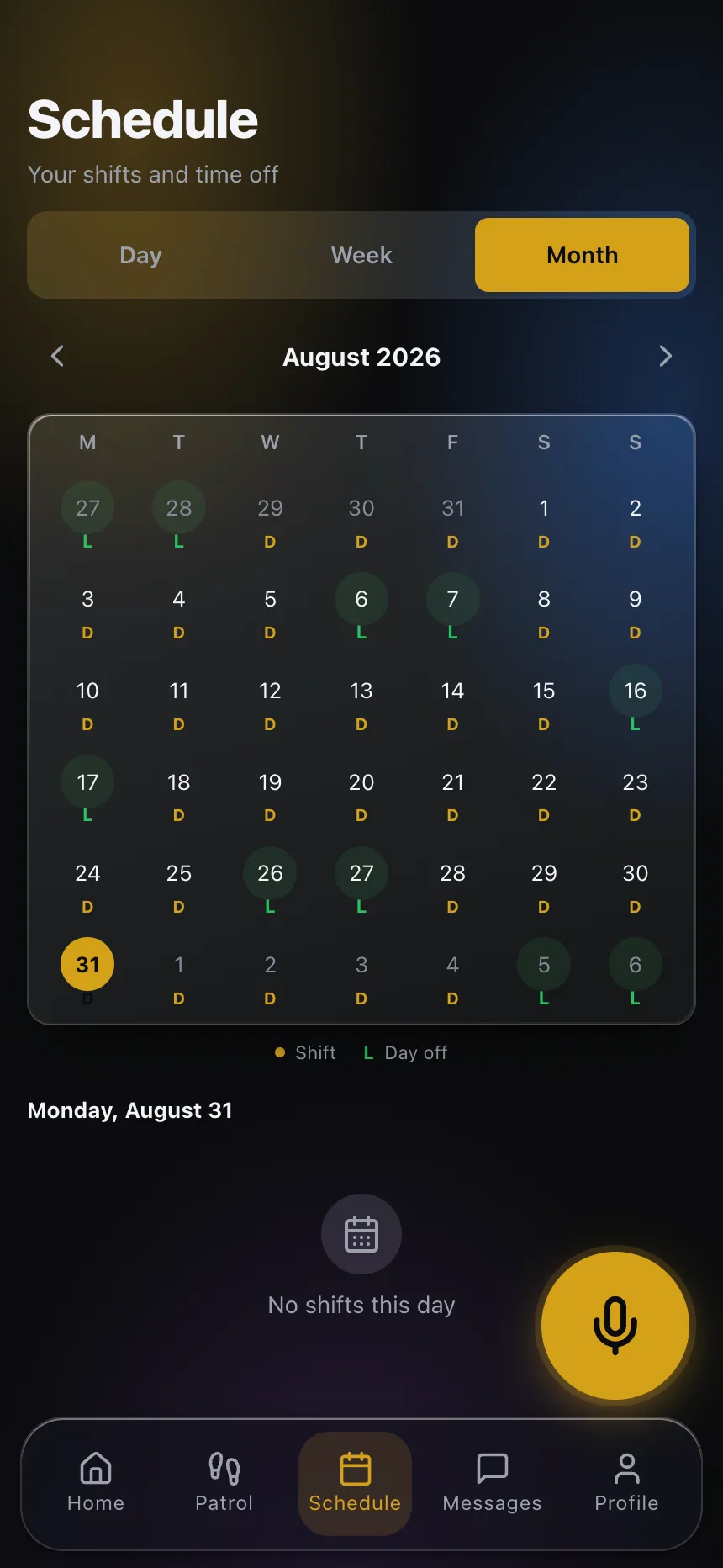
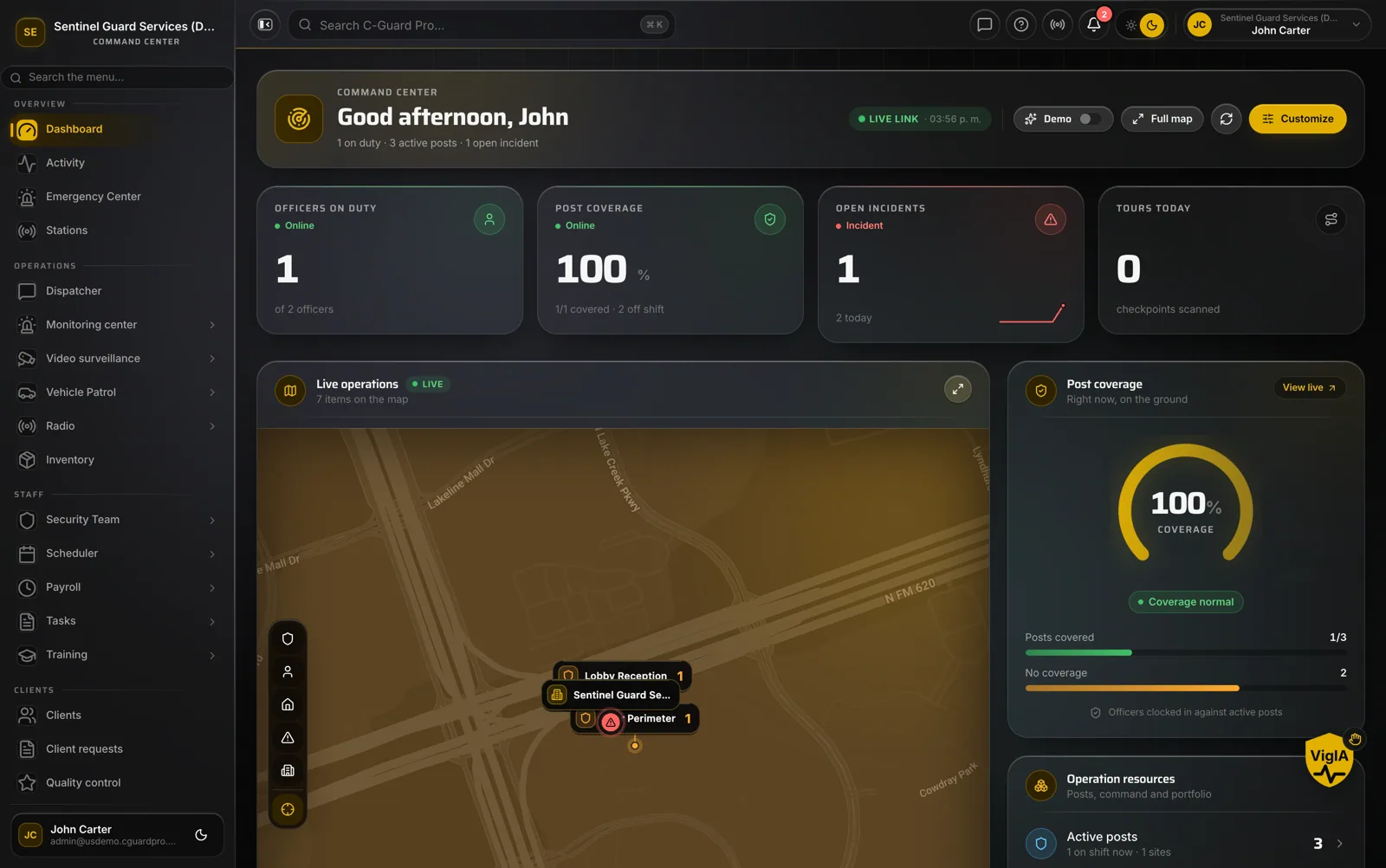
A license gets you the legal right to operate. It doesn’t build the operation a licensing board — or a client — actually expects behind it. Once you’re cleared to operate, the practical work starts: writing post orders specific to each site rather than a generic template, setting up a scheduling system that can prove who covered a post on a given shift, and having a plan for how officers clock in and out in a way that produces a defensible attendance record, not just a paper sign-in sheet a supervisor collects once a week. None of that is a licensing requirement in itself, but it’s the difference between a company that survives its first client audit or insurance review and one that scrambles to reconstruct records after the fact.
New operators in North Carolina, like anywhere else, tend to underestimate how much of their early credibility with commercial and institutional clients comes down to documentation, not just the guards on post. A property manager evaluating a new, recently licensed company wants to see that coverage is verifiable — that a shift that was supposed to be covered actually was, with a timestamp and a location to back it up. Building that discipline in from the first contract, rather than retrofitting it after a client asks hard questions, is what turns a freshly licensed company into one that keeps renewing contracts.
Insurance and the qualifying-agent question
Two other pieces trip up new North Carolina operators as much as the license category question does. The first is insurance: general liability coverage is standard across this industry, but the specific minimums, and whether a bond is required alongside or instead of certain coverage, is set by the Board and should be confirmed with them directly rather than assumed from what a company in another state carries. The second is the qualifying-agent structure many states, likely including North Carolina, build into their licensing scheme — a requirement that a specific individual within the company personally hold credentials and take responsibility for the license, distinct from the business entity itself. If that individual leaves the company, the license itself can be affected, which is a continuity risk new owners rarely think about until it’s already a problem. Ask the Board directly how that structure works and what happens if your qualifying agent changes.
Don’t confuse the license with being ready for a client
It’s worth separating two questions that owners tend to merge: “am I legally allowed to operate” and “am I ready to hold a client account.” The Board answers the first question. Nothing about passing that bar tells you whether your onboarding process can actually get a new officer trained and cleared for a post within the timeline a client expects, or whether your billing process can turn worked hours into an invoice without a week of back-and-forth. Plenty of newly licensed companies in every state discover that the operational side — not the regulatory side — is what actually determines whether their first few contracts renew.
Confirm every licensing detail — category, requirements, and any ongoing obligations — directly with the North Carolina Private Protective Services Board and with your own counsel before you rely on anything here; regulatory specifics change and this is general background, not legal advice.
If you want the operational side ready to go the day your license clears, explore CGuardPro or get in touch.