Anyone researching how to start a security guard company in Louisiana usually begins by guessing which state department handles it — often assuming it sits under a general licensing or public safety agency that also regulates a dozen unrelated trades. It doesn’t. Louisiana licenses this industry through a board built specifically for it: the Louisiana State Board of Private Security Examiners, generally known as the LSBPSE, and nothing else. That structure is worth understanding before you file anything, because it changes where you look for guidance, who you call with questions, and how the rest of the process is organized.
How to start a security guard company in Louisiana without guessing the regulator
A lot of states fold private security licensing into a broader department of public safety or professional licensing that also handles things like contractor licenses, cosmetology, or private investigation as one line item among many. Louisiana instead has a standalone board whose entire mandate is private security. That’s a meaningfully different experience for a new owner than dealing with a general department: the people you’re contacting are specialists in this specific industry, the forms and requirements are built around this industry alone, and there isn’t a broader bureaucracy to navigate around unrelated licensing categories.
The practical upside is that questions specific to security licensing — what class of license applies to the work you’re planning, what the current application requires, how renewals work — go to a board that deals with nothing else, rather than getting routed through a general call center that handles a dozen different professions. The thing to avoid is assuming that because the board is smaller and more specialized, the requirements are simpler. They’re not necessarily simpler, just more concentrated in one place.
What actually varies here and shouldn’t be assumed
Specific requirements — license fees, any bonding or insurance amounts, required training hours, and how long an application takes to process — are all details that change over time and are set by the board itself, not by any outside summary of them, including this one. Any owner planning to start a company in Louisiana should treat the LSBPSE’s own current requirements as the only reliable source, confirmed directly rather than through word of mouth from someone who went through the process a few years ago. None of those specifics are stated here on purpose, because stating them as fact risks giving a new owner outdated information at the exact moment they’re making a decision that affects the company’s ability to legally operate. This article also isn’t legal advice — for anything touching business structure, liability, or contract obligations, involve an attorney familiar with Louisiana’s private security licensing framework.
Building the operation while licensing is in progress
The licensing timeline is a good forcing function to start building the rest of the operation in parallel, rather than waiting until the license is issued to think about how the company will actually run. That includes deciding how officers will be scheduled and dispatched, how post orders will be written and delivered to the field, and how incidents will be documented from day one rather than improvised once the first client signs. A new company that has these pieces figured out before the first contract starts looks meaningfully more credible to a prospective client during that first sales conversation than one still working it out.
This is also the point where it’s worth deciding on the tools the company will use to run daily operations — scheduling, officer communication, and reporting — rather than treating those as problems to solve after the first hire. A company that walks into its first client walkthrough with a working system for scheduling, checkpoints, and incident reports is answering a question the client was going to ask eventually anyway: how do you actually manage the officers you’re proposing to put on our site.
A new owner also has an advantage that established companies rarely get: the chance to build these habits correctly from the first day rather than retrofitting them onto years of accumulated shortcuts. A company that’s been running for a decade often has a scheduling process held together by one dispatcher’s memory and a reporting habit that varies officer to officer. A brand-new Louisiana operation starting from zero can decide, before the first officer is ever posted, that every site gets the same standard for scheduling and documentation — which is a meaningfully easier problem to solve at the start than to fix later once habits have set in across a growing roster.
This is also the point at which it’s worth deciding how officer certifications, license status, and any state-required documentation get tracked once the company has more than a handful of employees. A one-person filing cabinet works fine for the first few hires and stops working the moment turnover picks up or the roster grows past what one owner can track from memory. Building that tracking habit early, alongside scheduling and reporting, avoids a scramble later when a client or the LSBPSE asks for documentation on short notice.
What the first reportable incident looks like without a system in place
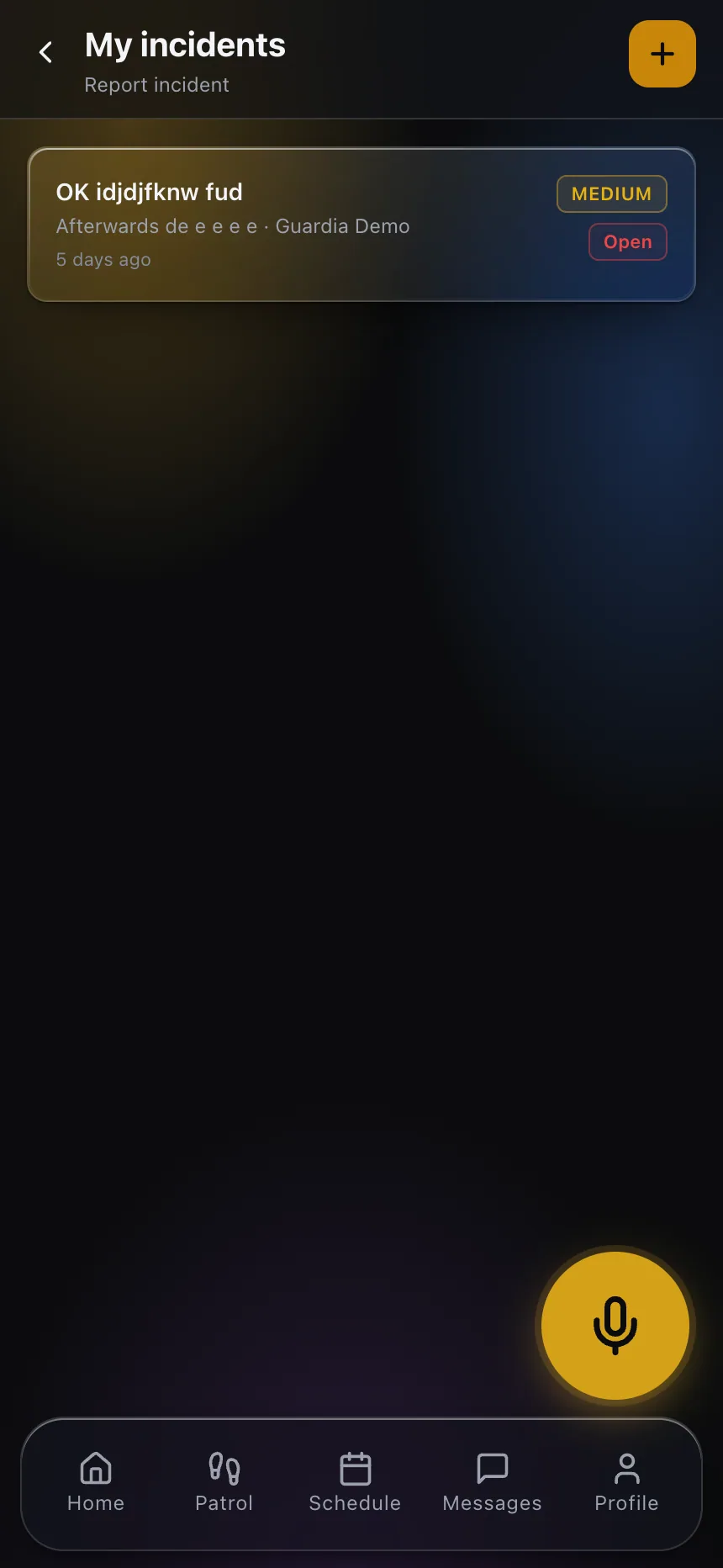
A new company’s first real test often isn’t the license application — it’s the first incident report a client actually reads closely. A break-in attempt, a slip-and-fall, a dispute at the gate: whatever it is, the client’s confidence in the company hinges heavily on how clearly and quickly that first report comes together. A company relying on a handwritten notebook or a text message to the owner at that moment is starting from a worse position than one that has structured incident reporting built in from the first week of operation, because the client’s read on the company’s professionalism forms fast, and a messy first incident report is hard to walk back.
The sequence worth following
Confirm directly with the LSBPSE what license class and requirements apply to the specific services you plan to offer — guard services, investigative work, or both — before committing to a business plan built around an assumption. Get counsel involved for the business and liability structure. And in parallel, build the operational backbone — scheduling, post orders, incident reporting — so the company is actually ready to run a contract the day the license comes through, not scrambling to figure it out once the first client signs. Requirements, fees, and timelines are set and updated by the board itself; verify everything current with the LSBPSE directly, and treat this article as orientation rather than a substitute for that.
If you’re building the operational side of a new Louisiana security company, see how CGuardPro handles scheduling, post orders, and reporting from day one, or get in touch with questions about getting started.