Most founders planning how to start a security guard company in California picture licensing as a single gate: apply, wait, get approved, open for business. It is not one gate. California licenses the company and it separately licenses every individual who will stand a post, and the two processes run on different tracks with different applicants. A founder who treats the corporate approval as the finish line finds out the hard way, usually with a signed contract and a start date already on the calendar, that having a licensed company does not mean having a single person legally allowed to work it.
One regulator, two very different licenses
In California, the agency responsible is the Bureau of Security and Investigative Services (BSIS), part of the state’s Department of Consumer Affairs. BSIS is the body that issues the company-level license — the Private Patrol Operator (PPO) license — and it is also the body that issues the individual Guard Card every officer must hold before working a post. Because one agency handles both, it is easy to assume they move together. They don’t. The PPO license is issued to the business and its qualifying owner or manager. The Guard Card is issued to a specific person, tied to that person’s own background clearance, and it has to exist before that person can lawfully be on a client’s property in a security capacity — regardless of whether the company that hired them is fully licensed.
Requirements, exact processing steps, associated fees, bonding requirements and timelines change and are set by BSIS, not by this article. Anyone starting a company in California should confirm the current requirements directly with BSIS and with an attorney familiar with California private security law before making hiring or contracting decisions. Nothing here is legal advice.
The company license doesn’t put anyone on post
This is the part that catches new owners off guard, often literally. The PPO license lets the business operate as a security company: bid contracts, invoice as a security provider, hold itself out to clients as a licensed patrol operator. It does not, by itself, authorize any specific person to physically perform guard duties. If the company’s owner assumed the Guard Card process would take care of itself once the business was approved — maybe handled in bulk, maybe fast-tracked because the company is already vetted — that assumption is wrong. Each individual applies as an individual. Each individual’s background review runs on its own clock. A company can be fully licensed and have zero officers cleared to work.
That gap between “the company is licensed” and “we have officers who can legally work” is where a lot of first contracts go sideways. A property manager signs based on the company’s licensed status, sets a start date, and the owner discovers the officers they hired last week are still mid-process. There is no legitimate way to compress this by putting an uncleared hire on post and hoping the card catches up — that is exactly the exposure the licensing system exists to prevent, and it is the fastest way to lose both the contract and the company’s own standing with the regulator.
Sequencing that actually works
The practical fix is to stop treating the two licenses as sequential and start treating them as parallel. While the PPO application for the company is moving through BSIS, start identifying and pre-screening the individuals who will need Guard Cards. Get their applications into the pipeline as early as the process allows, not after the company license clears. The two clocks run independently, so there is no advantage to waiting for one before starting the other — only a cost.
This also changes how a new company should think about its first client conversations. Do not commit to a start date before checking how many of the specific individuals slated for that post actually hold current, valid cards. “We’re licensed” is not the same claim as “we have three officers cleared for your site on the fourteenth,” and a client who has worked with security vendors before will eventually ask the second question even if they don’t ask it first.
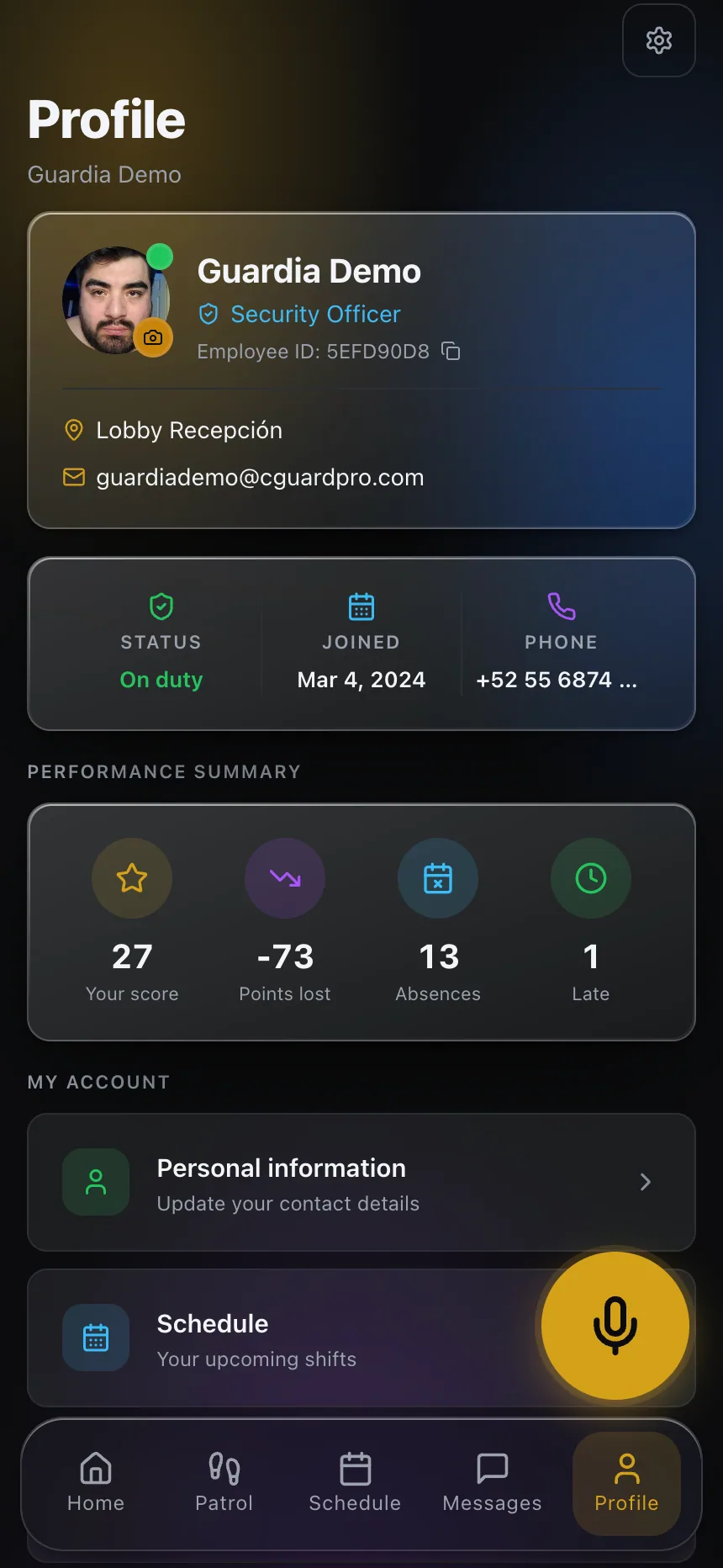
Once officers are cleared, the operational problem shifts from licensing to tracking. A roster of individually licensed people, each with their own card and their own renewal date, is a liability if it lives in a spreadsheet someone updates when they remember to. A system that ties each officer’s profile to their credential status — and flags it before it lapses, not after a client audits a post and asks to see it — is the difference between a compliance program and a compliance scramble. This is one of the few places where a security guard app earns its keep on the licensing side of the business, not just the operational side: it turns “which of our officers can legally work this site right now” into a question the schedule already answers, instead of one someone has to go find out.
What actually goes wrong at the client site
The scenario that plays out more than founders expect: a new company wins a contract, staffs it with a mix of experienced hires and people new to the industry, and assumes onboarding paperwork and license status are the same pile of documents. They are not. An officer can have a clean background, a signed offer letter, a completed orientation, and still not be legally on post if their card has not cleared. When a client’s own compliance team — hospitals, banks, and government sites are the ones most likely to check — asks to verify guard-level credentials as part of an audit, “still in process” is not an answer that survives the conversation. It is also the kind of gap that shows up specifically at renewal-heavy sites, where new companies are more likely to compete on price without having priced in the lag between hiring someone and being able to legally deploy them.
The founders who avoid this treat the Guard Card process as a staffing lead time, the same way they’d treat background checks or drug screening — something that has to be built into how far in advance they recruit for a new contract, not something they discover mid-onboarding. Building that lead time into hiring plans, before quoting a start date to a client, is cheaper than explaining after the fact why a post is short.
If you’re building out how your company tracks credentials, schedules officers and documents what happens at each post, take a look at how CGuardPro handles guard scheduling and profiles, or get in touch to talk through what a new California operation needs before its first contract starts.