A bank branch runs on procedure. The opening routine, the closing routine, cash handling, the way staff respond to a threat — none of it is left to improvisation, and none of it should be. So when you bring in bank branch security guards, the question is not just “is there a person at the door.” It is: does this guard follow your procedures exactly, every shift, and can you prove it?
As a branch manager or regional security lead, here is what to require from your provider.
Opening and closing are the highest-risk moments
The most dangerous minutes in a branch are before it opens and after it closes, when a small number of people are handling access and cash with the doors unlocked. A guard’s role in these windows is specific and scriptable: verify the exterior is clear before staff approach, watch the lot during the unlock, confirm the all-clear signal, and reverse the process at close.
When you hire bank branch security guards, require a written opening/closing protocol tailored to your branch — not a generic template. Then require proof that the guard executed it. A verbal “yes, we did the sweep” is worthless in a review. A time-stamped checklist that shows the exterior sweep, the all-clear, and the door-lock at the expected times is evidence you can stand behind.
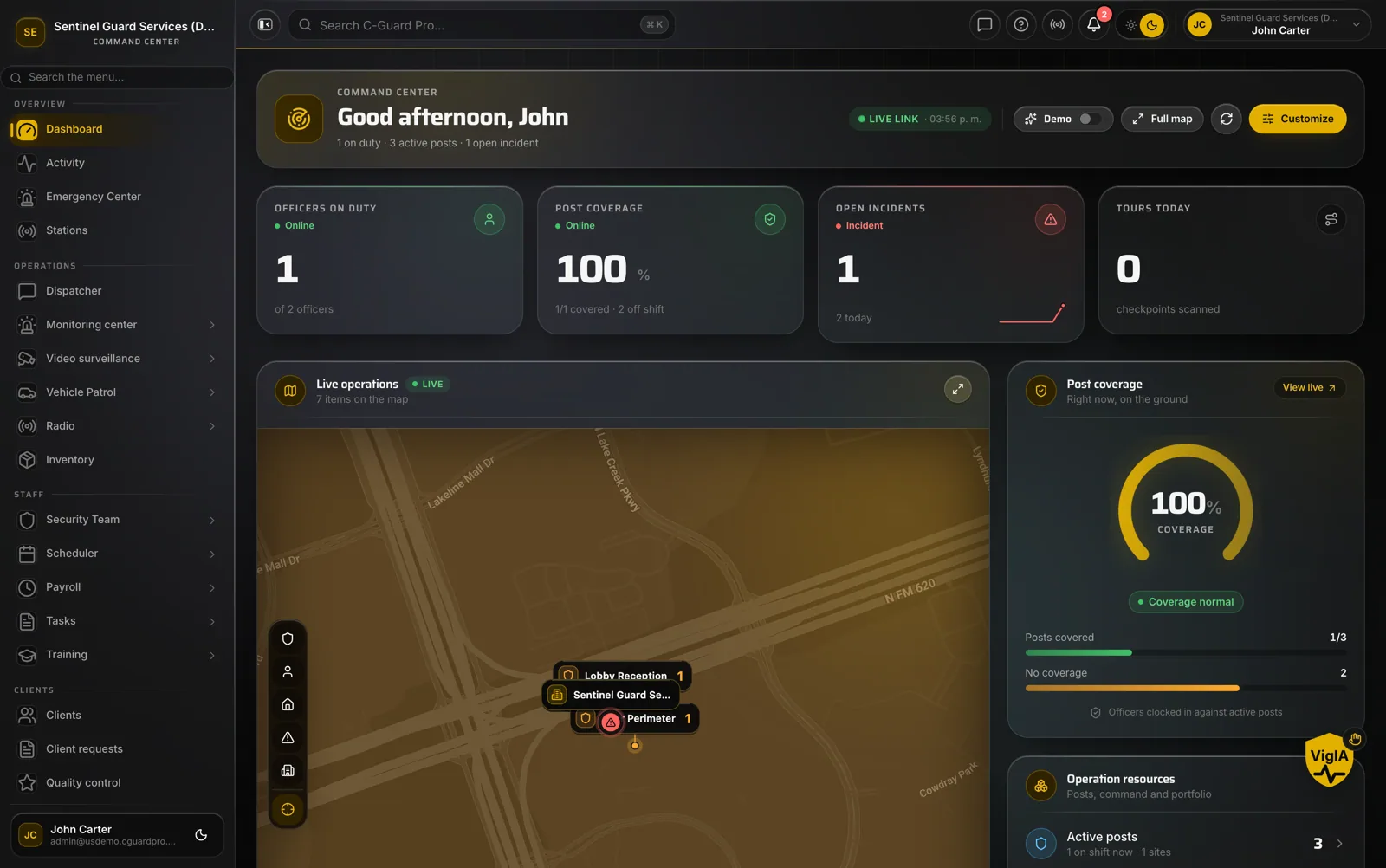 As the client, you should be able to see that the opening and closing steps were completed on time, without calling anyone.
Robbery response: less action, more discipline
The right response to a robbery is almost always de-escalation and observation, not intervention. A good provider trains guards to prioritize the safety of staff and customers, comply with demands, capture detail for the report, and trigger the alarm and response chain — not to play hero. Ask your provider directly how they train for this and how they brief guards on your specific branch protocol.
The one thing a guard should do quickly and quietly is raise the alarm. That is where panic alerts matter.
Panic alerts that actually reach someone
A panic button for security guards built into the guard’s app means the alert goes out instantly and silently, with the guard’s location attached, to a monitoring point and to your chain of command. Ask your provider: when a guard triggers an alert, who receives it, how fast, and is it logged? An alarm that rings only inside the branch, or that nobody is actively monitoring, is not a response plan.
Require that the alert path be documented and tested — not assumed to work.
Documentation and compliance
Banking is a documented industry, and your security should match. Every shift should produce a record: opening and closing completed, patrols of the lobby and ATM vestibule, anything unusual, and any incident with photos and timestamps. This isn’t busywork. It’s what you hand to auditors, to corporate security, and to your insurer when they ask what your coverage actually looked like.
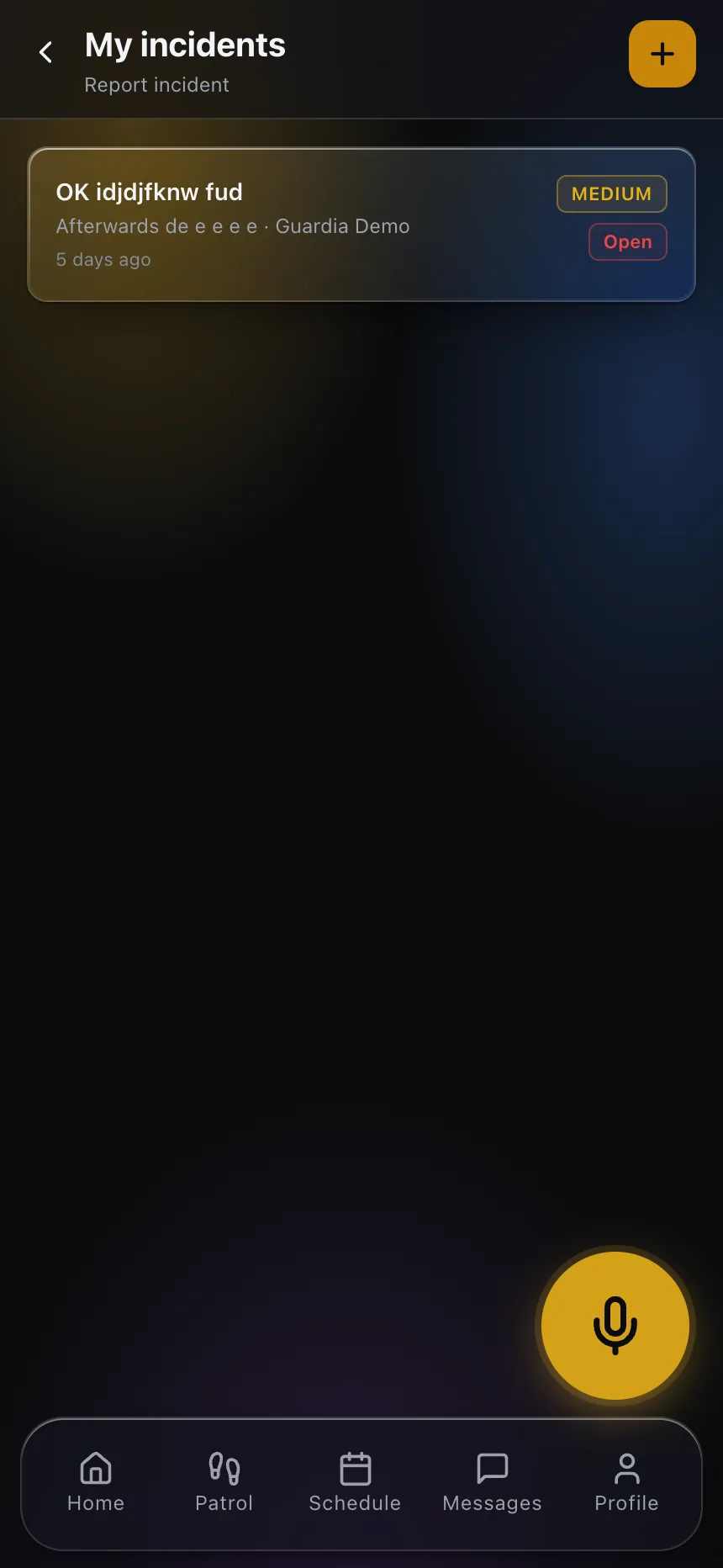 Incidents captured with photo, time, and location turn “everything was fine” into a record you can defend.
A daily activity report that you can pull up yourself — rather than waiting for someone to email you a photo of a paper log — is the difference between real compliance and a filing cabinet you hope is complete. When you evaluate providers, ask to see a sample report from a real (anonymized) shift. The quality of that report tells you how seriously they take documentation.
A note on regulation: rules for financial-institution security, guard licensing, and armed vs. unarmed coverage vary by state and are frequently updated. Treat any specifics as something to confirm with the relevant authority and your own compliance and legal advisors — this article is not legal advice.
Armed vs. unarmed, and staffing level
Whether your branch needs armed coverage, and how many guards, depends on your location, hours, cash volume, and your own risk assessment. A provider that pushes a one-size answer without asking about your branch is a red flag. A good one walks the site, asks about foot traffic and past incidents, and gives you options with the tradeoffs spelled out.
What to require before you sign
- A branch-specific opening and closing protocol, with proof of execution.
- A trained, de-escalation-first robbery response, briefed to your protocol.
- A tested, logged panic alert path with location and clear recipients.
- Digital incident and activity reports you can access yourself.
- Clear, documented answers on armed coverage and staffing rationale.
The right provider treats your branch as a procedure to be followed and proven — every open, every close, every shift.
To see what that kind of client-side visibility looks like, review the client portal built for security companies and the bank security guard software page, then hold your provider to that standard.