If you run a bar, a late-night restaurant, or a club, your security team is standing on the most valuable and most fragile thing you own: your license and your reputation. One badly handled ejection, one over-capacity night, one fight that spills onto the sidewalk and ends up on video — any of these can cost you far more than a season of cover charges. When you hire bar and nightclub security guards, you are buying protection for your patrons and a paper trail that protects you.
Here is what a nightlife operator should require, and how to tell a professional door team from a liability.
Door screening done right
The door sets the tone for the whole night. A good door team checks IDs consistently, watches for intoxication before entry, spots fake IDs and duplicate entries, and keeps the line orderly without becoming a flashpoint. The goal is calm control, not confrontation.
When you hire bar and nightclub security guards, ask how they train door staff and how they handle the hard cases: a refused ID, a guest who’s clearly had too much elsewhere, a group that’s escalating in line. The answer tells you whether you’re getting professionals or muscle.
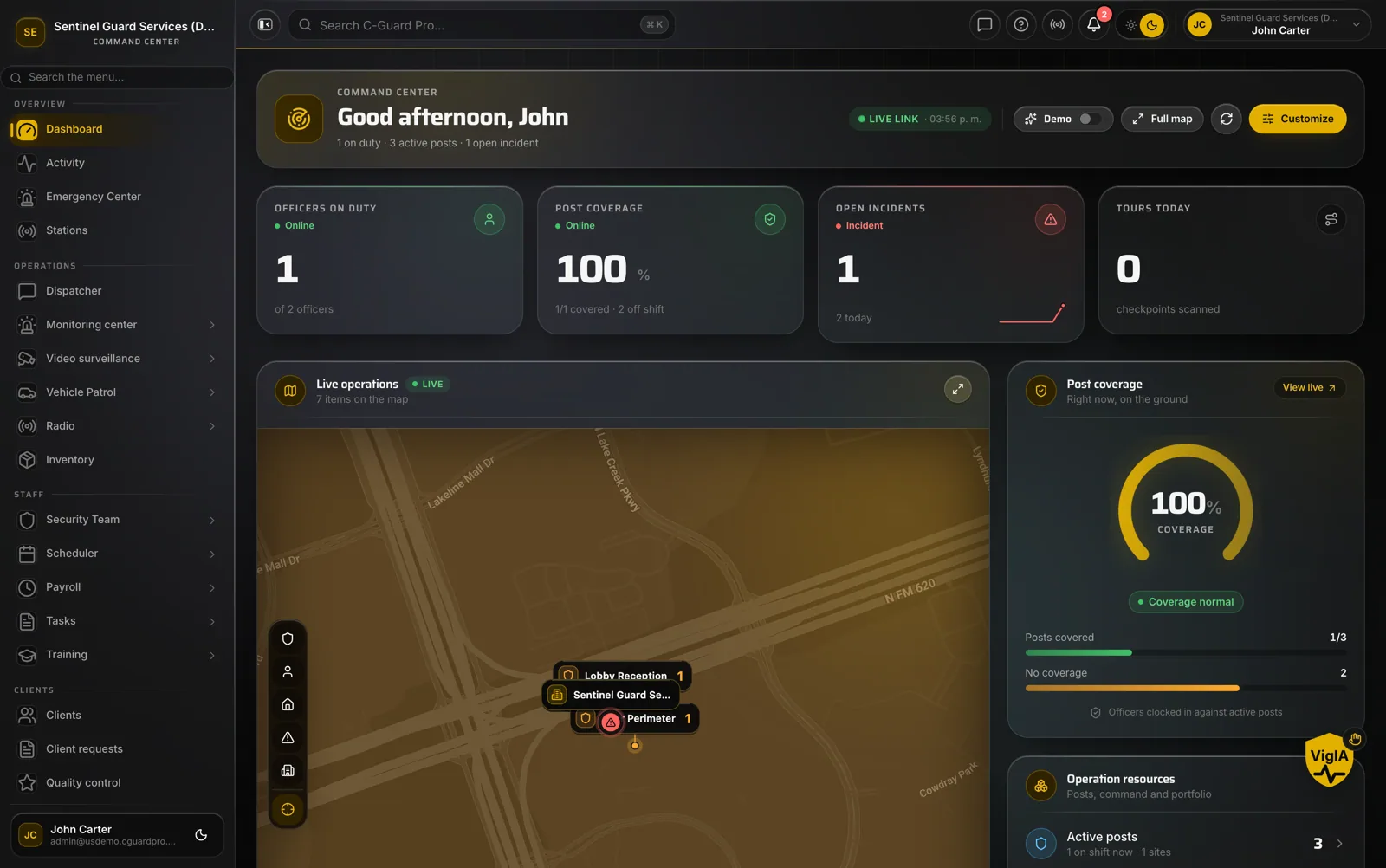 As the operator, you should be able to see who is on the door and inside right now, and what’s happened tonight.
Capacity control protects your license
Over-capacity is one of the fastest ways to lose a license and one of the easiest to prevent. Your door team should own the head count — counting in and counting out, holding the line when you hit the limit, and never treating the cap as a suggestion on a busy Saturday.
Require that capacity be tracked actively, not eyeballed. And require that when the venue is at capacity, that fact is logged with a timestamp. If an inspector shows up, “we were watching it” is a far weaker position than a record showing you held the line at the limit all night.
De-escalation over confrontation
The best security nights are the ones where nothing happens because a professional stepped in early. De-escalation — reading a situation, separating parties, walking someone out calmly — is a skill, and it’s the skill that keeps you out of court. A team that goes hands-on first is a team that will eventually generate the incident that hurts you.
Ask your provider about their de-escalation training and their use-of-force policy. Ask how they document an ejection or a physical incident. A professional welcomes that question because clean documentation protects the guard as much as it protects you.
Incident logging that protects the venue
This is where the right tools matter. Every meaningful incident — an ejection, a refused entry that got heated, a medical situation, a fight — should be logged immediately with time, location inside the venue, what happened, who was involved, and photos where appropriate.
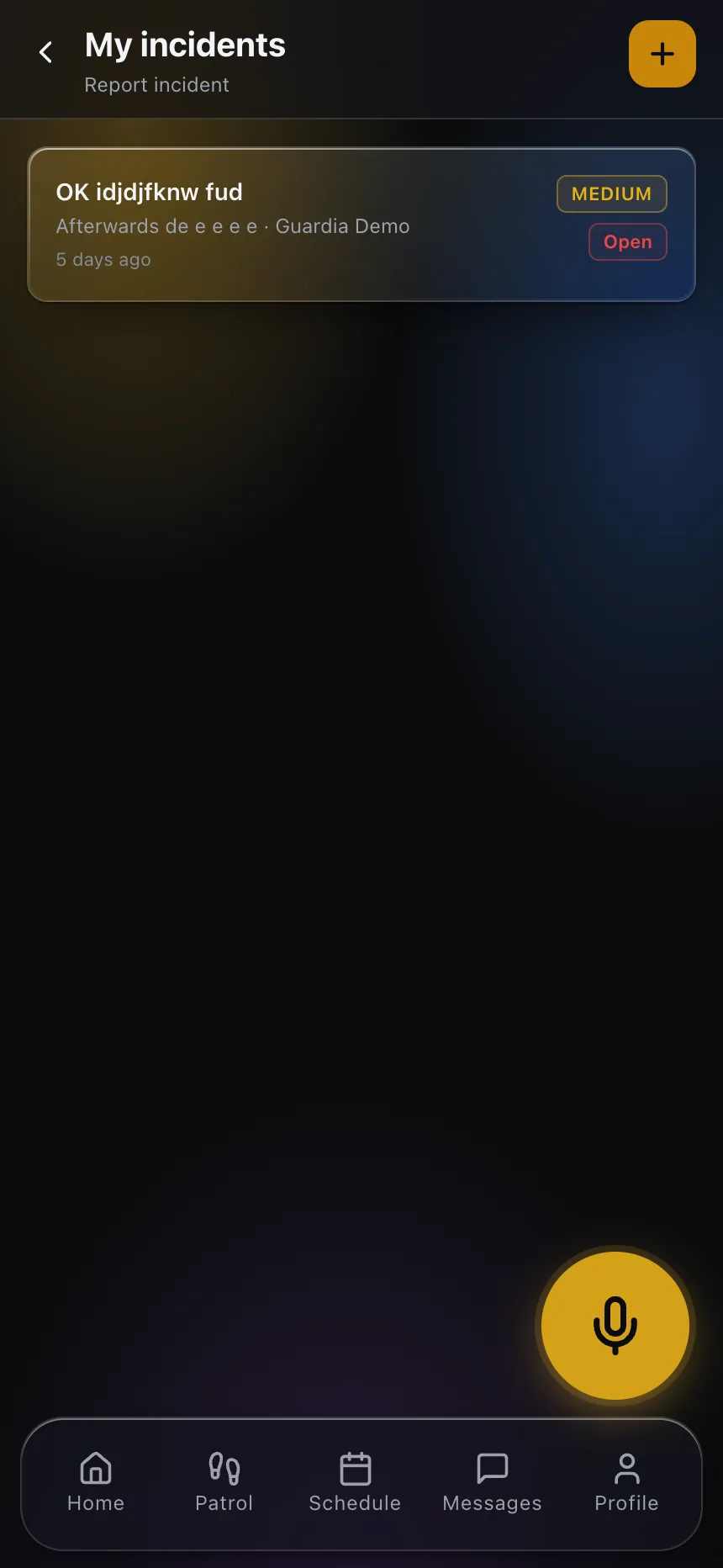 An incident logged on the spot — with time, place, and photos — is the record that protects your license when a night goes sideways.
A daily activity report that captures the whole night, plus detailed incident entries, gives you a defensible timeline. If a patron claims they were injured or mistreated, or if authorities ask what happened, you have a contemporaneous record instead of conflicting memories. Require that these logs are digital, time-stamped, and available to you — not scribbled on a clipboard that disappears at close.
Communication across the floor
On a busy night, your door, your floor, and your back exits need to talk instantly. A dropped ID at the door, a brewing argument by the bar, a guest who needs to be walked out — these move fast. Push-to-talk radio for security guards that runs on the guard’s phone keeps the whole team coordinated without expensive hardware, and without a guard leaving their post to relay a message.
Ask how your team communicates during peak hours. If the answer is shouting across a loud room, that’s a gap.
A quiet note on the rules
Licensing, capacity limits, ID requirements, incident-reporting obligations, and use-of-force rules vary by state and municipality, and they change. Treat any specifics as something to confirm with your local authority and your own legal advisor — this article is not legal advice. What holds everywhere is the principle: professional screening, honest capacity control, de-escalation first, and clean documentation of everything.
What to require before you sign
- A trained door team with a clear ID and screening protocol.
- Active capacity control, logged with timestamps.
- A de-escalation-first policy and a documented use-of-force approach.
- Digital, time-stamped incident and activity reports you can access.
- Instant communication across door, floor, and exits.
Nightlife security is judged on the nights that go wrong. The right provider makes those nights rare — and makes sure that when one happens, the record is on your side.
To see the kind of live visibility and reporting you should expect, take a look at the client portal built for security companies.