A hotel is in the business of feeling safe without looking guarded. Guests are paying for comfort and ease, and nothing undoes that faster than a visible security problem, or a heavy-handed security presence that makes the lobby feel like a checkpoint. When you hire hotel security guards, you are buying a delicate balance: protection that is real when it is needed and nearly invisible the rest of the time. This guide is for the general manager or director of operations who has to protect guests, staff, and the brand all at once.
Security that protects the guest experience
The first thing to understand about hotel security is that it serves the guest experience, it does not override it. A guard who hovers, interrogates, or turns every minor issue into a scene is a problem, not a solution. What you want is a professional who blends into the property, is warm to guests, and shifts into a firm, capable mode only when a situation calls for it.
So when you evaluate hotel security guards, look for presence and judgment, not just physicality. Ask how the provider selects and trains guards for a hospitality environment, how they handle a guest complaint versus a genuine threat, and how they interact with front desk and management. A provider who talks only about enforcement is not thinking about your brand.
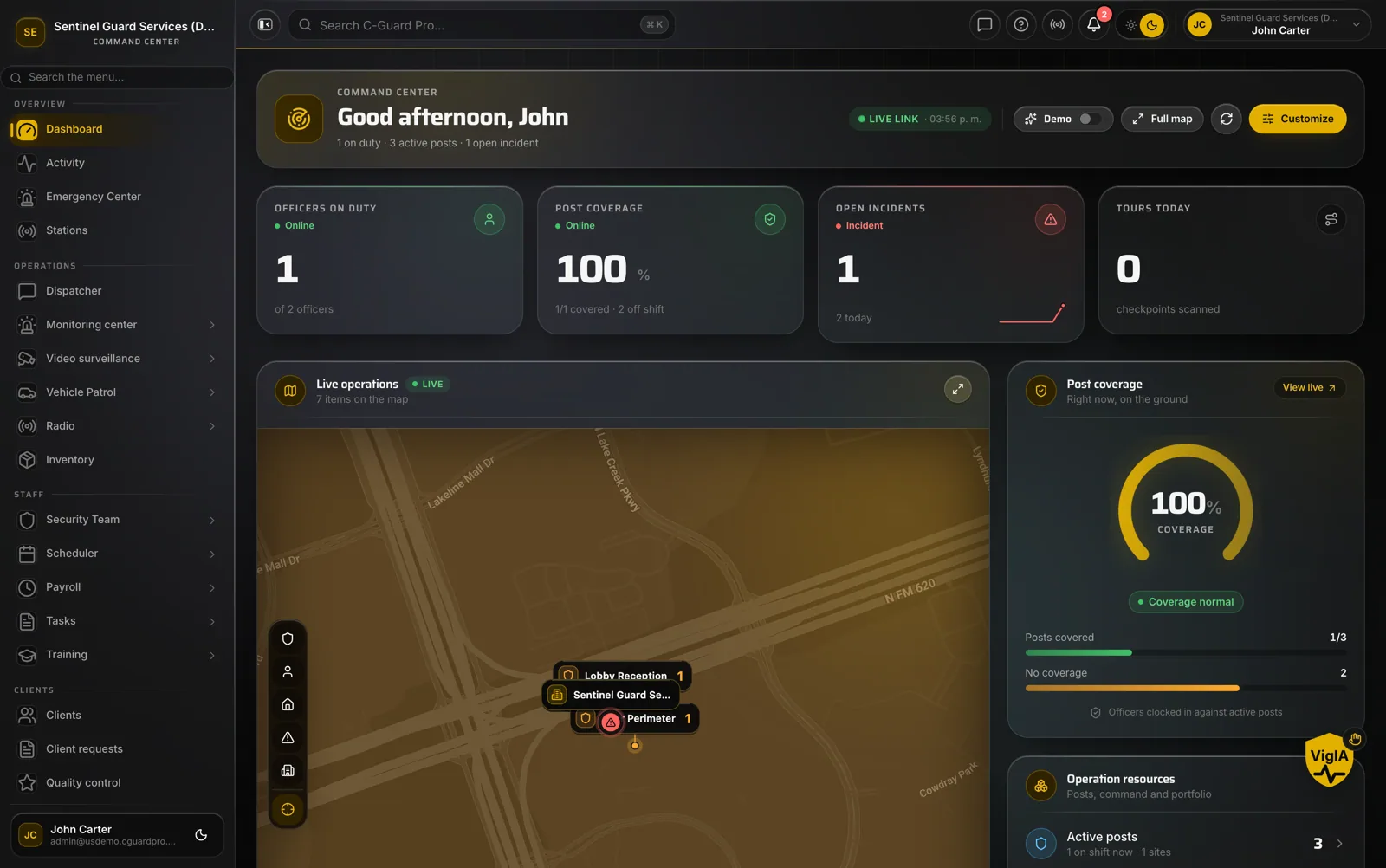 Hotel management should be able to see coverage and activity across the property without a visible security presence in the lobby.
Discreet patrols that still get proven
A hotel needs its property watched, the corridors, the pool and fitness areas, the parking, the back-of-house and loading areas, without a parade of uniformed guards disrupting the atmosphere. That means patrols should be discreet, but discretion cannot become an excuse for patrols that never happen.
Require verified patrols that stay quiet. A QR guard tour system lets a guard scan checkpoints on their rounds, corridors, amenity areas, exits, back-of-house, and each scan is timestamped. For a large resort-style property, GPS guard tracking shows the route covered across the grounds. The guest sees a calm professional passing through; you get a record that the property was actually patrolled. Require both, define the checkpoints, and require that you can review the results.
Handle incidents in a way that protects the brand
Hotels generate a particular kind of incident: a guest dispute, a noise complaint that escalates, a suspected theft from a room, an intoxicated guest, a trespasser using the amenities. How these are handled, and documented, directly affects your brand and your liability.
Two things matter. First, the guard’s demeanor: firm, discreet, and coordinated with management, never a public scene. Second, the record. Require digital incident reports with time, location, and photos where appropriate, captured while the details are fresh. When a guest disputes a charge, a claim is filed, or an online review turns into a complaint, a clear contemporaneous record is your best defense, and it protects the guest and the guard as much as the property.
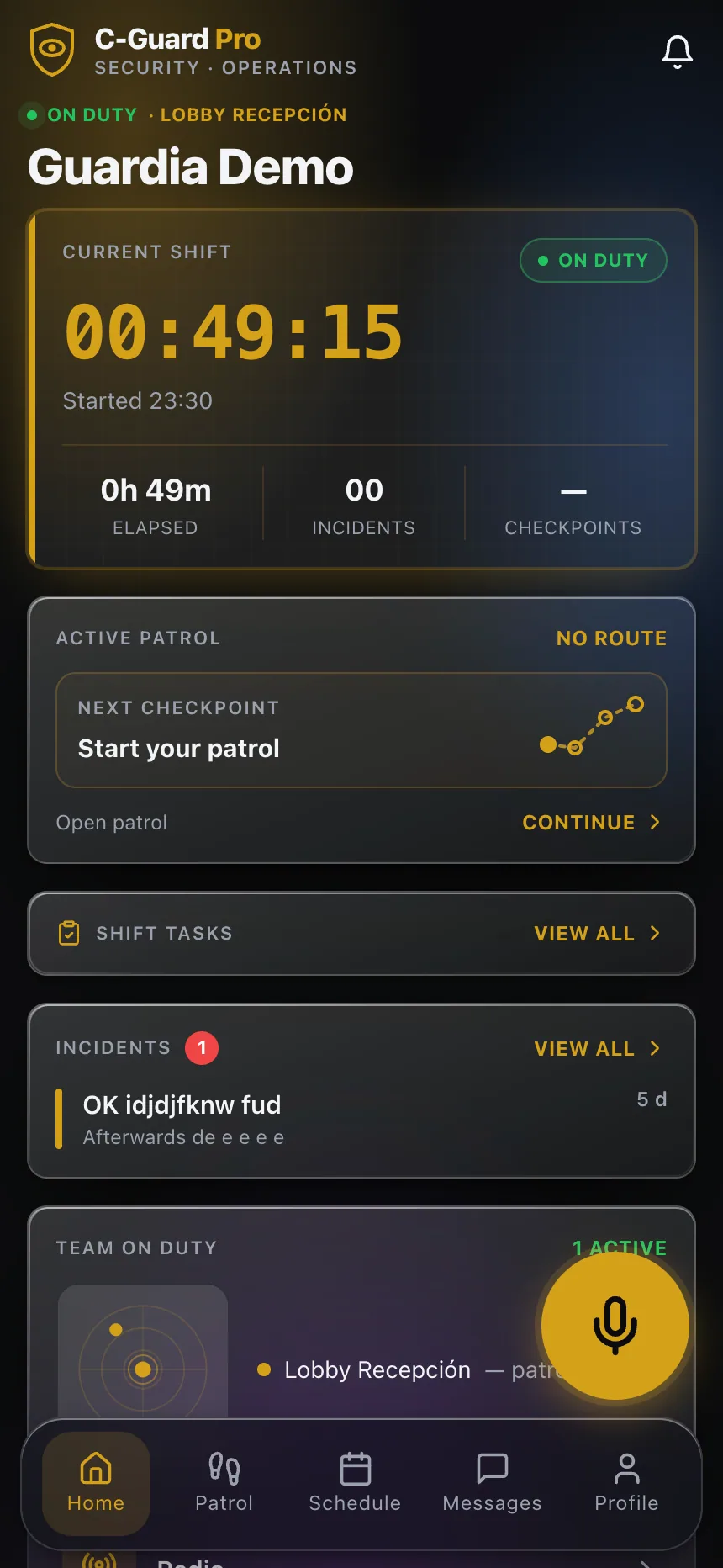 Patrol scans and incidents flow into one record, so management has the facts when a guest dispute or a claim surfaces later.
Quiet coordination is part of this. When a guard needs backup or a manager, instant push-to-talk radio for security guards lets them summon help without a public phone call or a raised voice, so the situation gets more hands before it draws a crowd.
Give management clear reporting
A GM cannot walk every floor on every shift, and does not want a visible security operation doing it for show. A client portal for security gives management a private, single place to see coverage, patrol history, and incidents across the property. That means you can review the overnight shift with your morning coffee, answer an owner’s or a brand inspector’s question with evidence, and hold your provider to the coverage you bought, all without any of it touching the guest-facing experience.
What to require from your provider
Put it in the agreement:
- Guards selected and trained for a hospitality environment, with judgment over force.
- Discreet, verified patrols with defined checkpoints and frequency.
- Quiet, instant communication for summoning help.
- Digital incident reports with time, location, and photos where appropriate.
- Clear coordination with front desk and management, and an escalation path.
- A private management portal to see coverage and incidents across the property.
A word on limits and rules
Technology makes a hotel security team more discreet, faster, and better documented, but it does not replace the human judgment that hospitality security lives on. A trained, personable guard is the product; the tools make that guard provable and coordinated. Requirements around guard licensing, cameras, and guest privacy vary by state and locality, and this article is not legal advice; confirm specifics with the relevant authority and your own counsel.
The takeaway
Hotel security succeeds when guests never think about it and management can prove it is working. Require guards with hospitality judgment, discreet but verified patrols, careful incident handling, and a private portal so leadership can see the operation without disturbing the guest experience. To see what that visibility looks like for a hotel buyer, explore the CGuardPro client portal.