A healthcare facility is one of the hardest security environments there is. It is open around the clock, it cannot turn anyone away, it holds controlled substances and vulnerable patients, and its busiest security zone, the emergency department, is also where emotions run highest. When you hire hospital security guards, you are not buying muscle at the door. You are buying a calm, trained presence that protects staff and patients, controls access to sensitive areas, and documents what happens without disrupting care. This guide is written for the administrator making that call.
The emergency department sets the bar
If your facility has an ER or urgent care, that is where your security program lives or dies. It runs at all hours, it draws people in crisis, and staff there face the highest risk of a volatile encounter. A guard who cannot handle a distraught family member, an agitated patient, or a crowded waiting room in the small hours is not the guard you need.
So when you evaluate hospital security guards, ask specifically about ER coverage: staffing across all shifts including nights and weekends, how quickly a guard can reach the department, and how the provider selects and trains guards for that environment. A provider who quotes generic “coverage” without addressing the ER is not thinking about a healthcare setting.
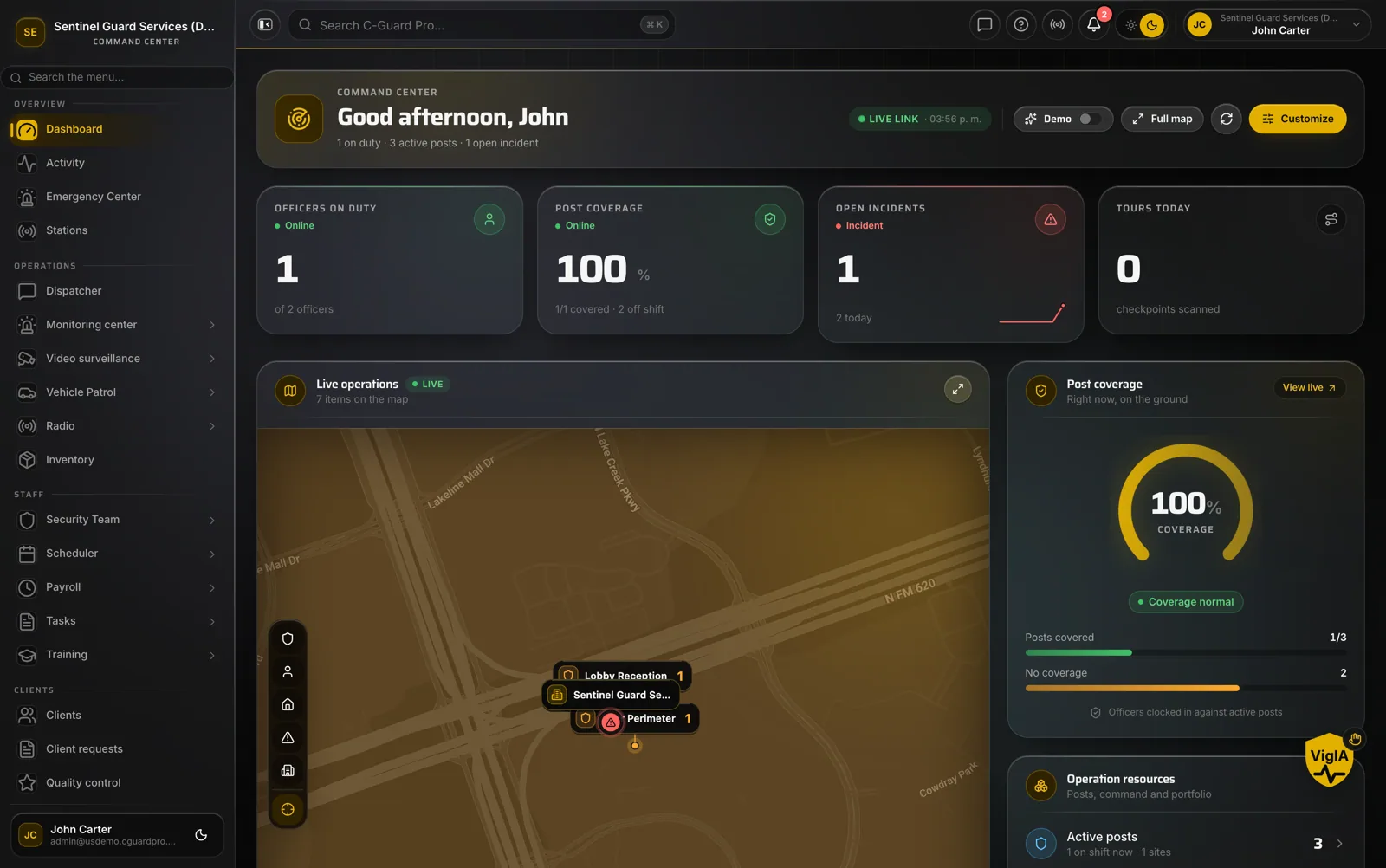 A healthcare administrator should be able to see coverage across every shift and every unit, including the overnight hours.
De-escalation over force
In a hospital, the goal is almost never to overpower someone. It is to calm a situation before it escalates, to protect staff without traumatizing a frightened patient, and to know when a clinical response is more appropriate than a security one. That takes training and temperament, not just a uniform.
Ask your provider how they train guards in de-escalation and how those guards coordinate with clinical staff. The right answer treats the guard as part of the care environment, not an outside enforcer. Any provider leaning on a show of force as the primary tool is a poor fit for a healthcare setting, and a liability besides.
Coordination matters as much as calm. When a situation is developing in a patient room or the ER, the guard needs to summon help quietly and quickly. Instant push-to-talk radio for security guards lets a guard call for backup without leaving the patient or making a scene, so a tense moment gets more hands before it becomes an incident.
Access control for sensitive areas
Healthcare facilities have zones that must not be open to everyone: pharmacies and medication storage, pediatric and maternity units, behavioral health, records, and after-hours entrances. Controlling and logging access to these areas is a core part of what you are buying.
Require a digital record of access and visitors: who entered a restricted area or after-hours entrance, when, and why. A searchable log matters when a medication discrepancy, a security concern, or a compliance question comes up. Ask your provider how they handle the exceptions, the vendor with no appointment, the visitor outside hours, the person trying to reach a restricted unit, and expect written protocols, not improvisation.
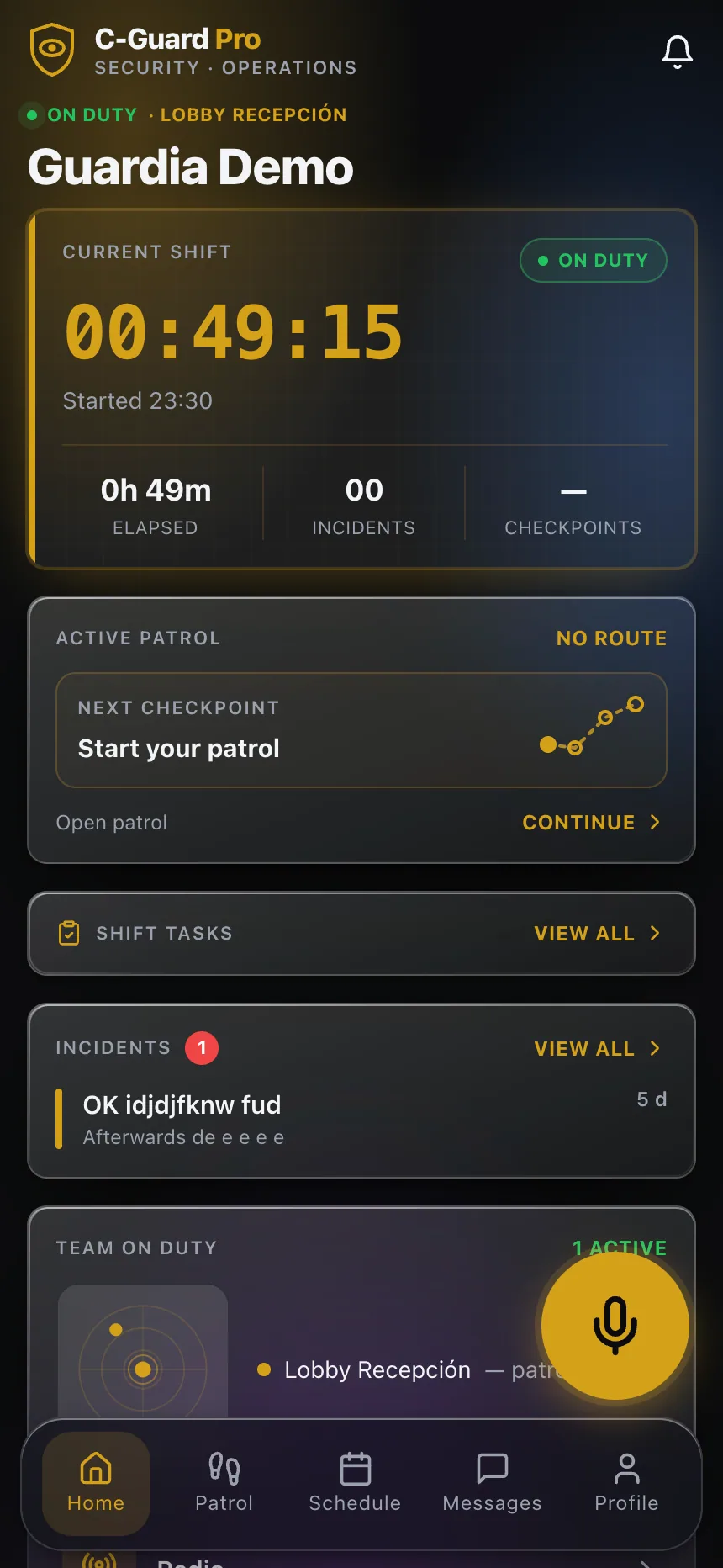 Access checks, rounds, and shift notes flow into one record, so a sensitive-area question has an answer instead of a shrug.
Document incidents carefully and consistently
Healthcare incidents carry weight: a workplace-violence event, a patient elopement, a visitor dispute, a theft. Each one may become a regulatory matter, an insurance claim, or an internal review. The quality of your documentation is what makes those follow-ups defensible.
Require digital incident reports with time, location, description, and photos where appropriate and permitted, captured while the details are fresh. Consistent, timestamped records protect staff, patients, and the guard, and they give your risk and compliance teams something real to work from. Over time they also show you patterns, where and when incidents cluster, so you can adjust coverage with evidence.
For the fuller picture of how a program fits a healthcare setting, the hospital security guard software page lays out the pieces.
Give administration real visibility
You cannot walk every unit on every shift. A client portal for security gives administration a single place to see coverage, patrol activity, and incidents across the facility, without paging the guard company. For a 24/7 operation, that means the overnight shift is as visible to leadership as the day shift, and your documentation is ready when an auditor, an insurer, or a regulator asks.
What to require from your provider
Put it in the agreement:
- ER and after-hours coverage staffed across every shift.
- Guards trained in de-escalation and coordination with clinical staff.
- Instant communication so a guard can summon help discreetly.
- A digital, searchable access and visitor log for sensitive areas.
- Digital incident reports with time, location, and photos where appropriate.
- A portal where administration can see coverage and incidents facility-wide.
A word on rules and limits
Healthcare is heavily regulated, and requirements around patient privacy, workplace safety, controlled substances, and guard licensing vary by state and locality. This article is not legal or compliance advice; confirm anything specific with the relevant authorities and your own counsel and compliance team. And keep expectations honest: technology helps a trained guard respond faster and document better, but it does not replace judgment, training, or enough staffing for a demanding around-the-clock environment.
The takeaway
In a hospital, calm and documentation matter more than muscle. Require ER coverage, de-escalation training, controlled access to sensitive areas, careful incident records, and a way for leadership to see the whole operation. To see what that visibility looks like for a healthcare buyer, explore the CGuardPro client portal.