A dealership is one of the hardest sites to protect, and one of the most tempting to hit. Your inventory sits outside in the open, keys live in a handful of predictable places, and the money tied up in a single row of vehicles is enormous. When you hire car dealership security guards, you are not just buying a uniform at the gate — you are buying a plan for the lot, the showroom, the key room, and the hours when nobody from your team is on site.
Here is how a buyer should think about it, and what to require from your provider before you sign anything.
What car dealership security guards are actually protecting
Break the site into zones and the job gets clearer. The front lot and display line are the theft and vandalism target. The service area holds customer vehicles and tools. The key room and the finance office hold the two things a thief really wants: the means to drive a car off and the paperwork to fence it. Catalytic converter theft, wheel theft, and joyriding out of a poorly fenced back lot are the classic patterns.
A guard company that understands dealerships will talk to you about all of those zones, not just “we’ll have someone at the front.” Ask them to walk your lot with you and point out the blind corners, the fence gaps, and the camera dead zones. If they can’t, keep interviewing.
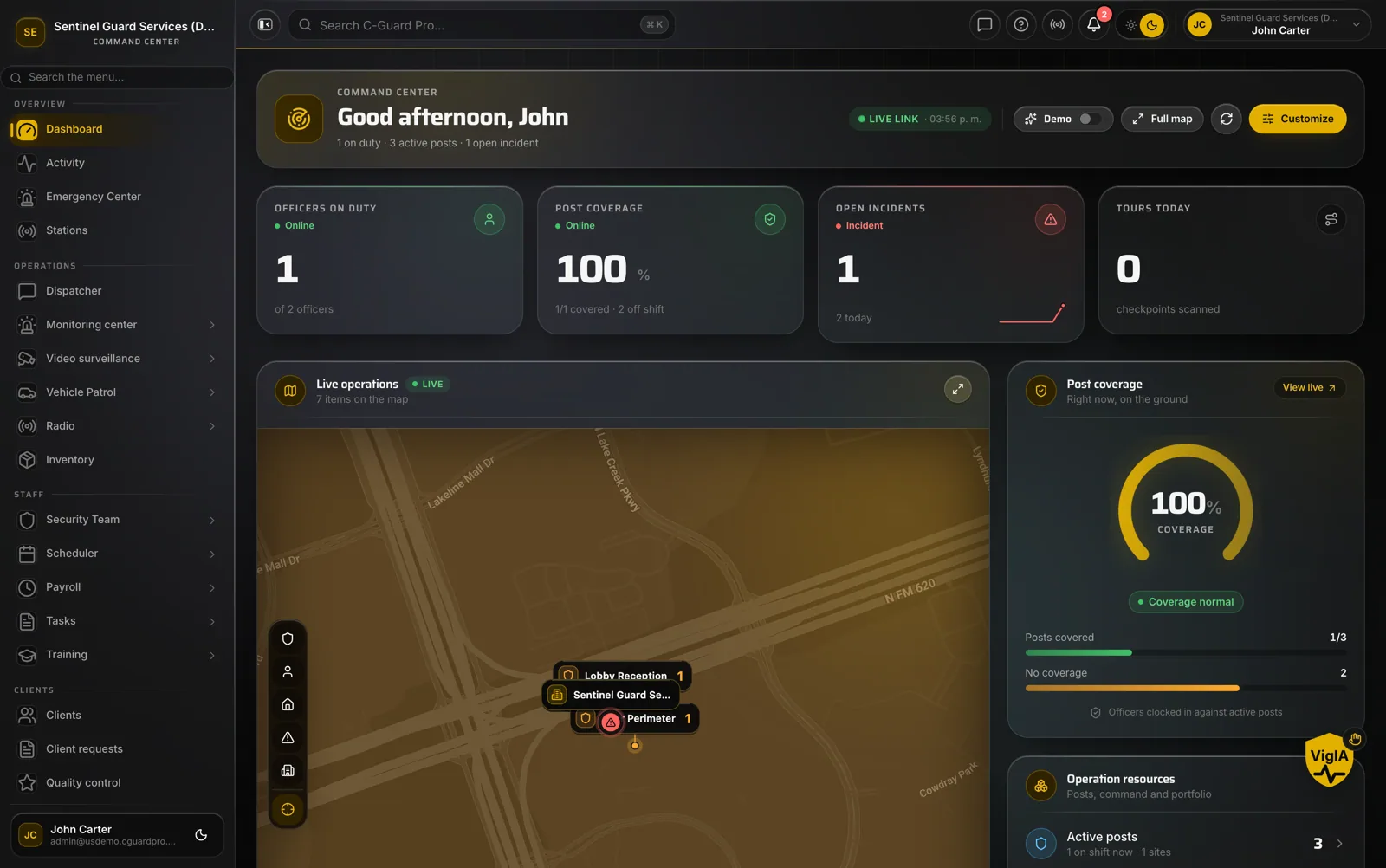 A live view of who is on site and which rounds have been completed — the kind of visibility you should expect as the client.
After-hours is where you win or lose
Most dealership losses happen when the site is dark. Daytime coverage matters for customer safety and lot presence, but your real exposure is overnight and on holidays. That is where after-hours patrols and proof of coverage earn their keep.
Require the following in writing:
- A patrol pattern that covers the whole lot, not a loop around the showroom. Every row, the back fence, the service bays, and the key room should be on the route.
- Randomized timing so a would-be thief can’t predict the gaps between passes.
- GPS-verified rounds so you can see the guard actually walked the full perimeter — not just clocked in and sat in the booth.
- Keyed or badged access logging for the service area and key room, so entries after hours are recorded.
Ask specifically how the provider proves the rounds happened. “We trust our guys” is not proof. A modern provider gives you time-stamped, location-tagged evidence.
Ask for proof, not promises
This is the single biggest difference between a provider that protects your lot and one that just bills you. When rounds are logged with GPS and checkpoint scans, you get a record that a specific person was at a specific corner of your lot at a specific time. If a converter goes missing at 3 a.m., you can reconstruct exactly where the guard was.
Tools like a guard tour system with QR checkpoints and GPS guard tracking exist precisely so the client can verify coverage instead of taking it on faith. When you interview a provider, ask whether they can give you that visibility. If they run everything on paper clipboards, you’ll never really know what happened overnight.
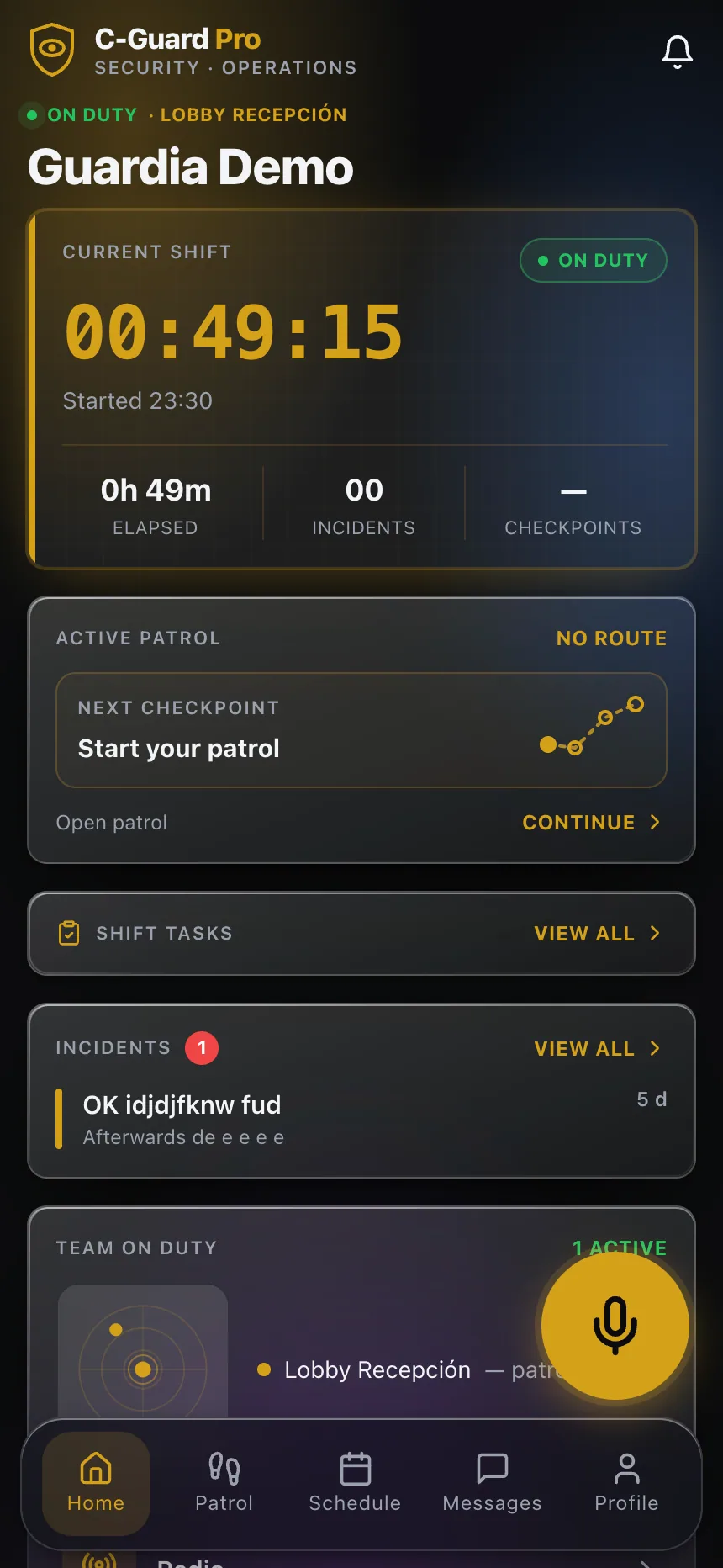 The guard’s app should guide the round and record each checkpoint, so the proof is automatic rather than an afterthought.
The showroom and daytime coverage
Daytime is a different problem. You want a visible, professional presence that deters test-drive fraud and keeps an eye on high-value trims without making buyers feel policed. A good guard here doubles as a set of eyes for your sales floor: watching the lot from the showroom, escorting deliveries, and noting anything unusual.
Ask your provider how they brief guards on your specific concerns — VIN cloning attempts, test-drive procedures, and how to handle someone loitering around the finance office. The answer tells you whether they treat your site as its own assignment or as an interchangeable shift.
Documentation protects you when something goes wrong
Insurers, corporate, and your own recordkeeping all benefit from clean incident documentation. A daily activity report that captures every pass, every locked door, and every unusual event turns a vague “everything was fine” into a defensible record. When a customer disputes damage that happened on your lot, or when you need to file a claim, that log is worth its weight.
Require that incidents be logged with photos, timestamps, and location — not scrawled in a notebook that lives in the guard shack. And require that you, the client, can see those reports without asking someone to email you a photo of a page.
What to require before you sign
- A zone-by-zone plan for lot, showroom, service, and key room.
- After-hours patrols with randomized timing and full-lot coverage.
- GPS-verified rounds and checkpoint proof you can review yourself.
- Digital incident reports with photos and timestamps.
- Live visibility into who is on site right now.
Dealership security is not about one guard at the door. It’s about proving, every night, that your entire lot was covered — and being able to see that proof yourself.
If you want to see what that kind of client visibility looks like, take a look at the client portal built for security companies and use it as a benchmark when you talk to providers.