Your busiest weeks are also your riskiest. More foot traffic, more inventory, more cash, more crowds, and a workforce stretched thin — all at once. Whether you run a retail center over the holidays, an event venue in peak season, or a warehouse during a shipping crunch, seasonal and holiday security staffing is the plan that keeps a good year from becoming an incident report. And it’s a plan you have to make early, because the providers with the best guards run out of them first.
Here’s how a buyer should approach the surge.
Forecast the surge before you’re in it
The mistake is treating peak season as a surprise. It isn’t — you know it’s coming, and you probably know which days and hours will spike. The work is mapping that curve before you talk to your provider: which entrances need extra bodies, which nights run late, when deliveries stack up, and where crowds create pinch points.
Bring that forecast to your provider and ask them to staff to it, not to an average. “We’ll add a few extra guards in December” is not a plan. A day-by-day, hour-by-hour coverage map is.
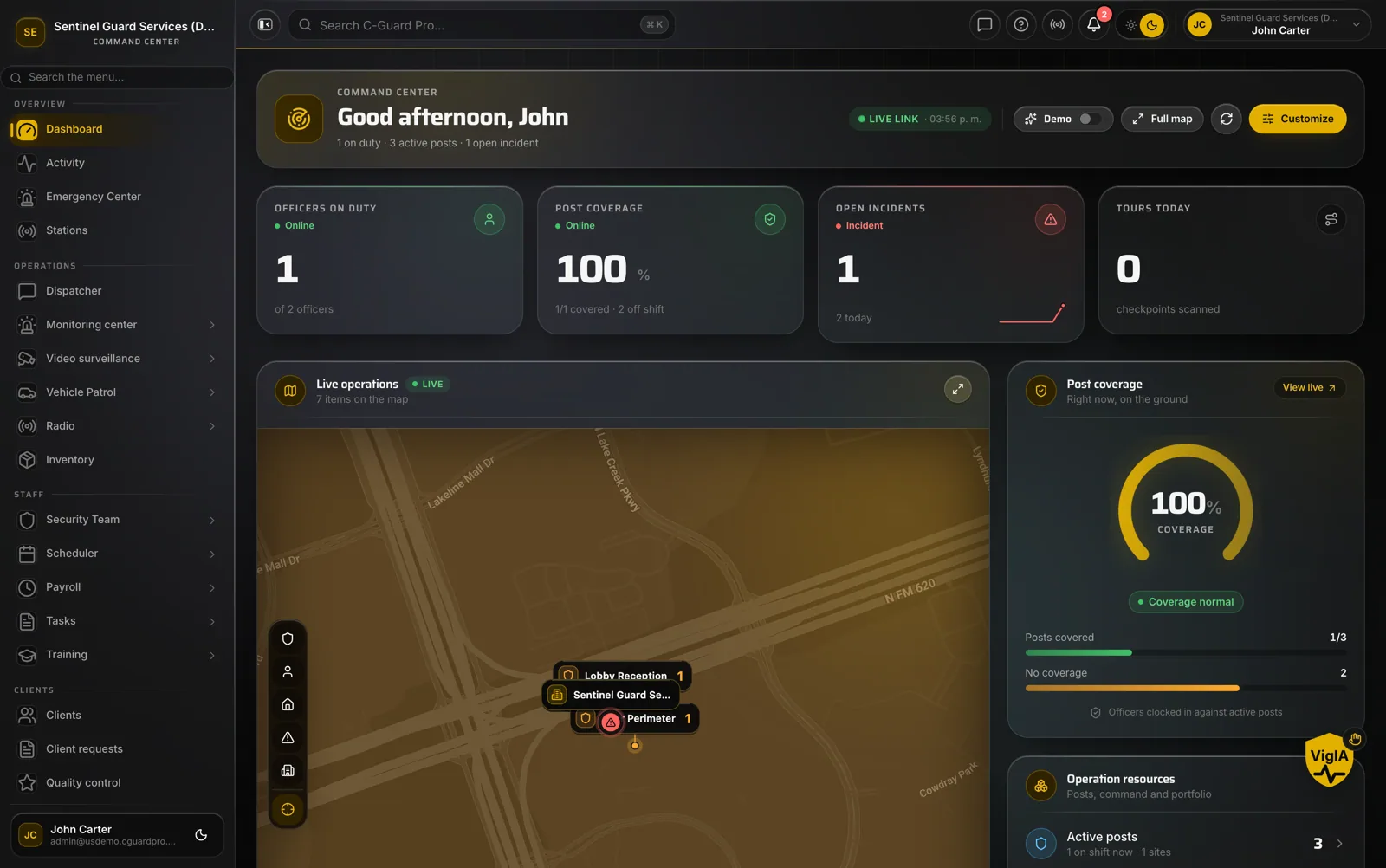 Going into peak season, you want a live view of coverage — not a promise you can’t check until the report arrives.
Lock rates and headcount early
Good seasonal and holiday security staffing is a seller’s market. The professional, well-trained guards get committed first, and by the time you call in late November, you may be choosing from whoever’s left. That’s how sites end up with unfamiliar, under-briefed guards during their highest-risk weeks.
Protect yourself by locking in early:
- Confirm headcount and rates in writing before the season, so you’re not exposed to surge pricing or a shortage.
- Ask about the same guards. Continuity matters — a guard who’s worked your site all year is worth far more in a crowd than a stranger. Request that your regular team is retained and only supplemented for the surge.
- Clarify overtime and holiday-pay terms up front so there are no invoice surprises after New Year’s.
Getting this in writing early is the single highest-leverage thing you can do for peak-season coverage.
Keep schedule visibility during peak
Here’s where seasonal staffing quietly falls apart: you add extra guards, extra shifts, and extra hours, and suddenly nobody’s sure who’s supposed to be where. A no-show on a normal Tuesday is an annoyance. A no-show at your busiest entrance on your biggest night is a real gap.
You need to see the schedule and the actual coverage, live. Require that your provider gives you visibility into who is scheduled, who has clocked in, and where the holes are — before the shift, not after.
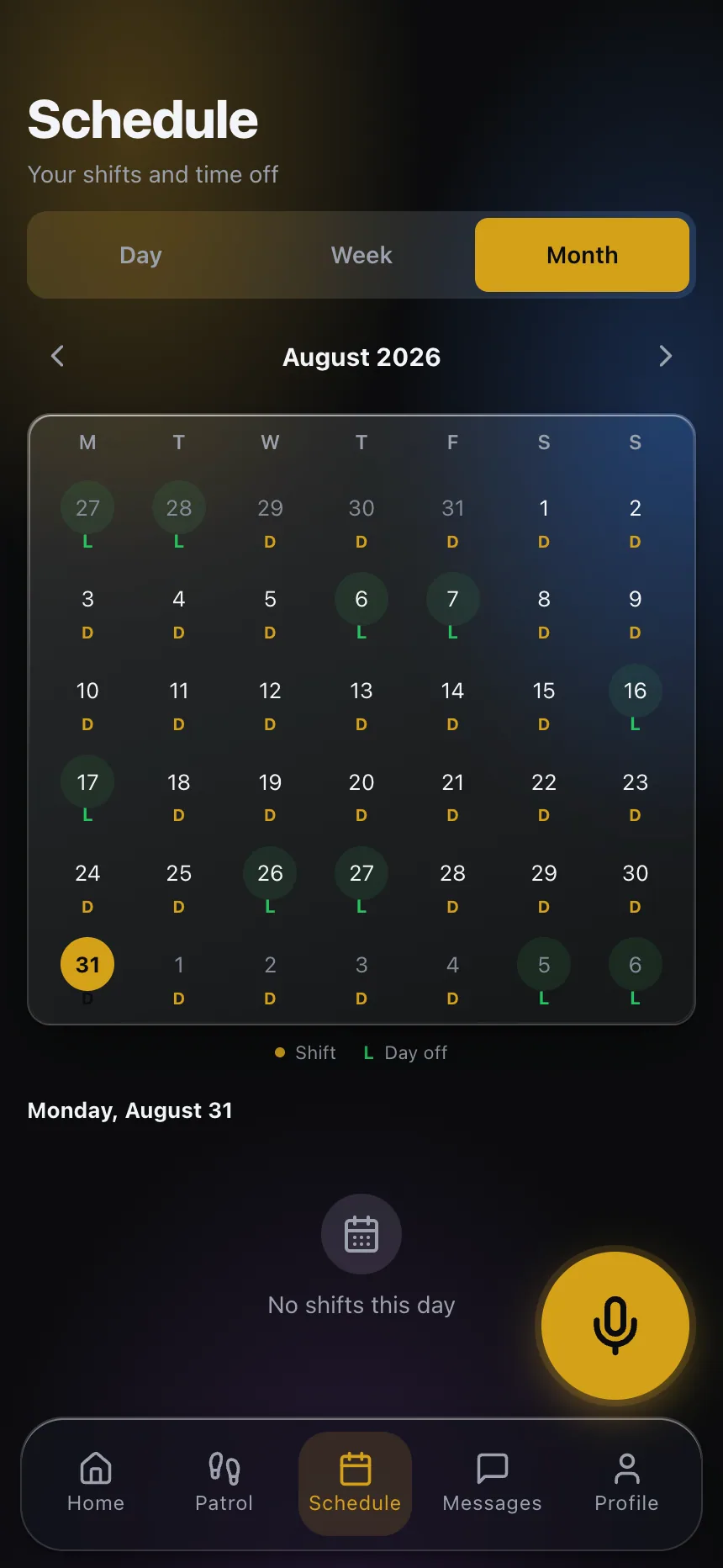 A clear schedule that shows every shift and who’s covering it keeps surge weeks from turning into guesswork.
Modern guard scheduling software, paired with guard time and attendance tracking, lets your provider build the surge schedule and lets you confirm that the bodies you paid for actually showed up. When a shift is uncovered, you find out in time to fix it — not from an incident report the next morning. Ask your provider whether you’ll have that visibility. If the answer is “call us and we’ll check,” that’s a gap during the exact weeks you can least afford one.
Don’t forget the brief
Surge guards are only useful if they know your site. Extra bodies who don’t know your layout, your procedures, or your escalation path can create as many problems as they solve. Require that seasonal staff get the same post orders and briefing as your regular team, loaded into the provider’s system so everyone follows the same playbook. A crowd is the worst time for a guard to be improvising.
It also helps to give the surge team the context that your regulars carry in their heads: which exits get crowded, where the last-minute deliveries stack up, which corner of the lot goes dark first, and who on your staff to find in a hurry. The more of that you push into the provider’s system ahead of time, the less it depends on a hallway conversation that a substitute guard never had.
Watch the pay and fatigue math
Peak weeks tempt everyone to stretch a small pool of guards across long, back-to-back shifts. Tired guards miss things, and that’s precisely when you can least afford a missed round. When you agree on headcount, ask how your provider avoids over-relying on the same few people during the surge, and how overtime and rest are managed. Coverage that looks full on paper but runs on exhausted staff is a gap waiting to open on your busiest night. This is another reason live schedule visibility matters — you can see whether the same names are being stacked shift after shift.
What to require before you sign
- A day-by-day, hour-by-hour coverage map built to your real forecast.
- Headcount, rates, and overtime/holiday terms locked in writing, early.
- Continuity of your regular guards, supplemented — not replaced — for the surge.
- Live visibility into the schedule and actual clock-ins during peak.
- The same post orders and briefing for seasonal staff as your core team.
Peak season rewards preparation. Lock your coverage early, insist on visibility you can check yourself, and make sure every guard — regular or seasonal — is working from the same instructions. That’s how your busiest weeks stay your best ones.
To see the kind of live schedule and coverage visibility you should expect, take a look at the client portal built for security companies.