Rooftops and mechanical rooms get walked less than almost anywhere else on a property, and that’s exactly why they’re the checkpoint most likely to be checked badly. Ask most officers what belongs on a rooftop access patrol checklist security teams actually rely on, and you’ll get “make sure the door’s locked” — which is one data point, not an inspection. An officer who scans the lobby door forty times a shift builds a real sense of what normal looks like there. An officer who climbs to the roof once a shift, or once a night, doesn’t have that baseline — so the checkpoint gets reduced to “the door was locked” and the officer moves on, because that’s the only thing they can be confident about in thirty seconds.
The problem is that “the door was locked” tells you almost nothing about what actually happens on rooftops and in mechanical rooms. HVAC tampering, stripped copper, staged access for a later break-in, an unlocked access hatch someone propped for convenience during a maintenance visit and forgot — none of that shows up if the checklist stops at the door.
A rooftop access patrol checklist security teams can trust looks past the lock
The lock is one data point, not the whole check. A workable checklist treats the rooftop and mechanical spaces as an area to actually inspect, not a box to touch and confirm still exists. That means:
Look for signs the door was recently forced or worked on, not just whether it’s currently locked. Fresh tool marks around a hasp, a strike plate that doesn’t sit flush, hinges with paint scraped off — those tell you someone accessed or attempted to access the space between visits, even if they locked it back up on the way out.
Check whether anything has been moved or disconnected, especially around HVAC units, electrical panels, and any exposed piping or wiring. Copper theft crews don’t always finish the job in one visit — a partially stripped unit, a panel cover that’s off, or conduit that’s been pried open is worth flagging even if nothing is actually missing yet.
Note ladder and hatch positions, not just whether the main door is secure. A roof hatch left propped, a permanently mounted ladder with a missing security cover, or an access point that bypasses the door entirely is a bigger risk than the locked door beside it.
Look for anything staged that doesn’t belong — tools, ladders, cut sections of fencing or screen mesh, cinder blocks positioned near a low wall. Staged materials are one of the more reliable early signs that someone is planning a return visit, and they’re invisible if the officer’s only question is “is the door locked.”
Check for signs of use that shouldn’t be there — cigarette butts, food wrappers, bedding, evidence someone has been sheltering or loitering on the roof. This matters for liability as well as security; an unauthorized person on a rooftop is a fall risk the property doesn’t want to discover after the fact.
Verify equipment condition against what it should look like, not just that it’s present. An HVAC unit’s access panels should be closed and secured. Rooftop AC condensers should have their fan guards intact. If an officer doesn’t know what “normal” looks like for that specific unit, that’s a training gap worth closing before the next rotation.
Why this checkpoint gets walked worse than every other one
Rooftop and mechanical room access usually sits at the bottom of a patrol route, both literally and in terms of attention. It’s inconvenient to get to, it’s often not visible from anywhere else on the property, and unlike a lobby or parking checkpoint, nobody is watching the officer walk it. That combination is exactly what leads to a scan-and-go habit — the officer taps the checkpoint from just inside the door without actually walking the space, because there’s no visible consequence to skipping the real inspection.
A guard tour system with a checkpoint placed at the far side of the mechanical room, not just at the entry door, closes part of that gap — an officer physically has to cross the space to record the scan. It doesn’t replace training on what to look for, but it removes the option of scanning from the doorway and calling it done.
Build the checklist into the actual task, not a separate memory exercise
Asking an officer to remember six inspection points on a roof they visit once a shift, in low light, at 3 a.m., is asking for the checklist to shrink to whatever fits in their head that night. The points above work better attached directly to the task the officer completes at that checkpoint — a short prompt for each item, answered on the spot, rather than a laminated sheet in the guard shack that nobody carries up the ladder.
This also changes what a supervisor can actually review the next morning. “Rooftop checked, door locked” tells a field supervisor nothing about whether the HVAC units were inspected or whether anyone noticed the ladder cover was missing. A completed checklist with specific answers to specific items gives the supervisor something to actually act on — and gives the client something more credible than a generic “all clear” if the account ever gets audited after a loss.
Why a single visit isn’t the whole picture
A rooftop or mechanical room checklist answered once tells you the state of the space at that moment. The more useful signal comes from comparing answers across visits, because a lot of the real risks here develop slowly rather than appearing all at once. A panel that’s “slightly ajar” on one visit and still slightly ajar three visits later isn’t a one-time observation anymore — it’s a pattern nobody’s acted on, and it only becomes visible if someone can actually compare this week’s checklist answers to last week’s instead of relying on whoever happens to remember the last time they were up there.
This is a case where a digital checklist earns its keep beyond convenience. A paper form filed in a binder rarely gets compared across visits — it gets filed and forgotten until someone goes looking for it after a loss. A checklist that logs each answer with a timestamp lets a supervisor pull up the history for a specific rooftop and actually see whether “door secure” has been true every single time, or whether the same minor issue keeps getting noted and never resolved. That comparison is what turns a routine checkpoint into an early-warning system instead of a formality repeated on a schedule.
It also changes the conversation with the client. A property manager who asks why the rooftop unit failed doesn’t want to hear “an officer walked by every night” — they want to know whether anything unusual was ever noted before the failure. A daily activity report that includes the specific rooftop and mechanical room answers, not just a generic “patrol completed” line, gives an account manager something to actually show the client when that conversation happens, instead of a vague assurance that rounds were made.
When something’s off, the report matters as much as the catch
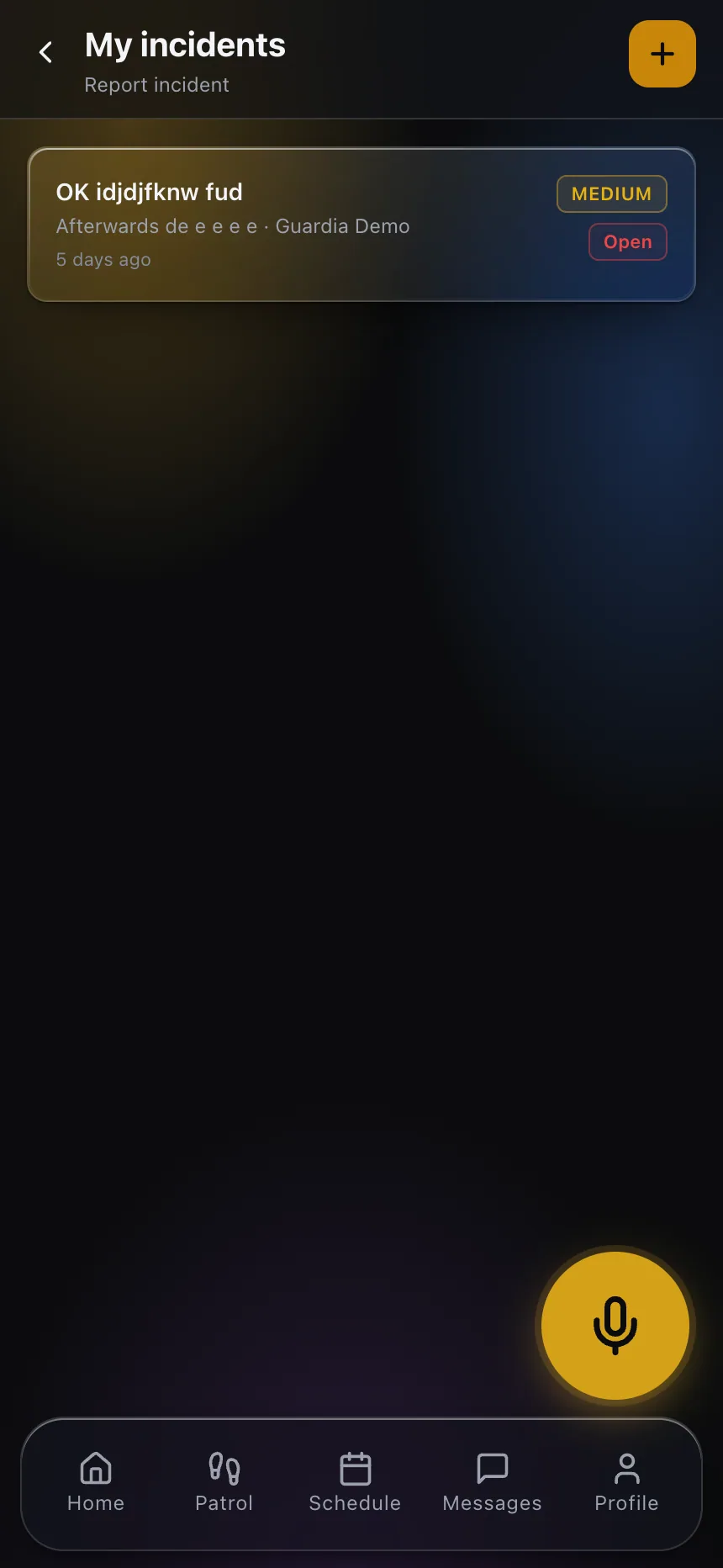
Finding tool marks on a rooftop hatch is only useful if it turns into something the office can act on before the next visit. A vague note buried in a shift log gets read days later, if at all. Filing it as an actual incident report with photos — the marked hasp, the moved panel, the staged materials — gives the account manager something concrete to bring to the property manager and gives the next officer on that post something specific to watch for, instead of a general “be careful up there.”
The checkpoint that’s rarely watched deserves the most specific instructions
Every other stop on a patrol route gets some passive oversight — foot traffic, cameras, other staff who’d notice if something looked wrong. Rooftops and mechanical rooms mostly don’t have that. The checklist is the only thing standing between “the door was locked” and an actual inspection, which means it needs to be more specific here than almost anywhere else on the property, not less.
If you want to see how checkpoint-level detail works for patrol routes like this, explore CGuardPro or get in touch.