You’re paying for guards to walk your property through the night, checking the vulnerable doors, the loading dock, the back stairwell. But how do you actually know they did? For most buyers, the “proof” is a paper log with a scrawled signature and a time that may or may not be real. It’s the easiest thing in security to fake — sit in a warm chair at the end of the shift and fill in the whole sheet at once. If you want to prove security guards actually patrol, the signed log is exactly what you need to stop trusting.
The good news is that verifying patrols is now straightforward. Modern providers use time-stamped, location-verified checkpoints that a guard can only register by physically being there. The result: instead of hoping the rounds happened, you can confirm they did — checkpoint by checkpoint, minute by minute.
Why the paper log fails you
The traditional patrol log has a fatal flaw: it records what someone claims happened, not what actually happened. A guard can:
- Fill in every checkpoint at once, from one spot, at any time.
- Copy last night’s times with minor tweaks.
- Sign for rounds that were shortened or skipped entirely.
None of this requires a dishonest guard, either. A tired one, a distracted one, or one who’s genuinely stretched too thin across too big a site will cut corners — and the paper log will faithfully hide it. You find out only when something goes wrong in the very spot that wasn’t being checked.
The log also gives you no live signal. Even if it’s honest, you don’t see it until days later, long after a missed round could have been corrected. You’re auditing history, not managing a service.
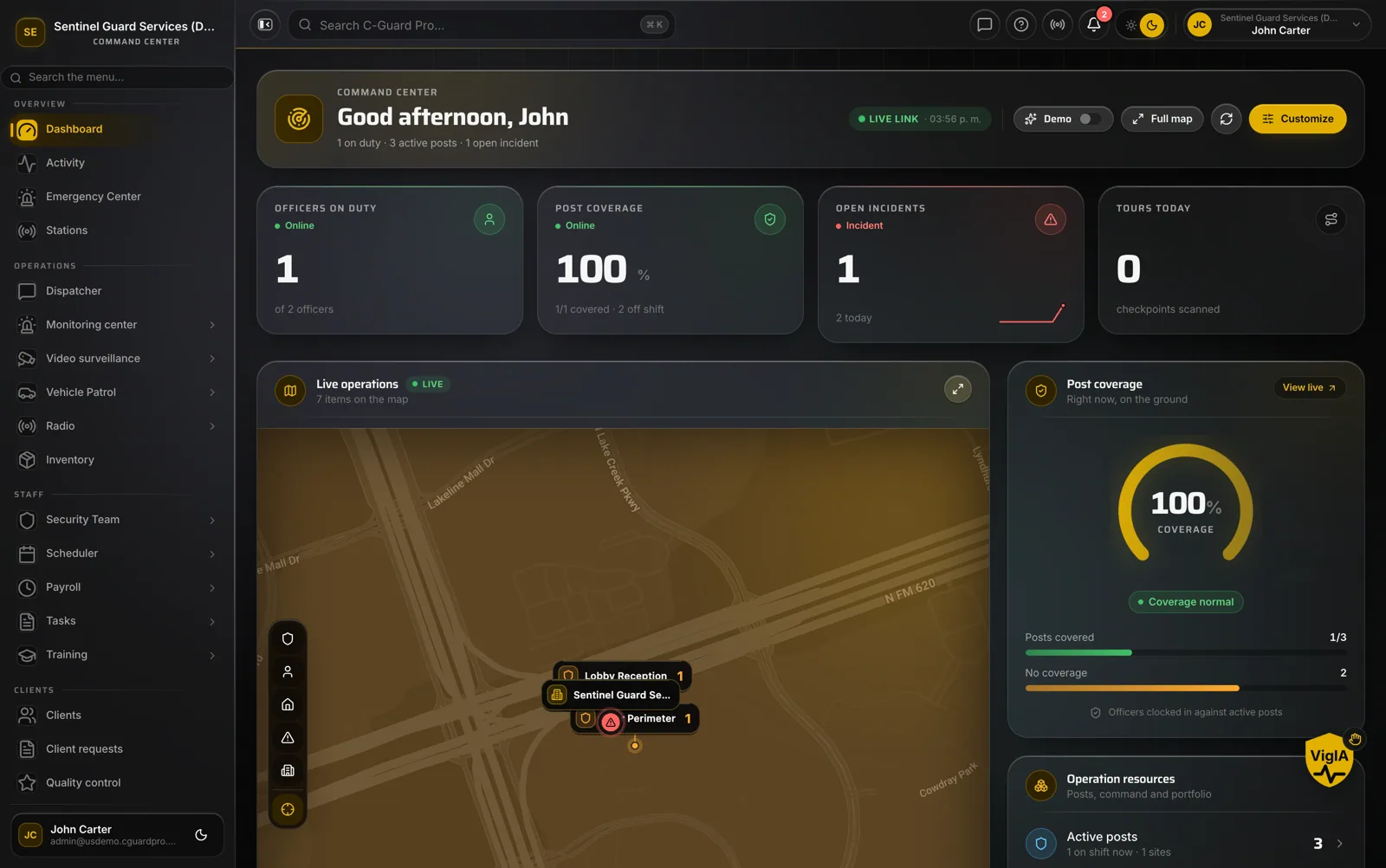 Instead of a signature you can’t verify, a live view shows which checkpoints were reached and when — a skipped round becomes a visible gap.
How QR and GPS prove security guards actually patrol
Modern patrol verification works on a simple principle: make the proof depend on the guard’s physical presence, not their handwriting.
QR checkpoints. You place coded tags at the points that matter — the side gate, the roof access, the server room door. To register the checkpoint, the guard scans the tag with their phone, which records the exact time. They can’t scan a tag they aren’t standing next to. A QR guard tour turns each point into a fact: reached at 1:47 a.m., not “reached sometime, allegedly.”
GPS verification. Alongside the scans, GPS guard tracking confirms the guard’s location and can show the trail of the patrol — the actual path walked, not an assumed loop. If a round was supposed to cover the perimeter and the trail shows the guard never left the lobby, you’ll see it.
Together, scans and location produce something a paper log never could: a record that’s costly to fake and easy for you to check. The vulnerable door the surveyor flagged isn’t just on a plan; it’s a checkpoint you can confirm was physically visited on schedule.
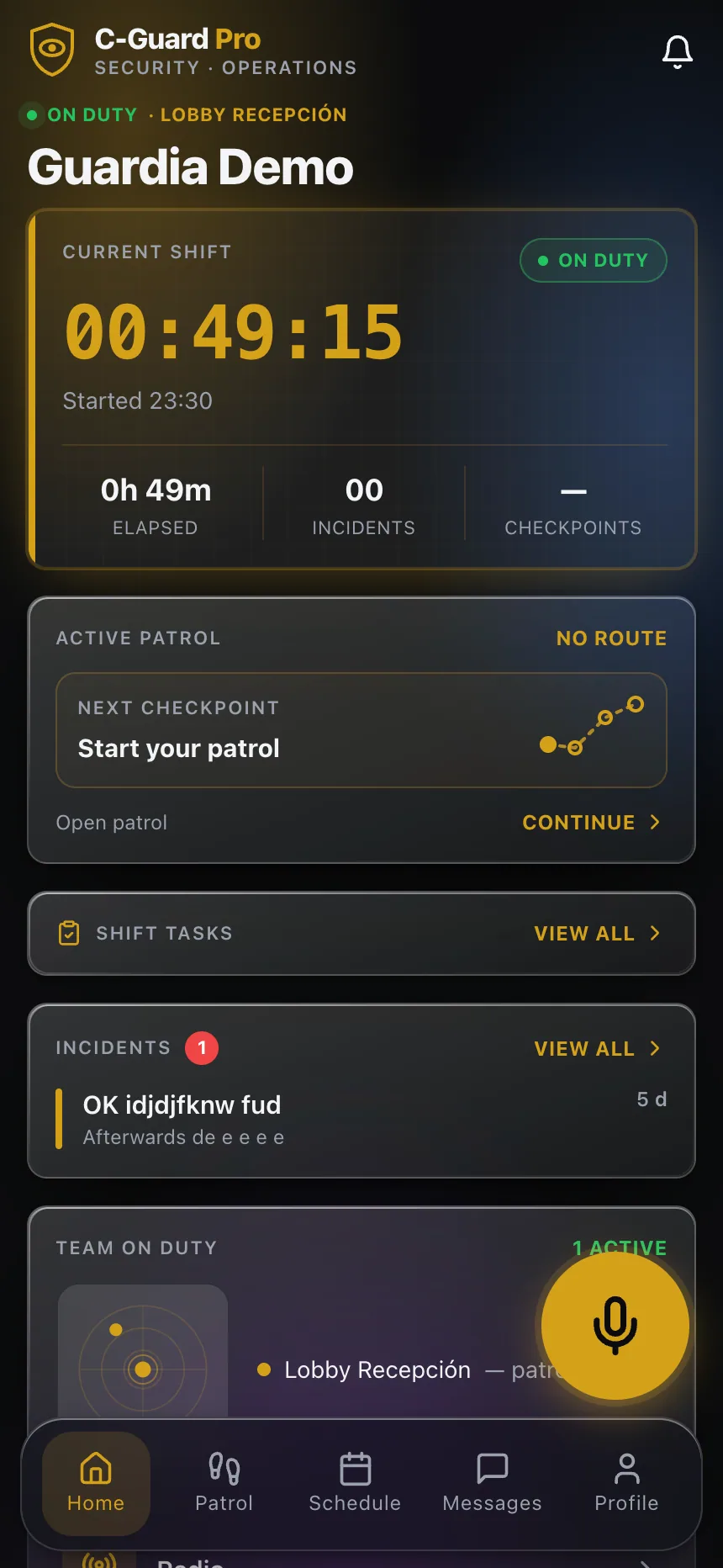 Guards scan checkpoints and log rounds from a phone; each scan is time-stamped and flows straight to the client’s view.
What to ask your provider
Whether you’re hiring or holding a current provider accountable, put these questions to them:
- “How do you prove a patrol happened?” If the answer is “the guard signs the log,” you’re on the old model.
- “Can I see completed patrols myself, live?” You want a portal, not a monthly report.
- “What happens when a round is missed?” A good system flags a skipped or late patrol so it can be caught and corrected, not buried.
- “Can you show me checkpoint-level detail for a real night?” Vagueness here is a warning.
A provider confident in their patrols will happily show you the proof. One who deflects is telling you what their nights actually look like.
Verification protects the guard too
It’s worth saying that time-stamped proof isn’t only about catching corner-cutting. It also protects honest guards and your relationship with the provider. When a client claims “nobody patrolled last night,” the record settles it. When an incident happens despite proper patrols, the evidence shows the service was delivered as promised. Good data cuts both ways, and that fairness is part of why serious providers embrace it.
One honest caveat: no system is perfect. A phone can lose signal in a basement, a tag can get damaged, GPS can drift indoors. A good provider handles these edge cases sensibly rather than pretending they don’t exist — and the occasional gap from a real technical hiccup looks very different from a nightly pattern of missing rounds.
Stop trusting the log, start verifying the round
If you want to prove security guards actually patrol your property, the answer isn’t a better signature — it’s better proof. Time-stamped QR checkpoints and GPS verification replace the fakeable paper log with a record you can check yourself, the morning after, while it still matters.
To see what verified patrols look like from the buyer’s side, explore the client portal a modern provider should be able to show you today.