Every missed pass-down you’ve ever had to explain to a property manager happened in the same five minutes: the outgoing officer is already thinking about the drive home, the incoming officer hasn’t looked at the log yet, and the “hard” changeover — off at 6:00, on at 6:00 — gives them exactly zero minutes to actually talk. Good overlap shift scheduling security guards can actually rely on starts with a deliberate buffer built into the roster instead of a changeover treated as an instant, and the case for it is simple: the buffer costs less than the incident it prevents.
Why the hard changeover fails
A schedule with a hard changeover looks efficient on paper — no wasted labor hours, clean 8s or 12s back to back, easy to build in whatever rotation you’re running, Panama, DuPont, 4-on 4-off. What it doesn’t show is that every risk in a 24-hour post gets funneled into a single instant. The outgoing officer has to compress an entire shift’s worth of context — who came through on a temporary badge, what the property manager asked about, which door has been sticking — into however many seconds it takes to walk out. The incoming officer inherits a post they haven’t seen yet during daylight, or during whatever just happened on the prior shift.
Most of what goes wrong on a client site doesn’t get caught in the pass-down. It gets caught later, when the incoming officer discovers the thing nobody mentioned — and by then it’s an incident report instead of a conversation.
There’s also a version of this that has nothing to do with laziness. Even a conscientious outgoing officer, five minutes from the end of a twelve-hour shift, is not thinking with the same sharpness they had at hour two. Fatigue at the end of a long shift is normal and expected, not a character flaw, and a hard changeover schedules the single most detail-dependent conversation of the day for the exact moment both officers are least equipped to have it well — the outgoing officer is running on fumes, and the incoming officer hasn’t had time to get oriented yet either.
What overlap shift scheduling security guards actually need
Fifteen to thirty minutes of overlap turns the changeover from a handoff into a walk. The outgoing officer can walk the post with the incoming officer, point at the door that’s been sticking, mention the vendor truck that’s supposed to be there until four, confirm the visitor log is current — the kind of detail that never makes it into a written pass-down because nobody thinks to write down what they’d say if someone were standing next to them. That walk-and-talk is worth more than the written log for exactly the situational detail that causes trouble later.
It also buys a few minutes of double coverage on the post itself, which matters more than it sounds on any site where the changeover is a known, learnable window — a loading dock, a lobby, anywhere a predictable gap in effective coverage is worth someone exploiting.
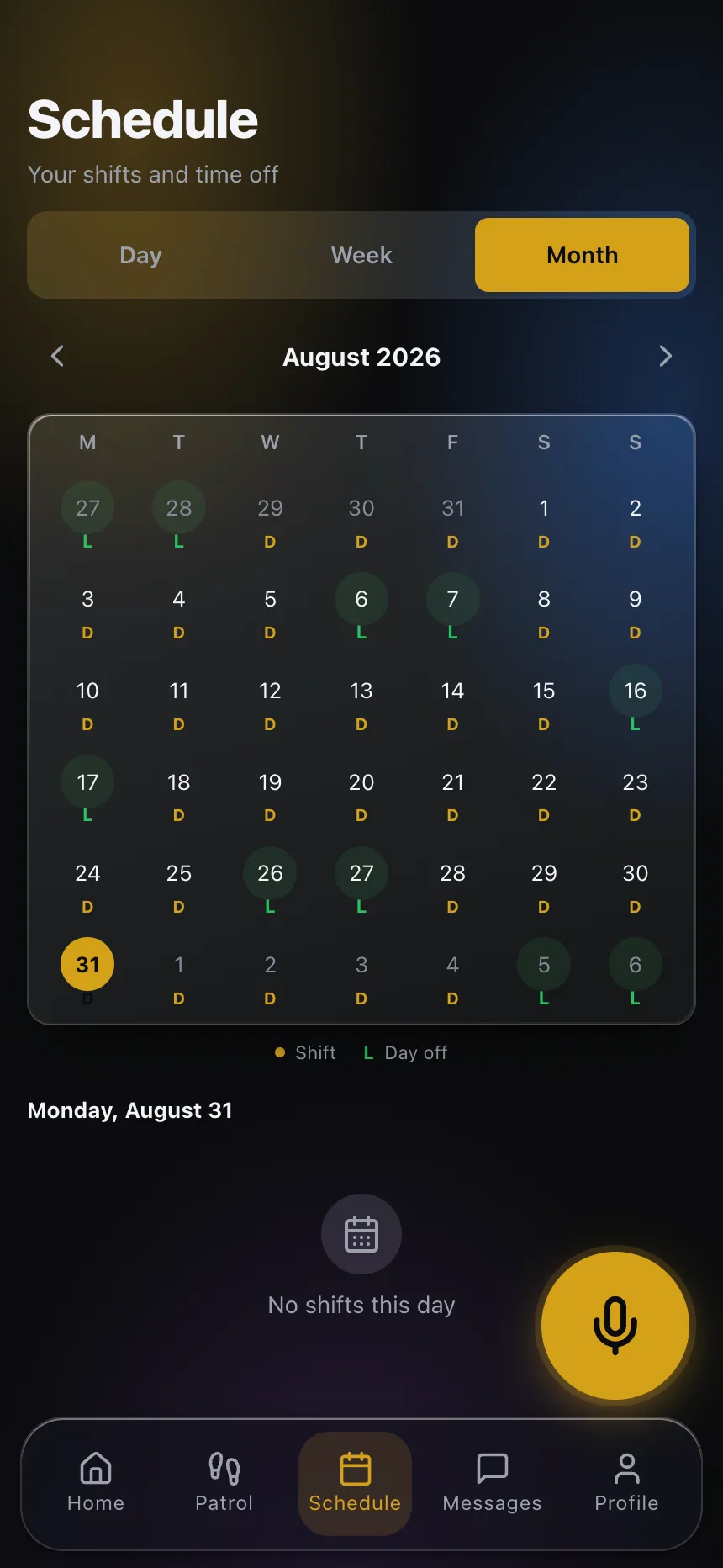
The cost is real, and it’s still worth it
Nobody’s pretending overlap is free. Fifteen minutes twice a day across every post on a contract adds up, and it belongs in an honest bill rate conversation — absorbed as a cost of doing the job right, or built into the rate at the next renewal. The comparison that matters isn’t overlap versus no overlap in the abstract; it’s overlap versus the cost of the incident a bad pass-down eventually produces: a missed vendor, a badge that should have been deactivated, a maintenance issue that turns into a liability claim because nobody flagged it for three shifts running.
Build the overlap into the roster, not into officers’ goodwill. If you’re depending on the outgoing officer to stick around informally because they’re conscientious, you’ll get it on the shifts where that officer is scheduled and nowhere else. Put it in the scheduling itself so it’s identical on every post, every day, regardless of who’s working it — and so payroll and billing agree on what the overlap window actually is, instead of arguing about it afterward.
Making the pass-down itself do its job
Overlap time is wasted if the pass-down during it is still verbal and unrecorded. Pair the walk-and-talk with a checklist the incoming officer actually completes — confirmed the post, reviewed open tasks, acknowledged anything flagged from the prior shift — so there’s a timestamped record that the handoff happened and what was said, not just a claim that it did after something goes wrong.
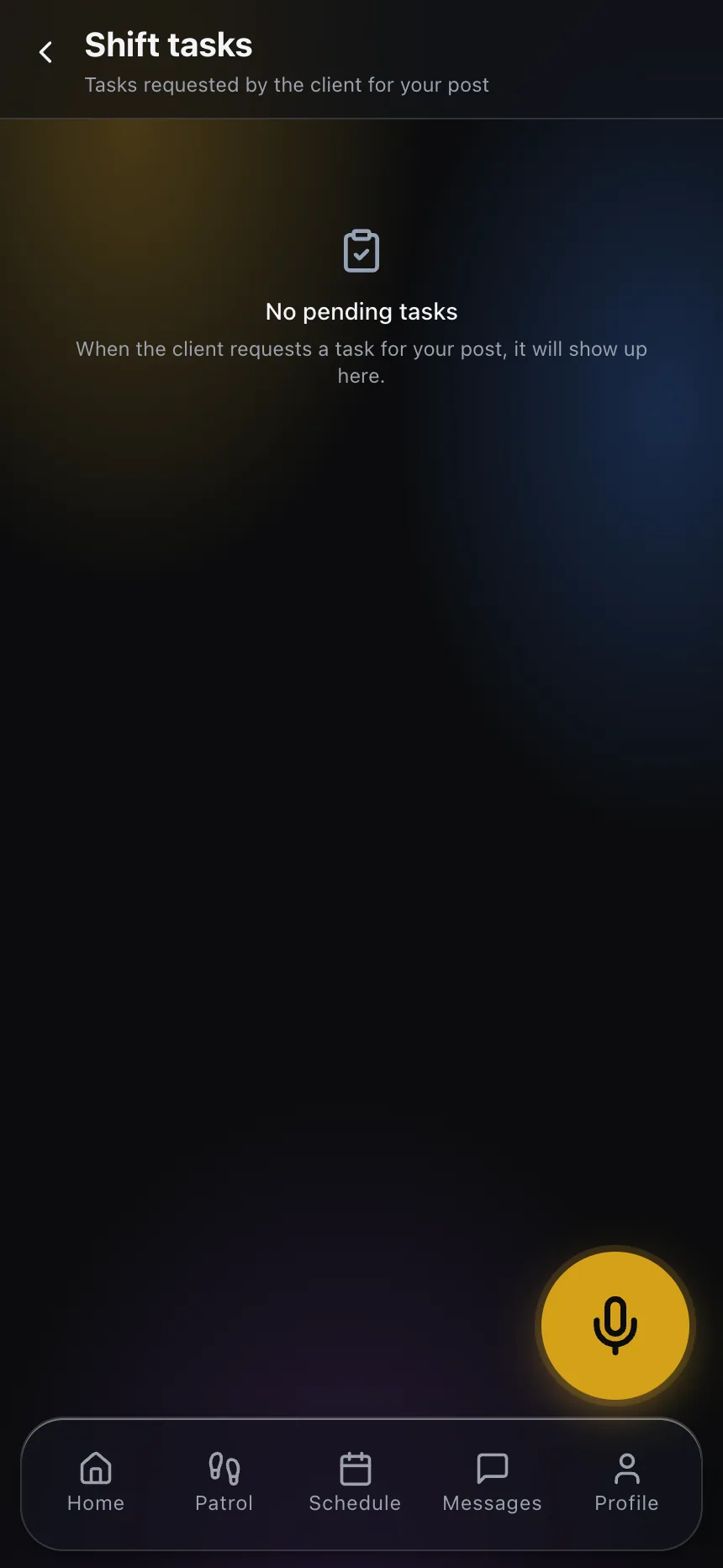
Where to actually build the buffer
Not every post needs it. A single-officer post with low turnover and a straightforward routine can run a hard changeover without much risk. The posts that need overlap are the ones where the changeover window is predictable and exploitable, where the pass-down carries real information — active incidents, vendor access, ongoing maintenance issues — or where the client has already been burned by something falling through the crack at shift change. Start there, measure whether it changes what shows up in incident reports over a few months, and expand it to the rest of the contract if it does.
How this plays with common rotations
Overlap isn’t a separate scheduling system bolted onto whatever rotation you already run — it’s a small adjustment inside it. A site running straight 12-hour shifts can build a short overlap into each changeover without touching the underlying pattern. A Panama or DuPont rotation, where the changeover time itself shifts across the cycle, needs the overlap built into the template so it travels with the rotation instead of getting quietly dropped whenever the schedule resets. Wherever the rotation lands the changeover, the overlap should be a fixed, visible block on the schedule, not something a supervisor is expected to remember to add manually week to week.
What supervisors should actually check
An overlap window is only doing its job if someone occasionally verifies it’s being used for the pass-down and not just clocked as paid time with no real handoff happening. A field supervisor spot-checking a changeover in person once in a while — or reviewing whether the handoff checklist is actually being completed with real detail rather than the same generic note every day — is what keeps the overlap from quietly becoming just fifteen extra minutes of overtime with nothing to show for it.
If you want to see how overlap windows and handoff checklists show up on the same schedule, explore CGuardPro or get in touch.