The most expensive security decisions rarely feel expensive at the time. They feel like reasonable shortcuts — take the lower bid, skip the fine print, assume the guards are doing their job. Then the shortcut catches up with you: an uncovered post, an incident no one documented, a provider you can’t hold accountable. The costly mistakes buyers make hiring private security are almost always the ones that seemed like sensible savings up front. Here’s how to spot each before it costs you.
Mistake 1: Buying the cheapest bid
The lowest number wins a lot of security contracts, and it’s the mistake that quietly causes the others. A rock-bottom hourly rate has to come from somewhere — usually officer wages, supervision, and training. Underpay officers and you get high turnover, a rotating cast of strangers on your site, and people too checked-out to notice what matters.
How to avoid it: ask every bidder to break the rate into wages, supervision, and overhead. Compare what’s inside the number, not just the number. The right bid is the one that funds decent officers and real oversight, not the smallest one.
Mistake 2: Skipping the SLA
Buyers often sign contracts that specify hours and price but say nothing about what happens when service falls short. Without defined service levels, “reliable coverage” is whatever the provider decides it is, and you have no leverage when a post goes uncovered or reports stop arriving.
How to avoid it: put measurable service levels in writing — coverage thresholds, response times, reporting cadence — with consequences for misses. Make them enforceable by requiring the data to prove them, drawn from a client portal both sides can see.
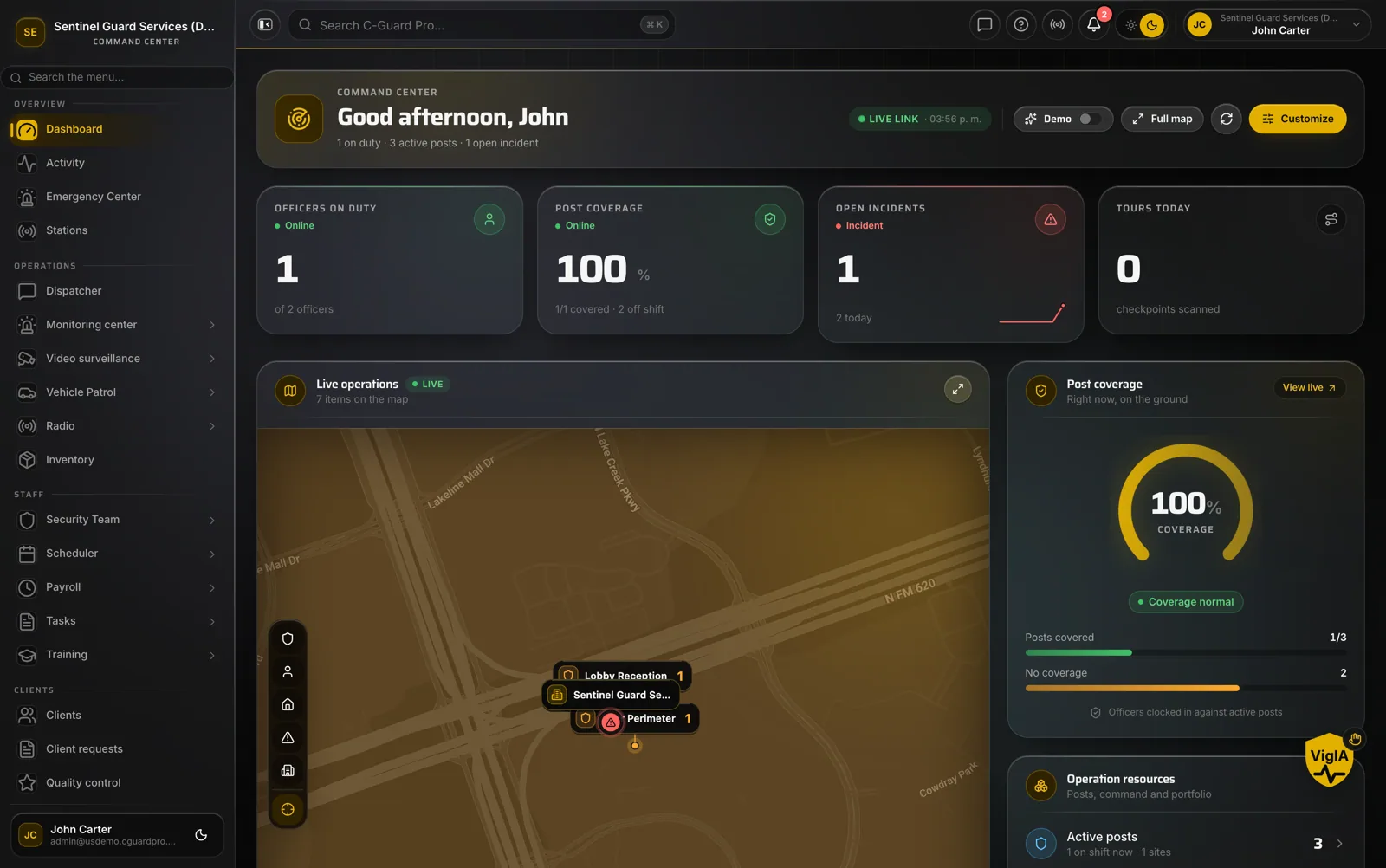 Skipping the SLA means you can’t measure this. Defined service levels turn “reliable” into numbers you can hold a provider to.
Mistake 3: Buying blind — no visibility
This is the mistake that hides all the others. If you can’t see what your officers do each shift, you won’t know a post was skipped, a patrol was missed, or an incident went unlogged until it costs you. Plenty of buyers pay for guards for years and simply trust that the work is happening.
How to avoid it: make live visibility a hard requirement. Demand a client portal that shows current status, and insist patrols are proven with a QR/GPS guard tour system rather than a paper log. If you can’t audit the work, you’re not really buying it.
Mistake 4: Ignoring how patrols and coverage are verified
“We patrol every hour” and “we’ve got you covered 24/7” are easy to say and easy to fake on paper. Buyers who don’t ask how those claims are proven end up paying for coverage that may or may not have happened.
How to avoid it: require verifiable check-ins via guard time and attendance so clock-ins are tied to the post, and checkpoint scans that stamp patrols with time and location. Ask what happens when a scheduled officer doesn’t show — a real answer means a real backfill process, not a shrug.
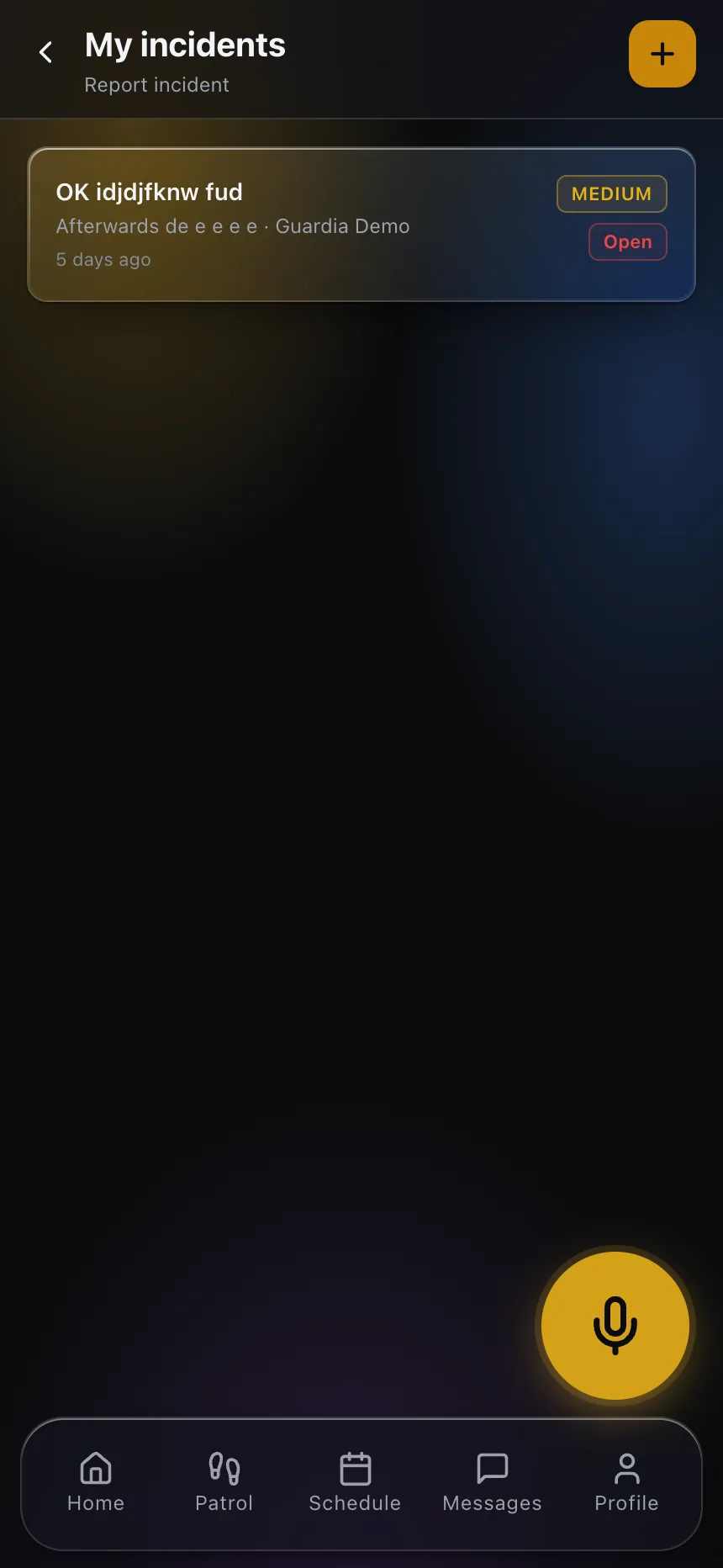 Incidents logged in the field, with timestamps, are the difference between knowing what happened and guessing.
Mistake 5: Treating incident reporting as an afterthought
When an incident surfaces weeks later — a claim, a dispute, a question from leadership — the buyers who suffer are the ones with no contemporaneous record. Reporting written from memory hours after the fact, or a monthly summary that glosses over specifics, leaves you defending your site with nothing solid.
How to avoid it: require incidents captured in the security guard app the moment they happen, and same-day reporting you can actually read. A timestamped record protects your officers, your organization, and your position if a claim ever lands.
Mistake 6: Under- or over-buying the arming and staffing mix
Some buyers over-arm a low-risk lobby out of caution; others under-staff a genuinely risky site to save money. Both are decisions made on gut feel instead of the site’s real threat profile.
How to avoid it: start from your actual incident history and threat picture, not fear. Match the arming and staffing to the risk you truly face, and remember that a well-supervised officer you can verify is often worth more than a more expensive arrangement you can’t see. Note that arming and licensing rules vary by state and change over time — confirm specifics with your regulator and a qualified advisor; none of this is legal advice.
Protect the budget by demanding proof
Nearly every costly mistake buyers make hiring private security comes down to accepting a promise where you should have demanded proof. The cheapest bid promises quality it can’t fund. The missing SLA promises reliability it can’t measure. Paper patrols promise coverage they can’t verify. The fix is the same each time: shift from what the provider says to what they can show.
Buyers who require visibility, measurable service levels, and real-time documentation don’t just avoid these mistakes — they spend the same budget and get a service they can actually trust.
See what verifiable, accountable security looks like from the buyer’s side in the client portal, and make proof your standard before you sign.