Here’s an uncomfortable truth about contract security: on a paper sign-in sheet, a no-show and a full shift look exactly the same at billing time. If a guard doesn’t turn up and nobody catches it, you can end up paying for coverage you never received, and never know. Learning how to verify security guard attendance is how you close that gap, so you pay for the hours that actually happened and no post sits quietly empty overnight.
This isn’t about distrusting your provider on principle. It’s about making the coverage you buy visible, because coverage you can’t see is coverage you can’t count on, and it’s the easiest thing in the world to over-bill by accident or otherwise.
Why “trust me” isn’t good enough
Attendance is the foundation everything else rests on. Patrols, incident response, deterrence, none of it matters if the guard isn’t physically present. Yet it’s the metric most likely to be tracked loosely, because the traditional tools make honesty optional.
A paper sheet signed at the start of a shift proves almost nothing. It can be filled in from a break room, backdated, or completed for a guard who left early. A phone call to a supervisor is only as reliable as the supervisor. None of this necessarily means bad faith; it means the system leaves too much room, and room is where coverage gaps hide.
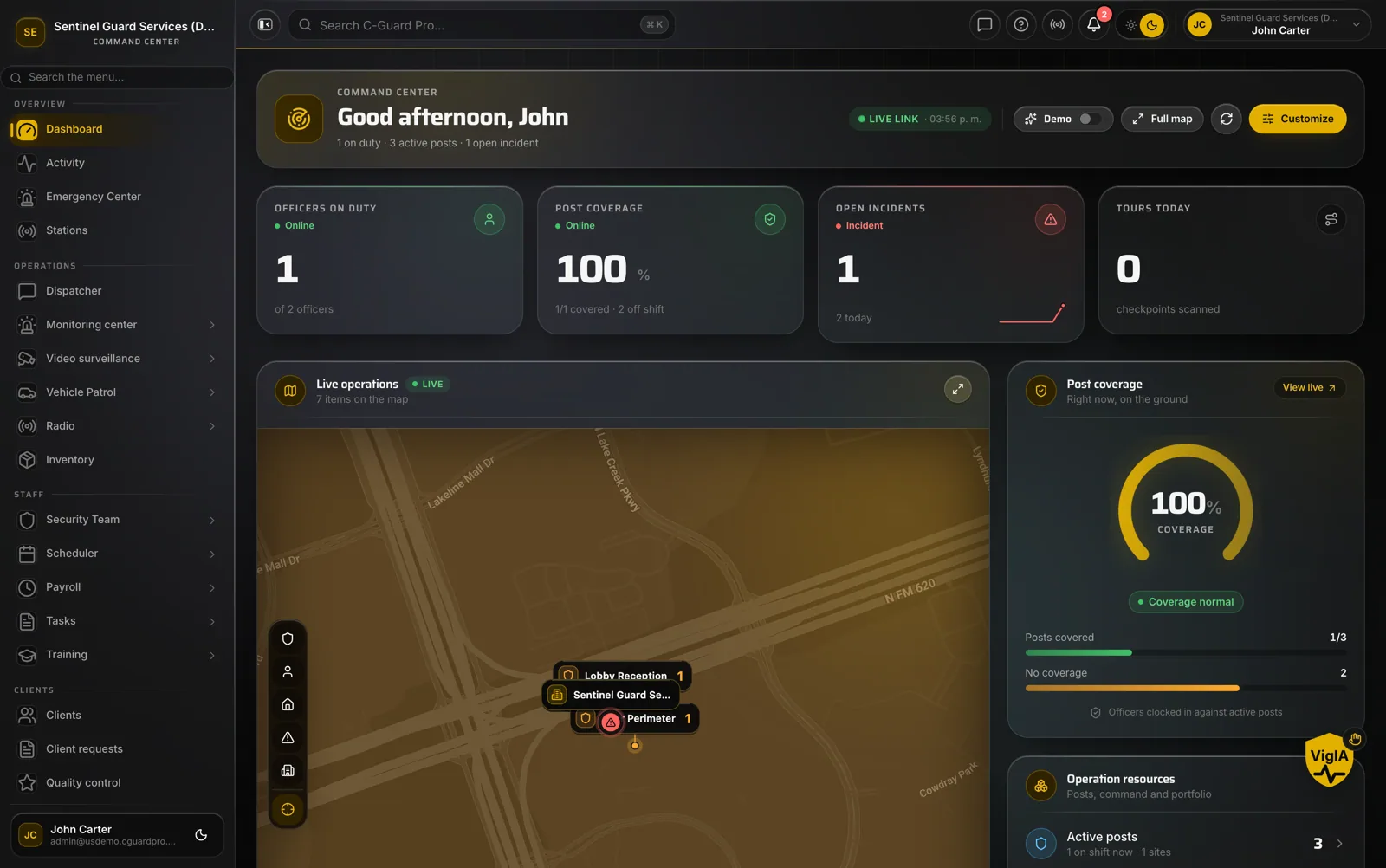 Live coverage means you can see which posts are staffed right now, not reconstruct it from a sheet later.
What real attendance verification looks like
The modern answer is guard time and attendance built on location, not signatures. Instead of trusting where a guard says they are, the system confirms where they actually are before it counts them as present.
Geofenced clock-in
A geofence is a virtual boundary drawn around your property. With geofenced clock-in, a guard can only clock in when they’re physically inside that boundary, from the app on their phone. Clock in from home, from the parking lot down the street, or from anywhere off site, and it won’t register as being on post. That single mechanism turns “I was there” from a claim into a checkable fact.
Live scheduling you can see
Attendance is only half the picture; the other half is whether the right guard filled the right post. A live guard schedule shows you shifts scheduled versus filled, and whether the assigned guard covered them or a last-minute fill-in stepped in. That distinction matters more than it sounds: a guard who knows your property spots the car that doesn’t belong far faster than a stranger sent to plug a hole.
GPS presence through the shift
Clocking in once at the start doesn’t prove someone stayed. GPS tracking across the shift confirms the guard remained on site and moved through the property rather than clocking in and disappearing. Combined with patrol checkpoints, it turns a whole shift’s presence into a record instead of an assumption.
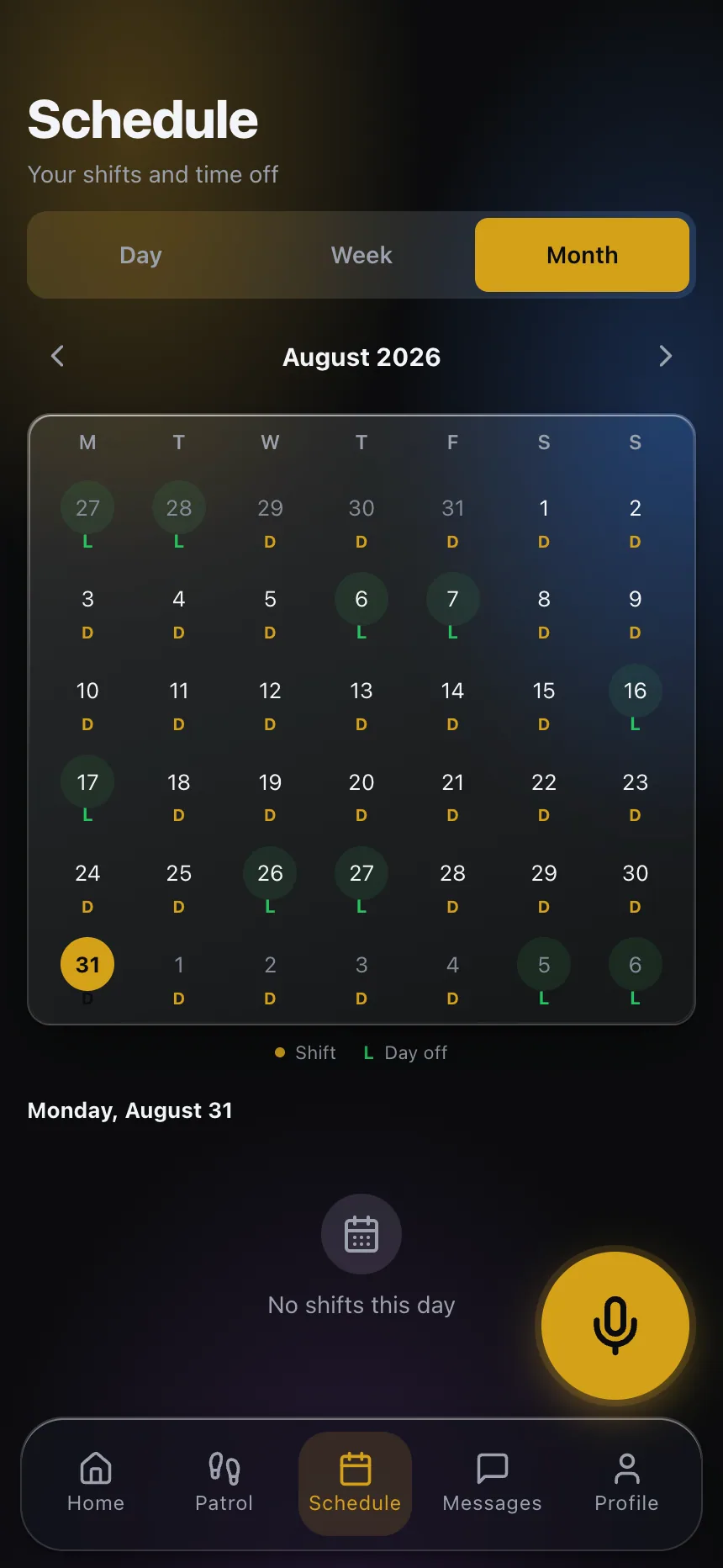 See at a glance whether posts were filled by the assigned guard or a rotating cast of fill-ins.
The billing angle you can’t ignore
Here’s where verification pays for itself directly. When attendance is verifiable, your invoice can be checked against the record: hours billed should match hours actually worked, on site, by the guards assigned. If a shift shows as a no-show that never got covered, it shouldn’t appear on your bill as delivered coverage.
Make this an explicit expectation with your provider. Ask that billing reconcile against the attendance record, and that you have access to that record yourself. A provider running verifiable attendance will welcome this, because it protects them too, against disputes and against their own guards cutting corners. A provider who resists is worth a second look.
Read the trend, not just the day
Once you can see attendance, watch it over time rather than reacting to a single incident. Everyone has a guard call in sick occasionally. What you’re looking for is a pattern: chronic late arrivals, frequent no-shows, or a constant churn of unfamiliar faces on your account. High turnover usually reflects how the provider treats its own people, and it directly erodes the coverage quality you’re paying for, even when the raw hours technically get filled.
Bring what you see to your monthly review. “Three shifts last month started 20 minutes late and two posts went uncovered” is a conversation the data settles instantly, with no arguing about whose memory is right.
A note on records: attendance and location data are personal information, and how it’s collected, kept, and shared can carry obligations that vary by jurisdiction. Agree with your provider on the specifics and confirm them with your own advisor. This isn’t legal advice.
Knowing how to verify security guard attendance comes down to one shift in mindset: stop accepting a signature as proof and start expecting location-based, checkable evidence. Do that and the coverage you pay for becomes coverage you can actually count on, shift after shift.
Want to see attendance and coverage in one live view? Explore the client portal and make verifiable attendance a standard you hold your provider to.