Switching guard companies feels risky because the sales pitch and the actual service rarely match. A slick proposal, a confident account manager, glowing references — and then, three weeks in, patrols get skipped, reports arrive late, and nobody can tell you what actually happened on your property overnight. The fix is to stop buying on promises. A structured security provider trial period lets you judge a new company on evidence, not on how good their PowerPoint looks.
Think of the trial as a paid audition with clear rules. You define what “working” means before day one, you demand the visibility to verify it in real time, and you keep a clean way out if the numbers don’t hold up. Done right, a trial costs you a little friction now and saves you from a bad twelve-month contract later.
Set the trial length and the exit clause first
Before anyone puts a guard on your site, agree on two things in writing: how long the trial runs and how you end it.
- A defined window. Long enough to see real behaviour across weekends, holidays and a shift change or two, but short enough that you’re not locked in. A short evaluation period at the start of the agreement is common; the exact terms and any notice requirements vary by contract and jurisdiction, so put them in the document and have your own advisor review them.
- A clean exit. You want the right to end the arrangement inside the trial with short notice if the agreed metrics aren’t met, without penalties designed to trap you. If a provider resists a fair exit clause, that itself tells you something.
None of this is legal advice — contract law and licensing differ by state and country. The point is simply that a serious provider will happily commit to being measured, because they expect to pass.
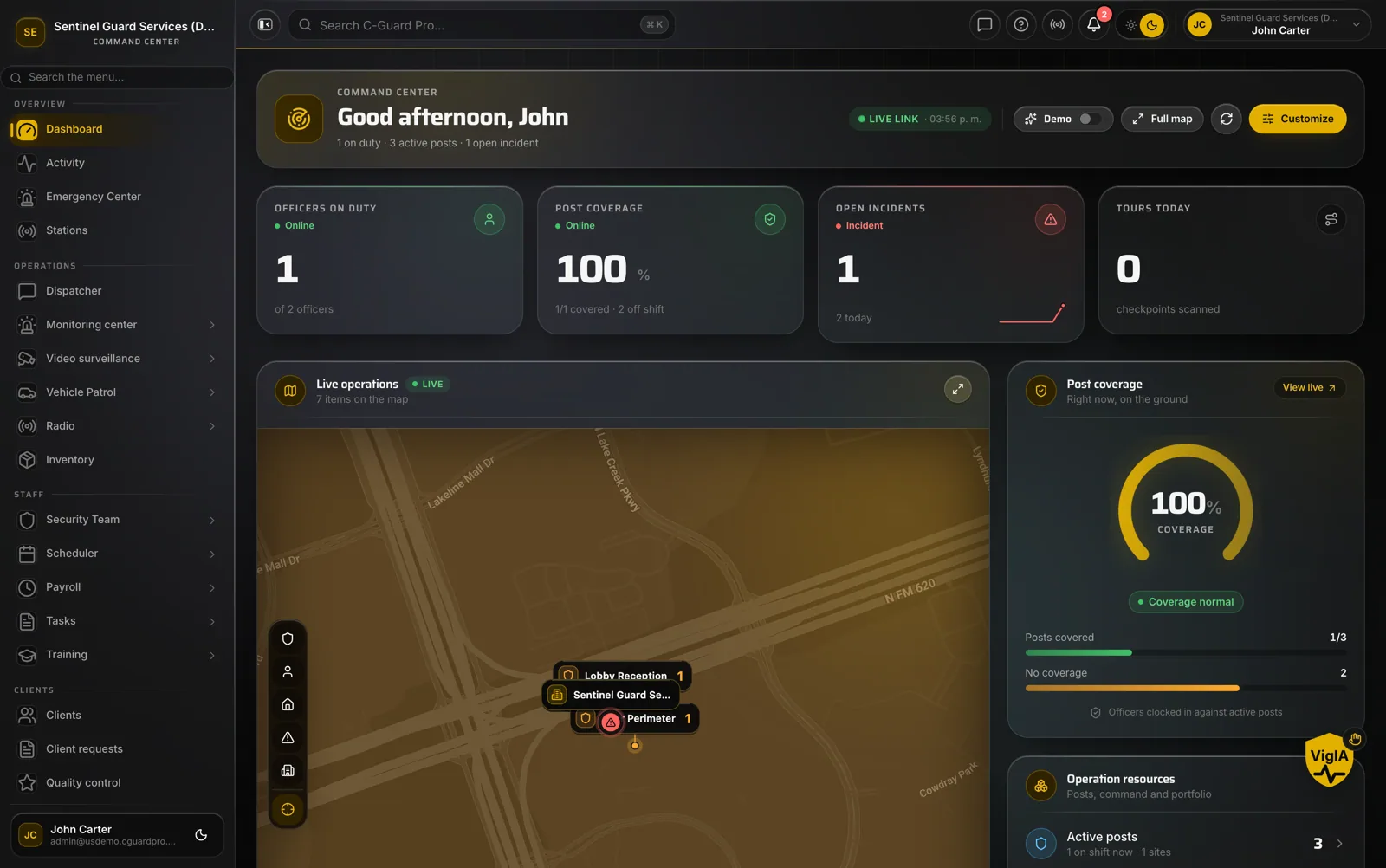 A live dashboard turns a trial into evidence: you see coverage, patrols and incidents as they happen instead of waiting for a recap.
Decide what “good” looks like — in numbers you can check
Vague standards (“professional service”, “reliable coverage”) can’t be measured, so they can’t fail. Replace them with a short list of things you can actually verify during the trial:
- Post coverage. Was the position staffed, on time, for every scheduled hour? Late arrivals and unfilled shifts are the most common early warning sign.
- Patrol completion. Were the rounds you agreed on actually walked, at roughly the intervals promised? You want proof each checkpoint was reached, not a signature on a clipboard.
- Incident handling. When something happened, how fast was it logged, and was the report clear enough to act on?
- Responsiveness. How quickly did the account manager answer a question or fix a problem you raised?
Keep it to a handful of metrics. A trial with twenty KPIs becomes a paperwork exercise nobody honours. Four or five that map to your real risks are enough to separate a good provider from a hopeful one.
Demand live visibility from day one
Here is the part most buyers skip and later regret: insist on seeing the service as it runs, not in a monthly summary that arrives after the trial is over. A modern provider gives you a client portal where you can open a screen and see who is on site, which patrols were completed, and what incidents were reported — today, not last month.
That visibility changes the whole dynamic. Instead of taking the provider’s word during a trial and discovering problems too late, you catch a skipped round the morning after and raise it while it still matters. When the evaluation ends, you’re not deciding based on a story; you’re deciding based on a log you watched fill up in real time.
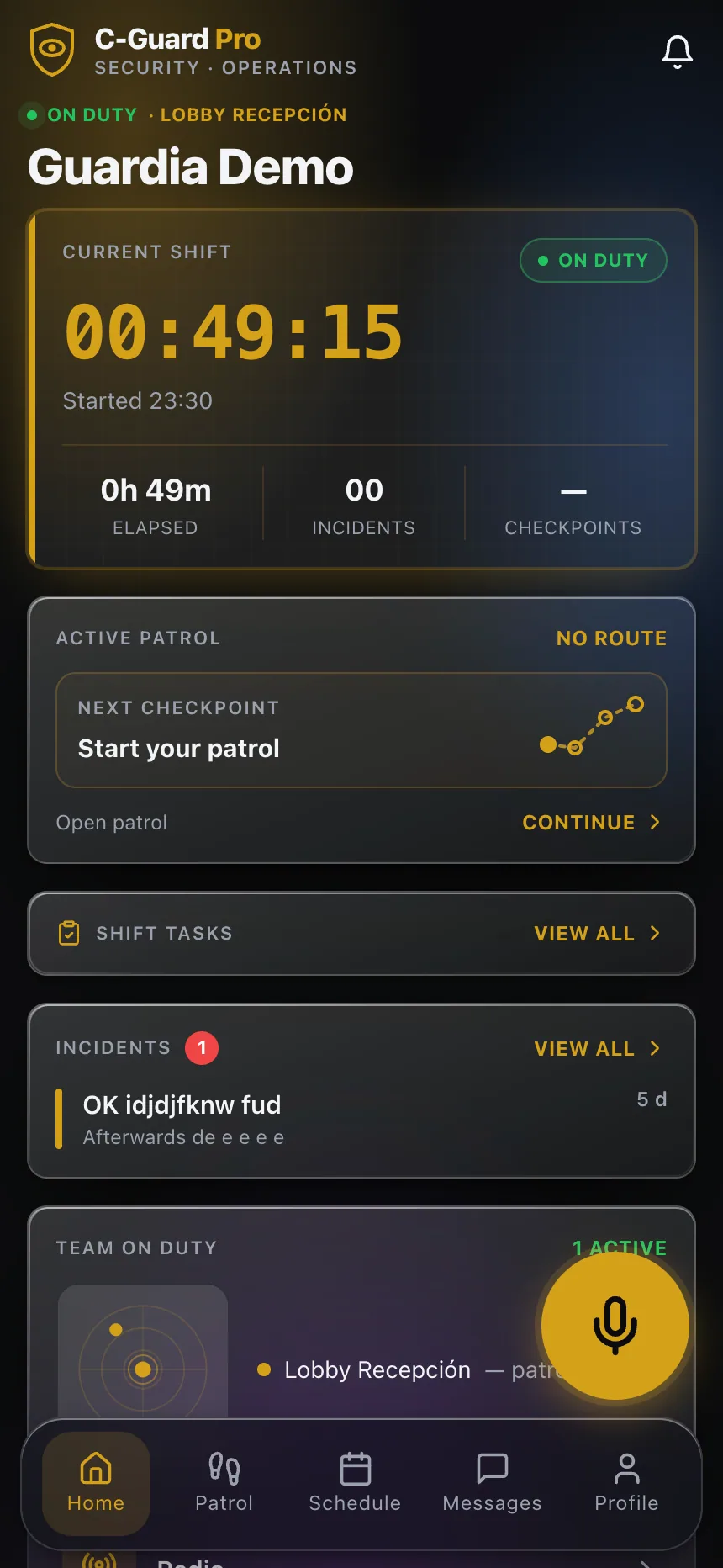 Guards check in and log activity from a phone; every action lands in your portal, so the trial data is captured automatically rather than reconstructed later.
Verify patrols and reports, don’t trust them
During the trial, spot-check the two things guards are most tempted to fake when nobody’s watching: patrols and paperwork.
Ask the provider to show you time-stamped patrol proof — checkpoints scanned by QR or confirmed by GPS location, with the time each one was reached. A paper log can be filled in at the end of a shift from a comfortable chair; a QR guard tour can’t, because it requires the guard to physically be at the point to scan it. If the round didn’t happen, the gap shows.
Do the same with reports. Read a few daily activity logs and incident reports from the first week. Are they specific — real times, real locations, real detail — or copy-paste boilerplate that could describe any night at any site? Padded, generic reports during a trial, when the provider is trying hardest to impress you, are a bad sign about what routine months will look like.
Run a short debrief before you sign
At the end of the window, sit down with the metrics you agreed on and go through them one by one. Did coverage hold? Did patrols get completed? Were incidents handled and reported well? Was the account manager responsive when you flagged something?
A trial only protects you if you actually use its results. If the provider hit the marks and you had clear visibility the whole way, sign with confidence. If they fell short, you have specific, documented reasons — not a gut feeling — and a clean exit you negotiated up front.
The trial that pays for itself
A security provider trial period isn’t about being difficult. It’s about replacing a leap of faith with a short, measurable test that any capable company should welcome. Set the window and the exit, agree on a few metrics that match your real risks, and insist on live visibility so you can verify patrols and reports as they happen.
If you’re evaluating a new provider now, the fastest way to see whether they meet a modern standard is to ask them to show you a live client portal on day one. If they can’t, you already have your answer.