Security is one of the few line items where success looks like nothing happening. No break-in, no injury, no incident that made the news. That’s exactly why it’s the first budget leadership questions when times get tight, and why so many facility and property managers struggle to defend it. Figuring out how to measure security guard service ROI turns a vague “we feel safer” into a case you can actually put in front of finance, with numbers you’re able to pull yourself.
The trick is that security ROI isn’t only about the incidents that occurred. It’s largely about the ones that didn’t, plus how well the service handled the ones that did. That sounds impossible to measure until you break it into the pieces you can track.
Reframe the question leadership is really asking
When someone asks whether the security spend is worth it, they’re asking three things at once: Are we getting the coverage we pay for? Is it actually reducing risk? And what did it prevent or contain? Answer those with data instead of reassurance and the conversation changes.
You can’t do that with a monthly invoice and a gut feeling. You need the operational record, which is why a provider that gives you a client portal makes this whole exercise possible. If you can see coverage, patrols, incidents, and response times live, you can build the ROI story yourself rather than asking the provider to grade their own homework.
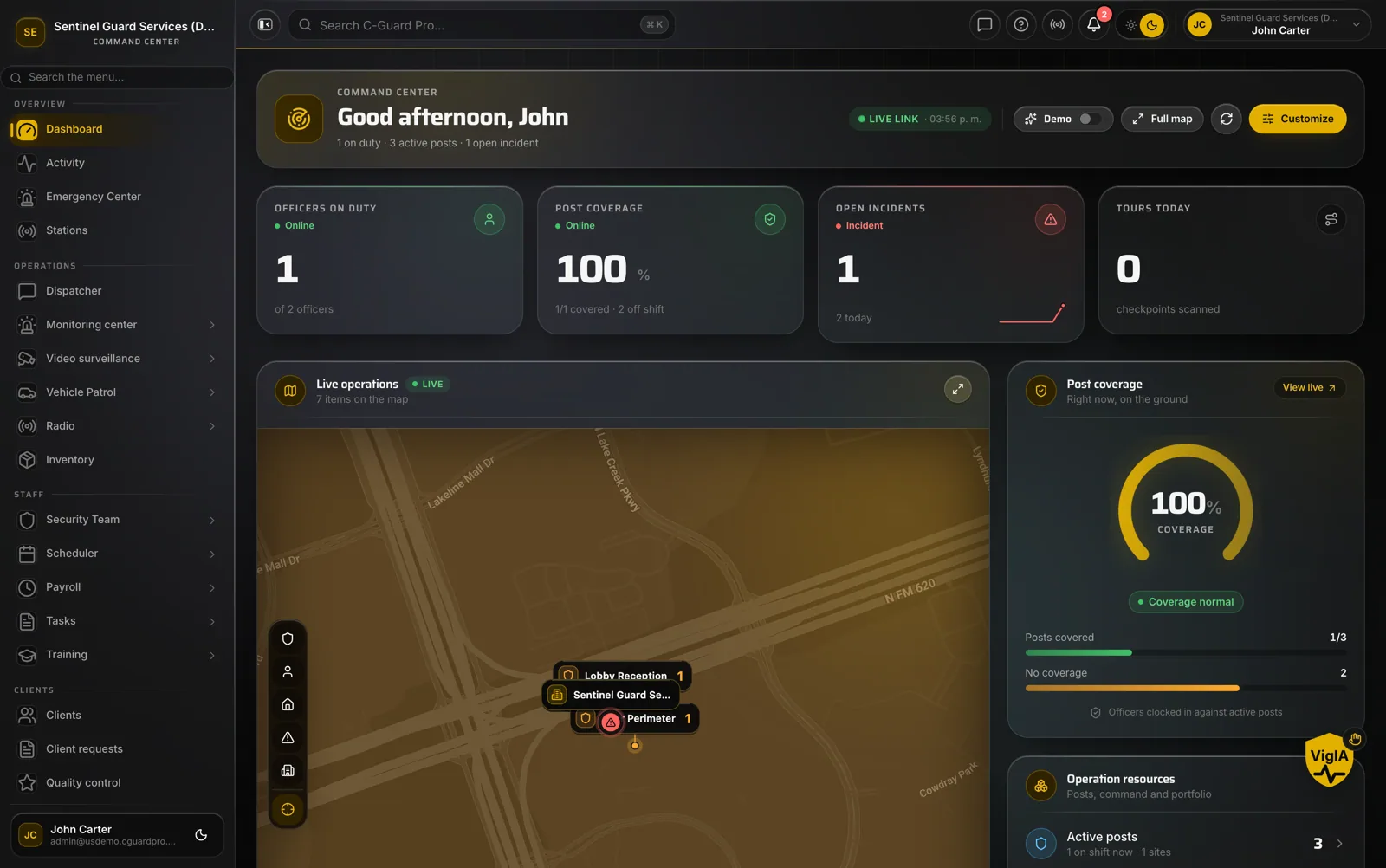 ROI starts with the operational record: what you paid for, what happened, and how it was handled.
The measures that make up the return
Don’t chase a single ROI number. Build the picture from a handful of tracked measures, and watch the trend over months rather than obsessing over any one figure.
Coverage delivered vs. paid
The most basic return check: did you actually receive the hours and patrols you were billed for? If shifts went unfilled, patrols got skipped, or fill-ins quietly replaced your assigned guards, you overpaid for service you didn’t get. Verifiable guard time and attendance data lets you confirm the baseline before you measure anything fancier.
Incident reduction over time
Track incidents by type and watch the direction of travel across quarters. A steady decline in the kinds of problems guards are meant to deter, trespassing, after-hours access, minor theft, disturbances, is a real signal that the presence is working. Be honest with the trend: seasonality and one-off spikes are noise; a sustained drop is the story worth telling leadership.
Loss prevention and deterrence
In retail, logistics, and similar settings, some of the biggest return comes from what doesn’t walk out the door. You may not be able to attribute every avoided loss precisely, and you shouldn’t pretend to. But a documented pattern, fewer shrinkage incidents after coverage was added or a route was changed, is legitimate evidence when you present it as a trend rather than a hard guarantee.
Response and containment
When something does happen, how fast did the provider react, and how well did they contain it? Time from alert to acknowledgement, and from acknowledgement to resolution, tells you whether you’re paying for guards who are present or guards who are effective. A fast, documented response to a real event is often the single clearest ROI moment you’ll get all year.
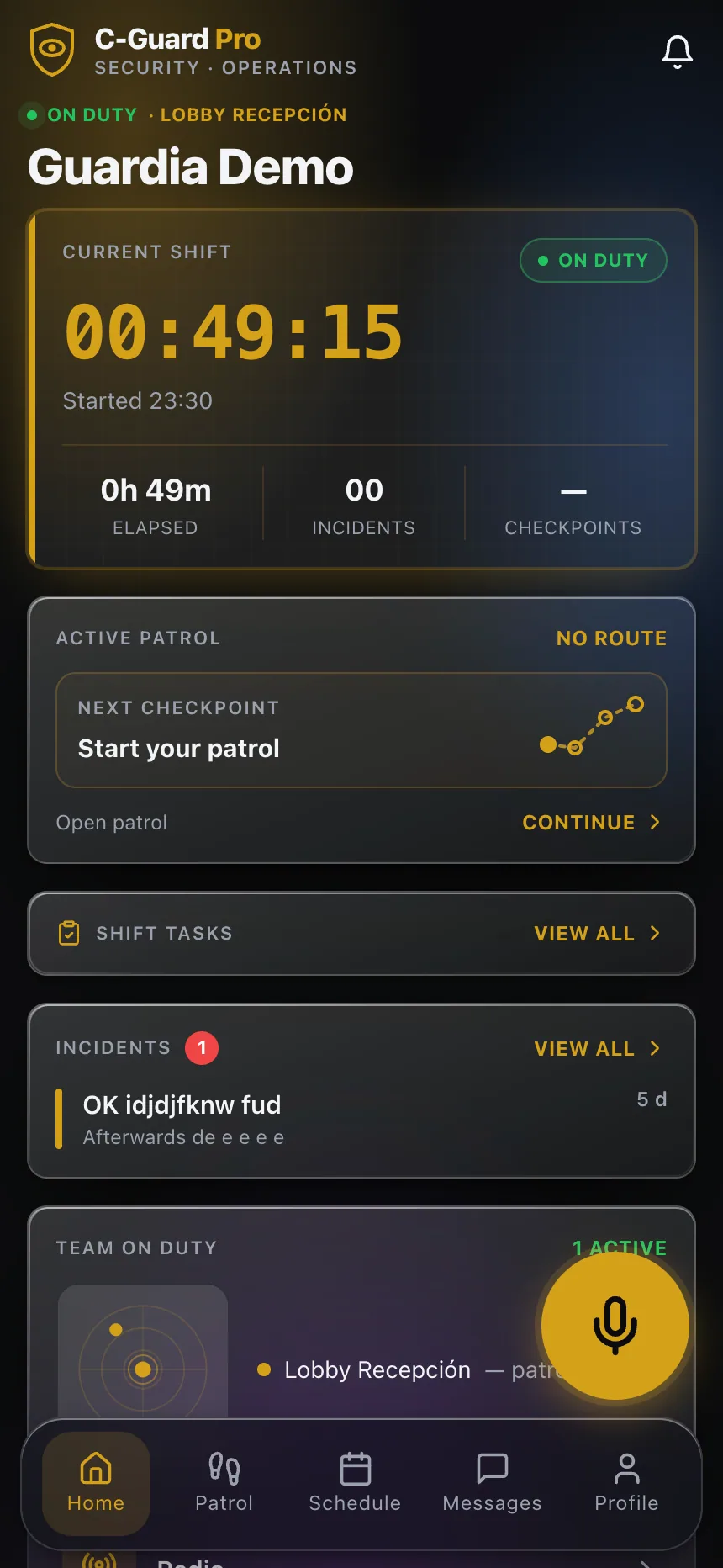 Response time and containment, captured live, are some of the clearest evidence of return you’ll get.
Build the case for leadership
Once you have the measures, assemble them into something a non-security executive can absorb in two minutes:
- What we paid for vs. received: coverage and patrols delivered, verified, not asserted.
- The risk trend: incidents by type over several quarters, with the direction clearly marked.
- Standout events: one or two real incidents where fast response prevented a much worse outcome.
- What changed because of the data: a route adjusted, a blind spot closed, a recurring problem eliminated.
Notice what’s missing from that list: invented statistics, borrowed industry percentages, and hard dollar figures you can’t defend. Resist them. A finance leader will trust a modest, verifiable trend far more than an impressive number you can’t source. Your credibility is part of the ROI case.
The honest limits
Be upfront about what security ROI can and can’t prove. You can’t run a controlled experiment on your own property, so some of the value, deterrence, peace of mind, staff and tenant confidence, resists precise measurement. Say so. Presenting the measurable parts with rigor and naming the unmeasurable ones honestly is far more persuasive than overclaiming.
It’s also worth remembering that the ability to measure ROI at all depends on the tools your provider uses. A provider running on paper logs literally cannot give you the trend data this exercise needs. So if you’re struggling to measure return, part of the answer may be insisting on a provider whose service is verifiable in the first place. Just note that incident and personal data can carry retention and privacy obligations that vary by jurisdiction; confirm the specifics with your own advisor. This isn’t legal advice.
Measuring security guard service ROI won’t ever be as clean as a spreadsheet formula, and anyone who promises otherwise is selling something. But by tying spend to delivered coverage, incident trends, loss prevention, and response, and by using live data to back it, you turn a soft line item into a defensible one. That protects both your property and your budget.
Want the kind of live data that makes an ROI case possible? Explore the client portal and build your next review around what it shows.