Something went wrong. A guard was asleep at post, a patrol was clearly skipped, an incident was handled badly, or a report arrived so vague it was useless. You’re frustrated, and you want it fixed — not smoothed over with an apology and a promise. Knowing how to raise a complaint with security guard company the right way is what turns your frustration into an actual correction, rather than the same problem recurring next month.
The instinct is to fire off an angry email or threaten to cancel. Sometimes that’s warranted, but as a first move it rarely produces a durable fix. A calm, documented escalation does — because it gives the provider something specific to act on and a record that makes ignoring you costly. Here’s how to do it well.
Start with documentation, not emotion
Before you contact anyone, gather what actually happened. A complaint backed by specifics is hard to dismiss; a complaint built on “the service has felt bad lately” is easy to wave away.
Pull together:
- The specific incident. Date, time, location, what happened, who was involved.
- The evidence. This is where a modern provider’s tools do the work for you. If you have a client portal, you can often see the missed patrol, the coverage gap or the thin incident report yourself — with time-stamps. Screenshot it.
- The contract term it breaches. Which agreed standard or KPI wasn’t met? “Patrols hourly” versus a three-hour gap in the log is a concrete, arguable point.
The difference is stark. “Your guards aren’t patrolling enough” invites a debate. “The portal shows no checkpoint scans between 11 p.m. and 2 a.m. on the 14th, against our contracted hourly rounds” invites a fix.
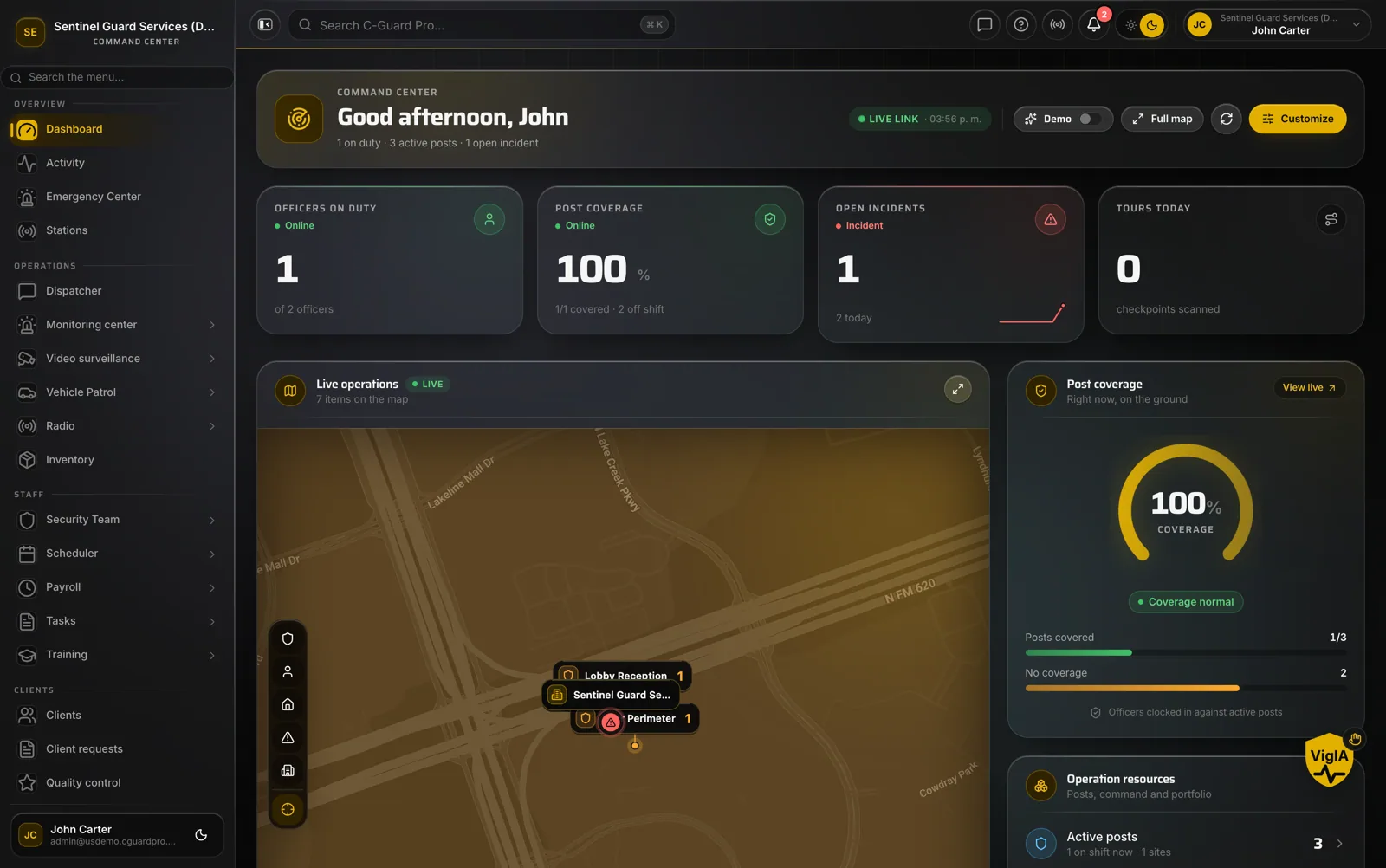 Portal records turn a vague grievance into evidence: the exact gap, with time-stamps, that the provider has to explain.
Follow a clear escalation path
Escalation works best as steps, each giving the provider a fair chance to respond before you go higher.
Step 1 — Your account manager, in writing. Most issues should start here. State the specific problem, attach the evidence, cite the contract term, and ask for a concrete correction and a timeline. Put it in writing even if you also call — you want the paper trail.
Step 2 — Their manager or operations lead. If the account manager stalls, deflects, or the fix doesn’t hold, escalate up. Reference your first contact and the lack of resolution. Stay factual; let the timeline of unmet promises make your case.
Step 3 — Formal notice. If the pattern continues, a formal written notice referencing the contract signals you’re serious. Depending on your agreement this may trigger a cure period or other terms — the specifics vary by contract and jurisdiction, so review yours and, if it matters, get advice. This isn’t legal guidance, just a prompt to know what your own agreement says.
Step 4 — Exit. If it can’t be fixed, your documentation is exactly what you need to leave cleanly and, if it comes to it, to defend your position.
Keep every step calm and factual. Anger feels satisfying but weakens your record; a cool, evidence-led trail is what gets results and protects you.
Focus on the fix, not just the blame
The goal of escalating isn’t to win an argument — it’s to make the problem stop. When you raise the issue, be clear about what “fixed” looks like:
- What specific change do you want? (Reliable overnight patrols, a replacement guard, better incident reporting.)
- How will you verify it’s actually fixed? This is where live visibility matters — you can confirm the correction in the portal rather than trust another promise.
- By when?
A provider who responds with a concrete plan and welcomes you verifying it is worth keeping. One who offers only apologies and no measurable change is telling you the pattern will continue.
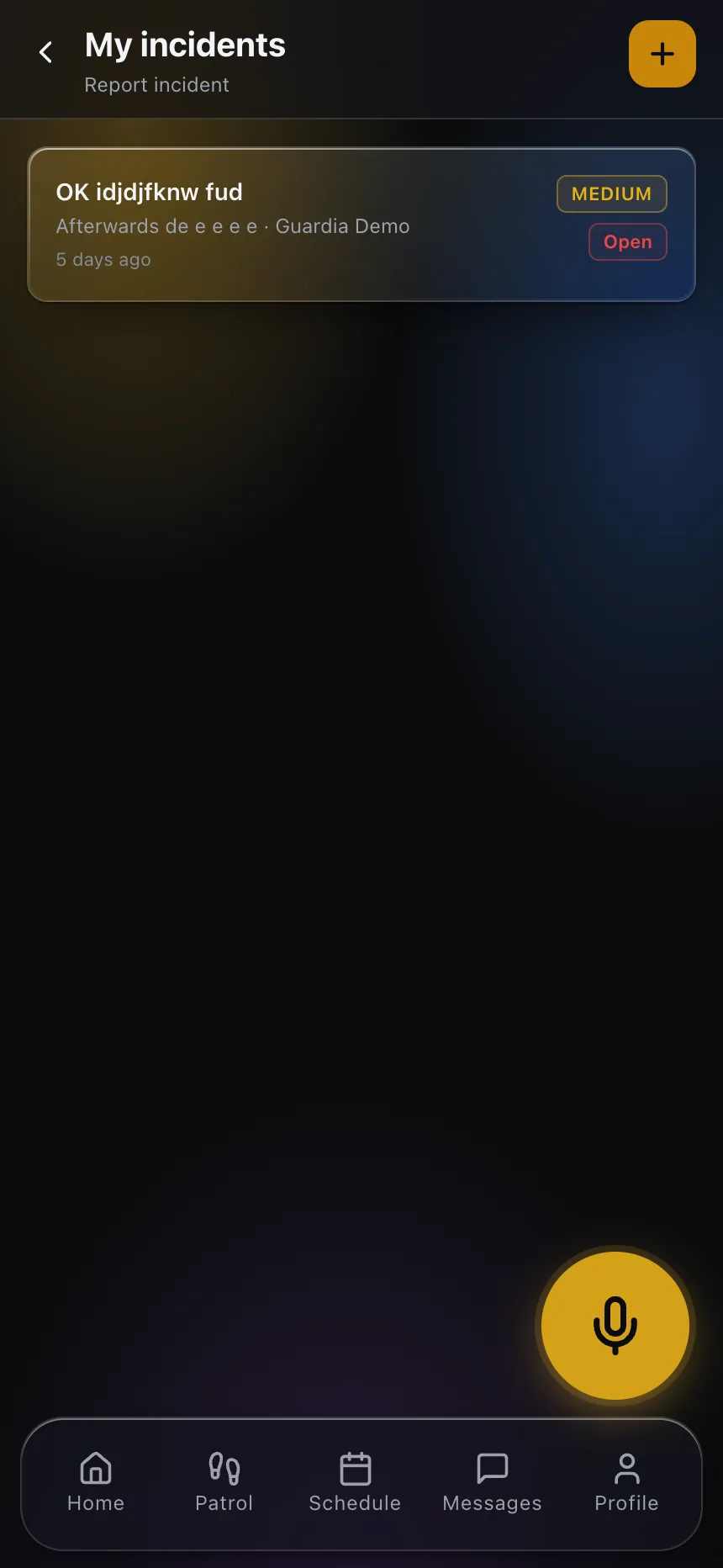 Detailed incident records give both sides the same facts — so the conversation is about fixing the problem, not disputing whether it happened.
Preventing the next complaint
The best complaint is the one you never have to make. Much of what drives escalations traces back to a lack of visibility — you couldn’t see problems forming, so they grew until they became incidents worth complaining about.
Demanding live visibility from the start changes that. When you can see patrols, coverage and incidents as they happen, you catch the drift early, mention it in a quick note, and it never becomes a formal grievance. The relationship stays healthy because small issues get handled small.
It also helps to have agreed, written standards you can point to — clear KPIs and reporting expectations set at the outset — so that when something slips, there’s an objective bar to measure against rather than a subjective argument about whether the service is “good enough.”
Escalate calmly, verify the fix
A complaint with security guard company handled well is calm, documented and focused on a measurable fix. Bring the specifics, follow the escalation steps, define what “resolved” means, and confirm it with your own eyes rather than another promise.
And to prevent most complaints in the first place, insist on seeing your service live. Take a look at the client portal a modern provider should be able to give you — the visibility that catches problems before they ever reach a formal escalation.