Choosing a security provider in the UK is not quite the same exercise as anywhere else. The licensing landscape, the industry accreditations, and the expectations around data all shape what a good provider looks like, and a buyer who knows what to check has far more leverage than one working from price alone. If you are working out how to choose a security company in the UK, start with the credentials, but do not stop there, because a licence tells you a provider is allowed to operate, not that they will actually deliver.
The best providers welcome scrutiny on all of it. The ones to avoid are the ones who get vague when you press.
Licensing and accreditation: the baseline, hedged
In the UK, guarding is a regulated activity, and there are recognised marks of a legitimate provider. Treat the following as things to verify, not as legal advice, because requirements and schemes change and specifics vary by role and circumstance. Confirm the current position with the relevant authority and, where it matters, a professional adviser.
- SIA licensing. Front-line security operatives in the UK are generally expected to hold appropriate Security Industry Authority licensing for their role. Ask a prospective provider how they ensure their deployed staff are properly licensed and how they keep that current. A provider should be able to answer this without hesitation.
- Approved Contractor Scheme (ACS). Some buyers look for providers registered under the SIA’s Approved Contractor Scheme as a signal of assessed standards. It is a useful indicator to ask about, not a guarantee on its own.
- Insurance and standards. Ask about liability cover and any relevant industry standards the provider works to. Get specifics, not reassurances.
None of this is legal guidance, and none of it substitutes for your own checks. It is the baseline you verify before a provider even makes your shortlist.
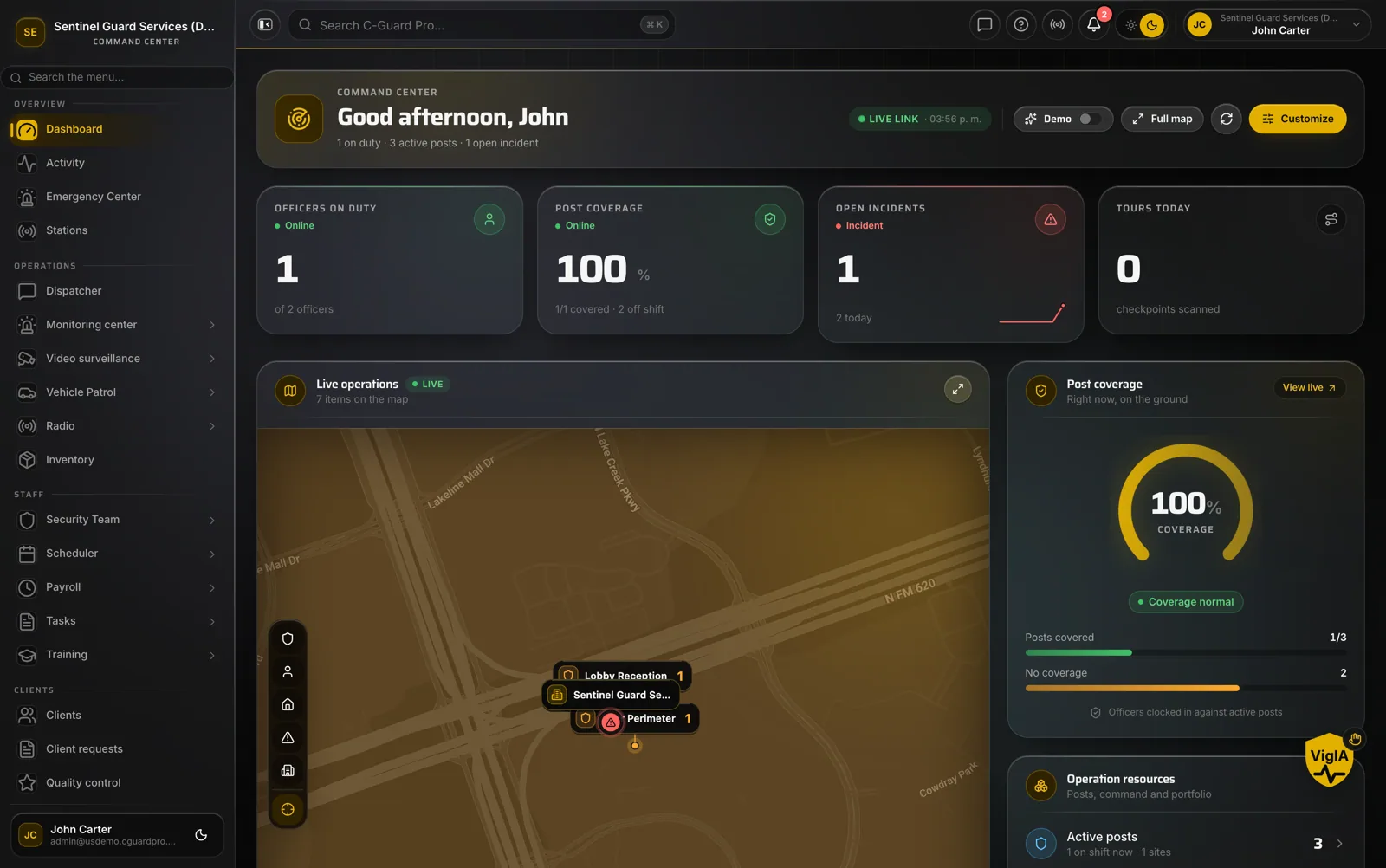 Credentials get a provider onto your shortlist; a live view of how they actually deliver is what should decide it.
What credentials do not tell you
Two providers can both be properly licensed and both look credible on paper, and still deliver wildly different service. Licensing sets a floor. It says nothing about whether guards turn up on time, patrol thoroughly, or report anything useful. That is where most of the real difference lives, and it is where a lot of buyers stop looking too soon.
So push past the paperwork into delivery:
- Turnover and continuity. How long do guards typically stay on a contract? High churn means no one learns your site, and it often signals a provider under strain. Continuity is worth a great deal on a guarded post.
- Supervision. How often does a supervisor visit, and how is oversight actually carried out? A provider that leaves guards unsupervised is cheaper for an obvious reason.
- Training beyond the licence. What site-specific and ongoing training do guards get? A licence is a minimum, not a ceiling.
- Fill-in cover. When your regular guard is off sick, who covers, and are they briefed on your site or sent in blind?
Demand a live client portal and patrol proof
Here is the requirement that separates a modern UK provider from a legacy one, and it is the single most useful thing a buyer can insist on: real, verifiable visibility into the service you are paying for.
A provider that offers a live client portal lets you see attendance, patrols, and reports in near real time, rather than waiting for a monthly summary written after the fact. That shifts the relationship. You are no longer trusting a promise; you are checking a record.
Pair that with patrol proof. Insist on GPS-tracked patrols and a QR-based guard tour so a guard has to physically reach checkpoints around your property, producing a timestamped trail that a two-minute walk-through cannot fake. If a corner of your site is never scanned, you will know, and so will your provider.
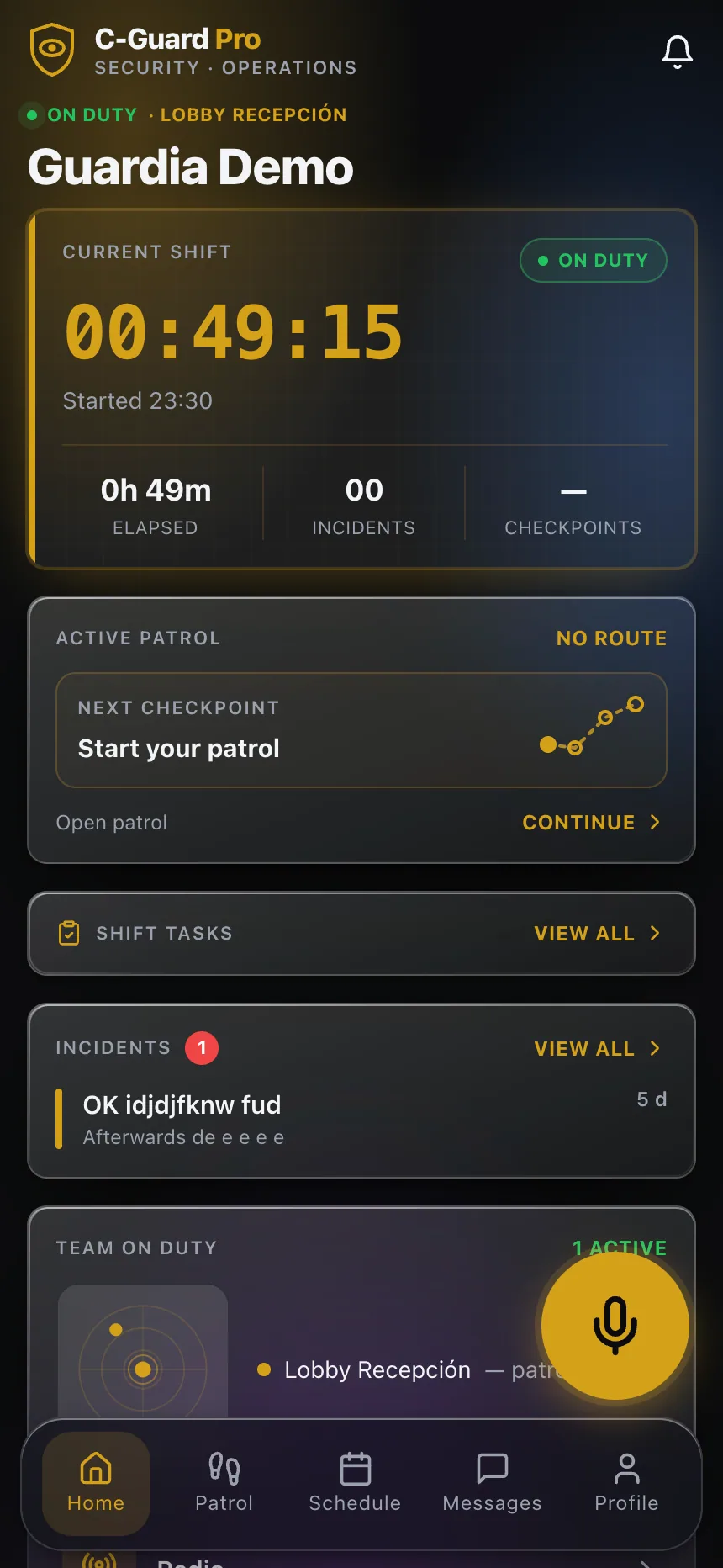 Guards check in, complete rounds, and log activity from the app, turning “the site was covered” into a record you can actually verify.
A note on data and privacy
Modern guarding software collects information: guard locations, timestamps, incident notes, sometimes footage. UK data protection expectations apply, and how a provider handles that data is a fair thing to ask about. Again, this is not legal advice, and the specifics depend on your circumstances, so confirm your own obligations. But a provider who has thought seriously about data handling, access controls, and what you can and cannot see is a provider who has thought seriously about the whole service.
Put it together into a decision
Choosing a security company in the UK is a two-part test. First, the credentials: appropriate SIA licensing for the roles involved, worth asking about ACS registration, proper insurance, all verified rather than assumed, and none of it treated as legal advice. Second, and more decisive, the delivery: low turnover, real supervision, thorough patrols, and above all the live visibility that lets you confirm you are getting what you pay for.
Run every shortlisted provider through both. The ones who breeze through the credential questions but go quiet on live visibility and patrol proof are telling you how the service will actually feel once the contract is signed. The ones who welcome the scrutiny, and can show you the proof on day one, are the ones worth trusting with your site.
To see the kind of live visibility and patrol proof worth demanding from a UK provider, explore the CGuardPro client portal.