Every security provider hands you a reference list, and every reference on that list is going to say something nice — that’s why they’re on the list. So the point of learning how to check a security company’s references isn’t to collect compliments. It’s to run a deliberate conversation that surfaces what the provider didn’t volunteer: how they behave when a post goes uncovered, how fast they fix problems, and whether the technology they demoed for you actually works day to day.
Get past the curated list
Start by acknowledging the obvious: the references you’re given are hand-picked. That doesn’t make them useless — a hand-picked client will still tell you a lot if you ask the right questions — but do two extra things.
First, ask the provider for a client who’s been with them for years, and separately for one they onboarded recently. Long-tenured clients reveal how the relationship wears over time; recent ones reveal what onboarding actually feels like. Second, ask whether you can speak with a client in your own sector — a warehouse operator’s experience won’t map cleanly onto a residential community’s.
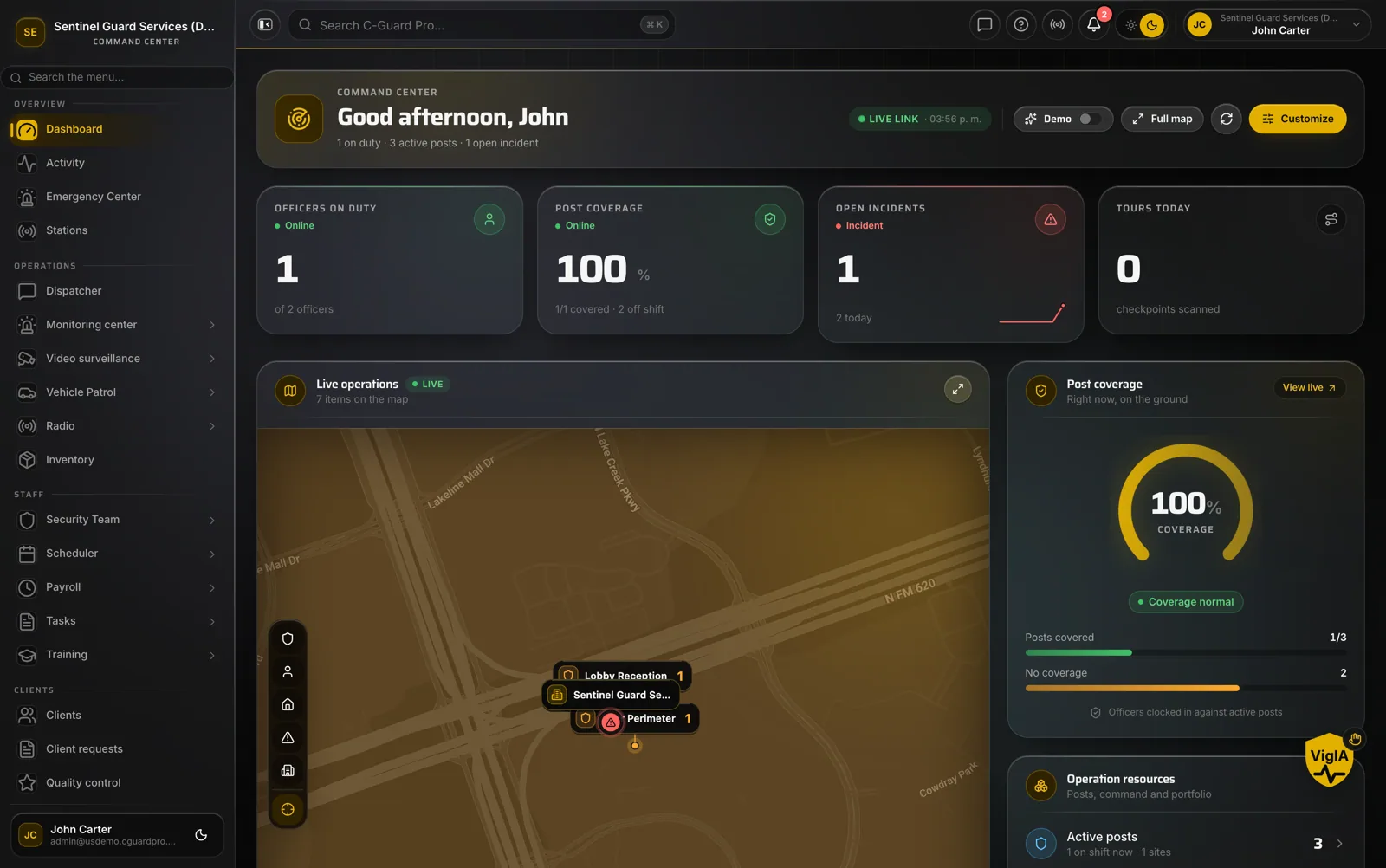 Ask a reference to show you the buyer-facing view they actually use — a real dashboard beats a testimonial.
The reference-check script
Skip the yes/no questions. Ask open ones that make the reference tell a story:
- “Tell me about the last time something went wrong. What happened, and how did they handle it?” Every provider has bad nights. What matters is the response, not the perfection.
- “How do you know your guards are actually on post and doing their patrols?” If the answer is “I trust them” or “I call the site,” this provider isn’t giving clients real visibility. If it’s “I check the portal,” that’s the answer you want.
- “How fast do you get reports, and what do they look like?” You’re testing whether daily activity reports arrive same-day and readable, or trickle in late and vague.
- “Have they ever left a post uncovered? What happened?” Coverage gaps are the most common failure. You want to know both whether it happens and how it’s handled.
- “If you could change one thing about them, what would it be?” This gets you the honest criticism the reference wouldn’t otherwise offer.
- “Would you hire them again?” Listen for the pause as much as the answer.
Ask to see the client portal a real client uses
This is the highest-signal request in the whole process. Ask the reference to show you — on a screen-share or in person — the client portal they log into. A client who genuinely uses a live portal can pull it up in seconds and walk you through last night’s activity. A client who “gets a monthly email” is telling you the provider’s visibility claims don’t hold up in practice. What the provider demoed for you should match what their clients actually use every day.
What to verify beyond the conversation
References tell you about experience; verification confirms the facts.
- Insurance. Ask for certificates and verify them directly with the insurer, not just the provider. Coverage requirements vary by state and are subject to change — confirm what applies to you with a qualified advisor. Nothing here is legal advice.
- Licensing. Confirm the company and its officers hold current licensing with your state’s regulator.
- Officer retention. High turnover means a rotating cast of strangers on your site. Ask references whether they see the same officers or a constant churn.
- Technology in practice. You’ve verified the portal exists; also confirm patrols are proven with a QR/GPS guard tour system rather than a paper log the reference has never actually seen.
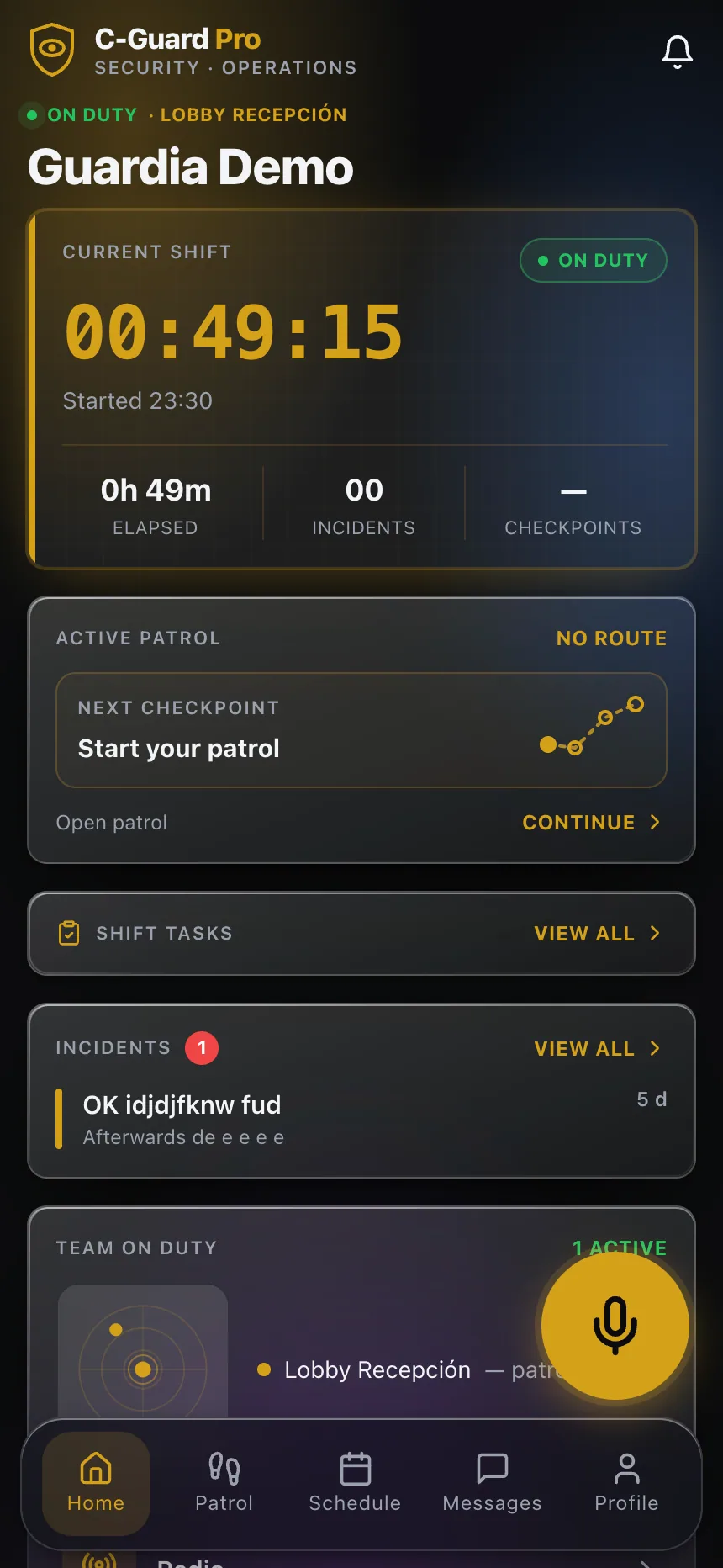 Verified patrols and logged tasks are what a good reference points to when you ask “how do you know?”
Red flags that end the conversation
Some answers should stop you:
- A reference who’s vague about who they even are or clearly briefed on what to say.
- No visibility — the client can’t tell you how they know their guards are working.
- Recurring uncovered posts with no accountability.
- The provider can’t or won’t supply a long-tenured client or one in your sector.
- References describe paper-only reporting and slow, defensive problem-solving.
Any one of these is worth a hard follow-up. A pattern of them means keep looking.
Reference-checking is your last honest look
Once you sign, your leverage drops. The reference check is your last unfiltered look at how a provider really operates — so treat it like an investigation, not a courtesy call. Push past the compliments, insist on seeing the tools a real client uses, and verify the facts independently. The providers who welcome that scrutiny are usually the ones worth hiring.
See what a client-facing view should look like in the client portal, so you know exactly what to ask a reference to show you.