You’re paying for security every month, but when did you last check whether you’re actually getting it? Most buyers sign a contract, get a reassuring monthly email, and assume the rest. Then an incident happens, they pull the records, and discover patrols were being skipped for weeks. A regular, structured way to audit your security guard provider is how you catch that drift before it costs you — and it doesn’t have to be a painful annual event.
The goal isn’t to catch anyone out. It’s to make performance visible and routine, so a good provider gets confirmed and a slipping one gets corrected while the problem is still small. With the right data, an audit that used to mean chasing paper for days can take a few minutes at your desk.
What an audit actually checks
A useful audit measures the things that matter to your safety, not the things that are easy to fake. Work through four areas:
Coverage
Was every scheduled post staffed, on time, for the full shift? Look specifically at the seams: shift changes, weekends, holidays, and overnight. Unfilled hours and late arrivals cluster there, and that’s when your site is most exposed.
Patrols
Were the agreed rounds completed, at roughly the frequency in your contract, hitting the checkpoints that matter? Don’t accept a signed log as proof. Ask for time-stamped evidence that the guard was physically at each point.
Incidents
When something happened, was it logged promptly, described clearly, and handled per your post orders? Read a sample of real reports. Vague, copy-paste entries are a red flag even when nothing went wrong.
Response
How fast did the provider react when a guard hit a panic alert, when you raised a concern, or when an incident needed escalation? Slow response is often the first crack.
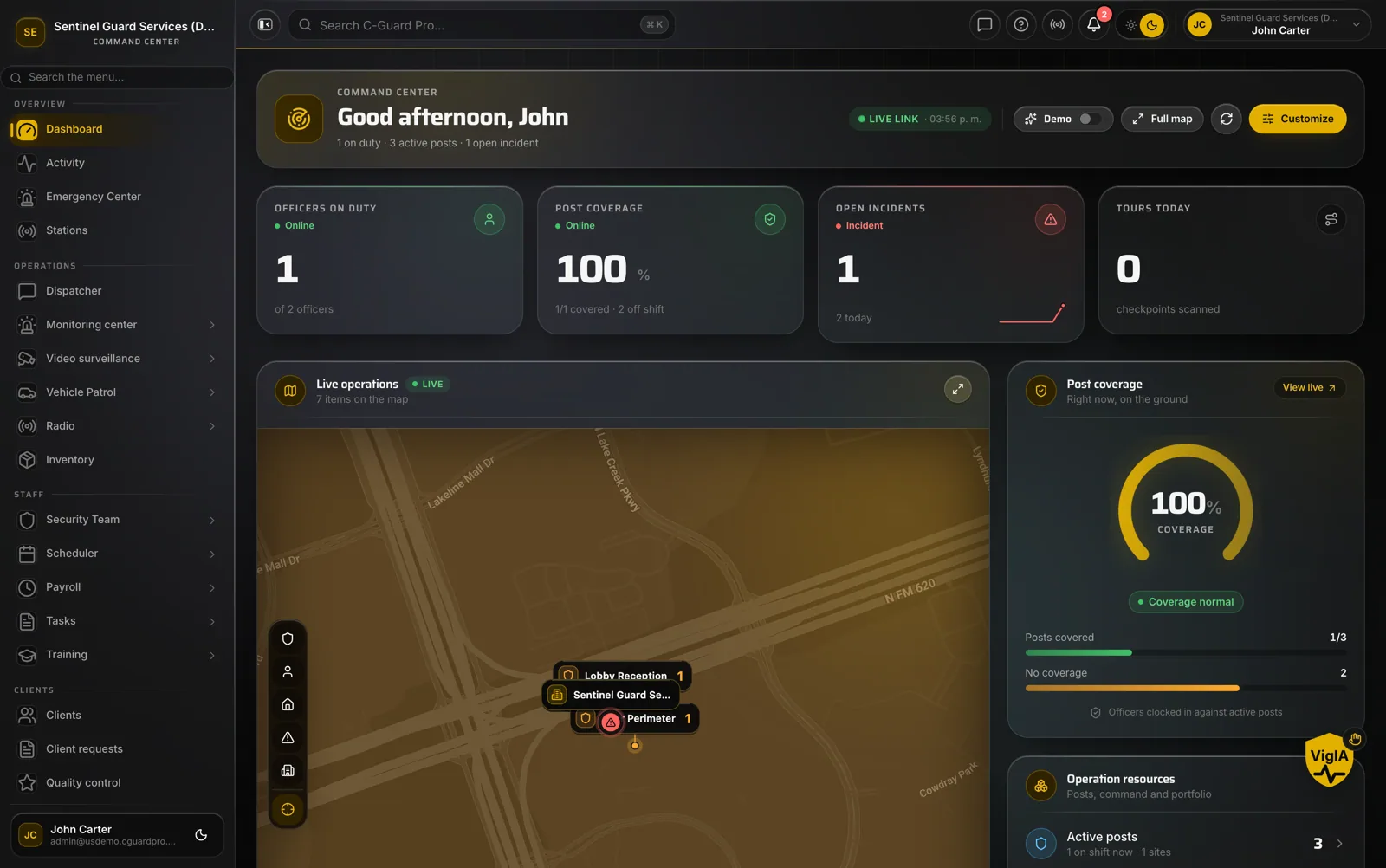 A live dashboard turns each audit area into a number you can read at a glance instead of a folder you have to reconstruct.
Why the old way of auditing fails
The traditional audit means requesting records, waiting for the provider to assemble them, and then reviewing a curated pile of paper. Every step of that process works against you.
The provider decides what you see and when. Records that would look bad are slow to arrive or quietly incomplete. By the time you’ve pieced together what happened last month, the month is over and the problems have moved on. Worst of all, the effort is so high that most buyers audit once a year, if ever — which means eleven months of blind spots.
An audit you dread doing is an audit that doesn’t happen. That’s the real reason so many providers coast.
How live data makes the audit take minutes
This is where a modern provider changes the equation. When the service runs through a client portal, the audit data assembles itself as the work happens, and you pull it whenever you like — no request, no waiting, no curated pile.
- Coverage shows up as clock-in and clock-out records against the schedule, so gaps and late starts are obvious. Ask your provider to demonstrate their time and attendance tracking.
- Patrols appear as time-stamped QR guard tour or GPS records, one per checkpoint, so a skipped round is a visible hole, not a hidden one.
- Incidents are logged digitally the moment they occur, complete with time, location and detail — searchable rather than buried in a binder.
- Response is traceable: when an alert fired, who acted, how fast.
Because the data is already there and it’s the same data the provider works from, they can’t hand you a friendlier version. Your audit becomes: open the portal, read the numbers, spot the outliers. Minutes, not days.
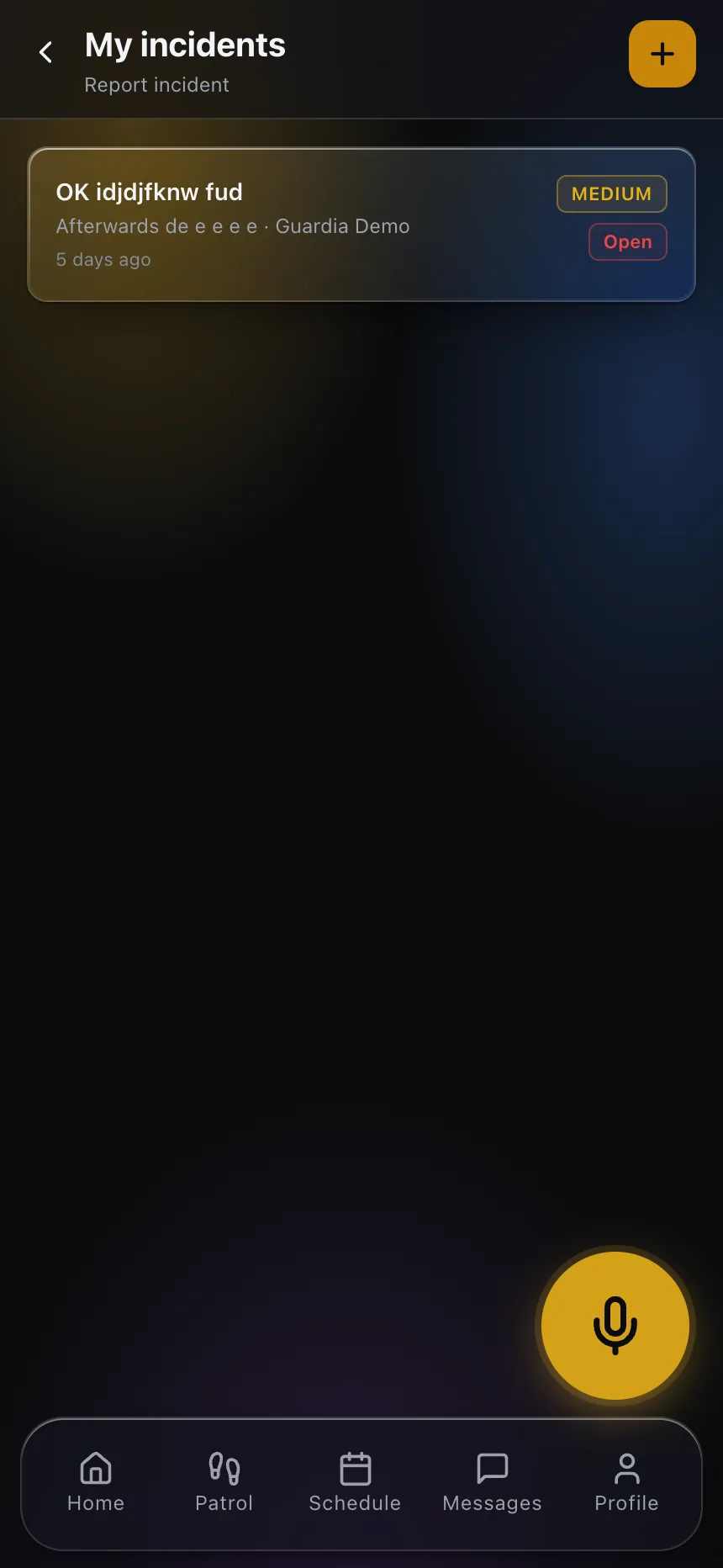 Incidents captured on the spot — time, location and detail — so the audit reads real records instead of tidied-up summaries.
A repeatable audit rhythm
The point of live data is that you can audit lightly and often instead of heavily and rarely.
- Weekly glance. A two-minute look at coverage and patrol completion. Any gaps? Any pattern forming?
- Monthly review. Read a sample of incident and daily reports for quality. Check response times on anything that escalated. Compare against the KPIs in your contract.
- Quarterly conversation. Sit down with the provider, walk the trends together, and agree on any fixes. A good provider welcomes this because the data usually vindicates them.
Keep a short written record of what you found each time. If performance ever becomes a contract issue, a documented history beats a vague sense that “things felt off lately.”
Turn the audit into leverage, not a fight
None of this is about becoming an adversary to your provider. A strong company wants you auditing them, because visible performance is their best sales argument for renewal. A weak one avoids it, which is exactly why you should insist.
If you want to audit your security guard provider without dreading it, the single most effective move is to require live visibility from the start. To see what that looks like from the buyer’s side, take a look at the client portal a modern provider should be able to give you.