A festival promoter calls on a Tuesday asking whether you can add forty officers to Saturday’s event security detail because ticket sales blew past projection. The contract already promised “the ability to surge if attendance requires it,” and now that promise is due. What most companies discover in that moment is that the promise was never backed by anything — no list, no pre-cleared pool, no plan for how forty bodies with the right training actually show up in four days. Event security staffing surge planning gets sold as a capability and treated as an afterthought, and the gap between those two things is exactly where a festival ends up short-staffed on the one weekend the client is watching closest.
Event security staffing surge planning: why the promise outruns the plan
Event work is different from a standing post in a way that trips up companies used to steady contracts. A retail account or an office building needs the same coverage every week, so the roster settles into a rhythm and stays there. Event security is the opposite: near-zero baseline staffing for a client most of the year, then a spike that has to materialize on a specific date that was set months in advance and can still move on short notice — weather, ticket sales, an added act, a headliner cancellation that shifts crowd size in either direction.
The instinct is to handle that spike the way you’d handle any staffing gap: call around, post the shift, offer overtime to the regular roster. That works for a small event with a week of lead time. It falls apart at festival scale, where the number of officers needed on a single date can exceed what the standing roster can absorb even with everyone working extra hours, and where the officers you do pull in need at least a baseline familiarity with event work — crowd flow, bag checks, alcohol enforcement, what to do when a section gets overcrowded — that a general commercial guard doesn’t automatically have.
What a surge pool actually is
A surge pool is not a bigger roster. It’s a pre-qualified list of officers — some full-time on other accounts, some part-time or per-diem, some picked up specifically for event work — who have already been vetted, already know the company’s event procedures, and have already indicated the kind of availability that matters: weekends, evenings, short notice.
Building that pool before you need it is the entire difference between a company that can surge and one that can’t. That means recruiting event-specific officers on an ongoing basis rather than only when a big date is six weeks out, running them through the same onboarding and post orders review whether or not they’re currently scheduled, and keeping their availability current instead of discovering three days before an event that half the pool moved out of state.
Where scheduling software actually earns its keep
Here’s the part that gets skipped in the sales conversation: none of that pool is worth anything if pulling from it takes a field supervisor an entire day of phone calls. A pool of two hundred names in a spreadsheet, cross-referenced against certifications and last-worked dates by hand, is not meaningfully faster than starting from zero when a client calls with four days’ notice.
What actually delivers the surge is scheduling software that can filter the pool by what matters for that specific event — who’s certified for the venue type, who’s worked with this client before, who hasn’t hit overtime thresholds already this week — and push open shifts to that filtered group at once instead of one phone call at a time. Officers claim shifts through their own phone instead of waiting for a callback, which turns a staffing gap that used to take a full day of coordination into something that can close in a few hours.
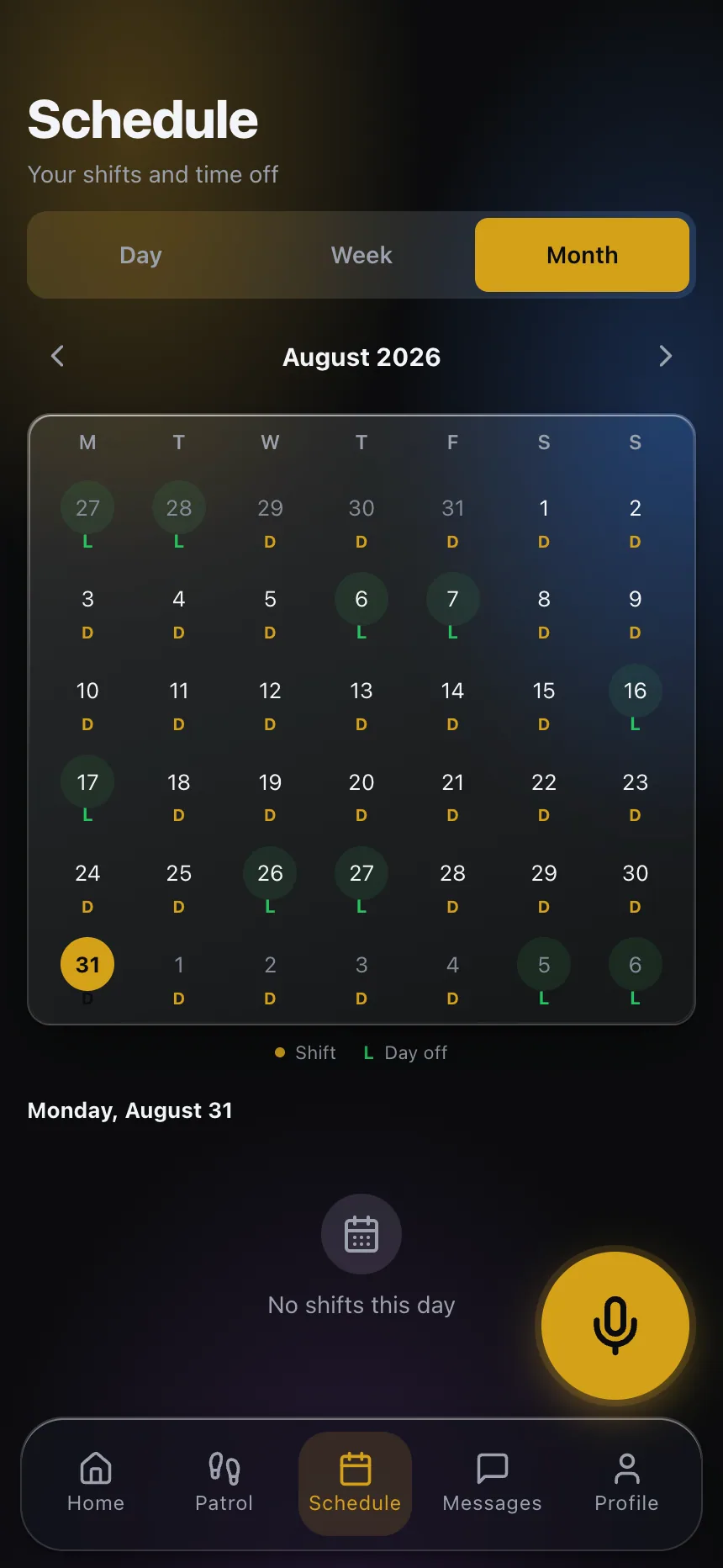
That speed is the actual capability the client is paying for when they hear “we can surge.” Not a bigger number of names in a database — a system that turns that list into filled shifts fast enough to matter when the notice period is measured in days, not weeks.
What still has to happen on top of the software
Software doesn’t replace the judgment calls that make a surge deployment work. Someone still has to decide staffing ratios for the specific event footprint, brief the surge officers on that event’s post orders — which gate they’re on, what the escalation path looks like, who the on-site supervisor is — and make sure the mix of experienced and newly pulled-in officers isn’t so heavy on the new side that nobody on a given post has run an event before.
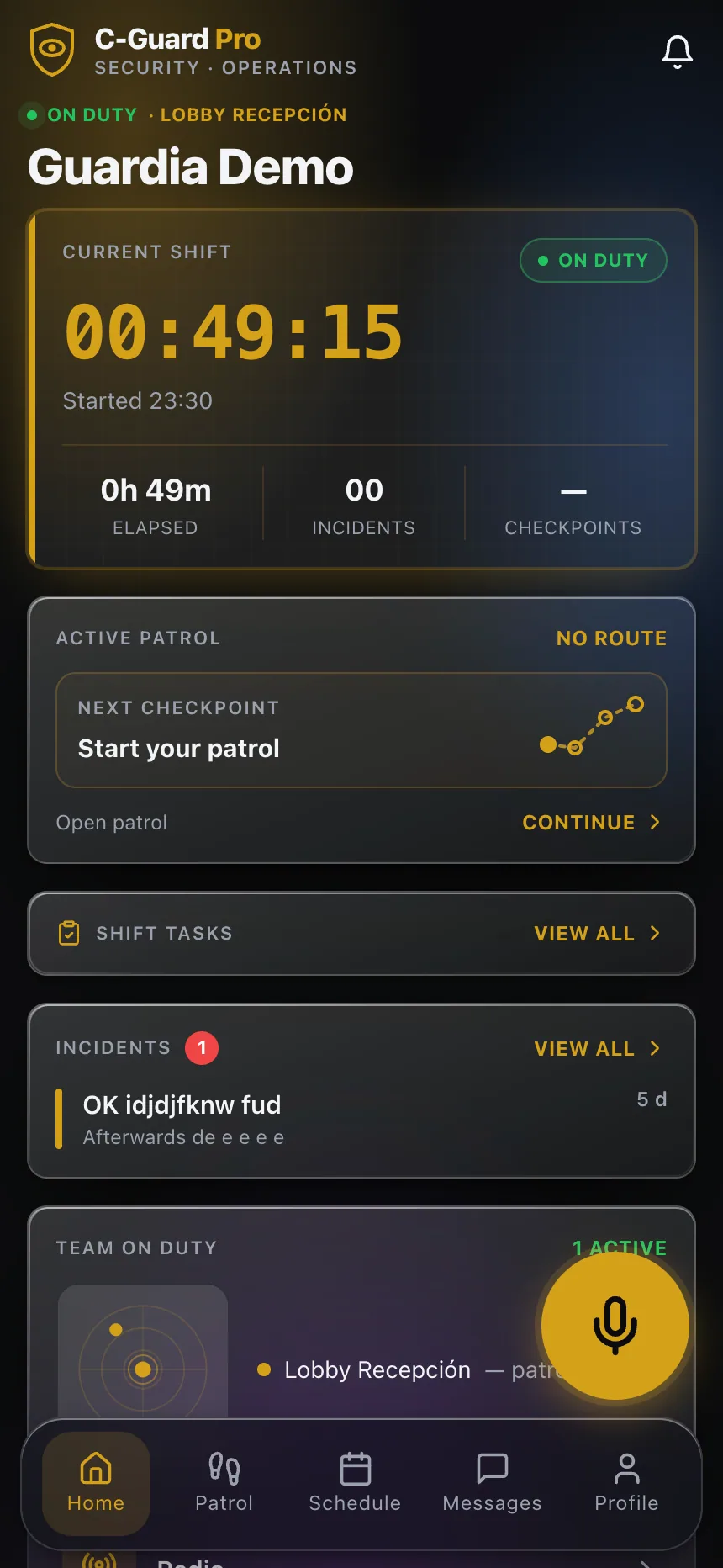
A field supervisor also needs visibility into who actually showed, in real time, not a roster that was accurate at confirmation time three days earlier. Officers who no-show for event work at a higher rate than standing-post work, for reasons that have nothing to do with reliability on their regular account — a second job, a schedule conflict that came up after they said yes — and the only way to catch that early enough to backfill is a live view of who’s clocked in against who was scheduled.
There’s also a geography problem specific to surge staffing that the software has to account for and a human still has to decide. Pulling from a pool spread across a metro area means the officer who claims a shift fastest isn’t automatically the right one to send — someone an hour away from the venue on event-day traffic is a bigger no-show risk than someone fifteen minutes out, even if both look identical on paper. Filtering by distance and drive-time reliability, not just certification and availability, is worth building into how shifts get offered rather than treating every claim in the pool as equally safe.
Building the pool before the next call comes in
The company that handles the Tuesday phone call well isn’t the one with the biggest roster. It’s the one that spent the off-season keeping a qualified pool current, has a system that can filter and fill from that pool in hours rather than days, and has a supervisor who can see, on the day, whether the plan actually held. None of that gets built during the four days between the call and the event — it either already exists or it doesn’t, and event clients tend to find out which one is true at the worst possible moment.
If you want to see how a scheduling system can help you build and pull from a surge pool before the next call comes in, explore CGuardPro or get in touch.