Security guard software
for senior living communities
Security in a senior living community looks different from most contracts. Officers spend more time checking doors, greeting visitors and helping staff than confronting anyone — and the moment that matters is the one where a door was propped open or a resident with dementia reached the parking lot. CGuardPro makes those rounds verifiable, keeps the visitor log searchable and puts every incident on record for the community's leadership. Trusted by 600+ security companies worldwide.
Real product screenshots
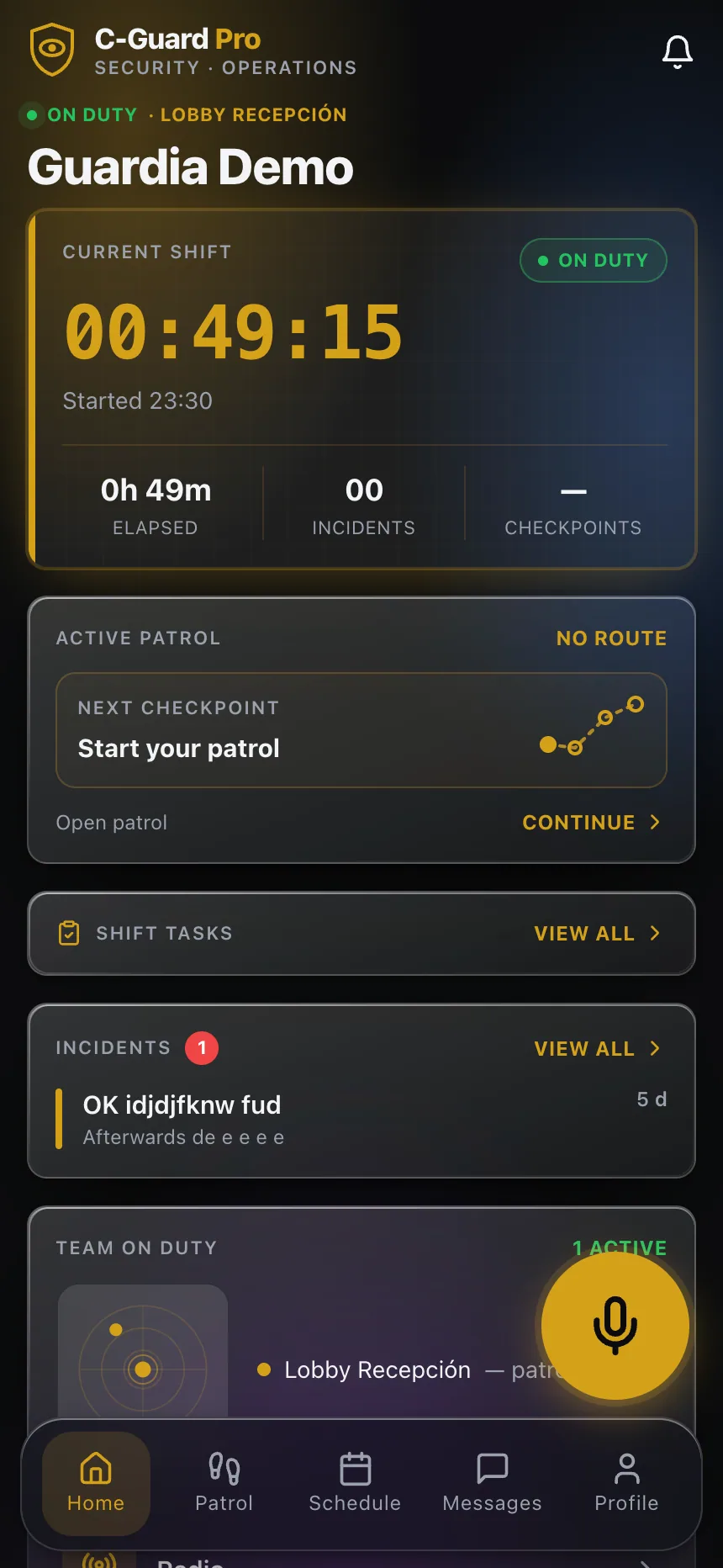
Short answer
Senior living security guard software has to support a community where the main risks are quiet ones: an exterior door left ajar at night, an unfamiliar visitor, a resident found outside where they should not be. CGuardPro verifies night rounds of doors and grounds with QR or NFC checkpoints, logs visitors at the front desk, lets officers file incidents with photos, and gives the executive director a portal limited to their community.
At a glance
- Typical posts
- Front desk / concierge, overnight rounds, parking and grounds patrol
- Typical checkpoints
- Exterior doors, memory care entrance, courtyards, parking, delivery door
- Key records
- Verified rounds, visitor log, incident reports with photos, shift pass-down
- Alerts
- Missed rounds, uncovered posts, officer panic button
- Not included
- No resident tracking or door-alarm integration; care staff own clinical reporting
What senior living communities worry about
A door that should have been checked
Memory care and exterior doors are the main line against a resident leaving unnoticed. When something happens, the first question is when the door was last checked and by whom.
Visitors at all hours
Family, home-health aides, hospice staff, vendors and the occasional unwelcome visitor. A paper sign-in book is hard to search when a family dispute or a theft complaint comes up.
Incidents reported by word of mouth
A fall in the parking lot, a confused resident in the lobby at 3 a.m., a heated family visit. Without a written record with time and photos, the director hears several versions the next morning.
How a senior living community runs on CGuardPro
Night rounds of every door
QR codes or NFC tags at each exterior door, the memory care entrance, the courtyard gates and the delivery door. Each scan is verified with time and position, and a checkpoint can ask for a note — door secured, door found open.
A visitor log that can be searched
The front-desk officer records the person, who they are visiting, who authorized them, their vehicle and plate and the exit time. Post orders hold the community's rules for after-hours visitors.
Incidents on record, care where it belongs
Officers file incidents with photos, category and severity, and follow the community's procedure for calling care staff. Clinical documentation and any regulatory reporting stay with the facility.
Leadership reads the service
The executive director gets a portal limited to their community, with rounds, daily activity reports and incidents. Shift pass-downs keep the night officer aware of what happened during the day.
What the community gets
- Verified night rounds of exterior and memory care doors
- Searchable visitor log with plate, host and exit time
- Incident reports with photos, category and severity
- Shift pass-down so each officer knows what happened before them
- Panic button and push-to-talk radio on officers' phones
- A portal for the executive director limited to their community
Frequently asked questions
Does CGuardPro track residents or connect to wander-management systems? +
No. CGuardPro tracks officers and their work, not residents, and does not integrate with door alarms or wander-management systems. Officers check doors on verified rounds and report what they find; the community's own systems and staff handle resident monitoring.
Who handles regulatory reporting after an incident? +
The facility. Assisted living is licensed by the states, and skilled nursing facilities in Medicare or Medicaid follow federal requirements in 42 CFR Part 483, including the abuse-reporting duties in 42 CFR 483.12. The officer's incident report gives the facility a time-stamped account with photos; CGuardPro does not certify compliance with any of these rules.
Should officers include medical details in their reports? +
Keep it to what the officer saw and did — time, place, who was called. Medical details belong in the care record. The client portal is limited to the community's own site, and roles and permissions control who in your company sees what.
What happens if the overnight officer does not show up? +
The missing clock-in raises the alert by itself, so dispatch sees the uncovered post and can reassign before the night nurse notices nobody is at the desk.
How much does it cost? +
USD 5 per user per month (anyone with a login), one plan with every feature, plus a one-time implementation of USD 299.99, with a 7-day free trial.
Walk a night round with us
Book a demo and we build a door-check round for a community, log an after-hours visitor and show what the executive director reads the next morning.