An officer at a strip mall recognizes the same man walking the parking lot at 1 a.m. for the third time this month. The first two times, the officer told him to leave and he did. This time, the officer wants him removed for good and, if he refuses, wants the account manager to back a trespass action against him. The account manager’s first question isn’t “was he actually trespassing” — it’s “can you show me the first two warnings.” If the answer is a shrug and a memory of a conversation nobody wrote down, the company doesn’t have a repeat trespasser removal procedure. It has one officer’s recollection, and recollection is not what backs up a removal when the person removed calls a lawyer.
The removal isn’t the exposure — the missing history is
It’s tempting to think the risky moment in a repeat-trespass situation is the physical act of getting someone to leave. It usually isn’t, assuming the officer follows the client’s post orders and doesn’t lay hands on anyone unnecessarily. The actual exposure shows up afterward, when someone asks the company to prove this wasn’t the first time the person was told to go — because “first offense, told to leave, no problem” and “third documented warning, escalated per post orders” are two completely different postures for a company defending its own decision. Without the paper trail, every removal looks like the first one, and every third-time removal looks unjustified by comparison.
This is also where officer safety and company liability line up instead of competing. An officer who acts on the assumption that this is “just some guy again” without checking whether prior contacts were logged is operating on memory in a situation where memory is exactly what won’t hold up. The habit that protects the officer — write down every contact, even the ones that end peacefully — is the same habit that protects the company’s decision six weeks later when someone disputes it.
A repeat trespasser removal procedure, built contact by contact
A defensible repeat trespasser removal procedure isn’t complicated, but it only works if each step actually happens and gets recorded, not just the last one.
Contact one gets logged, even though nothing escalated. The officer identifies the person, states the reason they can’t be on the property, and records the interaction — name if obtained, description if not, time, location, and outcome. This is the entry that makes contact two provably a second offense instead of an unrelated event.
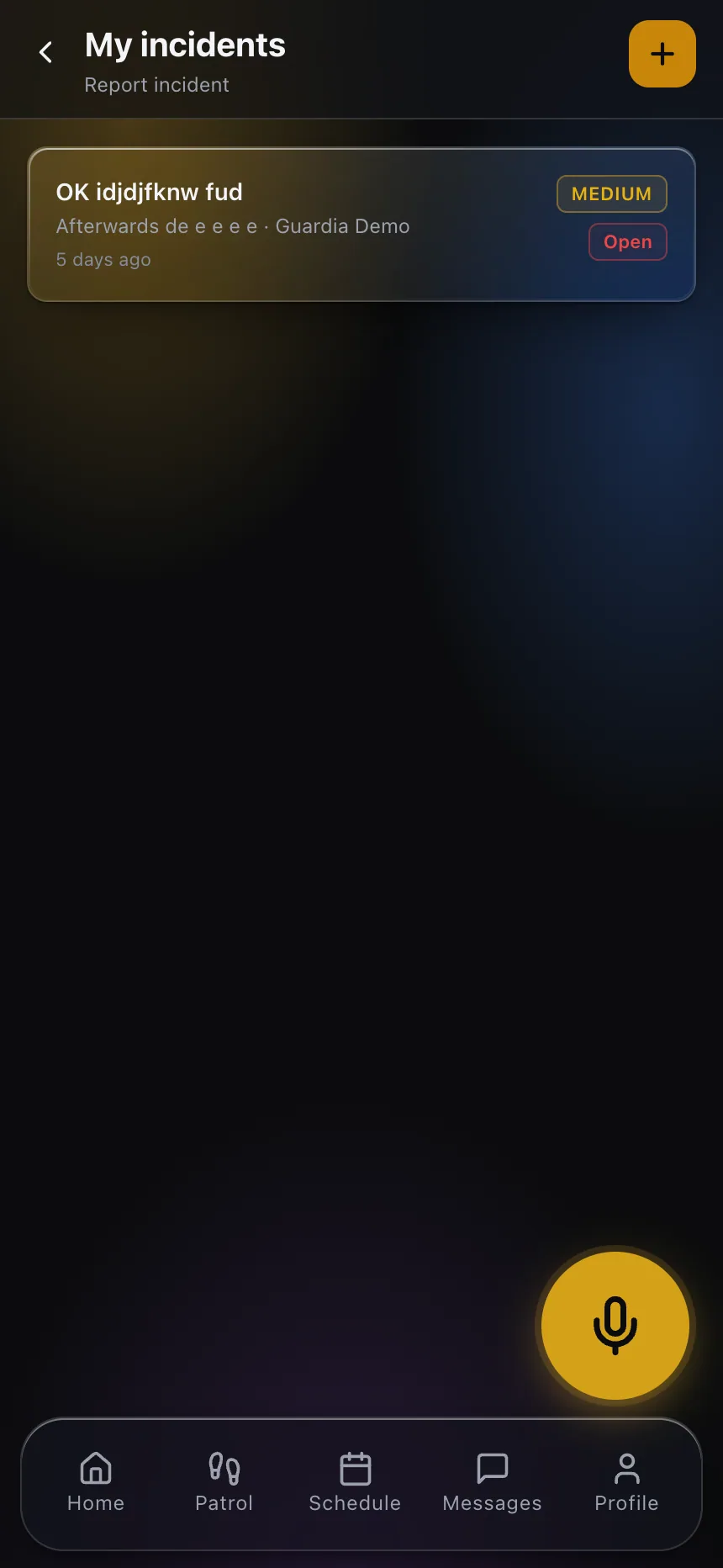
Contact two references contact one. This is the step companies skip most often, because it takes an extra minute to look up the earlier record instead of just writing a fresh, disconnected entry. A second warning that doesn’t reference the first one loses the thing that makes it a second warning at all — from the outside, it’s indistinguishable from two unconnected first contacts.
The escalation decision gets made on the record, not verbally. Somewhere between the second and third contact, someone with the authority to make that call — a field supervisor, an account manager, whoever the post orders name — decides this individual is now subject to removal and, if applicable, a trespass notice. That decision should exist somewhere other than a text message or a hallway conversation the next shift never sees.
The removal itself gets documented the same way the warnings were, with the same level of specificity: what was said, what the person did, whether police were contacted, and what the outcome was. A removal report that’s thinner than the warning reports that preceded it looks, to an outside reader, like the company cared more about the buildup than the actual event.
Where this falls apart in practice
The most common break in the chain isn’t a missing report. It’s a warning that exists but that the next officer on shift never sees, because it lived in one person’s memory, a paper notebook that stays in a guard shack, or a text thread that isn’t searchable by anyone else. A trespass pattern spans shifts and often spans officers, and if the record of contact one isn’t visible to whoever handles contact two, the chain never forms in the first place — it’s just three separate, disconnected incidents that happen to involve the same person.
The other common break is inconsistency in what gets written down. If contact one is a full report and contact two is “same guy, told him to leave again,” the account manager reviewing the file after contact three can’t tell whether the person actually escalated or whether the officer just got lazier about documentation as the situation became familiar. Consistency in the level of detail across contacts is part of what makes the chain readable to someone who wasn’t there for any of them.

What this is and isn’t
None of this is legal advice, and the actual authority an officer or a company has to remove, detain, or pursue a trespass action against someone varies by state and by what the site’s own post orders and the client’s contract authorize. Any company building or updating a trespass-escalation procedure should confirm what its officers can and can’t do with its own counsel and with the property’s management, not with a blog post.
What a company can control, without waiting on legal review, is whether the first contact gets written down the same day it happens, whether the second contact references the first, and whether both are visible to every officer who might be the one standing there for contact three. That’s the part of the chain that determines whether a removal looks justified or improvised — and it’s built entirely out of habits that have nothing to do with what the law allows and everything to do with whether anyone bothered to write it down.
Why the same discipline protects the officer, not just the file
It’s worth separating the company’s interest here from the officer’s, because they’re not identical even though the fix is the same. The company wants a defensible record if a removed individual disputes what happened or a property owner questions the decision. The officer standing in front of a person they’re trying to remove wants something more immediate: confidence that this is, in fact, the third contact, and that escalation is warranted rather than an overreaction to someone who was only ever warned once before. An officer who has to guess whether this is a first offense or a third one is making a judgment call with incomplete information, in a situation where the wrong call — too soft or too aggressive — creates its own problems.
A visible history removes that guesswork. When an officer can pull up the prior contacts before deciding how to handle the current one, the decision to escalate stops being a gut call made under some pressure from an irritated property manager and becomes a documented, defensible step in a sequence that was already agreed on. That shift — from judgment call to documented sequence — is what actually reduces both the company’s liability and the officer’s exposure in the moment.
If you’re standardizing how contacts and escalations get logged and handed off across a site, see how incident reporting and post orders work together in one record, or get in touch to talk through your escalation chain.