An officer stops by the property after a call, or shows up the next morning, and asks to see the footage from last night. Your officer wants to help — that instinct is correct, and cooperating with police is generally the right posture for a security company to hold. But “helping” and “handing over a copy of the recording on the spot” are not automatically the same decision, and the difference between them is exactly the distinction most guard companies never train for: law enforcement requests for security video footage arrive as either a voluntary ask or a legal demand, and which one just happened changes what your officer should do, what gets documented, and who is protected if the footage later matters in a courtroom.
This is a general compliance explainer, not legal advice. The rules governing when a company must, may, or should not release footage vary by state, by the nature of the request, and by the terms of the client contract governing that property. Confirm the specifics of any real request with your own counsel before adopting a formal policy.
Two kinds of law enforcement requests for security video footage
A patrol officer asking “can I see your camera footage from last night” and a subpoena delivered by a process server both result in police wanting your video. Beyond that surface similarity, they are not the same event.
A voluntary request is exactly what it sounds like — an officer asking, with no legal instrument compelling a response. The company (or, depending on the contract, the property owner) can generally choose to cooperate, decline, or cooperate partially, subject to whatever the client’s own policies and the company’s contract require. Nothing forces the hand here except the relationship and the judgment call.
A subpoena, warrant, or court order is a legal demand. It compels production, on specific terms, and failing to respond appropriately carries its own consequences. It also typically comes with formal language, specific scope, and a named recipient — features a verbal ask at the guard shack does not have.
The problem is that from the officer’s seat, both situations can feel like “the police are asking for something and I should be helpful.” That instinct is what leads guards to hand over a thumb drive on a verbal request without anyone above them ever knowing it happened, or conversely to stonewall a legitimate subpoena because nobody taught them to recognize one. Both mistakes are avoidable with the same fix: know which category you’re in before you act.
Why the distinction matters more than the footage itself
It’s tempting to think the safest move is always “just give them the video — we have nothing to hide.” In practice, that instinct skips over three questions that matter regardless of guilt or innocence.
Who actually has the authority to release it? On many properties, the security company does not own the footage or the system — the client does. A guard handing over footage without the client’s knowledge, on a property where the contract reserves that decision to the property owner, can put the company in a dispute with its own client even when the police request was entirely legitimate.
What does releasing footage in response to a mere request establish, versus a compelled order? A voluntary disclosure and a court-ordered production can carry different implications for how that footage is later treated as evidence, and for what obligations the company has going forward. That is a legal question, not an operational one, and it is exactly why counsel needs to be looped in on anything beyond the routine.
Is there a written record of what was requested, by whom, and what was provided? This is the part every guard company can control regardless of what the answer to the first two questions turns out to be, and it’s the part that gets skipped when everyone is focused on being cooperative in the moment.
What the officer at the gate should actually do
The workable field policy is simple to state and does not require an officer to become a legal expert on the spot.
Get the requesting officer’s name, badge number, agency, and the reason given for the request, in writing, before anything else happens. This takes thirty seconds and it belongs in the shift record regardless of what happens next.
Determine whether this is a verbal request or an accompanying legal document. If it’s a document — a subpoena, warrant, or court order — get a copy of it, note the date and the specific scope of what it demands, and treat it as something for a supervisor and counsel to review, not something to interpret on the spot at the gate.
Do not make the release decision at the post level. Whether footage should be released — and to what extent — is a supervisor or management decision, guided by the client contract and, for anything beyond a routine request, by counsel. The officer’s job is to document the request accurately and escalate it immediately, not to decide.
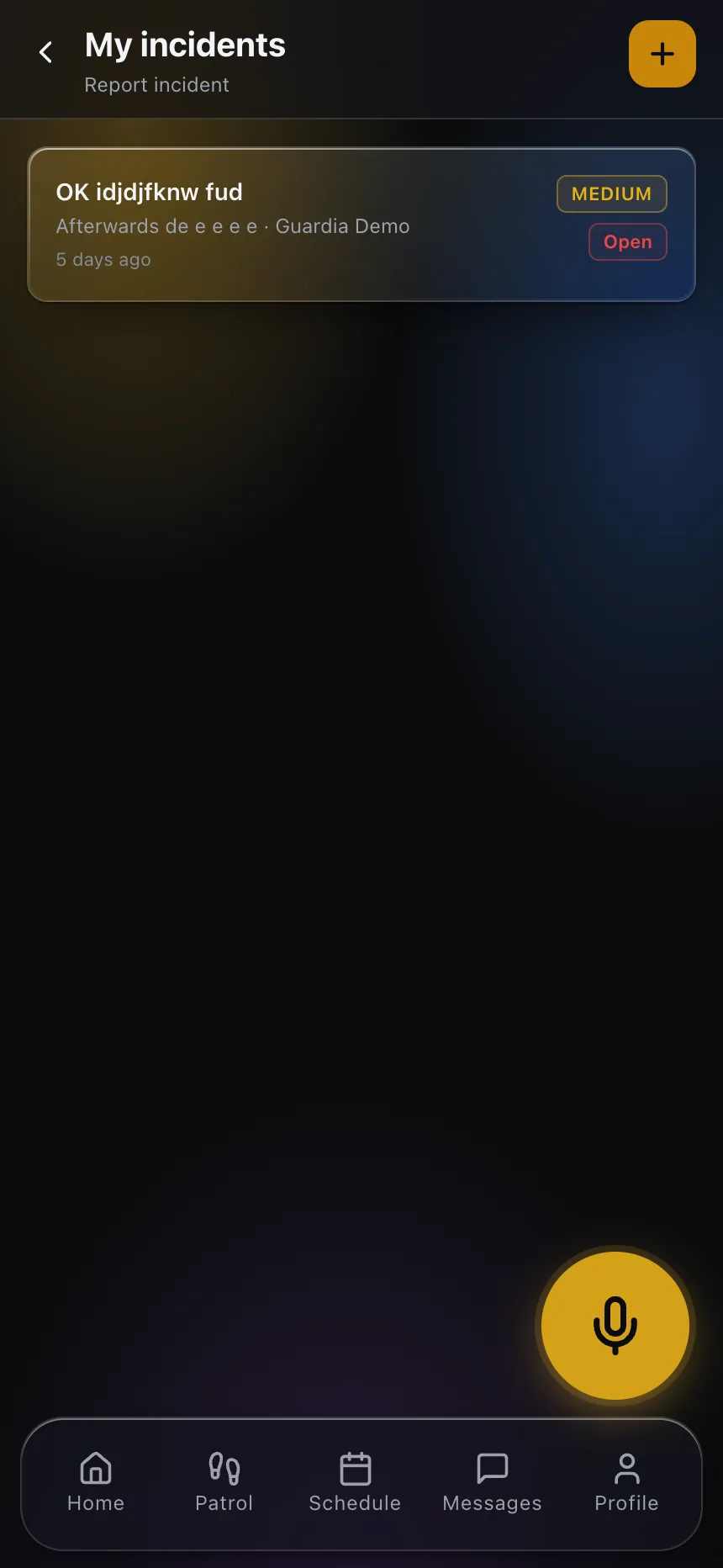
Log the request the same way you’d log an incident — because it is one. Time, requesting party, what was asked for, what was said in response, and what happened next. If footage is eventually released, log that too: what exactly, to whom, on whose authorization. This single habit — treating every police request for footage as a documented event rather than a hallway conversation — is what protects the company months later when someone asks “did we give the police that video, and did we have the right to?”
What this looks like in an operation with real volume
A company running a handful of sites can probably get away with word-of-mouth policy on this. A company running dozens of posts across multiple clients cannot, because the person who fields the request is rarely the person who understands the client contract’s terms on footage release, and by the time the request reaches someone who does, the officer at the gate has often already made a call.
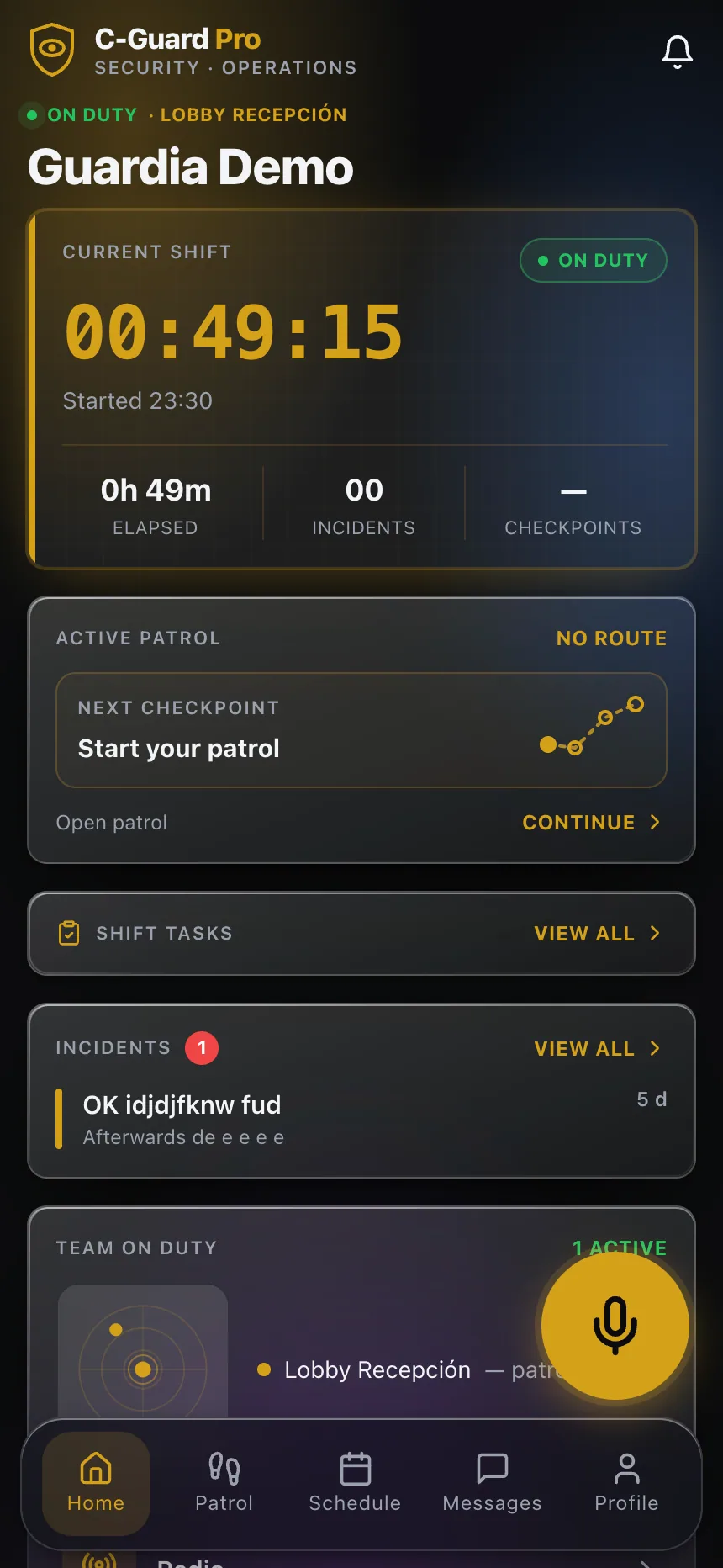
The fix isn’t a longer policy document nobody reads before a 6 a.m. request. It’s making the documentation step frictionless enough that officers actually do it in the moment — logging the request as an incident on their phone, flagged so a field supervisor sees it immediately rather than during a weekly review — and making the escalation path just as fast, so the “can a supervisor call me back before I hand this over” conversation happens in minutes, not after the officer has already decided alone. A digital incident reporting system that reaches a supervisor in real time turns this from a guessing game at the gate into a documented, reviewable decision — which is exactly what protects the company if that footage, or the fact that it was or wasn’t handed over, ever comes up again.
If your officers need a fast, reliable way to log and escalate requests like this from the field, see how incident reporting works inside CGuardPro, or get in touch to talk through your company’s current policy.