An operator expanding from Pennsylvania or New York into New Jersey often makes the same assumption on the way in: get the company licensed, then staff it the way they staffed everywhere else. New Jersey breaks that assumption almost immediately, because the New Jersey Security Officer Registration Act SORA puts the individual officer, not just the company, in front of the regulator.
This post explains that structural difference — what it changes about who files what, and for whom — without pretending to be a substitute for reading the current statute and rules yourself. Requirements, forms, and processes vary by state and change over time; nothing here should be treated as legal advice, and any owner operating or expanding into New Jersey should confirm current requirements directly with the regulator and with an attorney licensed in that state before making staffing or compliance decisions.
Who actually regulates the New Jersey Security Officer Registration Act SORA
In New Jersey, security officer registration runs through the New Jersey Security Officer Registration Act (SORA) program, administered by the New Jersey State Police. That’s a meaningfully different center of gravity than states where the company’s license is the primary regulatory event and individual officers are a secondary requirement layered on top. Under this structure, the officer holds a registration in their own name, tied to them as a person rather than to any single employer.
That single design choice ripples through almost every operational question an owner asks when they start staffing sites in the state.
What “officer-centered” changes in practice
Portability across employers
Because the registration belongs to the officer rather than the company, an officer who already holds a current New Jersey registration and moves between employers is, in principle, bringing a credential with them rather than starting over each time. For an owner recruiting experienced officers away from a competitor, that’s worth confirming directly with the state police unit that administers the program — it changes how fast a lateral hire from another New Jersey firm can actually go on post, compared to hiring someone with no prior registration in the state at all.
Where the compliance burden sits
An owner used to a company-centered model tends to build compliance processes that check boxes at the business level — is the license current, is the bond in place, is the insurance filed — and treat individual officer paperwork as a smaller, secondary task. New Jersey’s structure argues for flipping that emphasis. The company still has its own obligations, but a meaningful share of what regulators actually check traces back to whether each individual officer standing a post currently holds a valid registration in their own name, not just whether the company that placed them there is in good standing.
That makes per-officer recordkeeping a first-class operational task rather than a filing-cabinet afterthought. An owner needs a reliable way to know, for every officer on every schedule, whether that individual’s registration is current — not just at hire, but on an ongoing basis, since a lapse belongs to the person and can follow them onto whatever post they’re working that week.
Scheduling around individual status, not just headcount
Once registration status lives with the person, scheduling stops being purely a headcount exercise. A supervisor filling a callout at 5 a.m. needs to know not just who’s available, but whether that available officer’s registration is presently valid — because in an officer-centered system, putting an unregistered individual on post is the kind of gap that shows up in an inspection or an incident review regardless of how solid the company’s own paperwork is.
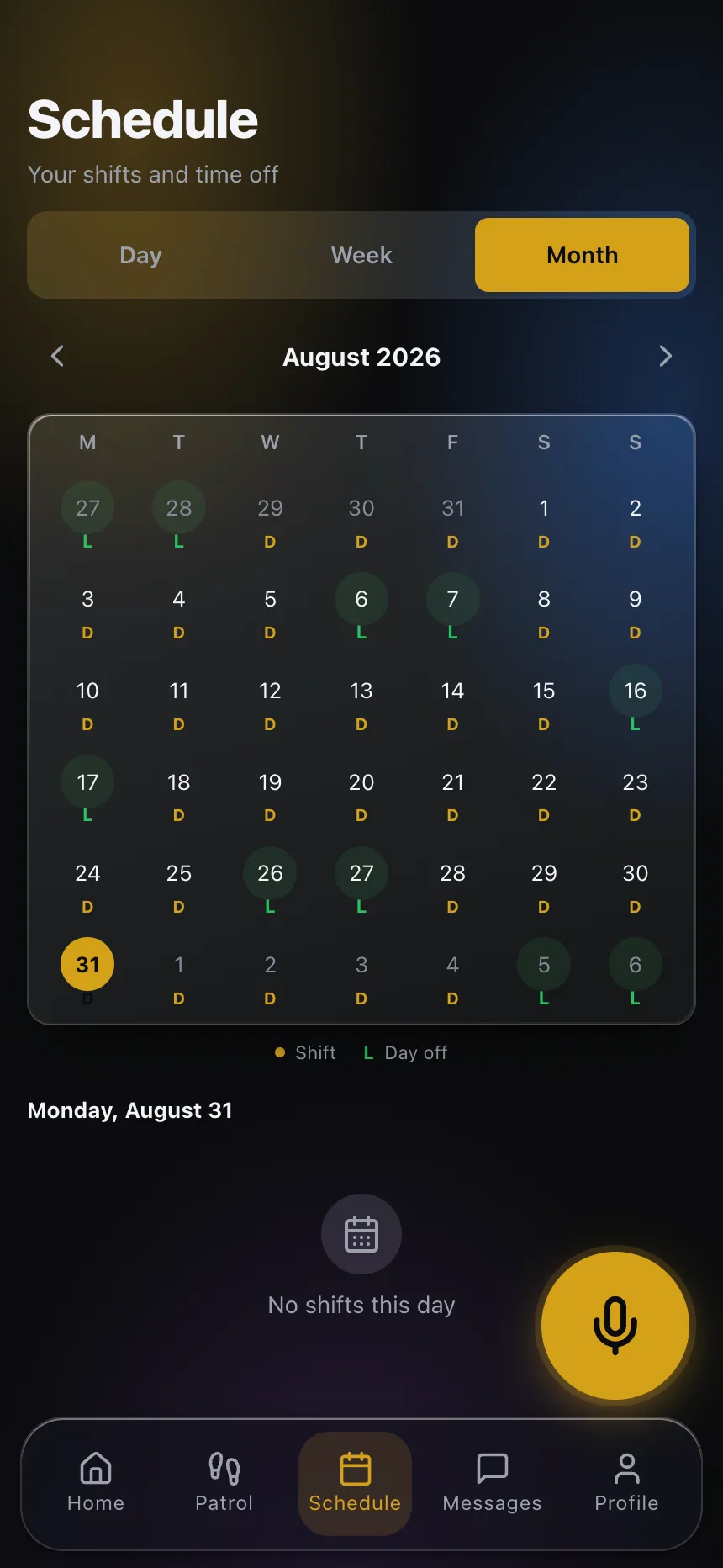
A guard scheduling software platform that tracks credential status alongside availability gives a supervisor one less blind spot at the exact moment they’re least equipped to catch it — mid-callout, under time pressure, filling a gap rather than reviewing a file.
What this means for a firm entering the state
For a company relocating or expanding into New Jersey, the practical takeaway isn’t a specific fee, timeline, or form number — those details change, and repeating a number here that goes stale in a year would do more harm than good. The takeaway is a shift in mental model: build onboarding and ongoing compliance processes that treat each officer’s individual standing with the state police as the primary compliance object, not a secondary form attached to the company’s own license. Confirm the current registration process, renewal cadence, and any reciprocity provisions directly with the New Jersey State Police SORA unit, and loop in counsel before finalizing how your intake and scheduling processes will track it.
That mental shift also changes what “onboarding” looks like operationally. A new hire isn’t fully placeable the moment they sign an offer — they’re placeable once their individual registration clears, and an owner who treats those two events as the same thing will eventually schedule someone onto a post before they’re actually eligible to be there.
What this means for a company operating across state lines
A regional operator staffing sites in New Jersey and in neighboring states with a more traditional company-centered license structure needs to hold two different mental models at once, and the failure mode is applying the wrong one to the wrong state. A compliance process built around “the company’s license is current, therefore we’re fine” works reasonably well in a state where that’s the primary regulatory event — it does not translate cleanly to New Jersey, where an individually lapsed registration on one officer is its own distinct problem regardless of the company’s own standing.
Owners running multi-state operations often solve this by making credential tracking granular by default everywhere, rather than maintaining a lighter-touch process for company-centered states and a stricter one just for New Jersey. It’s more consistent, and it protects against the scenario where an officer’s individual license or registration lapses in a state you assumed only cared about the company-level paperwork. Confirm the specific structure and requirements in every state you operate in directly with that state’s regulator — assuming one state’s model applies elsewhere is exactly the kind of error this kind of structural difference tends to produce.
Building the operational habit, not just the compliance file
The companies that handle officer-centered regulatory models well tend to do one thing consistently: they stop treating credential tracking as a once-a-year audit task and start treating it as a live field alongside scheduling and attendance, checked the same way a supervisor checks availability. Guard time and attendance records tied to individual officers, not just to a shift slot, make that habit easier to sustain across a growing roster.
If you’re building or tightening that process as you expand into a state with an officer-centered model like New Jersey’s, explore how CGuardPro keeps schedule, attendance, and officer records together, or get in touch to talk through your specific setup.