Most owners researching Michigan security guard agency license requirements assume there’s exactly one door to walk through for the financial-responsibility piece — get a bond, done. That assumption is fine in some states because it’s true. It’s not the whole picture in Michigan, and an owner who never checks whether there’s a second door ends up choosing the more expensive or less convenient path simply because nobody told them there was a choice at all.
This post is a general orientation, not a substitute for reading the actual statute or talking to a licensing attorney. Requirements, forms, and processes can change, and the only reliable source is the regulator itself along with your own counsel.
Who Actually Regulates This
In Michigan, security guard agency licensing falls under the Michigan Department of Licensing and Regulatory Affairs, generally referred to as LARA. That’s the body an owner needs to go to directly for current application requirements, forms, and any fee or timeline questions — this post intentionally does not repeat specific fees, bond amounts, or processing times, because those details change and because getting them wrong from a secondhand source is worse than not knowing them at all. Confirm everything directly with LARA and with an attorney familiar with Michigan’s licensing framework before you file anything.
Michigan Security Guard Agency License Requirements: The Bond-or-Insurance Choice
The detail that’s genuinely useful to know going in — and the one many owners researching general “security guard licensing” content never come across, because most state-by-state overviews assume a bond is the only mechanism — is that Michigan allows an applicant to satisfy the financial-responsibility requirement through either a surety bond or an equivalent insurance arrangement. That is a real either-or, not a workaround or a loophole. It exists because the state’s underlying goal is making sure a licensed agency can actually cover claims arising from its operations, and a properly structured insurance policy can serve that purpose just as a bond does.
What this means practically is that an owner evaluating how to meet this requirement has a genuine decision to make rather than a single prescribed path, and the right choice depends on factors specific to that owner’s situation — existing insurance relationships, how the company is otherwise covered, cash flow considerations, and how the bonding versus insurance markets are pricing each option at the time of application. None of those specifics belong in a general blog post, because they depend on the applicant’s own circumstances and on current market conditions that this post has no way to verify or keep current. The point here is narrower and more durable: know that the choice exists before you default to whichever option a broker mentions first, and confirm the exact current mechanics directly with LARA.
Why This Detail Gets Missed
Most general content about security guard licensing across states defaults to describing a bond because that’s the more common mechanism nationally, and writers covering many states at once tend to flatten the differences rather than calling out where a specific state actually diverges. Michigan’s flexibility on this point is exactly the kind of detail that gets lost in a fifty-state summary table, because it doesn’t fit neatly into a single column. An owner who read a generic multi-state guide and took away “you need a bond” isn’t wrong about most states, but they’d be operating on incomplete information specifically for Michigan.
This is also a reminder that licensing research done once, for one state, doesn’t transfer cleanly to another. A company expanding into Michigan from a state with a single, mandatory bond requirement should not assume the same rigid structure applies — and, just as importantly, a company already licensed in Michigan shouldn’t assume every other state it expands into offers the same either-or flexibility. Each state’s licensing authority sets its own rules, and the only way to know what applies is to check with that state’s regulator directly, every time.
Beyond the Financial-Responsibility Requirement
Financial responsibility is one piece of a broader licensing application, and Michigan, like other states, has additional requirements around the agency itself and the individuals it employs — the specifics of what’s required for company officers, for individual guard registration, and for any additional categories like armed licensure are all things to confirm directly with LARA rather than infer from this post or from any other state’s rules. Nothing here should be read as a complete checklist; treat it as a starting point for the conversation you need to have with the regulator and with counsel.
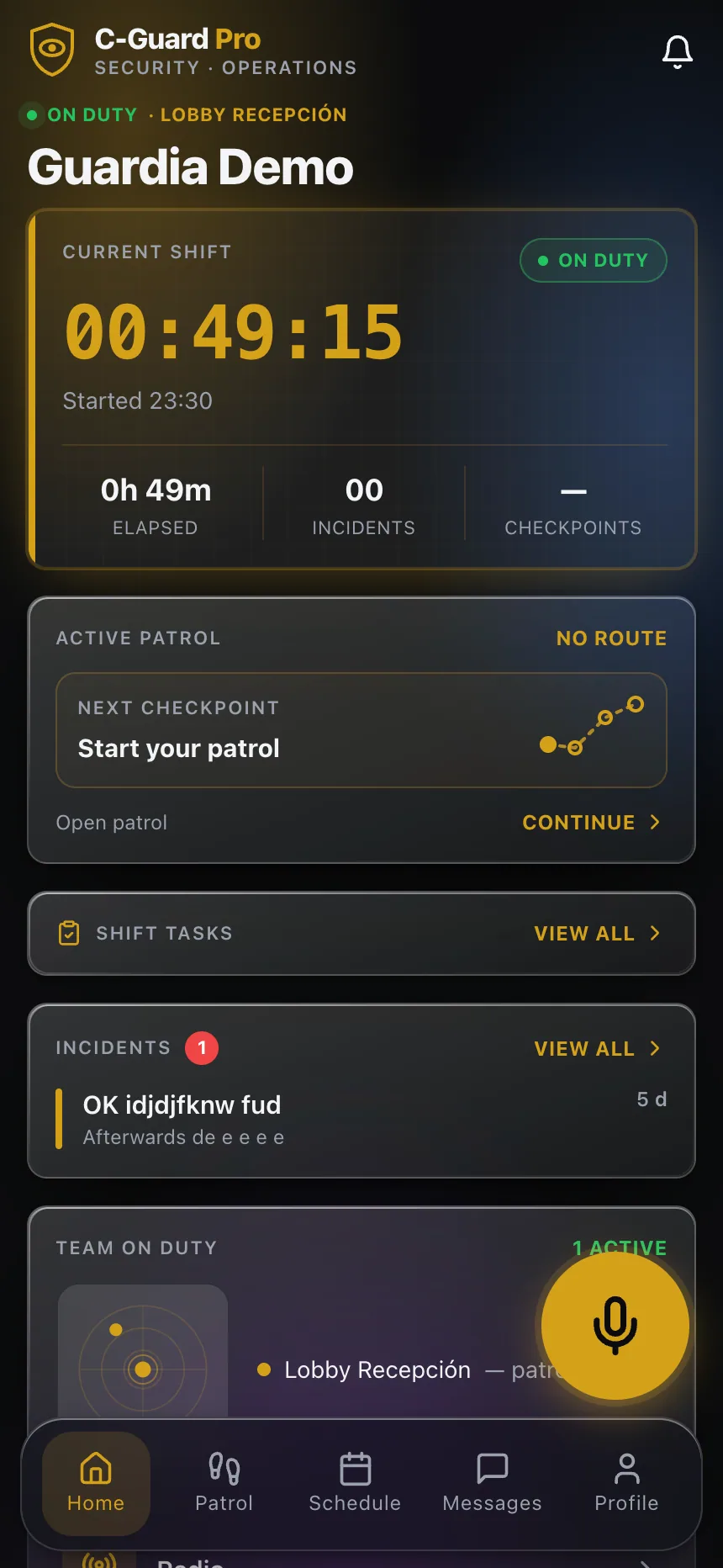
Once a license is in hand, the operational side of running a compliant agency in Michigan looks like running one anywhere else: officers need to be assigned to posts they’re actually qualified and registered for, and the company needs a reliable record of who worked where and when in case that record is ever requested during a renewal or an audit. A scheduling system that ties officer assignments to their current credentials, and keeps a clean history of who covered which post, makes that kind of record-keeping far less of a scramble when it’s actually needed.
Timing the Decision Around Renewal, Not Just Initial Application
The bond-or-insurance choice isn’t necessarily a one-time decision made at the moment of first licensing. A company’s insurance arrangements can change over the life of the business — a new umbrella policy, a change in carrier, a renegotiated package as the company grows — and any of those changes could shift which option is more practical to satisfy the financial-responsibility requirement on renewal. An owner who defaulted to a bond at initial application without knowing insurance was an option at all is in a reasonable position to revisit that choice at the next renewal cycle, rather than assuming the original decision has to stand permanently.
This is exactly the kind of detail worth raising directly with LARA at renewal time rather than assuming the agency’s requirements or an owner’s own circumstances haven’t changed since the last filing. A licensing requirement that felt fixed at first application isn’t necessarily fixed for the life of the company, and revisiting it periodically, with current information from the regulator, costs little and can save real friction down the line.
The Actual Takeaway
Michigan’s bond-or-insurance flexibility for financial responsibility is a genuine choice built into the license, not a technicality to skip past. Whether it’s the right choice for a given company depends on specifics this post can’t answer — cost, existing coverage, and current market terms all matter, and all of them need to be checked with LARA and with counsel rather than assumed from general licensing content written for a different state or for the industry nationally. This is not legal advice, and Michigan’s specific requirements can change, so treat everything here as a starting point for your own verification, not a finished answer.
If you want to see how a licensed operation keeps its scheduling and compliance records organized day to day, explore CGuardPro or get in touch.