Most owners starting a guard company assume there’s a state security board somewhere with a phone number, a paper application, and a person who answers questions about the private security industry specifically. Looking for the illinois private security contractor license the way you’d look for a licensing office in most other states costs a week or two before anyone realizes that assumption is wrong here.
The Illinois private security contractor license is issued by the Illinois Department of Financial and Professional Regulation — IDFPR — through its online CORE portal, the same system the state uses to license everything from cosmetologists to real estate appraisers. There is no separate security-industry office to call, no dedicated intake staff who deal only with guard companies, and no paper form waiting in a drawer. If you go looking for a private security licensing division the way you might in another state, you won’t find one — you’ll find a login screen shared with a few hundred other professions.
Why that structure trips people up
A licensing process built around a shared, generic portal behaves differently from one built around a single-purpose office. The application categories, document upload fields, and status language on CORE are written to serve professions with very different requirements from a security contractor company — barbers, funeral directors, private detectives are all in the same system. An owner who expects the portal to walk them through security-specific requirements step by step is going to find generic fields instead, and has to already know what a security contractor application specifically needs before sitting down to fill it out.
This matters most for the owner who is used to a different state’s process, or who is opening a branch in Illinois after operating somewhere else. The instinct to search for “Illinois security guard license office” leads to old third-party pages, not the current IDFPR system. The instinct to call a general number and ask what a security company needs often gets routed to someone who handles a completely different license type that week.
What to have ready before you start the application
Because the portal itself won’t prompt you industry by industry, the practical move is to build your own checklist before logging in, based on what IDFPR’s current instructions for the private security contractor license ask for. That generally includes company formation and ownership documentation, individual background information for owners and qualifying agents, and — as with most licensed trades — proof of the required insurance coverage. The specific document list, any bonding requirement, and what IDFPR currently asks a qualifying agent to demonstrate can and do change, so treat this article as a starting map, not a substitute for reading IDFPR’s own current application instructions line by line before you begin.
Two practical habits help regardless of what the exact list says this year:
- Read the application requirements straight from IDFPR’s site immediately before you start, not from a guide written months earlier — requirements, forms, and portal navigation get updated, and a stale list is worse than no list.
- Assign one person inside the company to own the CORE account. Because it’s a shared, general-purpose portal, a login that gets set up by whoever was available that day and then forgotten is how renewal notices get missed later. Treat the credentials the same way you’d treat a bank login, not a shared office password.
Where an owner coming from another state gets tripped up
An owner who has already run a licensed security company somewhere else brings assumptions into Illinois that don’t transfer cleanly. Some states run licensing through a dedicated security board with staff who field industry-specific questions daily; Illinois runs it through a portal that treats a security contractor application the same as an application from an unrelated profession. That means the informal knowledge an experienced multi-state operator has built up elsewhere — who to call, what a reviewer is actually looking for, how long a typical back-and-forth takes — doesn’t carry over. Illinois has to be treated as its own process from the start, even for an owner who has done this successfully in three other states.
The same caution applies to reciprocity. Some states recognize licensing or experience from elsewhere in some form; whether Illinois does anything similar for a private security contractor license, and under what conditions, is exactly the kind of detail that changes and should be confirmed directly with IDFPR rather than assumed from another state’s rules.
Once the company license is in hand
Getting the entity licensed is the first gate, not the last one. Illinois, like most states, separates the company-level license from anything required of the individual officers a licensed contractor employs, and from any local requirements a specific municipality or county layers on top. None of that is uniform enough to state as fact here — officer-level requirements, any required registration, and local rules all vary and change, and the only reliable source is IDFPR directly, along with counsel familiar with Illinois private security regulation. Nothing in this article should be read as legal advice; verify current requirements with IDFPR and with an attorney before you rely on any of it.
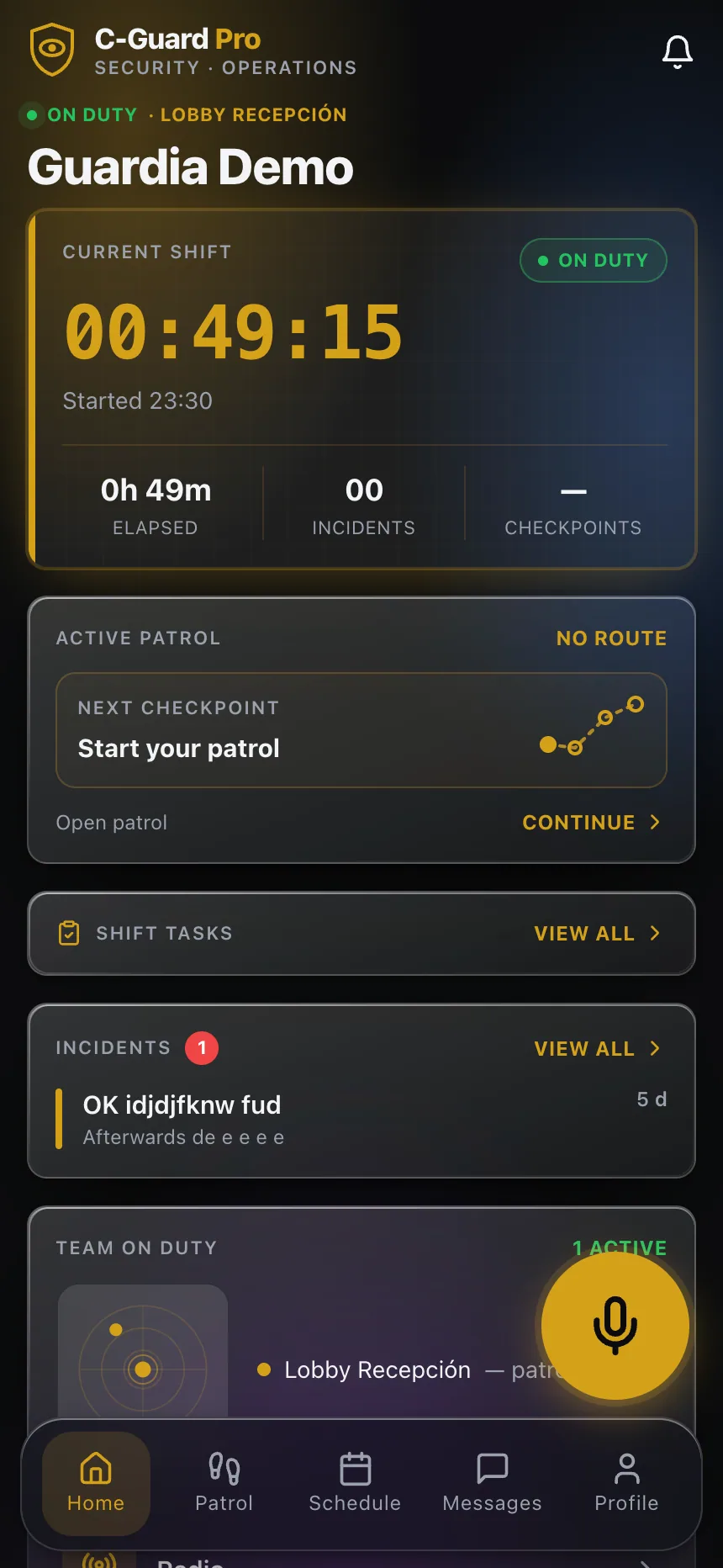
What a newly licensed company can control immediately is how its operation runs once it’s cleared to bid and staff jobs. That’s where the actual work starts: building schedules that hold up against callouts, getting officers set up on a consistent security guard app instead of a mix of paper logs and text messages, and having post orders and reporting practices in place before the first client site goes live rather than improvised after a problem happens.
The renewal cycle deserves the same attention as the first application
Because the CORE portal is shared across so many license types, renewal reminders and required continuing obligations don’t always look distinctly “security” in tone — they read like the same generic renewal notice a cosmetology license holder gets. That generic framing is exactly why a busy owner can miss one. Build renewal dates into your own calendar independent of whatever IDFPR’s system sends, and confirm well ahead of any deadline that nothing about the requirements has changed since the last cycle — IDFPR updates its own instructions periodically, and there’s no substitute for checking the current version yourself.
None of this is a reason to avoid opening a security company in Illinois. It’s a reason to stop assuming the state will hand-hold a security-specific process, and to start the CORE application already knowing what a security contractor license needs, rather than learning it field by field on the portal itself.
If you’re building out the operational side while you work through licensing, get in touch or browse CGuardPro’s resources for how other guard companies structure scheduling, reporting, and supervision from day one.