The first thing to know about a Colorado security guard company license is that the state doesn’t issue one. There is no statewide board, no state police licensing unit and no state guard card for private security officers in Colorado. Owners who spend a morning searching for “the Colorado agency” are looking for something that doesn’t exist.
That doesn’t make Colorado unregulated. It means regulation happens where your posts are — city by city — and the biggest of those local regimes, Denver’s, is detailed and strict. This guide explains what that means for a guard company, walks through Denver’s licenses, and covers the mistakes that multi-city operators make. It is not legal advice; confirm everything with the local licensing office before you sign a contract.
No state license — and no state PI license either
Colorado once had a state licensing program for private investigators under the Department of Regulatory Agencies. According to the Division of Professions and Occupations, the Office of Private Investigator Licensure ended effective August 31, 2021, after the continuation bill was vetoed. Security guard companies were never part of a state licensing program to begin with.
So for a guard company, the state layer is ordinary business setup: forming the entity with the Colorado Secretary of State, registering with the Department of Revenue for taxes, and carrying the workers’ compensation and other coverage any Colorado employer needs. The security-specific licensing happens locally.
Denver: two licenses, one city office
Denver is the local regime most operators meet first, and it’s the one with the most structure. Security licensing in Denver is handled by the Department of Licensing and Consumer Protection (formerly Excise and Licenses), working with the Denver Police Department. Its security services pages are at denvergov.org — Security services.
In November 2017 Denver adopted Council Bill 17-1177, which replaced the old merchant guard and merchant guard company licenses with two new ones — a security guard license for individuals and a private security employer license for companies. The new ordinance and rules took effect November 1, 2018. If you’re reading guidance that still talks about “merchant guards,” it predates the current system.
The private security employer license. A company that employs security guards in Denver needs this license. Denver’s own FAQ is explicit that it isn’t only for contract guard companies: businesses with in-house security, including bars and restaurants, cannot employ security guards until they hold a private security employer license. As of September 2026, the city’s FAQ lists these minimum insurance requirements for a private security employer:
- Employer’s liability insurance: $100,000 minimum.
- General liability insurance: $1 million combined single limit for bodily injury and property damage per occurrence.
- Workers’ compensation insurance: $100,000 minimum.
- A vehicle endorsement requires automobile coverage of at least $500,000 combined single limit per occurrence.
The same FAQ describes a weapons endorsement that employers can apply for so their guards may carry firearms, stun guns, batons or pepper spray, subject to the guards completing the required training.
The security guard license. Individual guards in Denver hold their own license, applied for through Denver’s online permitting and licensing portal. Guard applications require a certificate of security guard training completion, and only providers on Denver’s list of eligible training providers can issue that certificate. Check the city’s current training requirements and fees before you schedule new hires; they’re set out in Denver’s security guard rules and regulations, linked from the security services page.
Beyond Denver: every city is its own question
Outside Denver, requirements vary by municipality. Some Colorado cities have their own security licensing, some fold it into a general business license, and some have nothing security-specific at all. We haven’t listed other cities’ rules here, because we couldn’t verify each of them against the city’s own current pages, and a wrong list is worse than no list.
The practical approach is a checklist per jurisdiction:
- For every site you’ll staff, identify the city or county that has jurisdiction — not the mailing address on the contract, the actual location of the post.
- Call or check that jurisdiction’s business licensing office and ask specifically whether security guards or security companies need a license, a registration or a police background check.
- Keep the answer, the date and the name of the person you spoke with in your compliance file.
A company with posts in Denver, Aurora and Lakewood may be dealing with three different sets of rules — or with one strict set and two lighter ones. Either way, you need to know which is which before an officer stands a post.
Armed posts
With no state guard license, armed security in Colorado is governed by general firearms law plus whatever the local jurisdiction requires. In Denver, that means the weapons endorsement on the private security employer license and the associated training for guards. Elsewhere, ask the city directly, and confirm your insurance carrier’s requirements for armed coverage.
Renewal
Because there’s no state license, there’s no single renewal date. Each local license runs on its own term, and Denver’s guard and employer licenses renew separately. Keep a calendar per jurisdiction, and remember that insurance certificates generally have to be on file before a license is issued or renewed.
Common mistakes
Assuming no state license means no license. Denver’s licensing is mandatory and enforced.
Using merchant-guard era guidance. Denver’s system changed in 2018.
Forgetting in-house security. In Denver, even bars and restaurants with their own staff need a private security employer license before employing security guards.
Using the wrong training provider. Denver accepts training certificates only from its listed eligible providers.
Applying one city’s rules to the next. Check every jurisdiction where you have a post.
How CGuardPro helps once you’re licensed
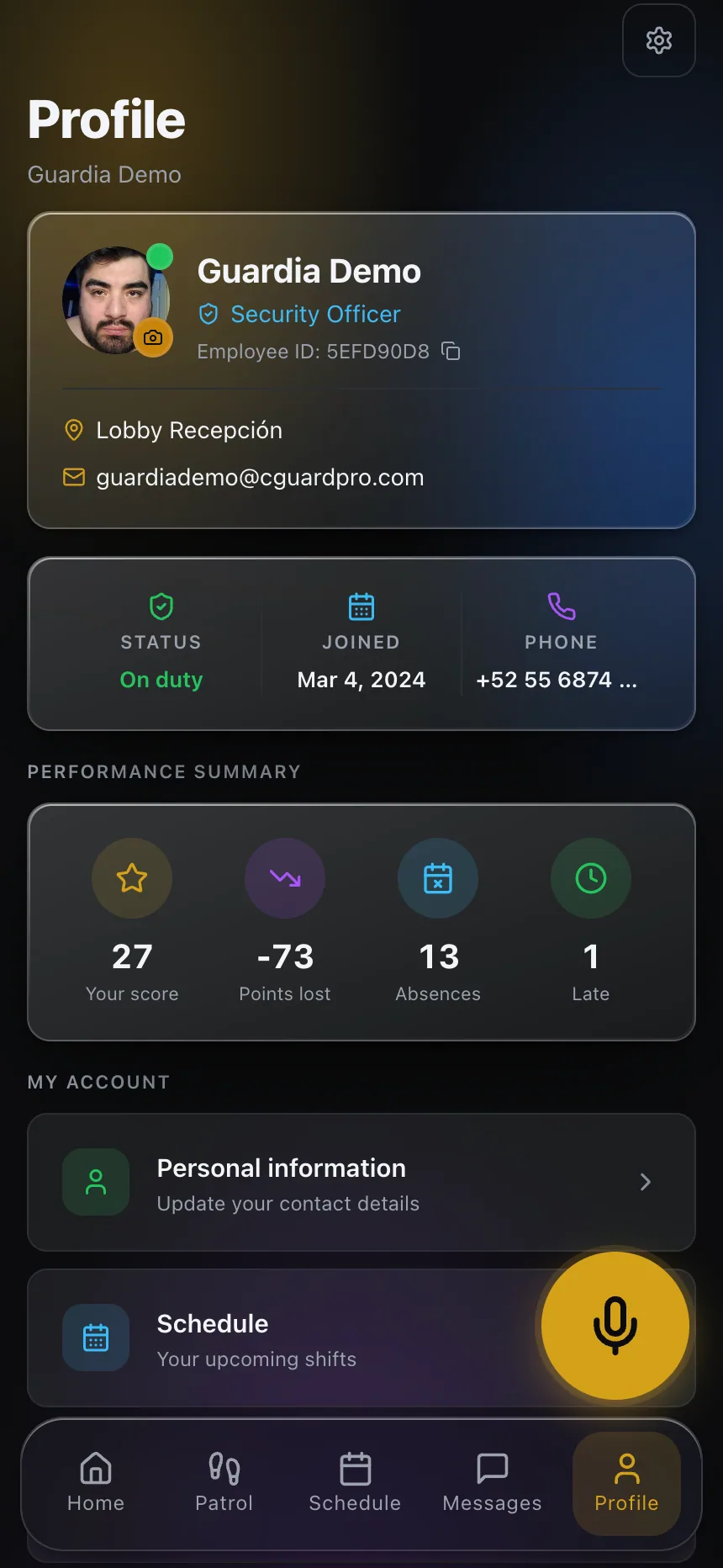
CGuardPro sells software and doesn’t hold, issue or verify licenses — there’s no connection to Denver’s licensing portal, and each license remains your responsibility. What it does is make the local patchwork manageable. Each officer has a document file with expiry dates, and the system sweeps them and raises the ones coming due, so a Denver guard license about to expire surfaces before the officer’s next shift in the city.
That record carries into guard scheduling software, where you build coverage around the officers who can legally work each site, and into security dispatch software, which shows license status at the moment of assignment. CGuardPro is trusted by 600+ security companies worldwide.
For other states, see our security guard company license by state hub or the overview of security guard license requirements by state. If you’d like to see how the platform handles multi-city compliance, get in touch.