An operations manager spends forty minutes walking the owner through a feature comparison — GPS tracking, digital reports, a client portal, an app for the officers — and the owner says it sounds fine but he’s not signing anything this quarter. Two weeks later, a client calls disputing three missed patrols on an invoice, the company has no record either way, and the client cuts the contract by a third out of frustration rather than proof. The owner asks, unprompted, why they don’t have a system that would have settled that call in five minutes. That’s the answer to how to justify buying security guard software to an owner, and it’s worth noticing that it’s the opposite of the pitch that failed two weeks earlier: it wasn’t a list of capabilities, it was one specific, already-painful incident matched to the exact record that would have made it a non-event.
Why the feature-list pitch usually doesn’t land
Owners of guard companies aren’t uninformed about their own operation, and a features walkthrough tends to read to them as generic marketing regardless of how good the product actually is — because every vendor pitch sounds like a features walkthrough, and an owner who’s sat through several of them has learned to discount all of them roughly equally. The deeper problem is that a feature list asks the owner to imagine a hypothetical future benefit, and owners who run tight-margin operations are trained, correctly, to be skeptical of hypothetical benefits. “This will help you supervise better” isn’t a claim an owner can evaluate; it’s a claim they have to take on faith.
What an owner can evaluate instantly is a cost they’ve already paid. Every guard company owner has a mental list of the disputes, the client calls, and the moments that cost them money or a relationship in the last year — and if the pitch connects directly to one of those, the owner isn’t being asked to imagine a benefit anymore. They’re being reminded of a bill they already paid and shown the receipt that would have prevented it.
How to justify buying security guard software to an owner
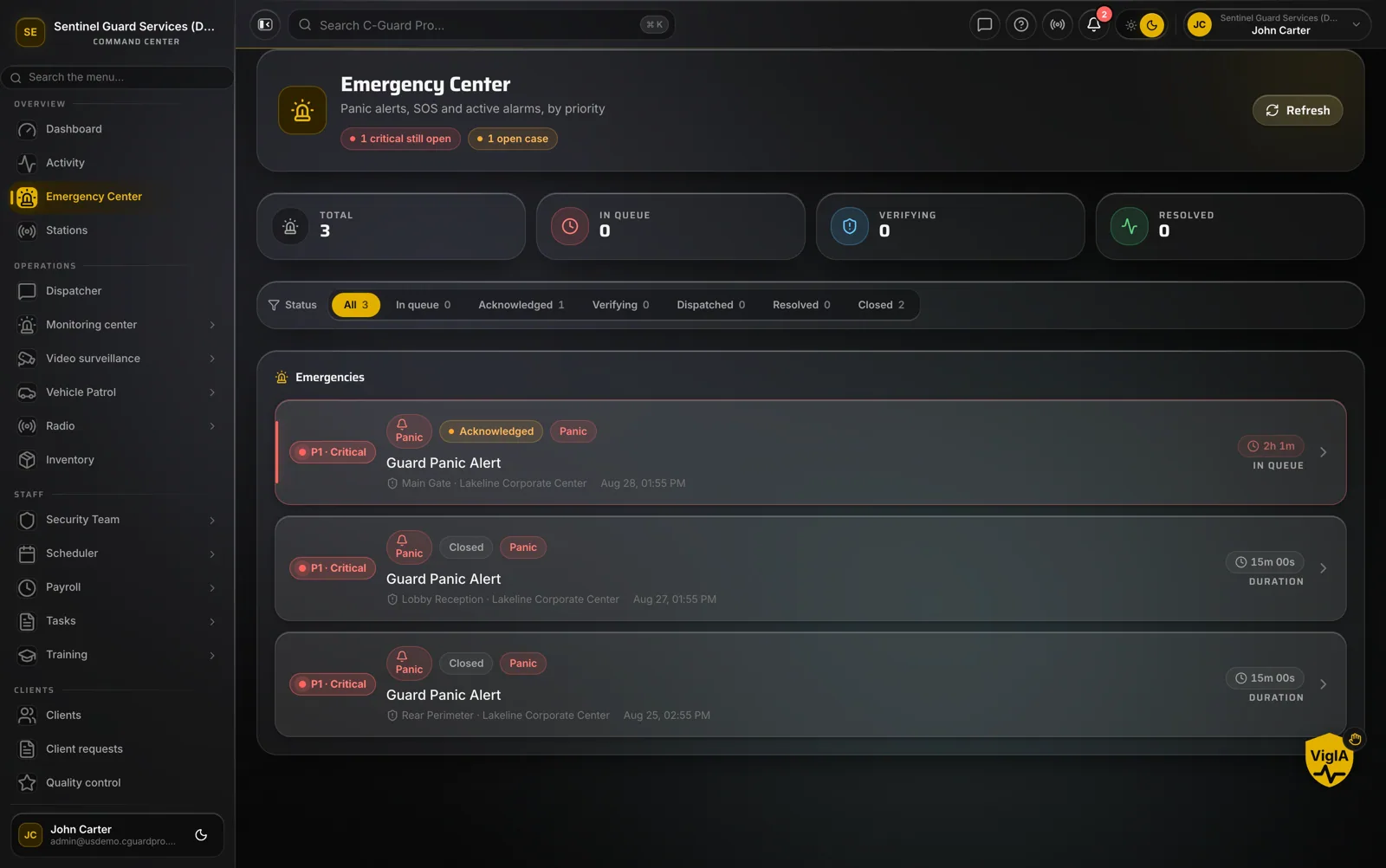
This means the first step in building an internal business case, or in a vendor’s pitch to an owner, isn’t a product walkthrough — it’s an inventory of the operation’s actual recent pain. A missed patrol the client caught before the company did. A disputed invoice line the company couldn’t defend because nobody could prove the shift was covered. An officer who claimed they responded to an alarm and a client who says nobody showed, with no record settling it either way. A liability claim where the company’s only account of what happened was one supervisor’s memory, written up two days later. Every guard company has at least one of these in recent memory, and it’s almost always more persuasive than any capability the software has that the company hasn’t yet felt the absence of.
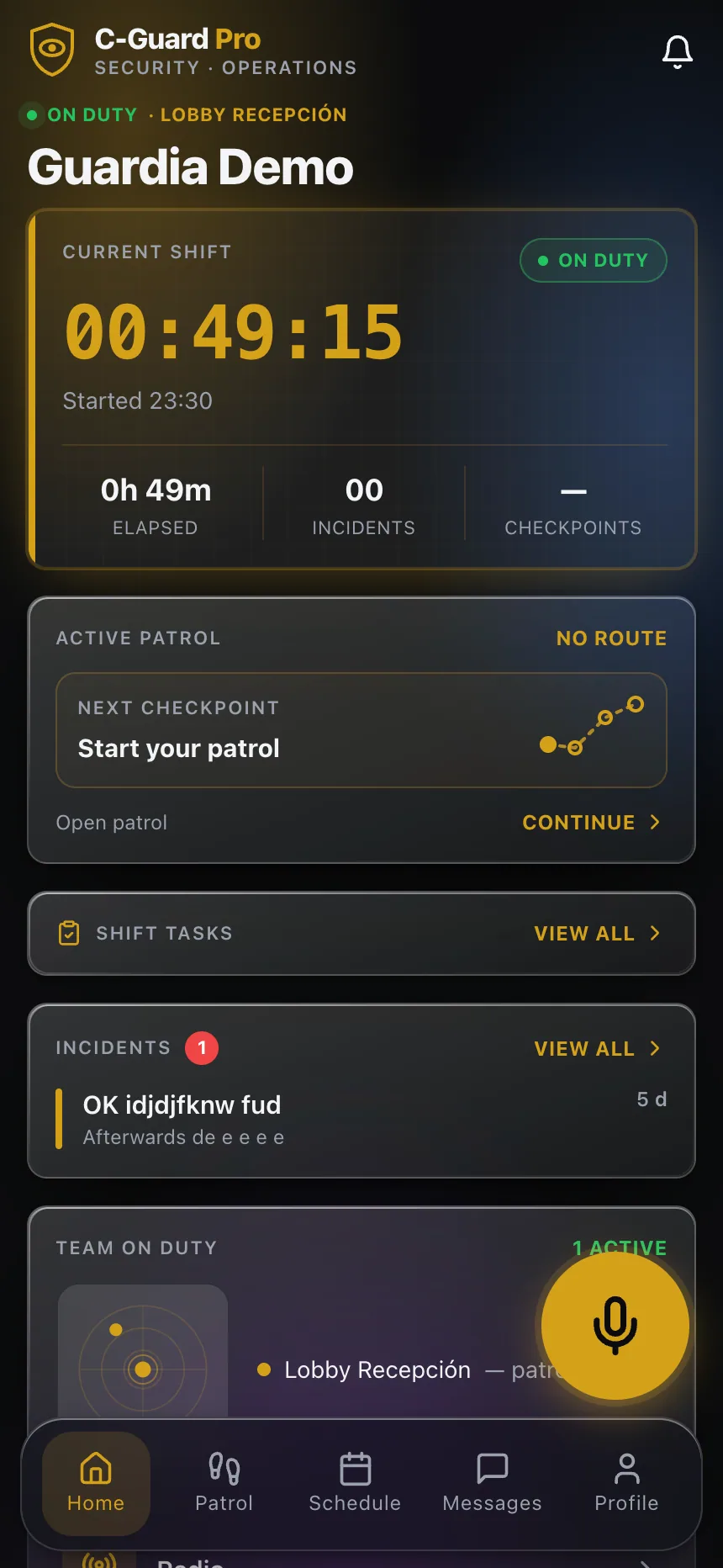
Once that incident is identified, the pitch writes itself: here’s what happened, here’s why the company couldn’t prove or disprove it, here’s the specific record — a GPS-timestamped patrol log, a geofenced clock-in, a photo attached to an incident report — that would have turned an unresolved dispute into a two-minute conversation. That’s a business case built on something the owner has already paid for once. It doesn’t need a projection of future savings, because the past incident already established that the cost is real.
Why this beats an ROI spreadsheet
It’s tempting to build the case the other way — estimate hours saved on reporting, estimate reduced dispute time, build a return-on-investment model with real-looking numbers. Resist that instinct unless the numbers are the company’s own actual figures, because invented or industry-average numbers dressed up as an ROI case fall apart the moment the owner, who knows their own margins better than any outside model, asks where the figures came from. A single real incident, told accurately, survives that scrutiny in a way a hypothetical spreadsheet doesn’t. It’s also just more memorable — owners remember stories about their own company, not percentages from a slide.
Who actually needs to hear the pitch
One detail that trips up a lot of internal advocates: the owner isn’t always the right audience by themselves. In a company where operations and finance report separately, the operations manager may be entirely convinced by the missed-patrol story while the finance side is the one who actually signs off on new recurring costs, and finance’s version of the same incident needs to be framed differently — not “this would have prevented a bad conversation with the client” but “this is the specific revenue we lost when the client cut the contract, and here’s what would have kept that account intact.” Same incident, two audiences, two different things each one needs to hear before they’ll say yes.
This is also where it helps to have already picked which accounts are most exposed to the kind of dispute the pitch describes. An owner or a finance lead is more likely to act quickly on “our three largest accounts have no defensible patrol record right now” than on “our reporting could be better in general.” Specificity about which relationships are actually at risk turns an abstract improvement into a concrete decision with an obvious next step.
What if there’s no incident like that yet
Not every company has a headline-worthy dispute sitting in recent memory, and it’s tempting to conclude the technique doesn’t apply until one shows up. It usually does apply, just at a smaller scale than a lost contract. Ask account managers for the small stuff instead of the big stuff: a client who asked a pointed question about coverage and got a vague answer, an invoice a supervisor had to eyeball and guess at rather than confirm, a callout nobody’s sure got covered because the person who’d know wasn’t the one who answered the phone. None of these rose to the level of a real dispute, but each one is the same gap the missed-patrol story exposes, just before it became expensive. An owner who can’t point to a lost account can usually still point to a moment where someone had to bluff confidence they didn’t actually have, and that works almost as well, because it’s still something the owner remembers happening rather than something being predicted.
Making the case durable, not just persuasive
A pitch built on one incident is a strong opener, but it holds up over time only if it generalizes honestly. The point isn’t “buy this because of the one bad week in March” — it’s “this is the category of problem the company has no defense against right now, and March is just the time it became visible.” An owner who signs off because of one incident and then finds the software doesn’t actually address the underlying pattern will conclude, reasonably, that they were sold on an anecdote. The internal case has to name the pattern the incident revealed — undocumented patrols, disputes with no record, response claims nobody can verify — and connect the software to fixing that pattern specifically, not just to avoiding a repeat of the one story that got the owner’s attention.
If you’re building this case for your own operation, look at what a real evaluation should weigh beyond price — see how to evaluate guard management software and what it typically costs — or get in touch to talk through the specific gap in your own records.