Ask someone outside the industry what bank security guard duties during a robbery look like and most describe the wrong movie — a guard drawing down, physically stopping the robber, becoming the story. The actual sequence a trained branch officer follows is almost the opposite: get people out of harm’s way, become a reliable source of information for responding police, and produce documentation that holds up. Intervention isn’t step one. In most cases, it isn’t a step at all.
Why the reflex to intervene is the wrong instinct
A robbery in progress is the single highest-consequence moment a bank guard will ever face, and the instinct to physically stop it is understandable and almost always wrong. The guard doesn’t know if the individual is armed, doesn’t know if there’s a second person outside coordinating, and doesn’t know what a sudden confrontation does to a room full of customers and tellers who are currently compliant and unharmed. The overwhelming majority of bank robberies end without physical violence when nobody escalates them. An officer who intervenes introduces the one variable most likely to turn a property crime into an injury.
This is a training and post-order issue more than a courage issue. A guard who’s never been told explicitly, in writing, that their job during an active robbery is observation and customer safety — not confrontation — is left to improvise under the worst possible conditions. That’s a gap in post orders, not a gap in the individual.
Bank security guard duties during a robbery, in the actual sequence
First: customer and employee safety. Where possible, this means quietly directing people away from the immediate area without drawing attention that could escalate the situation — not shouting, not sudden movement, not anything that signals to the robber that someone is organizing a response. If there’s a duress or panic button that can be triggered silently, this is the moment for it, precisely because it doesn’t require the guard to speak, move conspicuously, or interrupt what’s happening.
Second: observation, held quietly until it’s safe to use. Height, build, clothing, direction of travel if the robber flees on foot or by vehicle, any distinguishing features, whether a weapon was displayed or only implied verbally. None of this gets acted on during the robbery — it gets held, mentally or via a note if it’s safe to make one, until responding officers arrive and need it.
Third: liaison with responding police. This is where a bank guard’s role becomes genuinely useful to law enforcement rather than passive. The guard was present, saw the sequence, likely knows the branch layout better than anyone about to walk in, and can brief responding officers fast — exit used, direction of travel, time elapsed, whether anyone was injured, where the teller who was approached is now. A guard who’s thought through this handoff in advance gives police usable information in the first sixty seconds instead of a shaken, disorganized account five minutes later.
Fourth: documentation. Once the scene is secured and law enforcement has taken over, the guard’s incident report becomes the branch’s own record — independent of, and sometimes more detailed than, what police capture in the moment, because the guard had time afterward to reconstruct sequence and detail that an officer taking a scene statement doesn’t always draw out.
What the documentation actually needs
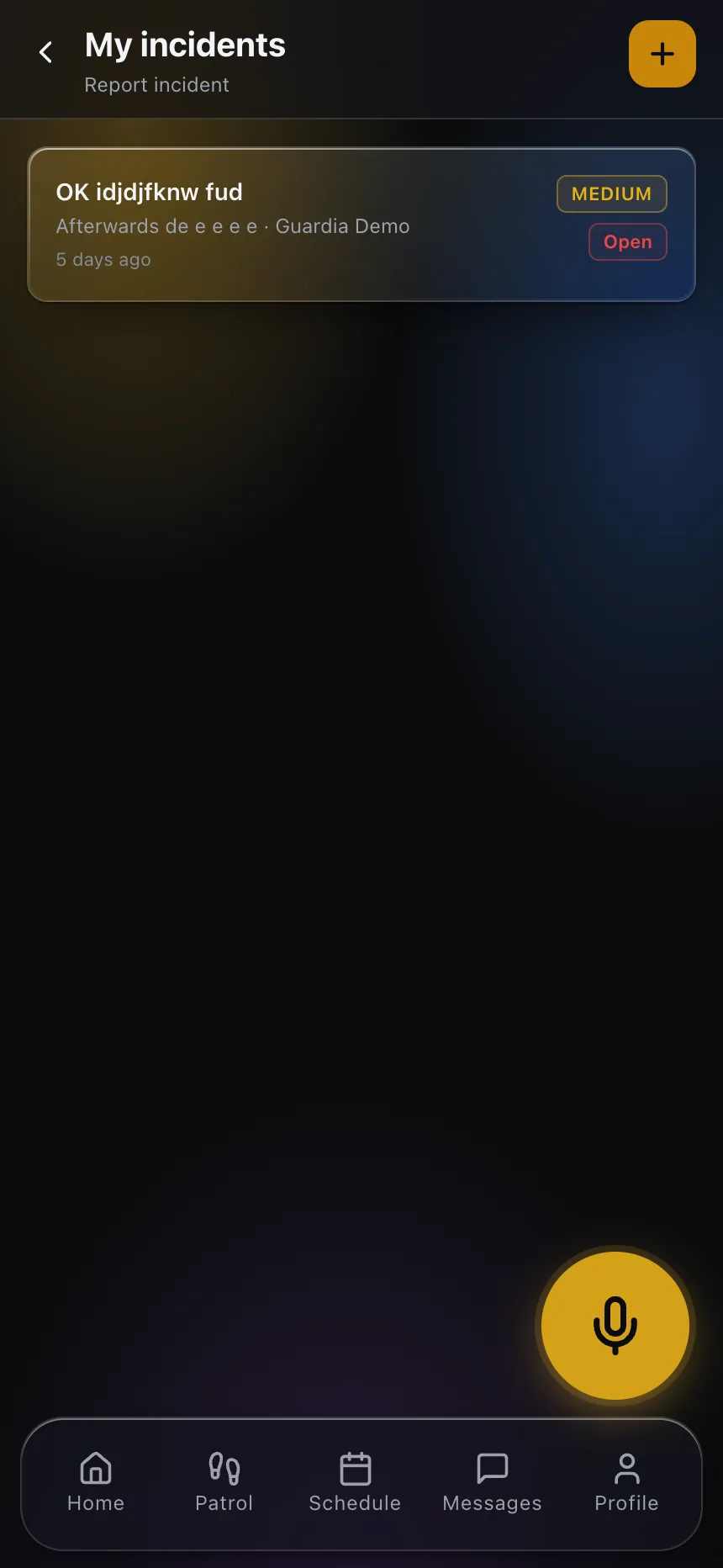
A bank robbery report isn’t a generic incident write-up. It needs a clear timeline — when the individual entered, when the threat became apparent, when they left, when police arrived — because banks, insurers, and law enforcement all reconstruct the event from timing as much as from description. It needs the observational detail preserved exactly as recalled, not smoothed into a cleaner narrative that loses the specific details a detective might use. And it needs to be filed while the memory is still close to the event, which is where a mobile incident reporting tool that the guard can use immediately after the scene clears — rather than a paper form filled out at end of shift, hours later — makes a real difference in accuracy.
The role of radio and dispatch before, during, and after
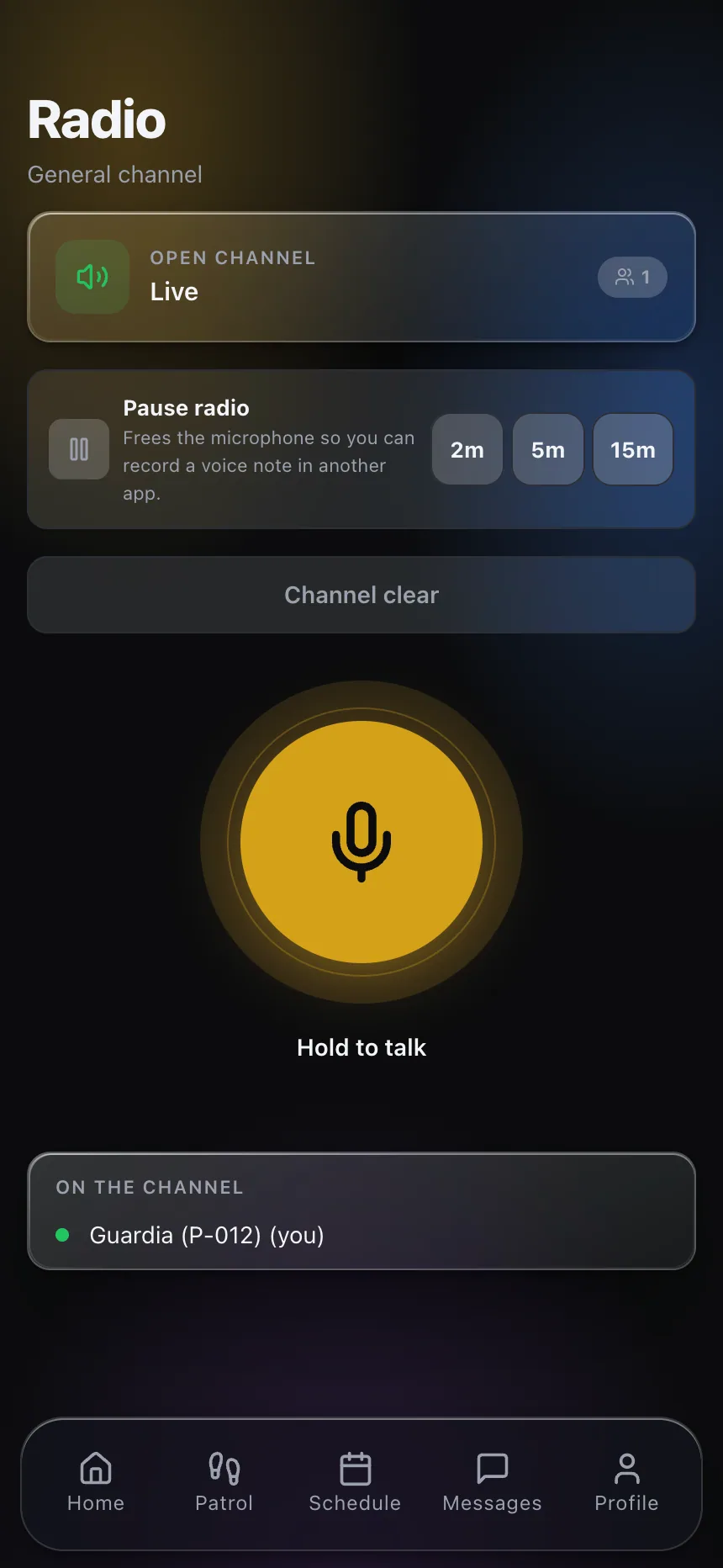
None of this works without a way to reach dispatch and other officers fast and quietly. A push-to-talk channel that doesn’t require pulling out a phone and dialing is what lets a guard alert a supervisor the moment something looks wrong — a customer acting strangely at the counter, someone loitering near the entrance for too long — before it becomes an active robbery rather than only after. And once law enforcement is on scene, dispatch’s job shifts to coordinating with the branch’s own chain of command and, where the account requires it, notifying the client’s risk or security team directly rather than leaving that call to the officer who just lived through the incident.
After the scene clears
The response doesn’t end when police leave. A branch robbery is a traumatic event for the guard who lived through it, not just an incident to close out on paper, and companies that treat the aftermath purely as a documentation exercise miss something that matters for retention and for the officer’s own wellbeing. Checking in with the officer in the days after — not just collecting the report and moving on — is a basic management responsibility, and it’s also practical: an officer who feels unsupported after an incident like this is far more likely to leave the post, or the company, than one who knows the company took the event seriously as something that happened to a person, not just a case number.
There’s also a pattern-recognition piece worth building into how these incidents get reviewed afterward. If a branch has had more than one incident, comparing the officer’s observations across events — same description, same approach, same timing pattern — can surface something useful for the bank’s own security team and for law enforcement that a single report in isolation wouldn’t show. That comparison only works if reports are detailed and consistent enough to line up side by side, which is another argument for structured digital reporting over a free-form paper narrative that varies by whoever happens to be writing it.
What this post isn’t
This is a description of the sequence a trained bank guard follows, not a training program and not a substitute for your company’s own post orders, your client bank’s specific protocols, or guidance from law enforcement and your insurer. Bank branches typically have their own security requirements layered on top of general guard training, and those requirements should come from the bank’s risk management team and be confirmed directly rather than assumed from a blog post.
If your current post orders for bank accounts don’t spell out this sequence explicitly, that’s worth fixing before the next incident, not after it. Get in touch to talk through how documentation and alerting fit into a bank security program that’s already got the fundamentals right.