The cheapest contract in a guard company’s portfolio is the second one signed with a client who already trusts you. There is no RFP, no insurance certificate exchange, no onboarding of a new billing contact, no ninety days of the client watching to see whether you are what you claimed. And yet most contract security companies grow almost entirely by chasing new logos, while upselling security clients they already serve stays an afterthought and the existing book remains exactly the size it was on day one.
The reason is usually not laziness. It is that the practice has a bad reputation inside the industry, and deservedly so, because the standard version of it is transparently self-serving: the account manager calls after an incident and suggests adding a post. The client hears “you want more money because something went wrong on your watch,” and the relationship takes a small permanent hit.
There is a better way to do this, and it starts with what you already know about the property.
You are already sitting on the sales intelligence
Your officers generate more information about a client’s property than anyone else who works there. Not opinions — observations, logged and timestamped, night after night. That record is the entire basis for growth on an existing account, and most companies throw it away by treating daily activity reports as a compliance artifact instead of an intelligence stream.
Read a quarter of reports on one site and patterns appear that neither you nor the client would have guessed:
- Doors propped repeatedly at the same loading dock, same shift, same day of the week.
- Vehicles found unsecured in a specific parking row that happens to be the one out of camera coverage.
- Tenants asking the lobby officer for escorts to the garage after dark, informally, several times a week.
- Maintenance hazards logged over and over — a gate that does not latch, a light out for two months.
- Alarm activations at an adjacent building the officer notices on patrol but that nobody has told the client about.
Each of those is a genuine need. Not a hypothetical risk, not a fear-based pitch — a thing that is happening on their property, documented by their own vendor, with dates.
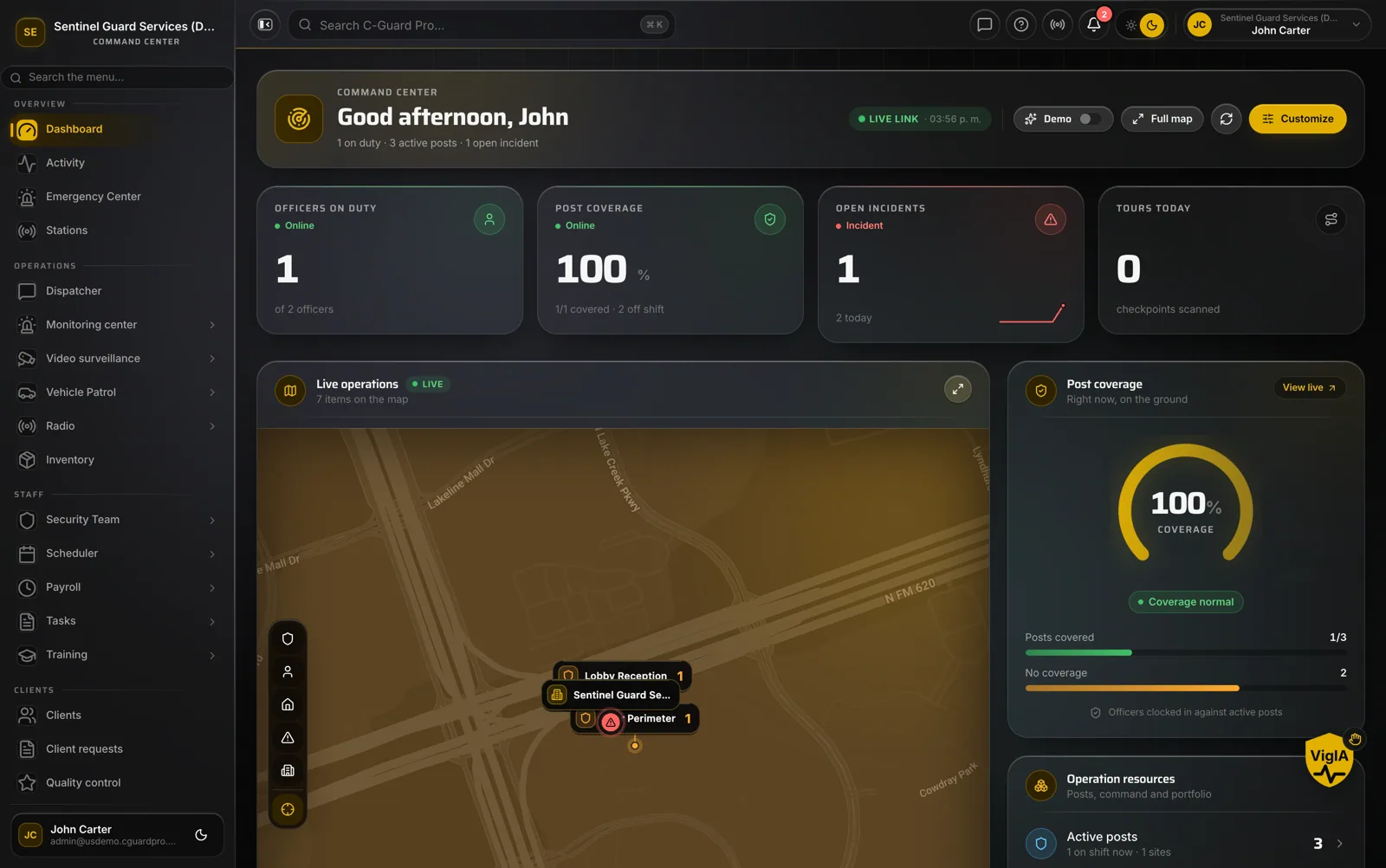
This is the difference between selling and reporting. When you bring a client a pattern with the underlying reports attached, you are not asking them to buy anything; you are telling them something they did not know about their own asset. The proposal that follows is a response to a problem they now own, which is a completely different conversation than one that starts with your revenue target.
What actually sells on an existing account
Patrol add-ons that fill a real gap
The most common genuine gap on a static post is the time nobody is walking. A single lobby officer cannot cover a garage. A gate officer cannot check a perimeter. Adding scheduled patrol passes to an existing static post is a modest increase in hours with a large increase in coverage, and it is easy for the client to justify upward because it maps directly to the incidents they have already seen.
Mobile patrol on a route — a marked vehicle hitting the site several times overnight — is often the right answer for smaller properties that cannot support a dedicated post. It is also the natural first sale to a client whose adjacent building has no coverage at all.
Event and surge coverage
Almost every commercial client has predictable surge events: a tenant move-in or move-out, an annual meeting, a construction phase, a holiday period with reduced staff, a layoff. These are short-duration, high-margin, and they build the internal case for permanent coverage more effectively than any proposal, because the client experiences the difference and then experiences its absence.
The key is to ask about the calendar rather than wait for the call. A quarterly conversation that includes “what is happening on the property in the next ninety days” surfaces these months in advance, when you can actually staff them properly instead of scrambling a callout.
Coverage of the hours nobody thought about
Look at the schedule for the gaps the client inherited from a previous vendor and never revisited. Weekend day coverage that ends at 4 p.m. because that is when it ended in 2018. A holiday schedule that leaves the property unattended. Shift changes with a thirty-minute overlap on one site and none on another. These are not upsells you invented; they are inconsistencies in the client’s own program, and pointing them out is a service even when they decide to leave them alone.
Technology services
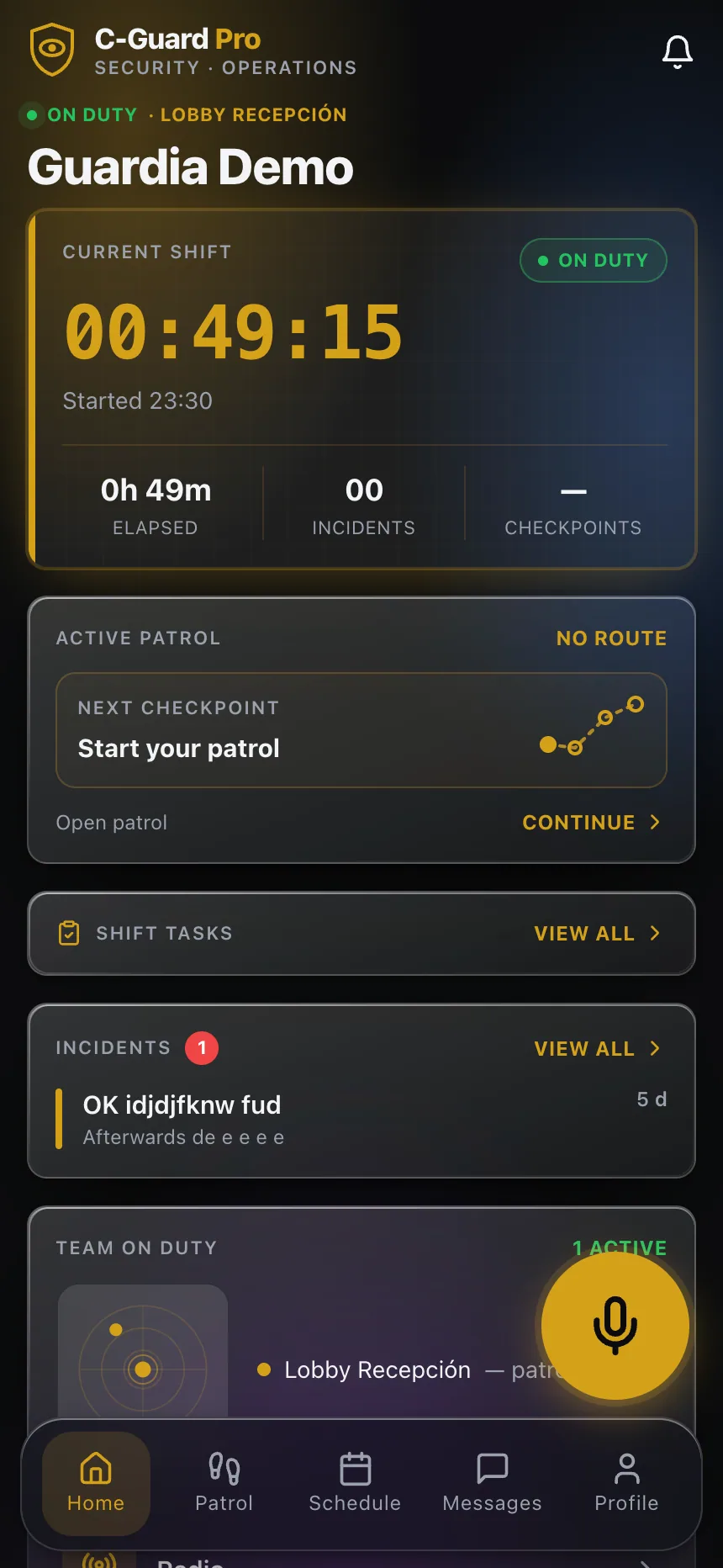
This is where the industry’s growth is, and where most guard companies still leave money on the table. Clients increasingly want visibility, not just presence. Verified patrol records, digital reporting they can access themselves, a portal where the property manager can look at last night without calling anyone.
The honest framing matters here. Technology does not replace the officer; it makes the officer’s work visible and auditable. A client who can see tour scans as they happen, or pull up a daily activity report from their phone at 11 p.m., is buying evidence and peace of mind. That is a real product with a real value, and it is one your competitor bidding on hours alone cannot match.
Adding sites, not hours
The most overlooked growth path is horizontal. Property managers manage portfolios. Facility directors have other buildings. A client who is satisfied with one site almost always has a second one covered by someone else, and nobody has asked them about it. This does not require a pitch — it requires the question, asked once, in a normal review conversation.
The habits that make upselling security clients work
Never sell in the aftermath. The week after a serious incident is the worst possible time to propose additional coverage, no matter how justified. Fix the immediate problem, absorb the cost if you need to, and raise the structural question a month later when it can be heard as analysis rather than opportunism.
Bring the free recommendation first. Post order changes, a patrol route adjustment, a checkpoint added where events cluster, a lighting observation — things that cost the client nothing and cost you nothing. Do this consistently and you build the standing to make paid recommendations that get taken seriously.
Quantify with their data, not with claims. “Six propped-door events on the dock this quarter, here are the reports” is persuasive. “Studies show unmanned docks are high risk” is noise, and any property manager who has heard three vendor pitches recognizes it instantly.
Let the field supervisor be part of it. The person who walks the site at night can say things the account manager cannot, and clients believe them. A supervisor who says “I would not want to be responsible for that garage without a pass at 2 a.m.” carries more weight than a proposal document.
Accept no. A client who declines a recommendation and does not feel pressured will call you when the thing you predicted happens. A client who feels worked will not tell you anything useful ever again.
The structural point
Growth on existing accounts is not a sales technique layered on top of operations. It is a byproduct of operations being visible. If your reports are legible, your patrol record is verifiable, and your client portal lets the client see their own site whenever they want, the needs surface on their own and the conversation is about what to do rather than whether to believe you.
Companies that run their accounts blind have nothing to sell but hours, and hours compete on price.
If you want to see what that operational visibility looks like in practice, explore CGuardPro or get in touch.