Guard company proposals to property management firms tend to read as though the buyer is a security professional. They lead with training programs, screening standards, supervision ratios and years in business. Meanwhile the person choosing a property manager security vendor has forty other vendors to manage, a tenant who is angry about the garage, an owner asking about the operating budget, and no particular interest in security as a discipline.
Understanding what a property manager actually optimizes for is the difference between a proposal that gets read and one that gets filed. And what they optimize for is not, at bottom, security. It is the absence of problems that land on their desk.
The real job of the person hiring a security vendor
A property manager is judged on tenant retention, owner satisfaction, and operating expenses staying inside budget. Security is one line item among many, and it is unusual in one respect: it is the line item most likely to generate an emergency phone call at an inconvenient hour.
That shapes everything about how they evaluate a property manager security vendor. Their internal question is not “which company provides the best security?” It is closer to “which company will make security stop being something I have to think about?”
This is not cynicism. It is the correct framing for a person with a portfolio of buildings and no time. A guard company that understands it will win work from firms that are technically better at guarding, because the guarding is not what is being bought.
Responsiveness is the first filter, and it is tested before you are hired
Property managers form their judgment about responsiveness during the sales process, not after. Every unreturned call, every proposal that arrives two days after it was promised, every question answered vaguely, is read as a preview.
It continues after award, in the form of a specific test that almost every account manager underestimates: what happens when the property manager calls at an odd hour.
The answer they need is not that you answer instantly. It is that they reach someone with authority to act. A dispatcher who can say “I have the supervisor en route and I will call you back in fifteen minutes” is worth more than a company owner who eventually calls back the next morning apologizing. What kills relationships is the black hole — the voicemail, the on-call number that rings out, the officer on site who does not know who to escalate to.
Three things make responsiveness real rather than promised:
- A published escalation path with names and roles, given to the client at onboarding and kept current when people change.
- Someone who is genuinely reachable during the hours the property is covered, not just during business hours.
- A supervisor who can physically get to the site, and a client who knows roughly how long that takes.
If your officers can reach dispatch instantly from the post — including hands-free while walking a floor — the property manager’s call gets a real answer rather than a promise to look into it. That is the operational reason companies put push-to-talk radio on their officers rather than relying on personal cell phones.
Reporting is what they use to defend the expense
Here is the part guard companies consistently miss. The property manager is not the final decision maker on whether your contract survives. The owner or asset manager is, and that person sees your line on a budget once a year and asks what it buys.
The property manager has to answer that question. Whatever you hand them is the ammunition they have.
A daily activity report emailed as an unstructured wall of text is useless for this purpose. What is useful:
- Activity summarized by category over a period, so a trend is visible.
- Incidents with enough detail to be forwarded to an owner or an insurer without editing.
- Evidence that the patrols actually happened, on the schedule that was contracted.
- Photos attached to what warrants them — a broken gate, a hazard, damage found.
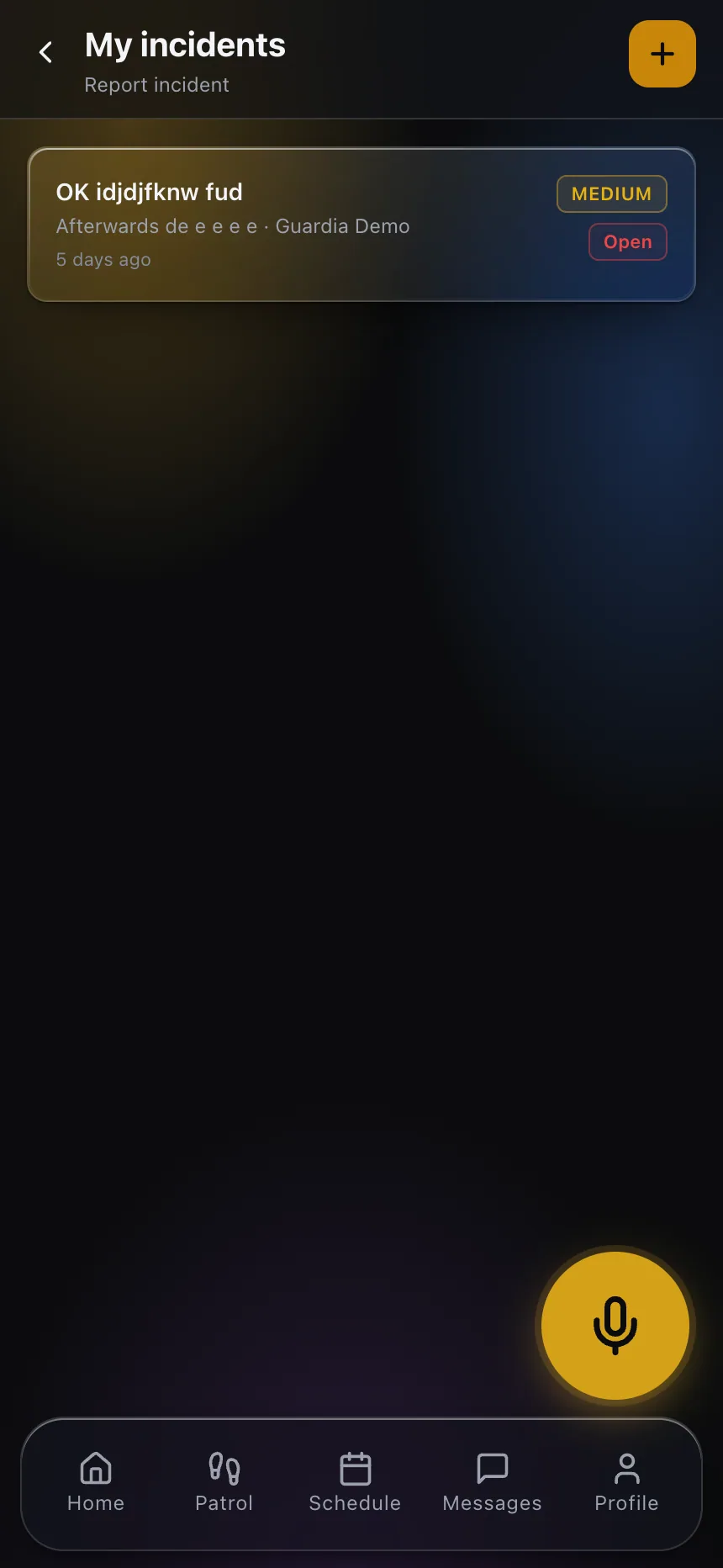
The second reason reporting matters is more immediate: tenant complaints. A tenant emails at 9 a.m. saying their car was broken into overnight and nobody was around. The property manager has to respond within the hour. If they can look up last night’s patrol record and the officer’s log themselves, they respond with facts in five minutes. If they have to call your office and wait, they spend the morning managing an escalation, and they will remember it.
This is why a client portal tends to reduce phone calls rather than invite scrutiny. Most calls to a guard company are not complaints — they are someone checking whether anyone was there.
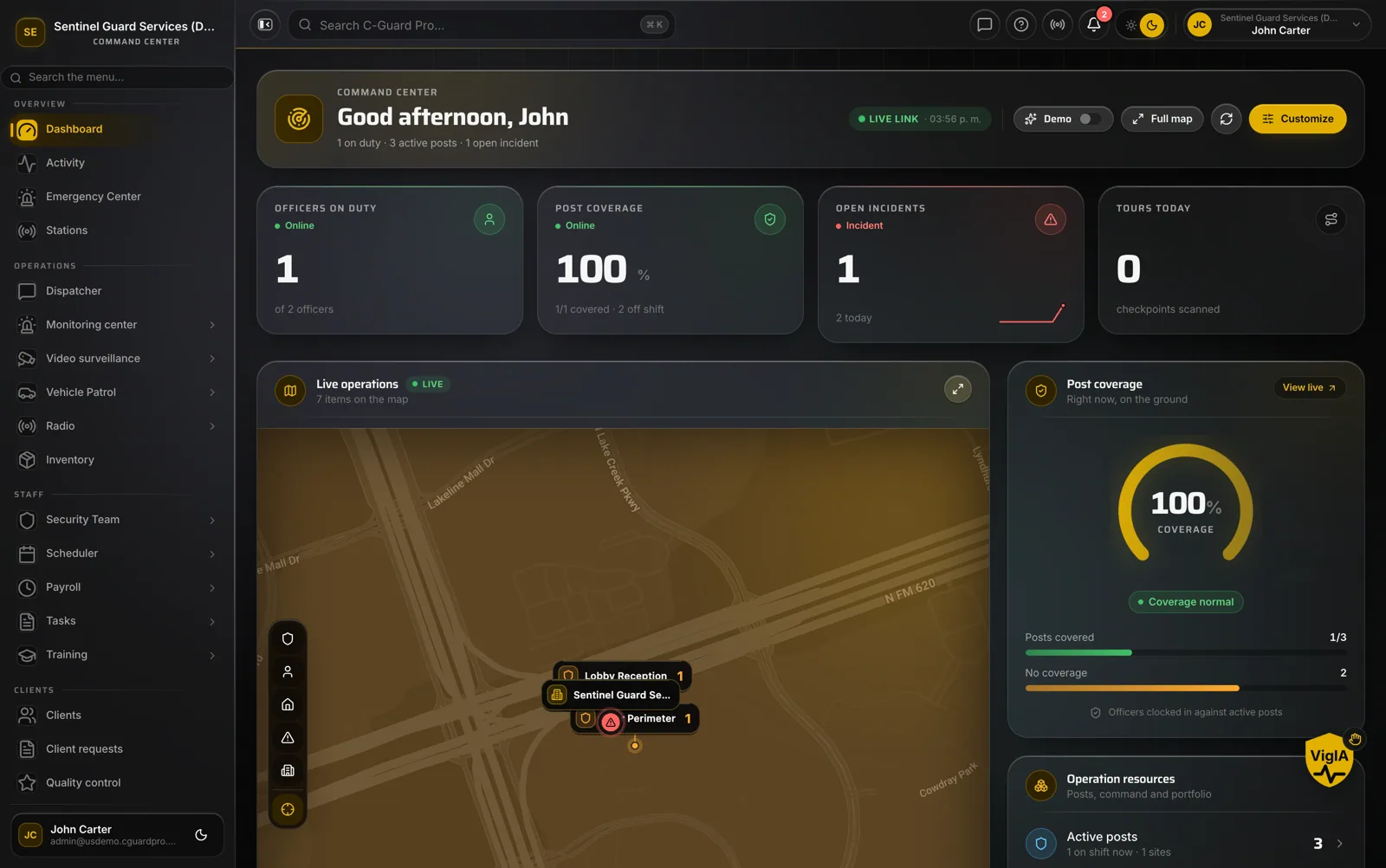
And it is why verified daily activity reports and a defensible patrol record are commercial assets, not compliance overhead. They are the property manager’s evidence that the money is doing something.
Turnover is the complaint they will not put in the RFP
Ask a property manager what went wrong with their last security vendor and turnover comes up almost every time, though rarely in those words. What they say is “we kept getting new people who didn’t know the building.”
The cost of turnover to them is not abstract. A new officer does not know which tenant is authorized in the loading dock after hours, which door alarm is chronically faulty, which contractor is supposed to be there on Saturdays, or that the CEO’s spouse parks in the visitor row. Every one of those becomes a phone call to the property manager.
You cannot promise zero turnover; the labor market does not allow it and any bidder who claims otherwise is not credible. What you can offer, and what almost nobody does explicitly, is continuity engineering:
A named primary officer per post, introduced to the client, with a named designated backup who has actually worked the site.
A real onboarding for relief officers. Not “read the post orders” but a walk-through with the regular officer. Clients notice this immediately.
Post orders that are current and accessible on the officer’s phone, so a fill-in has the building’s actual rules rather than a supervisor’s recollection.
Advance notice when a regular officer is leaving. Being told is annoying. Discovering it because a stranger is at the desk is a trust event.
A stable schedule. Officers leave posts that are chaotic. A shift pattern that holds — 8s or 12s, consistent rotation, predictable relief — retains people better than most retention initiatives, and scheduling that shows officers their upcoming shifts and fills gaps in advance is the mechanism, not a nicety.
What to put in the proposal
Given all this, the proposal that wins looks different from the standard one.
Lead with the escalation path and the response commitment, with names. Show a sample report — an actual one, redacted — because that is the artifact they will live with. State your continuity plan for the specific site, including the named primary and backup. Address turnover directly instead of avoiding it; the honest treatment reads as competence.
Then price. Not first, not hidden, and not so far below the field that the property manager has to wonder what you removed. Property managers have seen the low bid that could not staff the post, and the ones who have been burned by it are more price-skeptical than price-sensitive.
The underlying insight is simple. You are not selling protection to a security buyer. You are selling quiet to a person who has too many things to worry about, and proving, continuously and in writing, that the quiet is being earned.
If you want to see how that proof gets produced as a byproduct of normal operations, explore CGuardPro or get in touch.