An officer at a retail center asks a man to leave the rear loading area. He leaves. Two weeks later he is back, and this time he has pried the lock off a storage cage. The client wants him prosecuted, the responding officers ask whether he had been warned before, and everyone turns to the security company’s records — which contain a line reading “0140, subject in rear lot, advised to leave, complied.” That entry is not a trespass incident report. It establishes almost nothing that anyone can act on.
The difference between a story and an actionable record is a handful of specific details, and they take about four extra minutes to capture at the time.
First, the legal framing — hedged, because it has to be
Trespass law is state law, and it varies more than people expect. Who may give notice on behalf of a property owner, whether that notice must be verbal or written, whether signage alone suffices, how long a warning remains in effect, whether an officer may detain anyone at all, and what a security company’s role is versus law enforcement’s — all of that differs by jurisdiction, by license type, and by what the property owner has authorized in writing.
Verify your procedures with the regulator that licenses private security in your state — the Texas Department of Licensing and Regulation (TDLR) in Texas, or the equivalent elsewhere — and with the client’s counsel. This is documentation guidance, not legal advice. What follows is about what to record, not about what you are permitted to do.
One practical note that is worth confirming for every account: whether your company and your officers have been designated in writing as authorized agents of the property owner for purposes of giving notice. On many accounts nobody has ever checked, and it is the first question that gets asked when a case matters.
The five things that make a trespass report actionable
1. The warning — exactly what was said, by whom, and under what authority
This is the single most important element and the one most often reduced to “advised to leave.” Record:
- The exact words you used. “I identified myself as security for the property and told him: ‘This is private property, you are not permitted to be here, you need to leave now and do not return.’”
- That you identified yourself and how.
- Whose authority you gave it under: the property owner or their designated agent, named.
- Whether the person acknowledged understanding it, and what they said in response.
- Whether the warning was given once or repeated, and how many times.
- Whether any written notice was provided or posted, and whether the person accepted or refused it.
A vague “told him to leave” leaves open whether the person was asked to move along from one area or barred from the property entirely. Those are different things and the second one is what makes a return visit meaningful.
2. Identity — and what to do when they will not give it
Best case: name, date of birth, address, phone, and how you verified it. Most of the time you will get less than that, and you cannot compel anyone to identify themselves.
So capture identifying detail you can observe, in the detail you would need to recognize the person from the description alone six weeks later:
- Approximate age, height, build, skin tone, hair, facial hair.
- Clothing, item by item, including footwear and colors. Clothing is weak identification on its own — people change clothes — but repeat trespassers are strikingly consistent.
- Distinguishing marks: tattoos and their location, scars, a limp, glasses, a specific backpack or bicycle.
- Any name they offered, even if you doubt it. Record it as “stated his name was…” rather than as fact.
- Vehicle: make, model, color, plate and state, and where it was parked.
Photography of people is governed by state law and client policy and should be addressed explicitly in your post orders rather than left to the officer’s judgment in the moment. Where it is permitted, a photograph is worth a paragraph of description — but confirm the rule before you write it into procedure.
3. Time and location, with precision
Time you first observed them. Time you made contact. Time the warning was given. Time they departed or police arrived. Not “around 1 a.m.”
Location as a fixed, describable point: “inside the fenced rear loading area, east of the compactor, approximately 20 feet inside the gate on Halstead Street.” Whether the area is fenced, gated, posted with signage, open to the public, or restricted to tenants. Where the posted signage is, if any, and whether it is visible from where the person entered.
How they got in matters too: through an open gate, over a fence, through a door propped by a contractor, walking in from the street. That fact often tells the client something they need to fix.
4. Behavior and context, without characterization
What were they doing when you observed them? Sleeping, walking, looking into vehicles, carrying something, using a tool, gathering property. Describe the actions; do not label the person. “Was pulling on the handles of three parked vehicles in succession” is evidence. “Was acting suspicious” is nothing.
Note whether anything was damaged, moved or missing, and whether you observed any tools or property in their possession.
5. Outcome, precisely
- Complied and departed: which direction, on foot or in a vehicle, at what time.
- Refused: what you did next, exactly. Did you disengage and call police? Did you maintain observation from a distance?
- Police contacted: agency, time called, time arrived, responding officer names and badge numbers, case or incident number, disposition — citation, arrest, warning, no action. Always get the case number. A report without it is very hard to connect to anything later.
- Client notified: who, at what time, by what method.
The part everyone forgets: distribution
A trespass report that stays in a file helps nobody at 0200 on the night the person returns. The relieving officer, and every officer on that account across all shifts, needs to know that this individual was warned and what they look like.
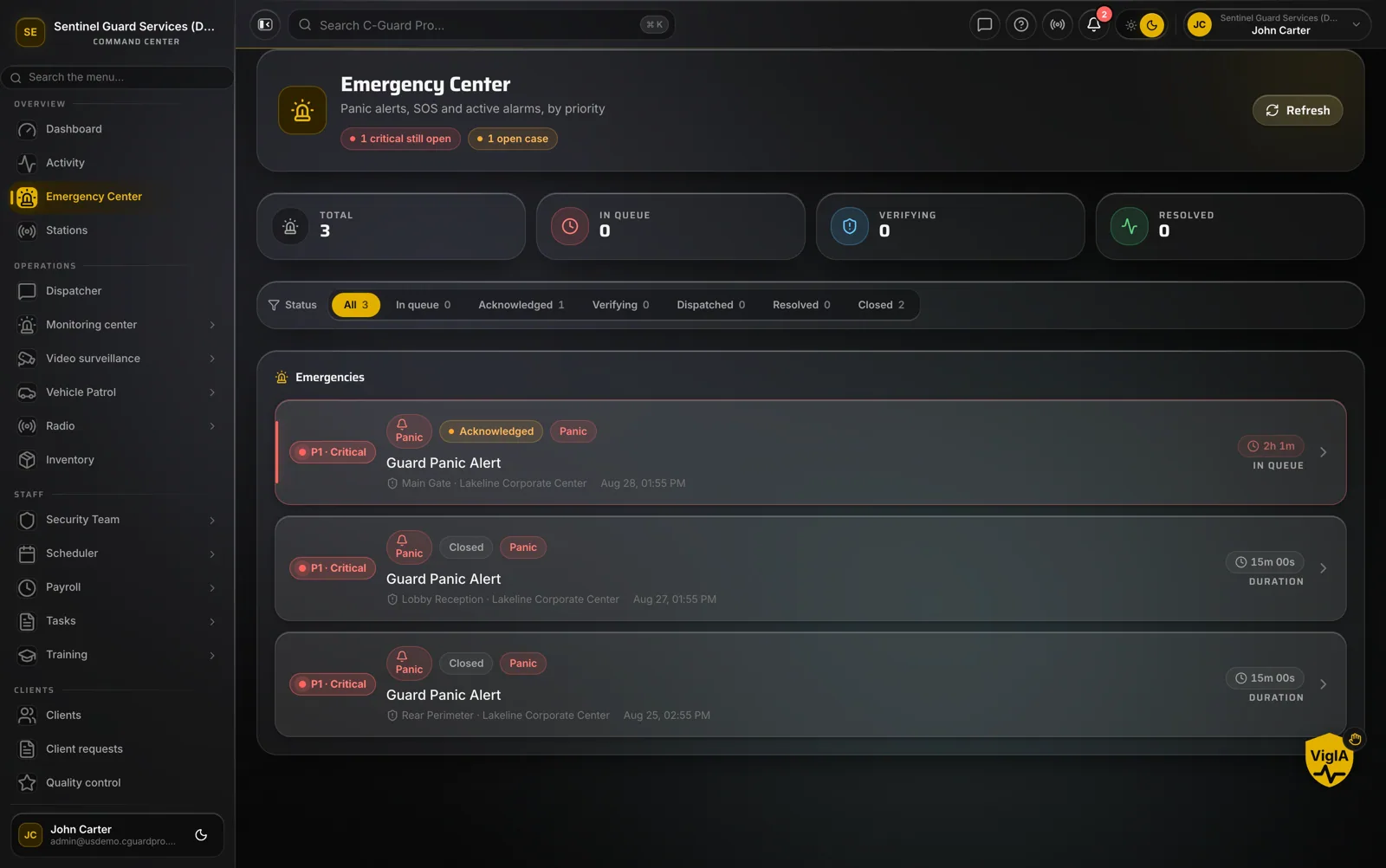
That is a BOLO, and it needs to move faster than a shift-change conversation. A push-to-talk channel across the account gets a description to everyone on duty in seconds, and the written report gives the next shift the detail that a radio call cannot carry.
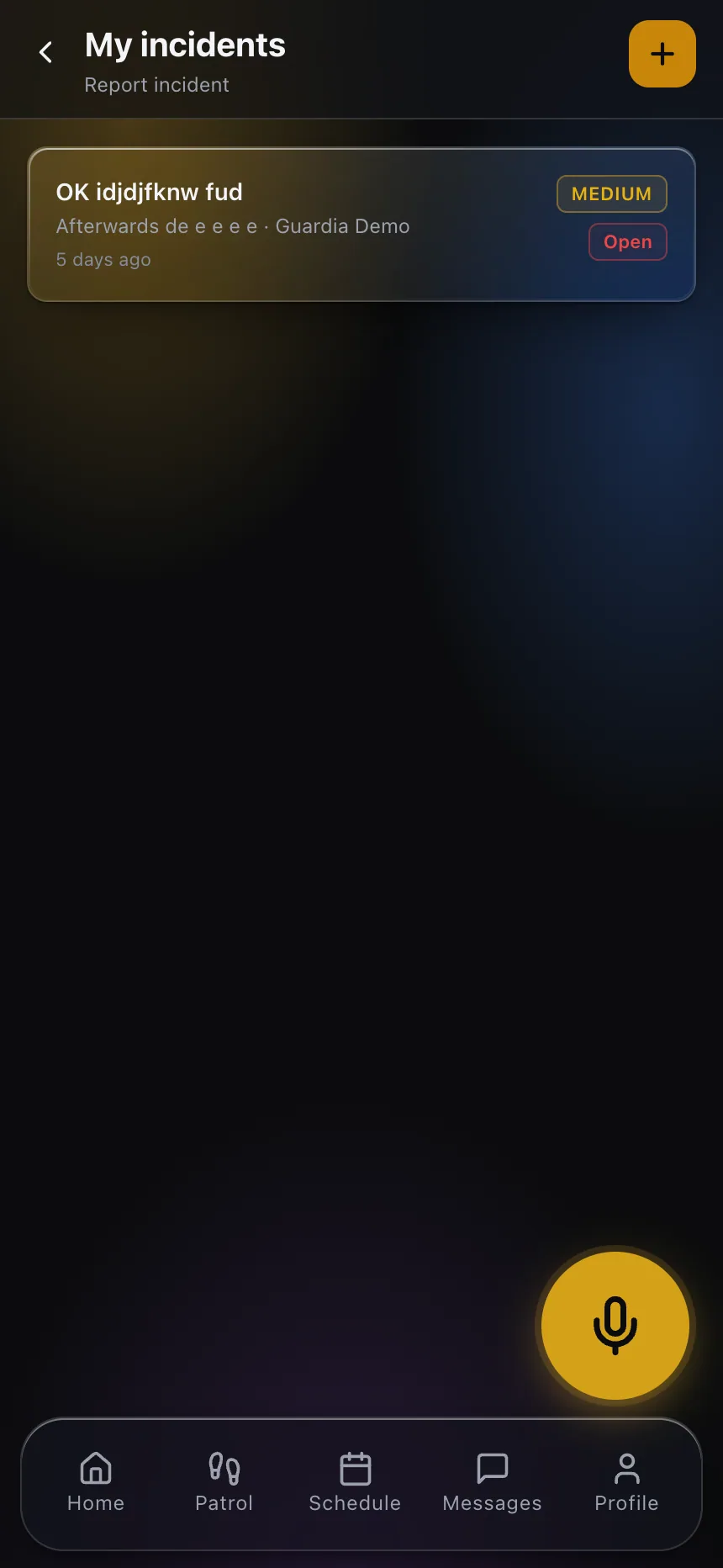
Equally important: the report has to be findable. When an officer encounters someone at 0200 and thinks “I have seen this guy before,” they need to be able to check in under a minute. Searchable incident and daily activity records across dates and sites turn that hunch into “warned on 08/15 and again on 08/29, here is the description and the case number” — which is precisely the fact pattern that makes a third visit something law enforcement can act on.
What not to put in the report
Legal conclusions. Do not write “the subject was trespassing” or “committed criminal trespass.” Write what he did and what you told him. Whether that constitutes an offense is someone else’s determination.
Assumptions about the person. Not their housing situation, not their mental health, not their sobriety, not their intentions. Describe behavior.
Anything about force you did not document properly. If there was any physical contact at all, that is a use-of-force matter with its own reporting requirements, and it does not get summarized in one line inside a trespass report.
Editorial frustration. “This is the fourth time this month and the client still won’t fix the gate” is a legitimate operational point that belongs in an account review, not in a document that may be read in court.
Build the repeat-visit picture deliberately
The value of trespass documentation compounds. One report is an event. Four reports over two months, each with a consistent description, times clustering between midnight and 0300, and the same point of entry, is an intelligence picture — one that supports a client conversation about fencing, lighting or a schedule change, and that gives law enforcement something to work with.
None of that exists unless the first officer, on the first night, spent four extra minutes writing down what he actually said and what the man actually looked like.
If you want to see how field-written incidents become a searchable record across an account, explore CGuardPro or get in touch.