Somebody goes down in a lobby. They get up, laugh it off, say they are fine, and leave. Your officer writes four lines in the log and the shift moves on. Then a letter arrives at the client’s office the following spring, and everything anyone will ever know about that afternoon is contained in a slip and fall incident report written by a security officer who had ninety seconds and no idea what mattered.
This is the report where the gap between adequate and excellent is largest, because premises-liability claims are argued over details that seem trivial at the time and become decisive later. None of what follows is legal advice — how liability is assessed varies by state and by the facts, and your client’s insurer and counsel set the rules for your accounts. But the information a report needs to preserve is remarkably consistent, and most officer reports miss half of it.
Why the timing of the hazard is the whole ballgame
In most premises-liability frameworks, the question is not simply whether there was water on the floor. It is what the property knew or should have known about it, and how long it was there. A puddle that appeared ninety seconds before the fall and a puddle that had been there for two hours are, in practical terms, entirely different cases.
Your officer usually cannot know when the hazard appeared. But they can preserve every fact that bears on it, and that is the part almost always left out:
- When was this area last inspected or patrolled, and by whom? If your officer walked that corridor at 1410 and the fall was at 1442, that is a materially useful fact — and only if you can prove the 1410 patrol happened.
- What was the condition of the area at that last pass? “Floor dry, no obstructions” recorded at 1410 is worth more than any adjective written after the fall.
- What was the source? Ice machine, roof leak, HVAC condensate, a spilled drink, tracked-in rain, a floor crew that just mopped. Report what you observed about the source; do not guess.
- Was there a warning sign, and where exactly? Present or absent, and if present, how far from the hazard and whether it was visible from the direction the person was walking.
- Who is responsible for that area? Janitorial contractor, building engineering, tenant staff. Names, not roles.
This is the strongest operational argument for verifiable patrol records. A QR-based guard tour that puts a timestamped scan at a physical checkpoint in that corridor gives you a defensible record that an officer was standing in that spot at that minute. A checkbox on a form saying “corridor patrolled” does not, and an attorney will say so.
What to capture at the scene
Work in this order. The scene starts changing the moment people arrive.
Care first. Ask if they are injured, offer to call EMS, and if there is any doubt, call. Do not move an injured person unless there is an immediate danger. Do not offer medication, ice, or a bandage beyond what your policy explicitly authorizes.
Then preserve, before you clean. Photograph the hazard before anyone touches it: wide (where in the building), medium (hazard in relation to the path of travel and any signage), close (with something in frame for scale). Photograph the floor surface, the lighting, the signage location, and the direction the person was walking from. If the hazard must be cleaned immediately for safety, do it — and record in the report that the scene was altered for safety and when.
Then document.
The person
Full name, phone number, address if they will give it, and their relationship to the property — tenant, employee, visitor, delivery driver, contractor. Which company they work for. What they were doing there.
What they were wearing on their feet. This sounds intrusive and it is one of the most commonly disputed facts in these claims. Describe it factually: “black rubber-soled work boots,” “flat leather dress shoes,” “flip-flops.”
What they were carrying, and whether their hands were occupied. Whether they were looking at a phone. Report only what you observed.
What they said, in their own words, as close to verbatim as you can. “He said ‘I didn’t see the water, I was walking fast.’” Statements made in the first minute are given real weight, and they are gone if nobody writes them down.
Whether they declined medical attention, and how you asked. Ask twice, and record both. “Declined EMS at 1445 and again at 1451 before departing” is far stronger than “refused medical.”
The scene
Exact location against a fixed reference — “approximately 6 feet east of the freight elevator doors, Level 1,” not “in the lobby.” The floor surface and its condition. The size and nature of the hazard. Lighting conditions and whether any fixtures were out. Weather, if the area is near an entrance, and whether mats were in place and in what condition. Whether the area was open to the public.
The witnesses
This is the item most often skipped and the one you cannot recover. Get names and phone numbers from anyone who saw it, immediately, while they are still standing there. Ten minutes later they are gone forever. Record what each said separately and attributed. If someone declines to give their information, record that they declined and describe them.
The video
Note which cameras cover that area, and get a preservation request to whoever controls the recorder that day. Retention on most systems is measured in days or weeks. A request made a month later gets you nothing, and “the video was overwritten” is a sentence that helps nobody on your side.
The timeline
Time of fall (observed or reported, and say which). Time you were notified and by whom. Time you arrived. Time EMS was called and arrived. Time the area was secured. Time the hazard was cleaned and by whom. Time the person departed. Time each notification went out.
What an officer must never speculate about
Cause. “The floor was wet because the ice machine leaks” is a maintenance theory. Write what you observed: water present, ice machine approximately eight feet away, no visible pooling under the machine.
Fault. Not the person’s, not the client’s, not the janitorial contractor’s. An officer’s report is not the place where fault is assigned, and any sentence that assigns it will be used against whichever party it disfavors.
Injury. You are not a clinician. “No visible injury observed; he declined medical attention and walked without assistance to the north exit” is observation. “He wasn’t hurt” is a diagnosis.
How long the hazard had been there, unless you personally know. If you passed at 1410 and saw a dry floor, write that. Do not extrapolate.
Apologies and admissions. Officers apologize because they are decent people. “I’m so sorry, that floor is always slippery” is kindness that becomes an admission about a known recurring condition. Train the alternative: “Are you hurt? Let me get you help and let me get this documented properly.” That is compassionate and says nothing about liability.
After the report leaves the site
A slip-and-fall report is worth little sitting on a clipboard at a guard desk. It needs to reach the account manager and the client’s designated contact the same day, because their insurer’s clock starts immediately and because the client may need to act on the hazard before it produces a second one.
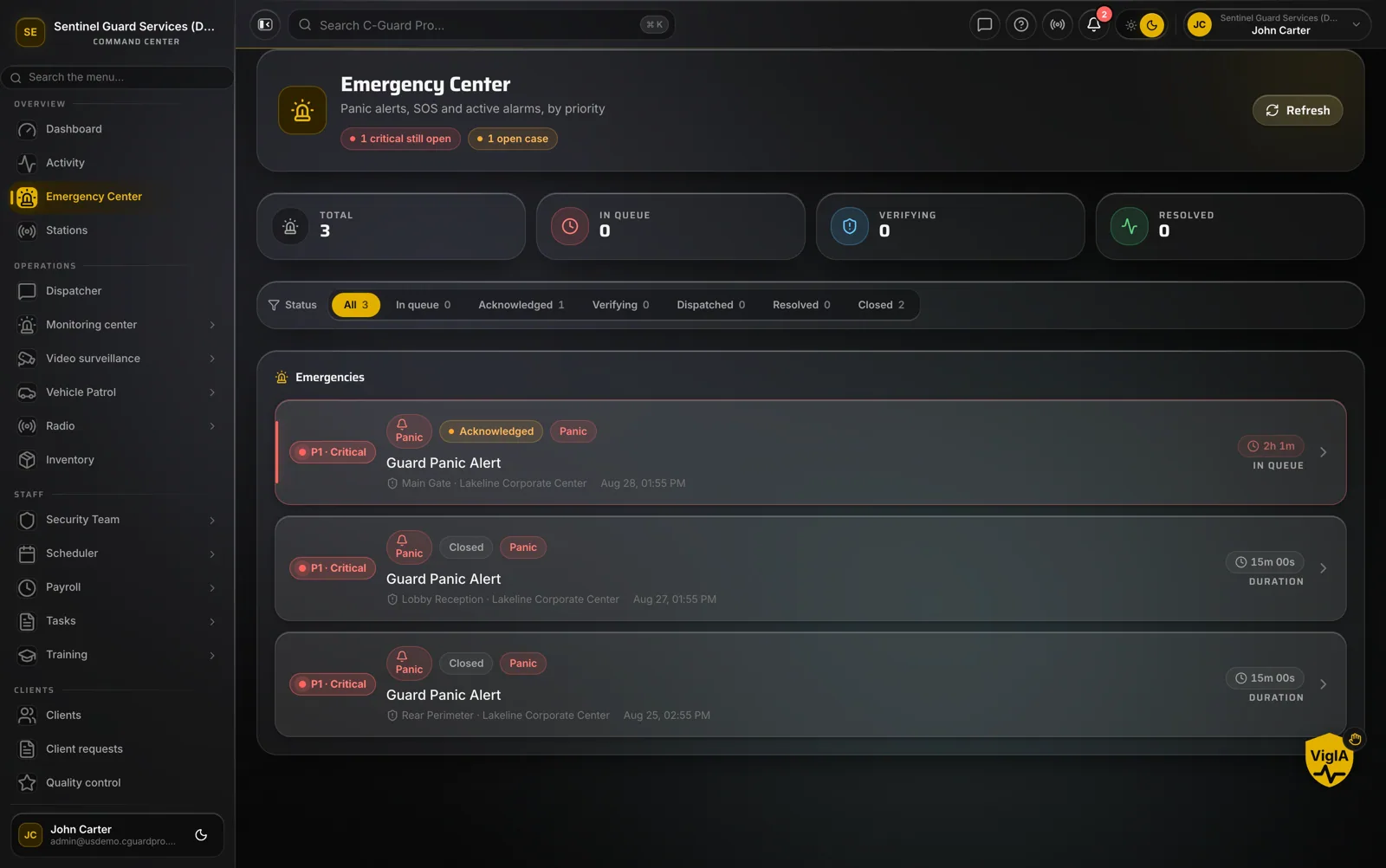
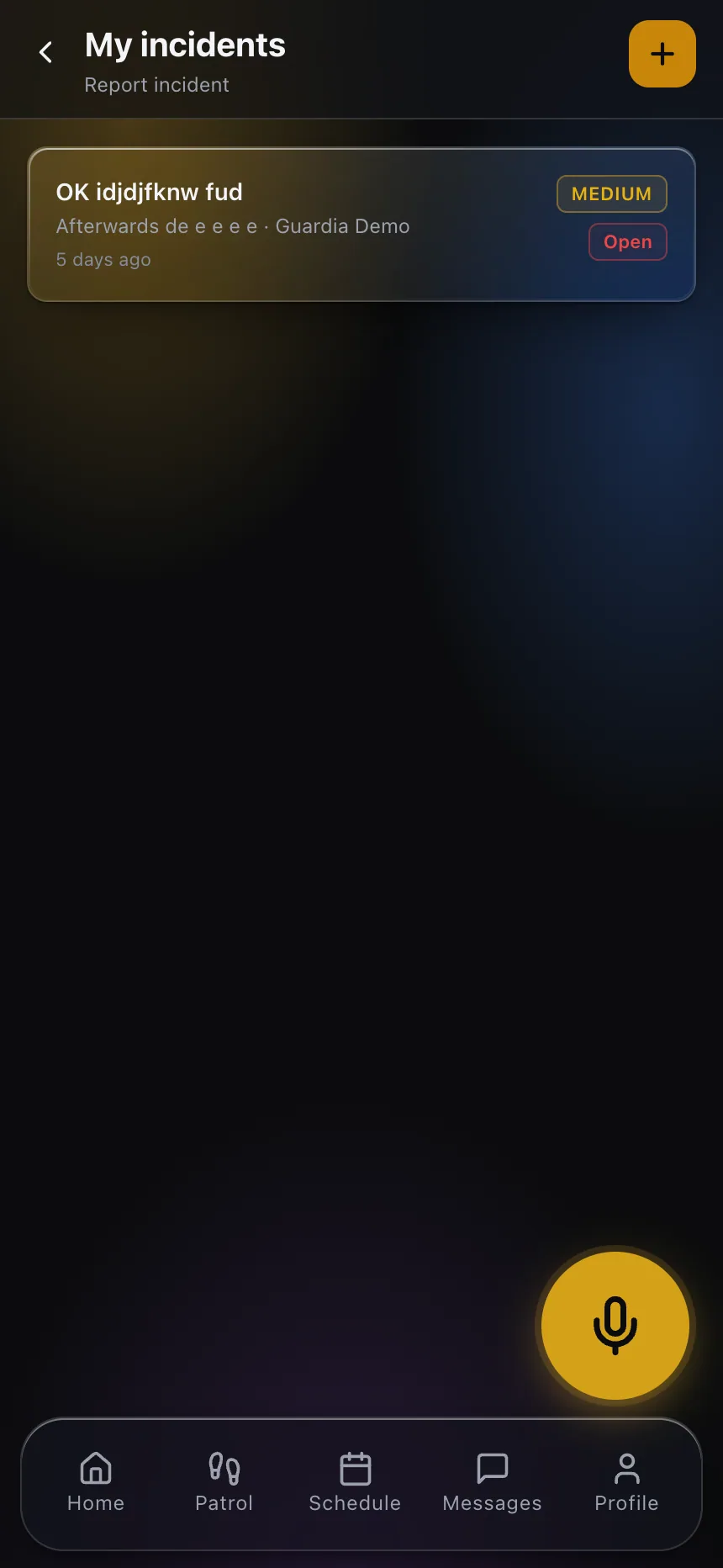
There is a pattern benefit too. Three separate reports over a quarter, each mentioning water near the same freight lobby, are three unrelated events in a filing cabinet and one obvious maintenance defect in a searchable record. Structured incident and daily activity reports that can be searched across dates and sites let an account manager raise it with the client as a prevention conversation — which is a far better meeting than the one that happens after the claim.
The supervisor’s checklist
Before the report is accepted, someone should confirm: exact location, times for every step, witness contact details or a note that none existed, footwear and hands described, the person’s own words quoted, signage documented as present or absent with location, photos taken before the scene changed, video preservation requested, last inspection of the area identified with a verifiable record, and no sentence anywhere that guesses at cause, fault or injury.
Six of those are usually missing on the first pass, and every one of them can be filled in that day — and only that day.
If you want to see how patrol records, field-written incidents and photo evidence line up in one timeline, explore CGuardPro or get in touch.