Attach a photo to an incident report and everyone relaxes. The picture feels like proof. Then a claim arrives eleven months later, someone opens the file, and the photo turns out to be a dark rectangle with a shape in it, no scale, no context, no way to tell which door it is or when it was taken. Photo evidence in security reports is only worth something when someone who was not there can look at it and understand exactly what they are seeing. Most officer photos fail that test, and the reason is almost never the camera.
What a useful photo actually shows
The habit worth teaching is three shots, in this order, for anything that matters.
Wide. Where is this? Frame the whole area with a recognizable landmark — the building entrance, a signed door number, an aisle marker, a light pole. Somebody looking at this image in a year needs to place it on the property without asking you.
Medium. What is the relationship between things? The wet floor and the freight elevator and the spot where the sign was or was not standing. This is the shot that answers the questions people actually argue about, and it is the one officers skip most.
Close. What is the detail? The broken latch, the pry marks, the puddle’s edge, the plate number, the graffiti.
Three shots take about forty seconds. One close-up of a scratch with no context takes ten and proves nothing.
Scale and reference
A close-up with nothing to size it against is guesswork. Put something of known dimension in the frame — a business card, a pen, a tape measure if you carry one, a standard floor tile. Then say in the report what you used. “Pry marks approx. 3 in. across the door edge, business card in frame for scale” is a sentence an adjuster can work with.
Light
Most security photography happens at night, and most night photos fail. A phone flash aimed straight at a glass door returns a photo of your own flash. Shoot at an angle. Get closer instead of zooming — digital zoom throws away the detail you are trying to preserve. If a scene is too dark to photograph usefully, use a flashlight held off to the side rather than the on-axis flash, and say in the report how the scene was lit. An honest note that lighting was poor is far better than a photo that appears to show nothing when there was something.
Before and after, and the sequence that gets forgotten
Photograph the scene before you change it. This is the rule officers break under pressure, because the instinct is to fix the hazard first — and often that instinct is correct, because a person could get hurt. When safety requires immediate action, take the ten seconds to shoot one wide and one medium frame first if you can, and if you genuinely could not, write that in the report: “Obstruction removed immediately for fire-egress safety; scene photographed after removal.”
Then photograph after. The propped fire door before you remove the box and after you secure it. The spill before the cleanup and after. The unsecured gate as found and as left. A pair of photos with times attached tells a complete story: this was the condition, this is what we did about it, at these times.
The metadata that matters
A photograph on its own is an image. A photograph with reliable time, place and author is evidence.
Timestamp. Not the time the officer typed into a caption three hours later — the time the shutter fired. This is what lets you line the photo up against the alarm log, the access-control record and the camera system.
Location. Coordinates recorded at capture put the photo on the property. When an officer later has to establish that they were at the northwest gate at 0214, a photo captured there with location attached does that work automatically.
Author and device. Who took it. A photo whose author cannot be established has limited value in any process where it will be challenged.
Integrity. Whether the image has been altered since capture.
Here is the practical failure. Photos taken with the phone’s own camera app and later attached to a report — emailed, texted, uploaded — routinely lose their embedded data in transit. Messaging apps strip it. Some upload paths recompress the file. The officer did everything right and the provenance is gone.
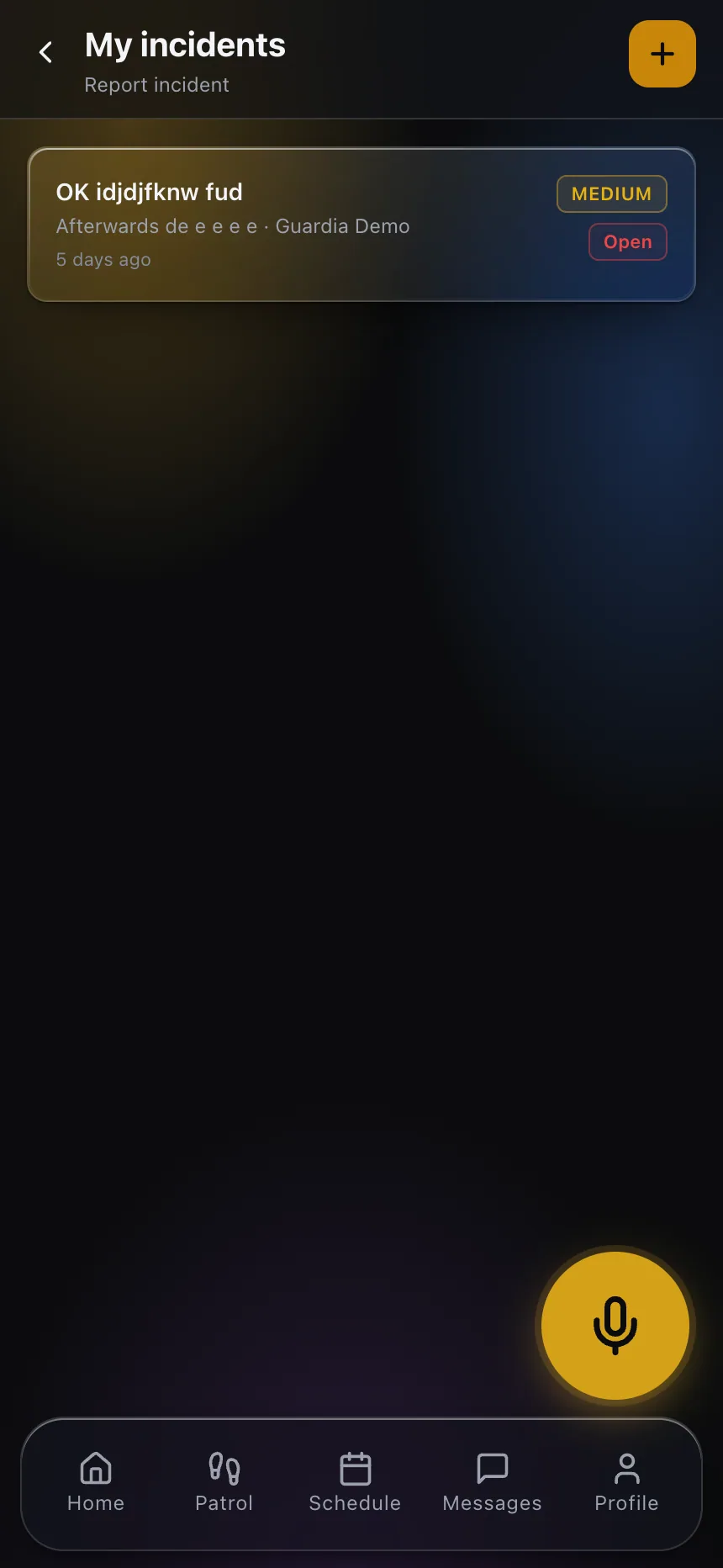
That is the argument for capturing photographs inside the report itself, on the officer’s mobile app, rather than in the phone’s gallery and attaching them afterward. When the image is captured in the entry, the time, the location and the officer’s identity are recorded as part of the record instead of hoping they survived a trip through three systems. It also removes an uncomfortable ambiguity: a photo pulled from a gallery could have been taken at any time, and a competent attorney will ask exactly that.
Handling: the rules that keep photos credible
Never edit the original. Do not crop it, do not brighten it, do not draw an arrow on it. If an annotated version helps the reader, produce it as a separate marked-up copy and keep the original untouched and identified as the original. Cropping is the most innocent-looking and most damaging habit, because the first question anyone asks is what was outside the crop.
Do not delete. Not the blurry one, not the accidental shot of the officer’s boot. A gap in a numbered sequence invites a question you will not enjoy answering. Keep them all; reference the useful ones in the narrative.
Caption every photo you reference. A photo with no caption is decoration. The caption should say what it shows, where it was taken from, and when: “Photo 3 — north face of Suite 310 door, taken from corridor looking east, 0344. Latch plate bent outward.”
Do not let photos replace the narrative. “See photos” is not a report. An image shows a condition; it does not show what you did about it, who you notified or how it ended.
Keep them with the report. Photos in a supervisor’s text thread or a personal camera roll are not part of the record and may not be retrievable when they matter. They should live attached to the report, retained on the same schedule as the report itself.
Privacy and judgment
Photographing people is where good intentions cause problems. What is permissible varies enormously by state, by whether the location is public or private, by whether audio is being captured, and by the client’s own policies — and hospitals, schools and residential properties often have specific restrictions of their own. Verify with counsel and with your client before you write a photography rule into post orders. This article is operational guidance, not legal advice.
A few habits are defensible almost anywhere. Photograph conditions, damage and property freely. Be far more careful with people, and be especially careful with anyone who is injured, receiving medical attention, undressed, or a minor. Never photograph someone as a way of intimidating them. Never post any of it anywhere — a site photo on a personal social account has ended careers and contracts, and it is one of the few things worth a zero-tolerance rule.
Making it a habit rather than a policy
Officers photograph well when three things are true: the camera is one tap away from the report they are already writing, they have been shown examples of good and bad photos from their own site, and someone actually looks at what they submit.
That last one is the whole program. If images land in a queue and a supervisor reviews them with the report, quality rises within a couple of weeks. If they disappear into a folder, officers correctly conclude that a dark rectangle is sufficient.
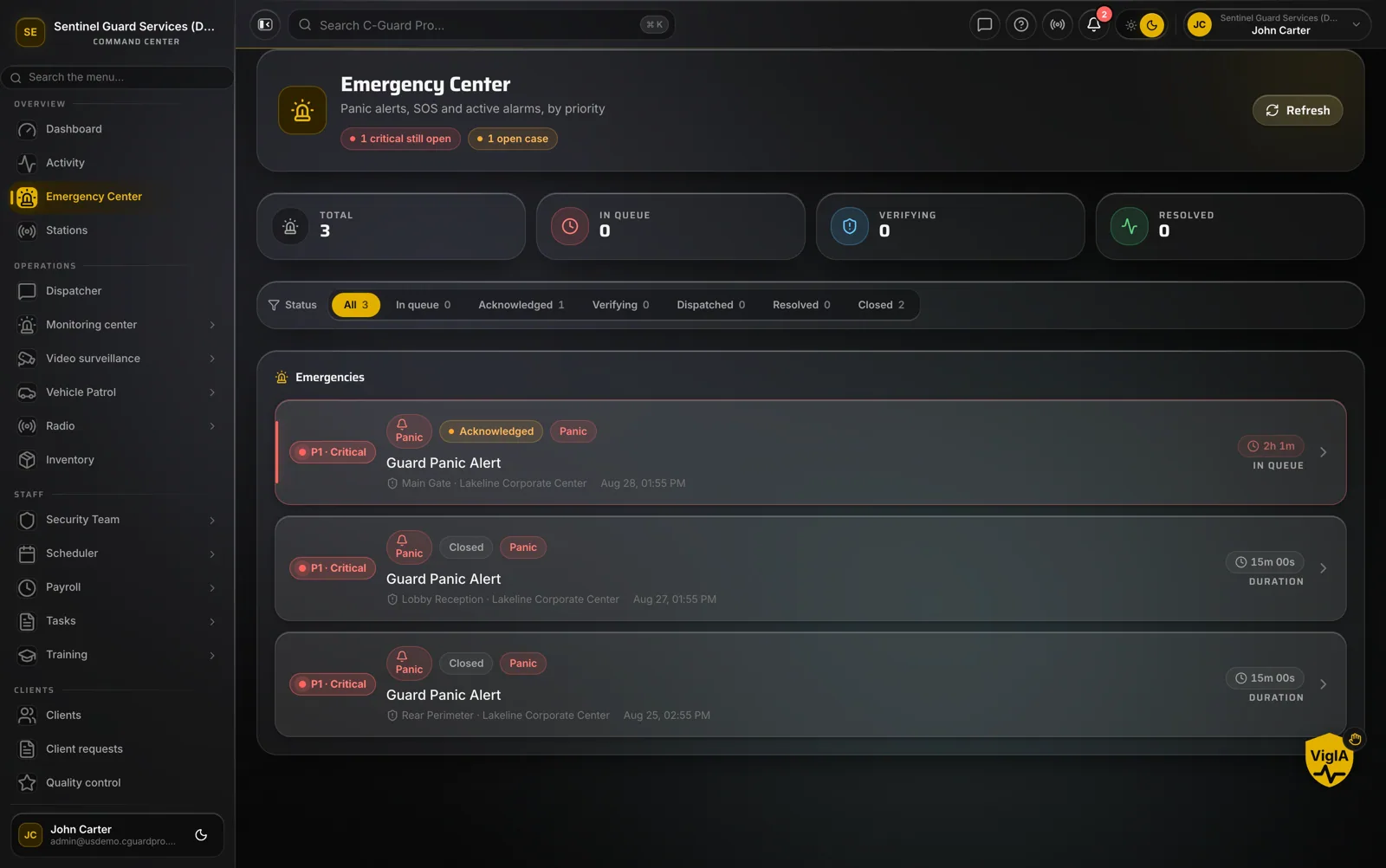
There is a client-facing benefit too, and it is not cosmetic. A daily activity report that shows the propped fire exit, with the time and the location on it, changes a client conversation from “your officer says” to “here is the door.” Give the client access through their own portal and the evidence arrives without an argument attached.
The test
Before you close the entry, look at your photos and ask: if I saw these for the first time a year from now, with no memory of this shift, would I know where this is, when it was taken, and what I am looking at? If not, you have two more shots to take, and they will take you thirty seconds.
If you want to see how photos captured at the moment of the entry stay attached to the record, explore CGuardPro or get in touch.