A hands-on incident is the shortest event and the longest paper trail in this business. Thirty seconds in a parking garage can generate a criminal case, a civil claim, a client escalation, a regulator complaint and an internal review, and every one of those will be decided largely by a document written by a shaken officer in the hour afterward. Use of force documentation is not the part of the job anyone trains hardest on, and it is the part that determines outcomes.
Before anything else: what an officer may lawfully do, what the employer permits, what must be reported and to whom, and how long records must be kept all vary by state, by jurisdiction, by license type and by contract. Some jurisdictions impose specific reporting obligations on licensed security personnel; some clients impose stricter ones. Verify your policy with the regulator that licenses private security in your state — the Texas Department of Licensing and Regulation (TDLR) in Texas, or the equivalent authority elsewhere — and with employment and liability counsel. This article is about the process of writing the report. It is not legal advice, and it is not a use-of-force policy.
First: the report is not the first thing
The order of operations before anyone writes anything:
- Scene safety and medical. Anyone injured — including the officer — gets attention. If there is any doubt, EMS is called.
- Notification up the chain. Supervisor and dispatch immediately, not at the end of the shift. Client contact per the escalation list in the post orders.
- Preservation. Video from the site’s system requested before it overwrites. Witness names and phone numbers collected while people are still present. Photographs of the scene, of any damage, and of visible injuries where policy permits.
- Separation. If more than one officer was involved, they write independently. Two officers comparing notes before writing produces two reports that match suspiciously and are worth less than two honest, slightly divergent accounts.
The panic or duress function matters here for a reason people underrate: it timestamps the moment the officer believed the situation was escalating, independent of anyone’s later memory of it. That anchor point is often the most useful single fact in the whole reconstruction.
The framework: facts, in sequence, before any conclusion
The structure that holds up is chronological and observational. Write what you perceived, in the order you perceived it, and separate perception from decision from action.
1. How you came to be there
Time, location, assignment, and what prompted your involvement. A dispatch call, a radio request from a tenant, a direct observation. Include what you were told before you arrived, attributed to whoever told you: “Dispatch advised at 2231 that a tenant reported a male attempting to open vehicle doors in the P2 garage.”
2. What you observed on arrival
Physical description, position, behavior, anything the person said, the environment. Concrete and neutral.
3. What you said and what they said
As close to verbatim as you can honestly manage. If you are paraphrasing, say so. “I identified myself as security and told him he needed to leave the property. He said ‘you can’t touch me’ and stepped toward me.”
Direct quotes carry weight precisely because they are hard to fabricate convincingly. Do not clean them up. Profanity stays in the report.
4. What you perceived that informed your decision
This is where officers either write the most important paragraph of the report or omit it entirely. Reasonableness is evaluated against what the officer perceived at the time. If you do not record it, it does not exist.
Write the observable basis: distance, posture, hands, objects, movements, tone, size disparity, the presence of others, the exits available, what you had already tried. “He closed to approximately three feet with his right hand behind his back. I could not see his hand. There was no clear path behind me between the parked vehicles and the wall.”
Note what you tried first, if you did: verbal direction, repeated instruction, disengagement, calling for backup, waiting for police.
5. The physical action itself
Precisely what you did, in sequence, in plain physical language. Which hand, which part of the body, what technique, for how long, and when it stopped. Then what happened as a result.
6. Disengagement and aftermath
When contact ended and why. Medical assessment offered and the response. Law enforcement arrival, officer names and badge numbers, report or case number, disposition. Injuries observed on both parties. Damage to property, uniforms or equipment. Time the person left or was released or taken into custody by police.
7. Notifications and evidence
Who you notified and at what time. What was photographed. What video was requested, from which system, and to whom the preservation request went. Witnesses with contact information.
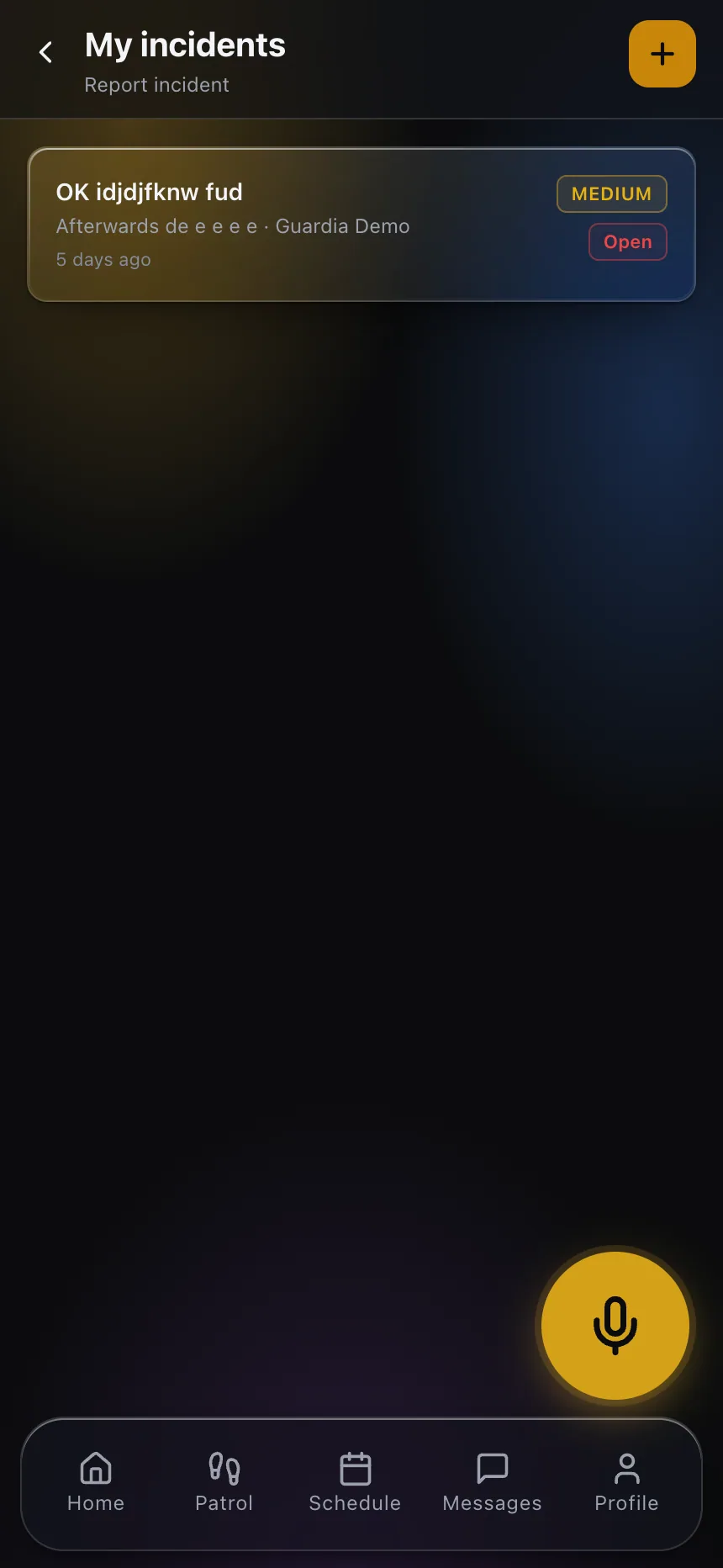
Weak versus strong, on the paragraph that decides the case
Weak: Subject became aggressive and combative so I used the minimum force necessary to control the situation and detained him until police arrived.
Every substantive word in that sentence is a conclusion. “Aggressive,” “combative,” “minimum force necessary,” “control” — a reader learns nothing about what happened and everything about the fact that the officer is characterizing rather than reporting. Under questioning, each of those words becomes a separate line of attack.
Strong: At 2237 the male turned toward me and raised his right arm to shoulder height with a closed fist, from a distance of approximately four feet. I stepped back once and repeated “stop, do not come closer.” He advanced one step. I placed my open left hand on his right shoulder and turned him toward the concrete pillar to my right, and with my right hand guided his right wrist behind his back. He went to his knees. I did not strike him. Contact lasted approximately fifteen seconds until he stopped pulling away, at which point I released his wrist and stepped back. He remained on the ground and was breathing normally. I asked twice whether he was injured; he said “no, get off me.” APD units arrived at 2244.
The second version is longer, harder to write, and vastly more defensible — because a reader can evaluate it. It also does not claim anything the officer could not know.
Language to avoid
Conclusory adjectives about people. Aggressive, violent, combative, irate, intoxicated, deranged. Describe behavior instead. “Intoxicated” in particular is a medical judgment; “slurred speech and unsteady gait were observed” is not.
Legal terms of art. Assault, battery, resisting, trespassing, reasonable, excessive, necessary. Those are conclusions someone else gets to reach. Officers who use them in reports find themselves defending a legal characterization instead of describing an event.
Vague force verbs. “Restrained,” “subdued,” “took him down,” “escorted him out” — none of these describe a physical action. Write the actual mechanics.
Passive voice. “Force was applied” hides the actor, and the actor is the entire question.
Justification stapled to the front. Reports that open with “for my safety and the safety of others I was forced to…” read as defensive before the reader knows what happened. Put the facts first; the justification emerges from them.
Anything you did not perceive. Do not write what the person “intended,” “wanted” or “was trying to do.” Write what they did.
Timing, corrections and review
Write it as soon as you are safe and settled, before your shift ends and before you talk to anyone but your supervisor about the facts. Memory degrades fastest in the first hours, and specifically it degrades toward the story you have told out loud most recently.
If you later remember something, or discover an error, do not edit the original. File a dated supplemental report that states what is being added or corrected and why. A record that shows a correction transparently is stronger than one that appears immaculate; a record that was quietly altered is close to worthless.
Every use-of-force report should get a same-day supervisor review, and it should be a real one — checking for missing times, conclusions dressed as observations, and gaps in the sequence, while the officer can still fill them. Reports that arrive in a queue the moment they are submitted, rather than in a folder at the end of the week, make that possible.
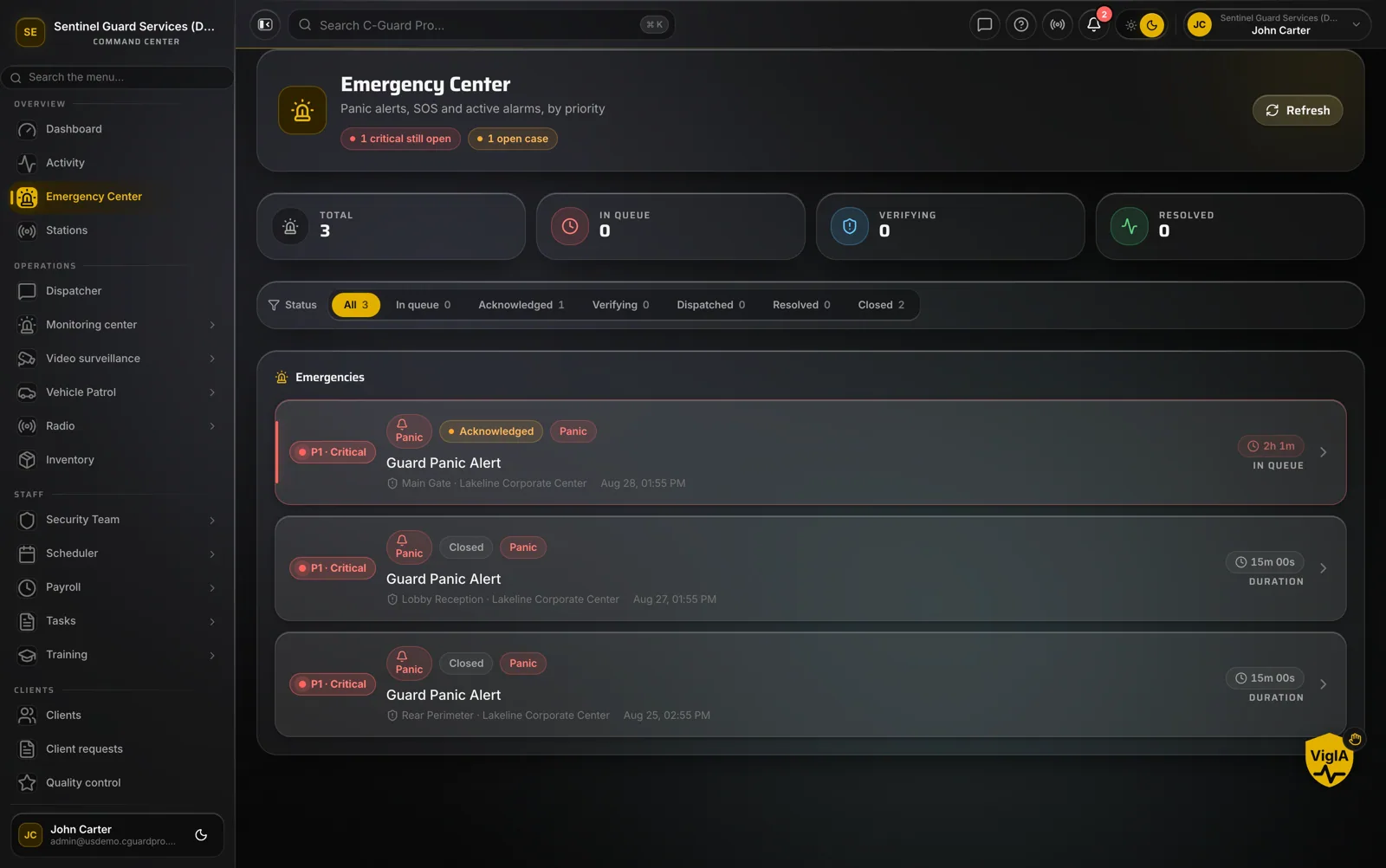
The corresponding daily activity report entry should reference the incident by number, briefly, and carry none of the narrative.
The standard to write to
Assume your report will be read aloud, line by line, by someone whose job is to find the gap between what you wrote and what the video shows. Write facts, in order, with your perceptions recorded and your conclusions left out. That is not defensive writing. It is just accurate writing, and it happens to be the only kind that survives.
If you want to see how incidents captured in the field reach a supervisor for same-day review, explore CGuardPro or get in touch.