A Class A office tower has a lobby that is genuinely busy from 6:30 to 9:30 in the morning and again from 4:00 to 7:00 in the evening. In between, the officer greets a courier every forty minutes and watches an empty atrium. The property manager does not want to pay for the dead middle, and honestly, they have a point. Split shift scheduling is the obvious answer, and it works — right up until the officer you built the schedule around quits because they spent six hours a day at a coffee shop near the site waiting for the second half of their own workday to begin.
What a split shift actually is, and what it is not
A split shift is one work period broken into two or more separate blocks in the same day, with an unpaid gap between them that is longer than a normal meal break. Two four-hour blocks with a five-hour gap is a split. A twelve-hour tour with a paid thirty-minute lunch is not, no matter how the schedule prints.
That distinction matters more than most schedulers realize, because a long unpaid gap only stays unpaid if the officer is genuinely relieved of duty and free to use the time for their own purposes. An officer told to stay on the property, stay in uniform, and answer the radio during the “gap” is arguably on duty the whole time. Wage-and-hour rules on this vary by state and by how the arrangement is structured, and some states have specific split-shift premium rules on top of federal law. Verify with employment counsel before you build a schedule on the assumption that a gap is free — this article is operations guidance, not legal advice.
The coverage math that makes split shifts look attractive
Take that lobby. The honest demand curve has two peaks and a trough. Your options are roughly:
One 12-hour post. Simple, one officer, one set of post orders, continuity with tenants. You are paying for six hours of very low activity, and the client will eventually notice.
Two short posts with two different officers. Clean from a labor standpoint, and each officer gets a short day. But you now need two people who want short days at inconvenient hours, and short shifts are the hardest thing in this industry to staff reliably. The 6:30 a.m. three-hour block is the one that produces callouts.
One split shift, one officer. The client pays for six billable hours instead of twelve. The officer gets full-day pay equivalent in fewer hours — attractive to some people — and the tenants see the same face at both peaks, which is most of what a lobby post is really for.
The third option is genuinely the best answer for a narrow set of situations. The narrowness is the part people skip.
When split shift scheduling actually helps
It helps when the gap is short enough to be a break rather than an exile. Two hours is a break. Six hours is a second commute and a wasted afternoon.
It helps when the officer lives close to the post. This is the single strongest predictor of whether a split shift will hold. An officer with a fifteen-minute drive can go home, eat, sleep, and come back. An officer with an hour each way is being asked to donate four hours of unpaid travel to your schedule, and they will not do it for long.
It helps when the officer volunteered for it. Split shifts that people bid for behave completely differently from split shifts that get assigned. Someone with a morning class, a second job in the middle of the day, or a childcare window may want exactly this shape. Post the shift and let people take it rather than filling it top-down.
It helps at sites with genuine dual peaks: school campuses at arrival and dismissal, retail centers at opening and closing, medical office buildings with morning clinics and evening cleaning crews, construction sites with a start-of-day and end-of-day gate.
When they hurt — and the costs that never show up on the schedule
Travel time and cost. The officer drives to the site twice. Fuel and mileage are real, and no schedule shows them. If they cannot afford the second round trip, they will look for a job with one.
Retention. A split shift consumes the officer’s whole day while paying for part of it. That is the trade, and people accept it for a while and then stop. Turnover on a split-shift post tends to be quiet: nobody complains, they just take the next single-block offer that comes along. You find out when you get the two weeks’ notice.
Callout risk doubles. Every shift block is an opportunity for a no-show. Two blocks means two chances for the officer to not appear, and the evening block is the one that gets missed after a bad afternoon.
Fatigue and alertness. The gap is not rest. Sitting in a truck for five hours in a parking lot is not recovery, and the officer who arrives for the evening peak may be less sharp than one who started fresh at 4 p.m.
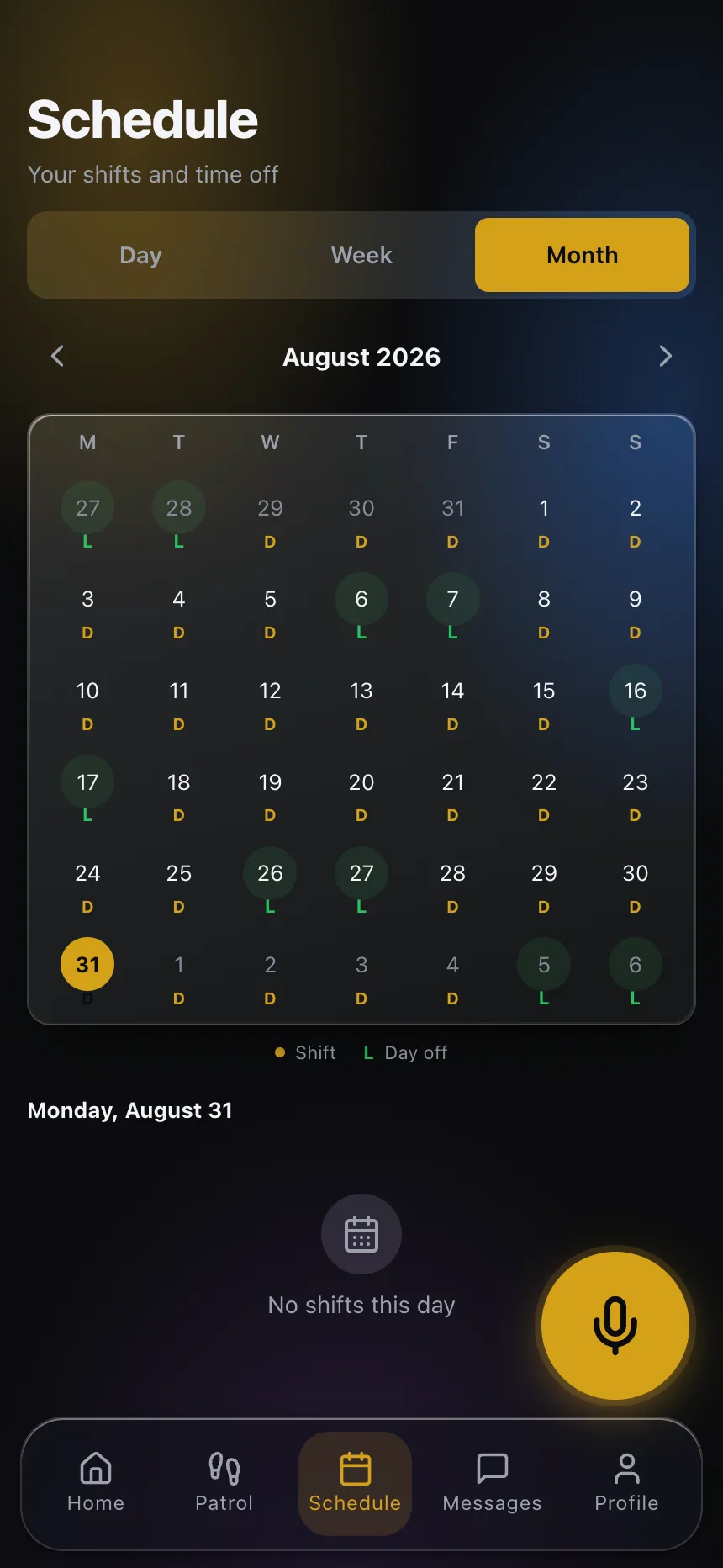
Overtime traps. Split shifts often push a week into odd shapes. If Tuesday’s split runs 6:30–10:30 and 15:30–19:30, and Wednesday you need someone to cover a callout, you have already eaten the officer’s availability. Build the schedule so you can see weekly hours as they accumulate, not after payroll closes — this is exactly the case that guard scheduling software earns its keep on, by showing projected weekly hours before you assign the shift rather than after.
The client-rate conversation nobody wants to have
Here is the part that separates operators who make split shifts work from operators who lose money on them. Six billable hours of split coverage does not cost you the same as six billable hours of a straight block. It costs you more, in supervision, in recruiting, in the premium you may need to pay to keep the post filled, and in some jurisdictions in split-shift pay requirements.
If you bill split coverage at your standard rate, you are subsidizing the client’s convenience out of your margin, and it will show up as a staffing problem you will blame on the labor market. Price the shape of the schedule, not just the hours.
The conversation with the property manager is straightforward if you have the reasoning ready: “We can cover both peaks with the same officer, which is what your tenants want. That shape is harder to staff than a straight tour, so the rate reflects it. The alternative is two officers on short blocks, which costs you the same or more and means two different faces in your lobby.” Most clients understand this immediately. The ones who do not are usually the ones you should be quoting a 12-hour post to anyway.
Making the gap visible in the field
Split shifts create a specific operational blind spot: the second block. Dispatch remembers the officer clocked in at 6:30; nobody checks that they came back at 3:30 until the client calls. Clock-in verification with a selfie and location on both blocks closes that gap, and a live view of who is actually on post tells the supervisor at 3:45 that the evening block never started — while there is still time to fill it.
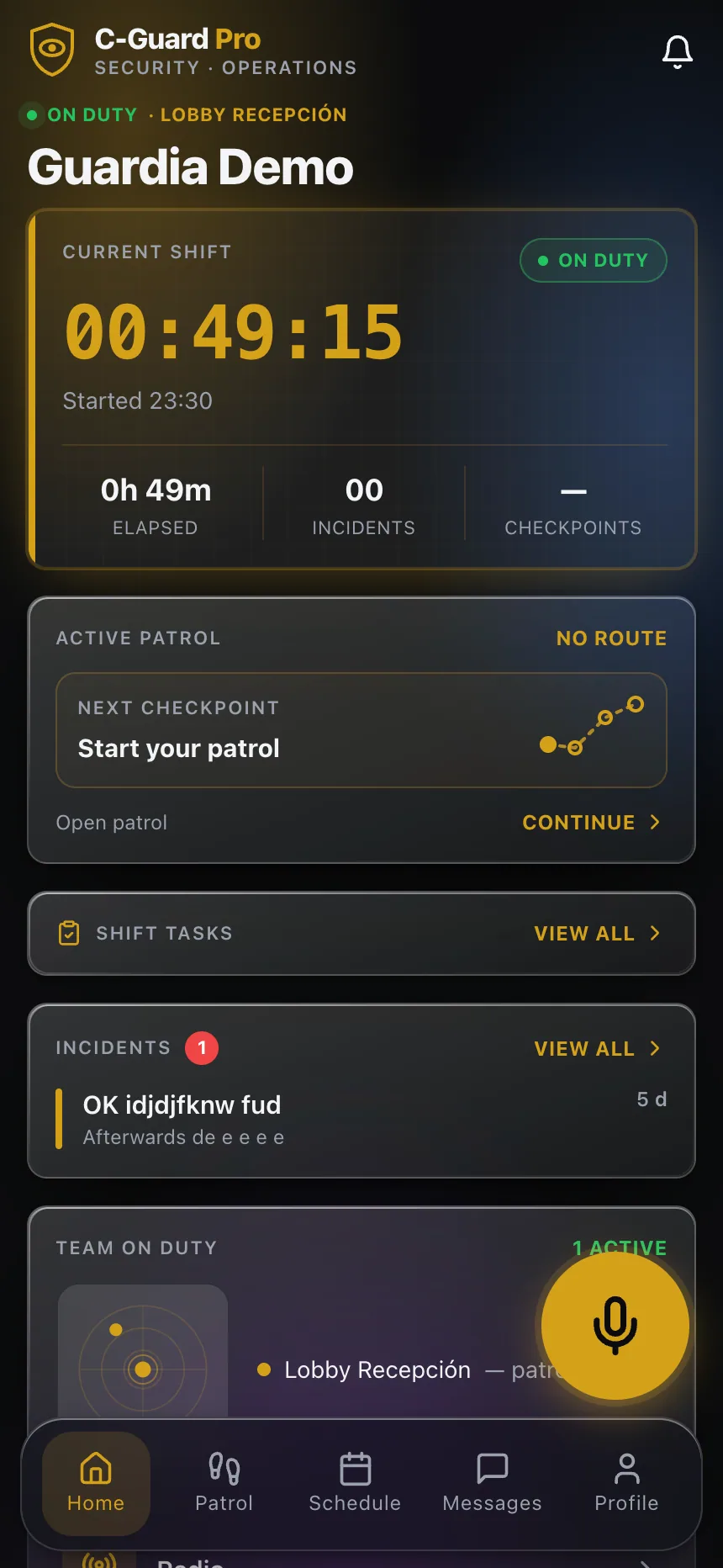
The same applies to the end of the first block. An officer who leaves at 10:15 instead of 10:30 on a post the client believes is covered until 10:30 is a service failure that nobody documents. Verified time and attendance turns both edges of both blocks into a record you can show, rather than an assumption you can defend.
A short rule of thumb
Use a split shift when the gap is under about three hours, the officer lives near the post, they chose the shift, and the rate reflects the shape. Break any two of those conditions and you are building a post that will churn — slowly, quietly, and always right before a holiday.
If you want to see how split blocks, weekly hour projections and verified clock-ins look in one place, explore CGuardPro or get in touch.