If you have worked a 24-hour post in contract security, you have probably worked a Panama schedule without anyone calling it that. It is the 2-2-3: two on, two off, three on, then the mirror image the following week. Officers tend to like it, clients rarely notice it, and supervisors underestimate what it does to continuity until they try to find out who was on the gate last Thursday night.
How the Panama schedule works
The full cycle is fourteen days. A crew works two days, is off two, works three, then is off two, works two, and is off three. Over the two weeks, each officer works seven 12-hour shifts — one short week and one long week — and the pattern flips so the next fourteen days are the reverse.
Like 4-on 4-off, covering a 24-hour post takes four crews: two on days, two on nights. Unlike 4-on 4-off, the cycle length is a clean multiple of the calendar week, which is why it produces a genuinely valuable feature: every officer gets a full three-day weekend every other week, on the same days, forever. That is not an accident of the pattern, it is the whole selling point.
Most operations run it fixed — days stay days, nights stay nights. A slow-rotating version swaps crews between day and night at the end of a cycle, which spreads the night burden but makes recovery harder. In security work specifically, where post familiarity matters and night posts have different rhythms from day posts, the fixed version is usually the better call.
One long week and one short week means hours do not distribute evenly across calendar weeks. Whether that crosses an overtime threshold depends on where your workweek boundary sits and on the wage and hour rules that apply to your workforce and jurisdiction. Settle that with payroll and employment counsel before you commit the pattern to a contract; this article is operational guidance, not legal advice.
Why officers ask for it
Nothing worse than three in a row. The longest working stretch is three shifts. Compared to a four-shift block, the third night is meaningfully easier than a fourth would be, and officers who have worked both patterns say so.
The alternating three-day weekend. Predictable, repeating, plannable. It is the closest thing a 24-hour post offers to a normal life.
You are never off for so long that you go stale. Two days off is a rest, not a disconnection. Officers coming back after two days remember the tenant complaint, the vehicle that keeps parking in the fire lane, the contractor with the expired badge.
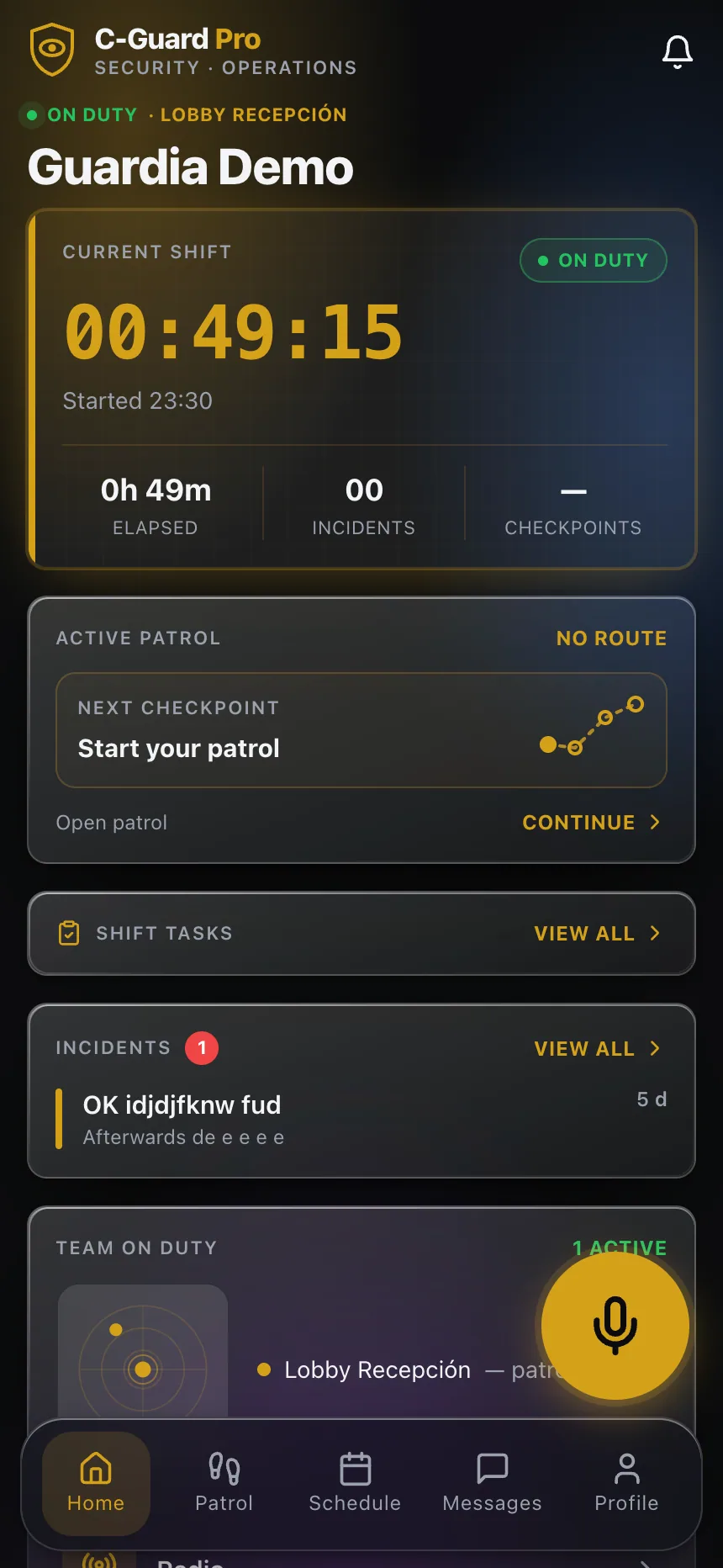
That last point is real but fragile. Two days off is short enough that officers feel current, which makes them less likely to check for updates. If something changed at the post while they were off, the handoff has to reach them actively. A mobile app that puts the current shift, the post assignment and today’s tasks on the officer’s home screen closes that gap better than a briefing sheet taped to a clipboard. The guard mobile app is where the post reality should live, because that is where the officer is looking.
The supervision cost nobody prices in
Here is the tradeoff that gets discovered in month three: the crew on a given post changes constantly. Under a 2-2-3, the person on days Monday is frequently not the person on days Wednesday. Across a two-week cycle, four different officers touch the same post at the same hour of day.
That has consequences.
Continuity has to be written, not remembered
On a pattern with long blocks, an officer can carry knowledge in their head for four days and hand it over once. Under Panama, information changes hands constantly — sometimes at 6 a.m. with both officers exhausted, sometimes with no overlap at all if relief is late.
The fix is not “tell the officers to communicate better.” It is to make the handover an artifact. Every shift produces a daily activity report that the next officer on that post actually sees, with the open items called out: the door that would not latch, the vehicle to watch for, the tenant who is expecting a delivery at 7. When the DAR is filed from the app at the post rather than typed up later from memory, the details survive the handover instead of evaporating with the officer who noticed them.
Post orders get read less often
Officers on rotating crews assume someone else caught the update. Post order changes have to be pushed and acknowledged, not posted. If your only distribution channel is a binder at the desk, the binder is being read by whoever happens to be curious, which is not everyone.
Accountability blurs
When something goes wrong on a post — a missed round, an unlocked door, a report that never got filed — the first question is who was on. Under Panama that answer is genuinely non-obvious a week later, and paper sign-in sheets make it worse. Verified clock-in and clock-out with location and a photo removes the argument entirely and takes about four seconds of the officer’s shift.
Radio traffic goes up
More crew changes means more coordination. Relief running late, a supervisor checking placement, a question about an access procedure the officer has not hit before. Operations running Panama patterns lean harder on live communication than operations running long blocks, simply because more people are cycling through. Push-to-talk radio running on the officer’s phone handles that without buying and maintaining hardware for four crews per post.
Where the pattern breaks
Thin rosters. Four crews plus a bench, per 24-hour post. If you are running the post with three crews and a lot of goodwill, you are running a Panama schedule on paper and an overtime schedule in reality.
Callouts on the three-shift stretch. The people you would naturally call are two days into their own two-day break, meaning you are asking someone to give up half their rest before their next block. They will say yes once. They will resent it the third time.
Posts requiring deep site knowledge. Some client sites — complex campuses, industrial plants with specific hazards, sites with heavy access control — need officers who have been there long enough to know the exceptions. Cycling four crews through the same hours slows that learning down. Consider a fixed-crew pattern for the technical posts and Panama for the general ones on the same account.
Client expectations of familiarity. A property manager who wants to see the same two faces is not going to be happy with a rotation that produces four. Sometimes the right answer is to explain the pattern to the client and let them choose; sometimes it is to staff that account differently.
Making it work
Publish the full cycle far ahead. The value of Panama is predictability, and a rotation that is only visible two weeks out is throwing away its own main benefit. Generate it forward and let officers see months of it.
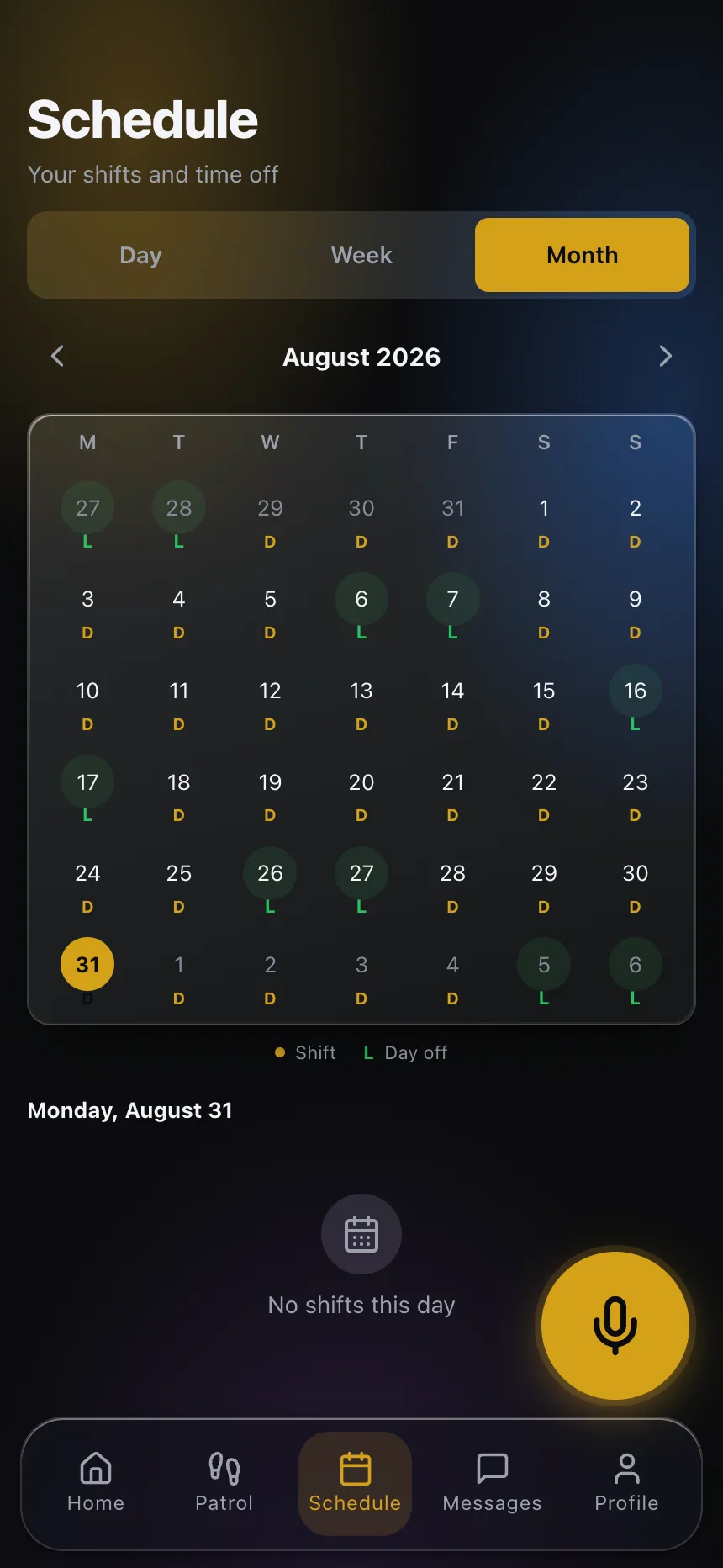
Formalize the handover. Overlap of even a few minutes, plus a filed DAR the incoming officer is expected to read, buys back most of the continuity the pattern costs.
Pick fixed over rotating for night posts. Flipping crews between days and nights every cycle turns a livable pattern into a sleep problem.
Staff the bench honestly. The pattern’s popularity with officers is real leverage in recruiting — use it to build depth on the account rather than to justify running lean.
If you want to see how rotations, handovers and shift records work together in one system, explore CGuardPro or get in touch.