Read ten security services proposals side by side and you will find the same document ten times. Company history. A page about “our commitment to excellence.” Stock photography of an officer in a blazer. Recruiting and screening described in language that could belong to any contractor in the country. Then a rate table, and that rate table is the only page anyone compares.
If your proposal is interchangeable everywhere except the number, you have taught the buyer to decide on the number. That is a self-inflicted wound, and it is fixable without changing your price.
Why most proposals get skimmed
The person evaluating your proposal is usually not a security professional. They are a facilities director, a property manager, a general counsel, an HR lead — someone who owns this problem as one of nine things they own. They have a specific fear, and it is almost never “I might pay too much.” It is: this transition will blow up on me and I will own it.
Everything a strong security services proposal does flows from understanding that fear. The buyer wants to know that switching will not hurt, that the officers will actually show up, that they will hear about problems from you before they hear about them from their boss, and that when they need to explain the program upward, you will have given them something to show.
Company history does not address any of that.
The structure that works
Six sections, in this order. Order matters, because buyers read the front and skim the back.
1. What we heard
Open by restating the client’s situation in their words, from the walkthrough and the RFP. The specific problems at their specific property: the loading dock nobody watches after six, the tenant complaints about the garage, the last vendor’s turnover, the reporting they never got.
This section is short and it does more work than anything else in the document. It proves you were paying attention, and it quietly frames the rest of the proposal around their problems rather than your capabilities. Everything after this should visibly answer something in this section.
2. The staffing plan
Concrete. Posts, days, hours, coverage pattern, armed or unarmed, and the schedule structure you propose — 8s or 12s, and why for this site. Say who supervises, how often a field supervisor visits, and what happens on holidays.
Then say what happens when an officer calls out. Every buyer has been burned by an uncovered post. Describe the callout process honestly: who is contacted, how relief is dispatched, what your escalation is if relief cannot be found, and what the client is told and when. Vague reassurance here is a red flag to an experienced buyer; specificity is a differentiator because so few proposals attempt it.
3. The transition plan
This is the section that wins contracts, and most proposals do not have one.
Lay out the days between award and first shift as a dated sequence: site survey, post orders drafted and approved by the client, officer selection and site-specific orientation, badge and access provisioning, client contact tree built, systems and reporting configured, the first-day plan, and who is physically on site during the first shifts.
Two commitments belong here and are worth making explicitly. First, whether you will interview and consider retaining incumbent officers — a huge concern for buyers who like the people but not the company. Second, who the client calls during transition, by name, and how fast that person answers.
A buyer reading a real transition plan is reading an answer to their actual fear. A buyer reading “we pride ourselves on seamless transitions” is reading nothing.
4. Reporting and visibility
Describe exactly what the client will see, and how often. Not “comprehensive reporting” — the actual artifacts. A daily report of activity and incidents. Tour completion. Incident notifications with a stated timeframe. A monthly summary. A quarterly review meeting with an agenda.
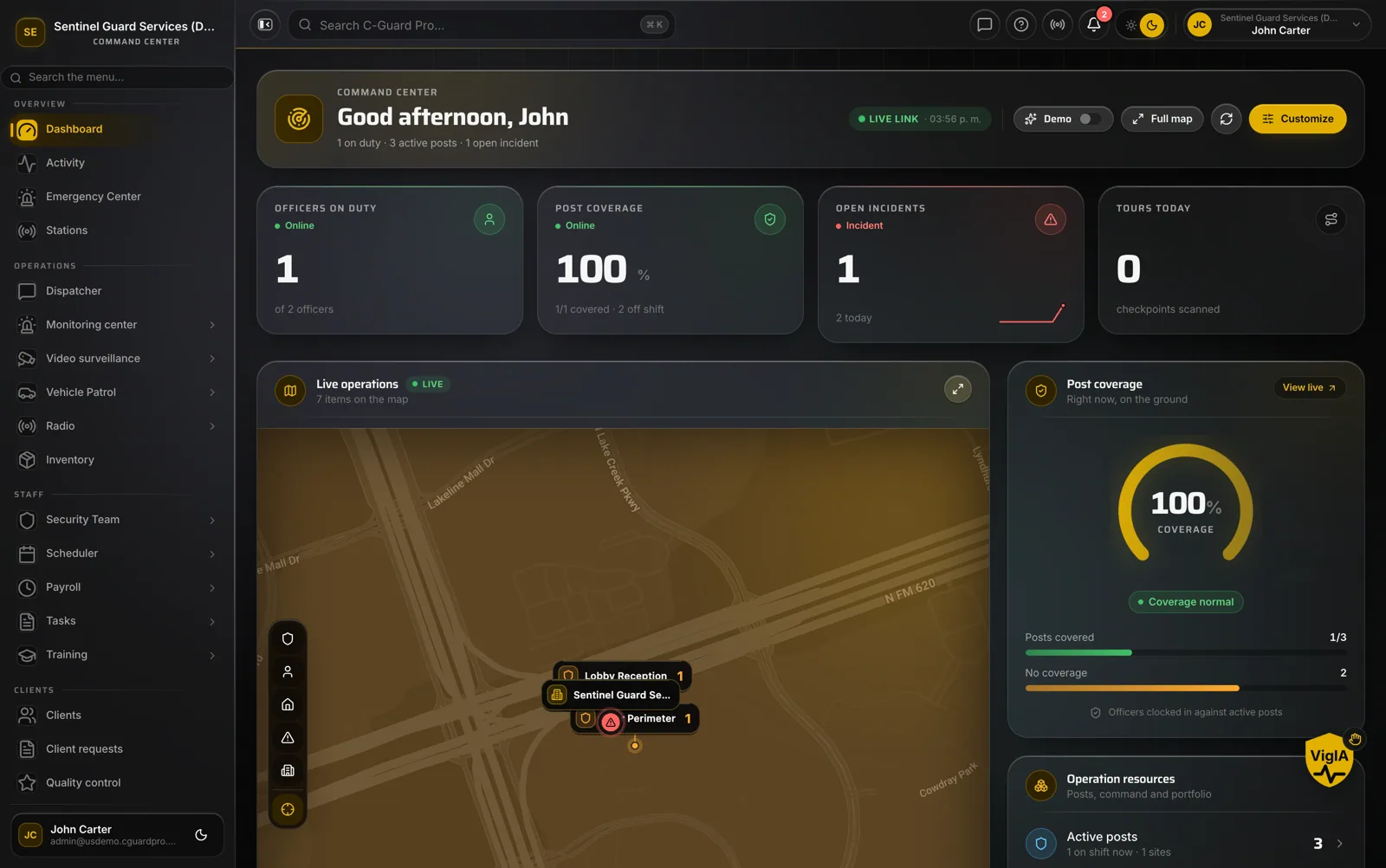
If the client can see their own site’s activity themselves rather than waiting for a monthly PDF, say so plainly — a client portal that shows tours, reports and incidents as they are filed is a concrete, verifiable claim, and concrete claims are what separate a proposal from a brochure. Same with daily activity reports that arrive with timestamps and photographs instead of a handwritten log the client never sees.
5. Evidence
The section almost everyone leaves out, and the one that changes the conversation.
Evidence means: show them what the output looks like. Include a redacted sample daily activity report from a comparable account. A redacted tour completion summary. A redacted incident report showing what a real notification looks like end to end. A sample of the monthly review deck.
The reason this works is simple. Every competitor is claiming quality reporting. You are the only one showing it. The buyer can hold your sample DAR next to whatever their current vendor gives them and see the difference without you having to say a word about the competition.
Two other evidence items worth including: references at accounts genuinely similar to theirs, with permission to call; and named people — the actual account manager and field supervisor who will run this account, with their background. Buyers trust named humans more than org charts.
6. Commercial terms
Rates by post and hour category, what is included, what is not, how overtime and holidays bill, how escalation works, term and notice. Clear, plain, no surprises buried in a schedule.
Put this last, not because you are hiding it, but because the four sections above it determine how the number gets read.
Substantiating what is behind the rate
Buyers who have been in the industry a while know that a low bill rate on a proposal is a promise about pay rate, and that a low pay rate is a promise about who shows up. You do not need to attack a competitor’s number to make this point. You need to make the components of your own service visible.
Describe what your rate covers in operational terms: the supervision cadence, the training hours, the relief structure, the technology the officer uses on post. Then let the buyer draw the conclusion about what a materially cheaper bid must be cutting. That argument lands far harder coming from the buyer’s own head than from your paragraph about “cut-rate providers.”
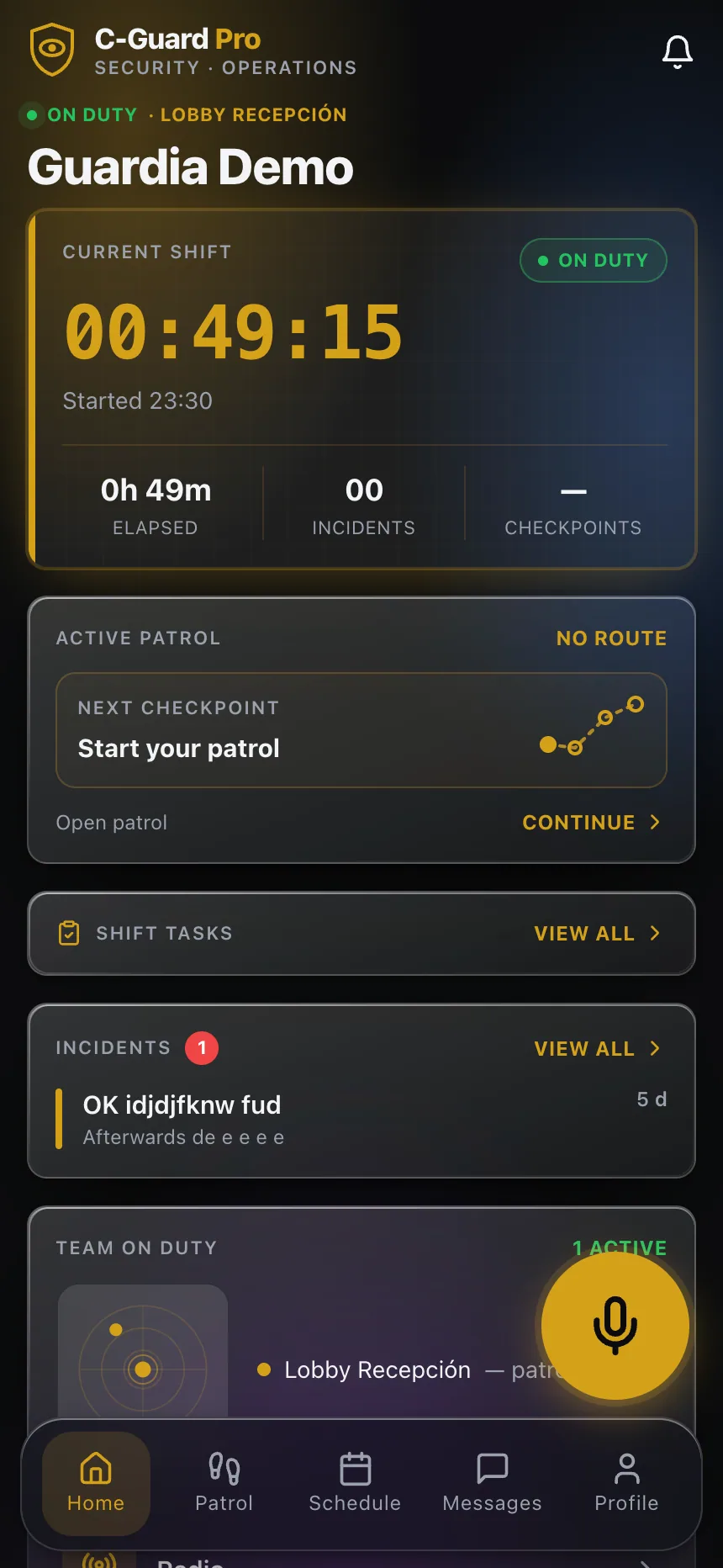
Where technology is part of the answer, be specific rather than sweeping. “Officers scan tags at checkpoints on their assigned route and the client can see completion” is verifiable. “We leverage cutting-edge technology” is noise. If QR-based guard tours are how you prove coverage, say what the client will actually see and when.
The mechanics that matter more than they should
Answer the RFP in the RFP’s order. Evaluators score against a rubric. Making them hunt for your answer costs you points you will never see deducted.
Every claim needs a mechanism. “Low turnover” is an adjective. “Officers are assigned to a home site rather than floated, and the field supervisor conducts a check-in with each officer at a stated interval” is a mechanism. Adjectives are free, so buyers discount them to zero.
Kill the generic pages. If a page would be identical in a competitor’s proposal with the logo swapped, it is dead weight. Company history belongs in an appendix, if anywhere.
Write for two readers. The person who reads it closely and the executive who reads only the first page and the price. Make the first page carry the argument on its own.
Site-specific beats company-wide, always. A photograph of their loading dock with your proposed coverage overlaid on it is worth more than every page of corporate boilerplate combined.
The close
The last page should not be a summary. It should be a next step with a date on it: proposed walkthrough, proposed decision timeline, proposed transition start. Proposals that end with “we look forward to hearing from you” hand control of the timeline to a buyer with eight other priorities.
A security services proposal is not a description of your company. It is an argument that the next twelve months will be uneventful for the person signing it. Write that argument, prove it with samples, and the rate table stops being the only page anyone reads.
If you want to see the reporting and client visibility that makes an evidence section easy to build, explore CGuardPro or get in touch.