Owners spend weeks arguing about the bill rate and about ninety seconds on everything else in the agreement. Then the account underperforms, and when you go looking for why, the rate is fine. What is not fine is that there is no escalation clause in year two, that a post can be cancelled with a phone call the same afternoon, that holidays bill at straight time because nobody said otherwise, and that the client has been adding duties for a year without a single change order.
The rate sets your ceiling. The other security contract terms decide how much of that ceiling you keep.
This is operational guidance, not legal advice. Contract enforceability, indemnity limits, insurance requirements and notice provisions vary by state and by circumstance, and some public-sector and prevailing-wage work carries terms you cannot alter at all. Have counsel review any agreement before signing, and have your insurance broker review any clause that touches coverage.
Escalation: the clause that decides year three
A multi-year agreement with no escalation mechanism is a wager that your costs will not move. They will. Wages move, workers’ compensation renews, minimum-wage floors change in some jurisdictions on schedules published years in advance, and health benefit costs reset annually.
Three structures are commonly used, and they behave very differently:
A stated annual escalator. Simple, predictable for both sides, easy for a client to budget. Its weakness is that it is a guess made in advance — if costs move faster than the escalator, you absorb the difference for the rest of the term.
A pass-through tied to defined cost drivers. Rates adjust when a specified event occurs: a statutory wage floor change, a workers’ comp classification change, a client-mandated increase in officer pay. Cleaner economically, but it needs precise drafting or it becomes an annual argument about what counts.
A reopener. Either party may request a rate review at defined intervals. Weakest protection, because a right to ask is not a right to receive, but better than silence.
Whichever you use, two details matter more than the structure. First, that a wage-driven increase adjusts the bill rate by more than the wage alone — payroll taxes and comp premium scale with wages, so passing through only the raw wage means absorbing the burden yourself. Second, that the mechanism has a stated timeline and does not require the client to agree in order to take effect, or you have written a request rather than a clause.
Minimum hours and cancellation windows
A post is a staffing commitment. You hire, license, train and schedule a person against it. If a client can cancel a shift the morning of, you either send an officer home unpaid — which is how you lose officers, and which may itself carry reporting-time obligations in some jurisdictions — or you pay for hours you cannot bill.
Terms worth having:
Minimum shift length. Officers do not accept four-hour drives for two-hour posts, and the economics of a very short shift rarely work.
A cancellation notice window. Shifts cancelled inside the window bill at the scheduled hours or an agreed portion. This is not an aggressive term; it is standard in every staffing business and clients understand it when it is explained as protecting the officer’s paycheck rather than your revenue.
A minimum weekly or monthly hour commitment on accounts where you have hired specifically for that contract.
Special events priced separately. Event coverage is a different product with different staffing economics. Do not let it be absorbed into the standing rate.
Holiday, overtime and premium billing
Silence here defaults against you.
Write out which days are holidays for billing purposes — the list can differ from your payroll holiday list, but both should be explicit. Write out how those hours bill.
Write out how overtime bills. If the client requests coverage that pushes officers into premium hours, that should be billable at a premium rate. If the premium arises because you scheduled poorly, it should not. Distinguishing those two cases in the language is what makes the clause fair enough to survive a conversation.
Write out how short-notice callouts bill when the client is the cause: a same-day request for an additional officer costs you more to fill than a planned shift, and that should be visible in the terms rather than argued about on an invoice.
Scope and change orders
Scope creep is the most reliable killer of otherwise healthy accounts, and it is almost never malicious. It accumulates one reasonable request at a time. Can your officer also sign for packages. Can he do a walkthrough of the third floor. Can he escort employees to the lot after dark. Can he monitor the camera feed while he is at the desk.
Each addition consumes time the rate never priced, and none of them arrive as a formal request.
The protection is procedural, not adversarial:
- The contract defines duties by reference to written post orders, and states that post orders are the operative description of scope
- Any change to post orders is documented and acknowledged by both sides
- Changes that materially increase hours or duties trigger a rate or hour adjustment
- A named person on each side is authorized to approve changes
That last item prevents the most common failure: a tenant, a night manager or a client employee with no authority directing your officers, and your officers complying because they want to be helpful.
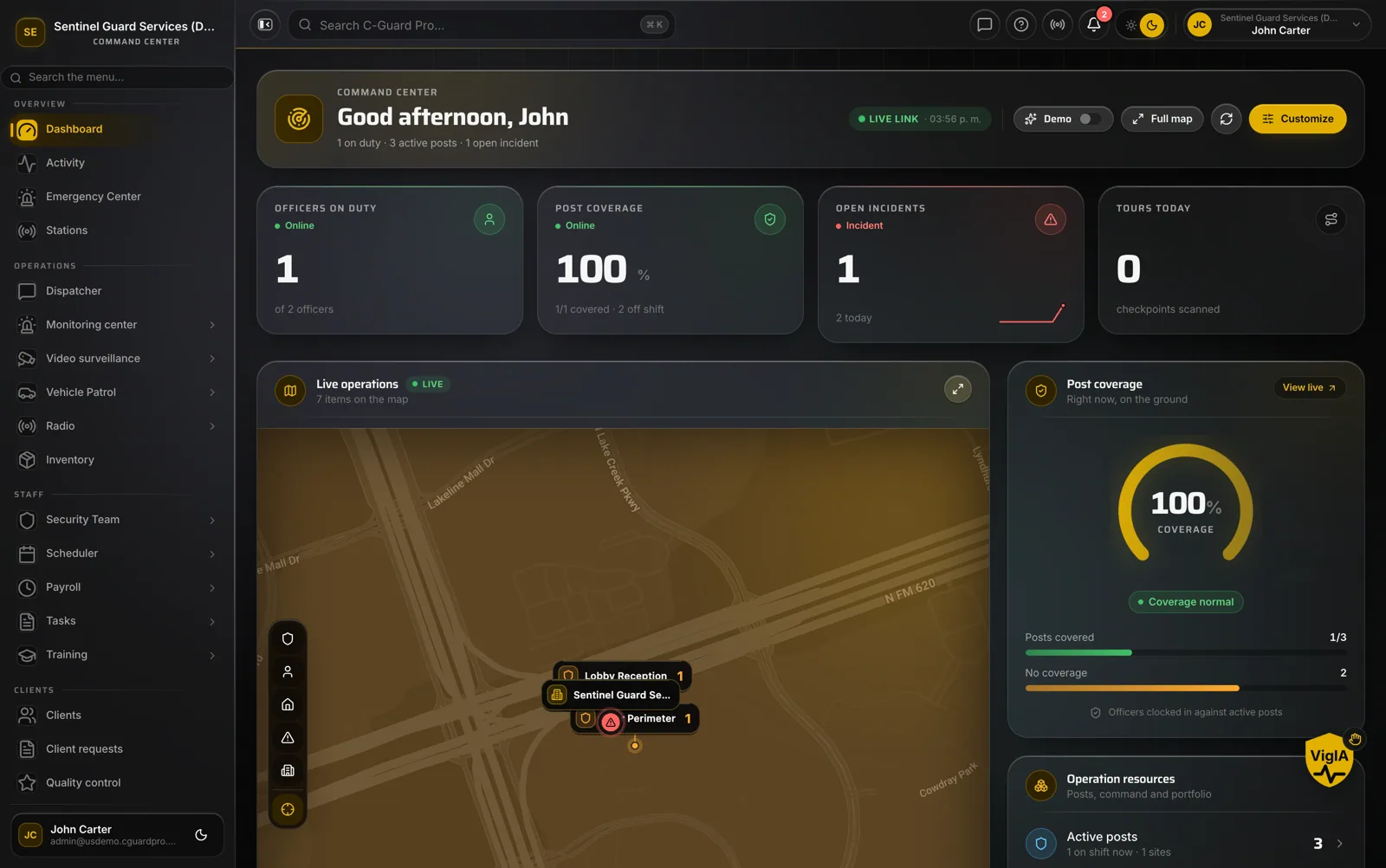
The practical enforcement mechanism is documentation. If the record of what officers actually did is complete and available to both parties — tours completed, patrols run, reports filed — then the conversation about creep becomes factual instead of a memory contest. A client portal that shows the client the activity as it happens serves you here as much as it serves them: nobody argues about whether the extra rounds were performed when both sides are looking at the same record.
Termination and notice
Symmetry is the principle. Whatever notice the client can give you, you should be able to give them.
Watch for three things. Termination for convenience with short notice, which turns your staffing commitment into an option the client holds for free — if you accept it, price it. Cure periods, which should exist: a defined window to fix a stated performance problem before termination for cause, with the problem stated in writing. And transition obligations, spelling out who returns keys, badges and equipment, how final billing works, and whether either party may hire the other’s people.
Non-solicitation deserves specific attention. Clients hire officers they like. Whether restrictions on that are enforceable varies significantly by state and has been an area of active legal change — get counsel’s view rather than copying language from a template you found.
Insurance, indemnity and limitation of liability
The clauses that carry the largest exposure and get the least owner attention.
Send every insurance and indemnity provision to your broker before signing, not after. Common problems: required coverage limits or endorsements you do not actually carry, additional-insured and waiver-of-subrogation requirements your policy does not support, and indemnity language broad enough to make you responsible for the client’s own negligence — which some states restrict and others do not.
Ask about a limitation of liability. Many clients will not agree to one, some will, and the answer is worth knowing before you price the account.
Performance standards you can actually meet
Clients increasingly want service levels, and you should welcome them — provided they measure things you control and are defined precisely.
Good subjects: post coverage, tour completion, report delivery timeliness, incident notification within a stated window, supervisor visit frequency, response to client communications.
Bad subjects: anything that measures outcomes you do not control. Incident counts, theft losses and “no security events” are not performance standards for a guard force; they are the client’s risk. Agreeing to be measured on them is agreeing to be blamed for the neighborhood.
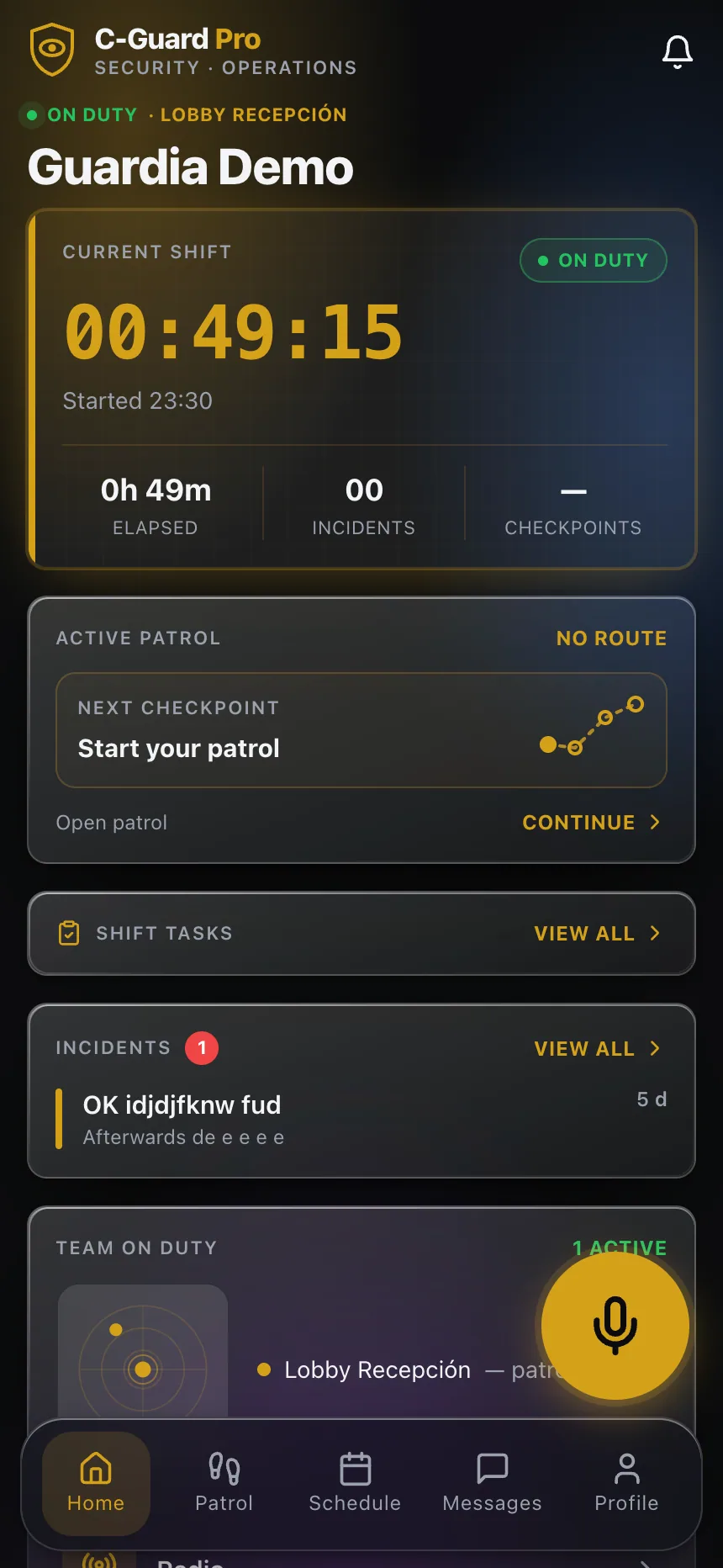
If you accept a standard, make sure you can prove compliance without manual effort. Tour completion is measurable if checkpoint scans create a record automatically; it is a fight if it depends on a handwritten sheet. Report timeliness is measurable if daily activity reports carry their own timestamps. A standard you cannot evidence is a standard you will lose an argument about.
Payment terms and the quiet cost of float
Payroll runs on your schedule regardless of the client’s. Long payment terms mean you are financing the account, and that financing is a real cost that belongs in the price if you accept the terms.
Worth negotiating: net terms, a late-payment provision, a right to suspend service after a defined delinquency with notice, and how disputed invoice items are handled — ideally, the undisputed portion gets paid while the disputed line is resolved, rather than the whole invoice sitting.
How to raise these without souring the deal
Bring them up early, framed around the client’s interest, and in writing.
Cancellation windows protect the officer’s paycheck, which protects continuity at their site. Escalation clauses prevent the sudden mid-term rate conversation nobody wants. Change-order language protects the client from a vendor who silently drops duties. Cure periods give the client a fix instead of a transition.
Every one of these terms has a version that genuinely serves both parties, and a buyer who understands that will negotiate rather than refuse. The owner who loses is the one who never raises them at all and discovers in month fourteen exactly which clause was missing.
If you want to see how coverage, tours and reports create the record these terms depend on, explore CGuardPro or get in touch.