You walked the property, wrote a real staffing plan, priced it honestly, and lost to a company whose number made no sense. Everyone in contract security has that story, usually several. The temptation afterward is to conclude that the buyer only cares about price and that the market is a race to the bottom.
Sometimes that is true. Often it is not. Lowball security bids win a lot of work that a better-argued proposal would have won, because the losing bidder made an argument the buyer could not verify and the winning bidder made a claim the buyer could.
Why the low bid is usually structurally cheaper, not smarter
The cost of an hour of guard coverage is not mysterious. It is a wage, plus the taxes and insurance that ride on that wage, plus the cost of the officer existing — licensing, uniforms, screening, training hours — plus supervision, plus the company’s overhead, plus whatever it costs to fill hours when somebody calls out.
Almost none of those layers can be made dramatically more efficient by a small contractor. Payroll taxes are payroll taxes. Workers’ comp is rated by class and payroll. Licensing costs what it costs.
So when a bid comes in materially below a properly built rate, it is not because that company discovered efficiency. It is because one or more of the following is being funded at a level the buyer has not been told about:
- The pay rate, set below what the local market clears for that shift, which means the post is filled by whoever is available rather than whoever is suitable
- Supervision, reduced to a name on an org chart who visits rarely
- Training, cut to the licensing minimum and nothing site-specific
- Relief depth, meaning callouts get covered by whoever answers the phone, or not at all
- Insurance, carried at limits or with endorsements that will not respond the way the client assumes
- Margin, priced at a level the company cannot survive on, which becomes the client’s problem when the contractor renegotiates in month eight or fails outright
The last one is worth naming plainly, because buyers understand vendor failure risk in every other category of spend.
What the low bid actually costs the buyer
The buyer’s spreadsheet compares hourly rates. The buyer’s actual experience is composed of things that do not appear on it.
Turnover in the officer’s chair. A post staffed at a rate the local market does not support turns over continuously. Every turnover means a person who does not know the building, does not know the tenants, does not know which door sticks and which alarm always false-trips. Site knowledge is the entire value of a post officer, and it resets to zero with every replacement.
Uncovered shifts. A contractor without relief depth has one answer when an officer calls out: hope. The client discovers this when the lobby is empty on a Sunday morning.
Management time transferred to the client. This is the biggest hidden cost and the one buyers underestimate most. Whoever signs the contract now spends their own hours chasing coverage, re-explaining the post orders to a new face, and escalating problems that a functioning field supervisor would have caught. That time has a cost, it comes out of the buyer’s own week, and it is invisible in the bid comparison.
Documentation that does not exist when it is needed. The moment a client needs the record — a slip and fall, a theft, an insurance question, a tenant complaint, a lawsuit — the difference between a contractor with real reporting and one without becomes the only thing that matters. A client who cannot produce evidence of what was patrolled and when is exposed in a way no rate saving compensates for.
Making the argument with evidence, not adjectives
Every losing bidder in the country tells the buyer that the cheap guy will cut corners. Buyers have heard it from everyone, so it lands as sour grapes. The argument only works when the buyer can check it themselves.
Ask questions instead of making claims
Give the buyer a short list of questions to put to every bidder, yours included. Questions are not attacks; they are due diligence, and a buyer who uses them is doing their job.
- What pay rate will officers on this account receive, and will you commit to it in the contract?
- Who is the named field supervisor for this account, and how often will they be on site?
- What is your callout procedure, and who covers a post when an officer does not show?
- What training will officers receive beyond the state minimum, and how many hours is site-specific?
- Show us a sample daily report from a comparable account.
- What insurance limits will you carry, and will you provide a certificate before start?
- What is your officer turnover on accounts of this type?
You do not have to say the low bidder will answer these badly. You only have to make the questions get asked.
Show the output, do not describe it
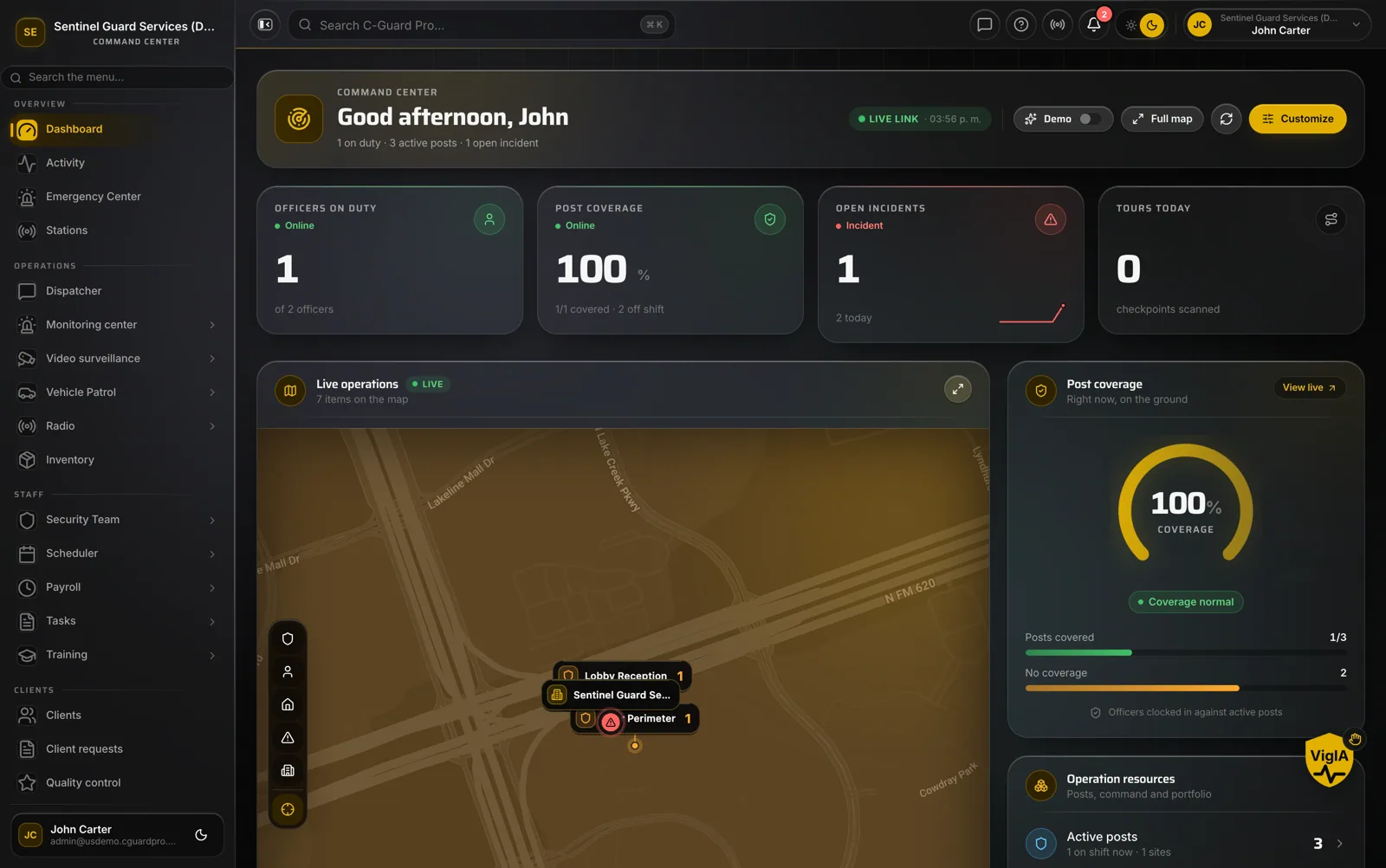
The strongest move available in a competitive bid is to hand the buyer artifacts. A redacted daily activity report from a similar account. A redacted tour completion summary. A screenshot of what the client will see when they log in. A sample incident notification, showing the time it was reported and the time it was sent.
This works because it converts an unverifiable promise into a verifiable one. Every bidder claims good reporting. You are the only one who showed what “good reporting” produces on a Tuesday. If the low bidder can show the same, they have earned the comparison. Usually they cannot.
Where the reporting is generated automatically rather than typed up later, say so concretely: checkpoint scans create a tour record at the moment the officer is standing at the location, and a client portal puts that record in the buyer’s hands without a request. Those are checkable claims. “Rigorous oversight” is not.
Price the transition risk out loud
Buyers switching vendors are buying a transition, whether they think about it that way or not. Put your transition plan in writing with dates and names, and note what the client’s own time commitment will be under your plan versus a vendor who arrives on day one with no site survey.
A buyer who has been through a bad transition needs no persuading. A buyer who has not will still recognize that one bidder has a plan and the others have a start date.
Sometimes you should lose
Not every loss is a failure of argument. Some accounts genuinely want the cheapest warm body, and every hour you spend chasing them is an hour not spent on a buyer who cares about outcomes.
Signals that a prospect is not yours to win: a scope written so vaguely that no two bidders are pricing the same thing, a selection process that is purely price with no interview, an incumbent being re-bid annually with no complaints about performance, or a buyer who will not permit a site walkthrough. Qualify these out early and cheerfully. The pipeline discipline of walking away is what makes it possible to hold price on the accounts you do pursue.
Build the follow-up into your process
Underpriced contracts have a life cycle, and it is short. Coverage gaps start, turnover accelerates, the client’s own time gets consumed, and somewhere in the first year the buyer either renegotiates or starts looking.
Losing a bid should therefore end with a calendar entry, not a shrug. A short, warm check-in partway through the term — no pitch, just a note that you are still interested and available — puts you in front of the buyer at exactly the moment the low bid is failing. Buyers rarely go back to the market immediately when a vendor disappoints; they call the person they remember.
Keep the losing proposal on file. If they call, you can update it in a day rather than starting over.
The internal discipline
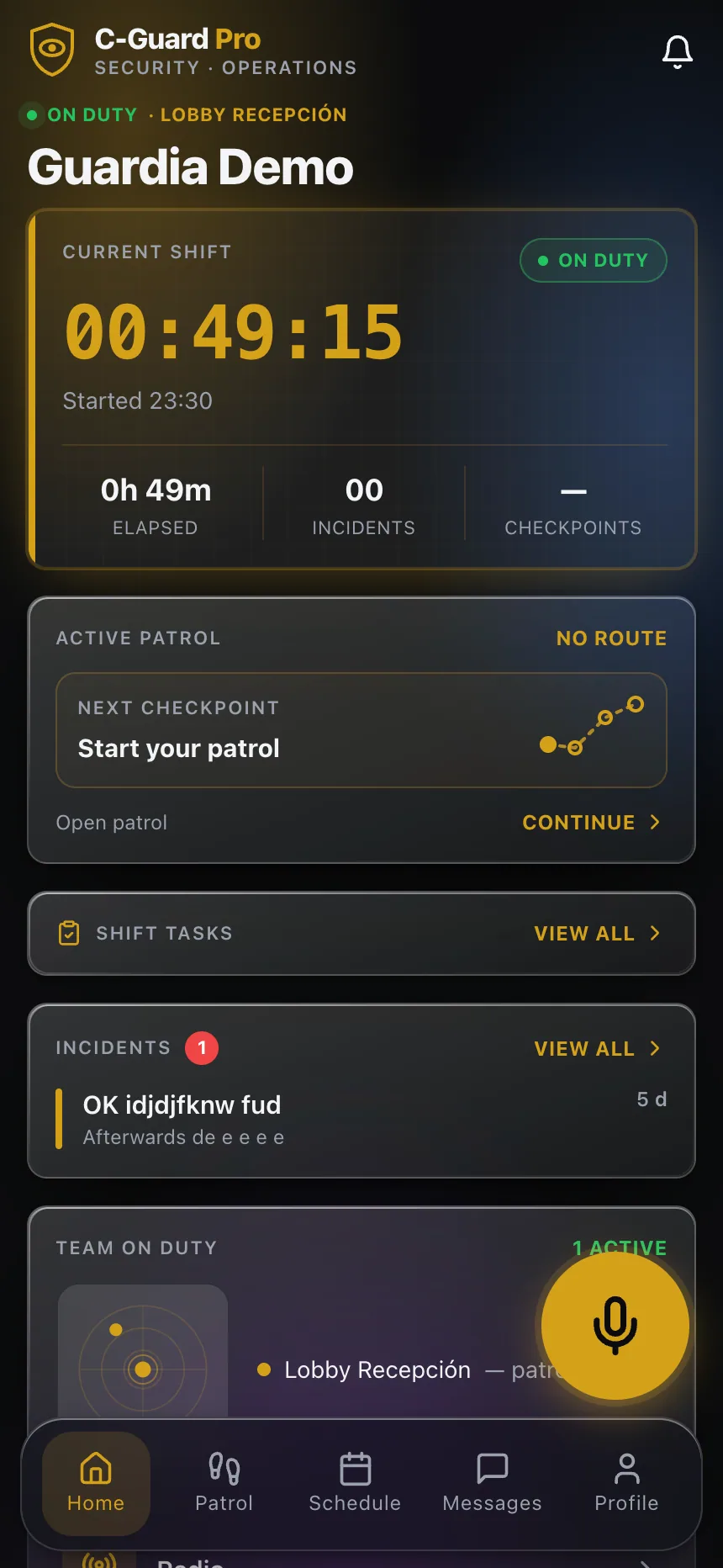
The last piece is uncomfortable: the total-cost argument only works if it is true at your company.
If your own accounts have coverage gaps, if your supervisors are not visiting on the cadence you promised, if your daily activity reports are thin, then a buyer who checks your references will find that the premium bought them nothing. The premium has to be visibly spent.
So the response to lowball security bids is not primarily a sales response. It is an operational one: run the accounts you have well enough that the evidence section of your next proposal writes itself, and that your references say specific, checkable things about coverage, supervision and reporting.
Companies that win consistently against cheaper bids are not better at rhetoric. They are better at producing proof.
If you want to see the kind of record that makes a value argument verifiable rather than rhetorical, explore CGuardPro or get in touch.