Two officers work it out between themselves in the parking lot. One has a wedding, the other wants the hours, and the swap is agreed with a handshake. Nobody tells the branch. Saturday night the client’s property manager finds an officer at the desk who has never been on that site, does not have the alarm code, and cannot answer a question about the loading dock. A shift swap policy exists to prevent exactly this — without killing the flexibility that keeps officers from quitting.
The temptation is to ban swaps. That is the wrong call. Officers who cannot trade a shift will call out instead, and a callout is strictly worse: you lose the coverage and the notice.
What swaps are actually buying you
A well-run swap program is a retention tool with a coverage benefit attached. When an officer has something come up, they have three options: request time off through the schedule, arrange a swap, or call out. The first requires lead time you often do not have. The third is free for them and expensive for you. The second is the only one where the post stays covered by someone who chose to be there.
So the design goal is not control for its own sake. It is to make the swap route easier than the callout route, while ensuring that every swap passes through a filter that protects the post, the payroll and the client relationship.
The four rules a shift swap policy must contain
1. A swap is not real until it is approved and in the schedule
This is the rule everything else hangs on. Say it plainly in the policy: an agreement between two officers has no effect on the schedule. Until a supervisor approves it and the schedule shows the new names, the originally scheduled officer is the officer responsible for the post. If they do not show, it is a no-show on their record.
That sounds harsh. It is the only version that works. The alternative is a schedule nobody trusts, which means at 3 a.m. dispatch does not know who is on the post, which means a callout takes twice as long to fill and an incident takes twice as long to attribute.
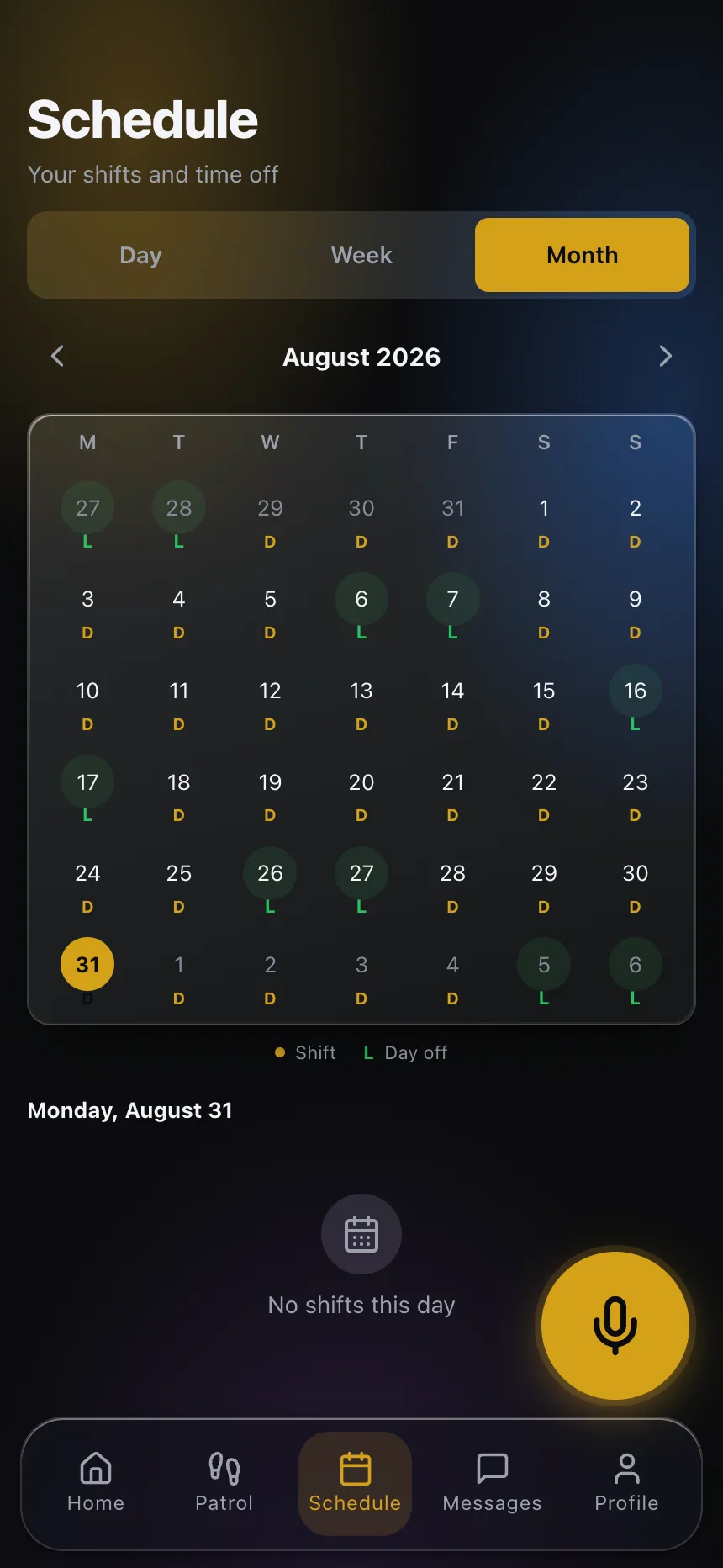
Practically, this means the schedule has to be somewhere both officers and supervisors can see it in real time. If the roster lives in a spreadsheet on one person’s laptop, “the schedule is the source of truth” is an aspiration, not a rule. Publishing assignments to each officer’s phone, with approved swaps updating instantly for everyone, is what makes the rule enforceable. That is a core reason to run guard scheduling software rather than a shared file.
2. Both officers must be qualified for the post
The most common swap failure is not a no-show. It is coverage by someone who should not be there.
Check three things before approval:
- License and credentials. Whatever the state and the assignment require, current and on file. Requirements vary by state and by armed versus unarmed status, and they change; verify current rules with your regulator — TDLR in Texas — and with counsel. This is not legal advice.
- Client clearance. Many accounts require named, vetted officers. Some require background checks the client runs themselves. An officer cleared for one account is not automatically cleared for another.
- Site training. Post orders, access procedures, alarm response, emergency contacts. An officer who has never worked the site should not first see it at 11 p.m. on a Saturday.
Build the qualification check into the approval step so it happens every time rather than when the supervisor happens to think of it.
3. Swaps cannot create premium hours without authorization
Here is the trap. Officer A is scheduled Saturday and has a light week. Officer B picks it up and is already near the top of her hours. The post is covered, everyone is happy, and you have bought premium hours nobody approved, on a contract you bid at straight time.
The policy should state that swaps which push either officer past a defined weekly hour threshold require operations approval, not just supervisor approval. And the approver needs to be able to see current hour totals at the moment of approval — reconstructing them after the period closes is how the cost gets discovered too late.
Overtime thresholds, workweek definitions and any state rules that go beyond the federal baseline vary by jurisdiction and by how your workforce is classified. Set the number with payroll and counsel.
4. No swap creates an unsafe stretch
Define a maximum consecutive hours limit and a minimum rest between shifts, and apply it to swaps the same way you apply it to callout coverage. Officers picking up hours are motivated and will happily agree to a schedule that has them working a night, sleeping four hours and coming back for a day. The policy has to say no on their behalf.
The mechanics worth specifying
Notice. A stated minimum — for example, swaps requested more than a set number of hours before the shift are routine, and anything inside that window is treated as a callout fill requiring operations approval. Pick a number that fits your branch’s response time and publish it.
Who initiates. The officer giving away the shift owns the request. They are the one with the obligation, and making them responsible for finding the cover prevents supervisors from becoming a swap brokerage.
Who approves. Name the role, not the person. Include what happens when that role is unreachable.
Frequency. Some operations cap routine swaps per officer per month. This is worth considering not to be punitive but because an officer swapping constantly is telling you their assigned pattern does not work for them. That is a scheduling conversation, not a discipline one.
Records. Log who requested, who accepted, who approved, and when. Six months later that log is what settles a payroll dispute or an attendance question.
Make the approved schedule reach the officer
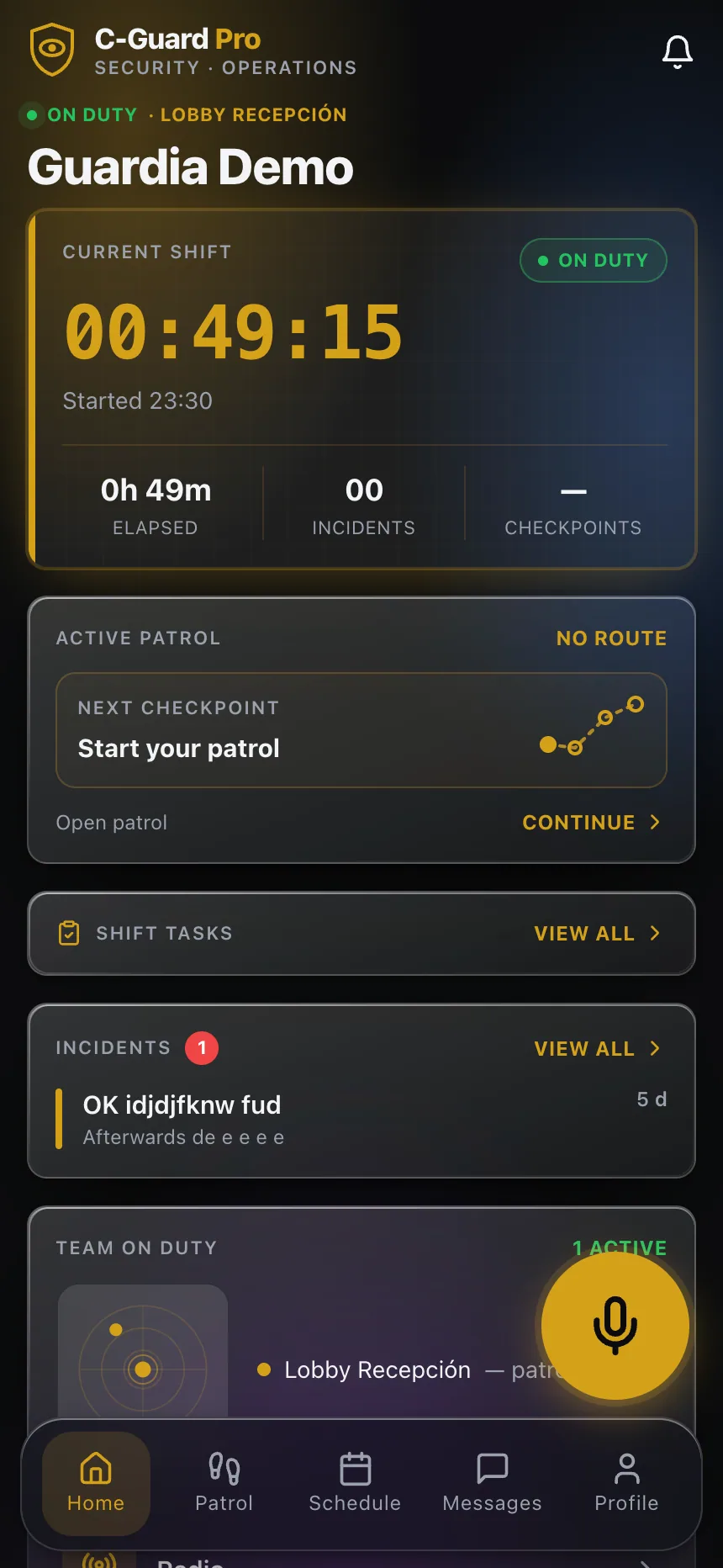
An approved swap that stays in the office is only half a swap. The officer picking up the shift needs the post assignment, the start time and enough post information to walk in ready. The officer giving it up needs confirmation, in writing, that they are released — that removes the anxious 10 p.m. phone call and the “I thought you took it” argument the next morning.
Push both confirmations to the phone. Officers should be able to look at their own schedule and see the truth, whatever was said in the parking lot.
Watch what the swaps tell you
Treat swap data as a signal. A post that generates constant swaps has a problem — the hours, the commute, the site, or a supervisor. An officer who is always giving shifts away is probably in the wrong pattern. An officer who picks up everything is either your most valuable flex resource or heading for burnout, and it is worth knowing which.
Reviewing swap volume by account each month costs almost nothing and catches scheduling problems before they turn into resignations.
A shift swap policy is not paperwork for its own sake. It is the mechanism that lets you say yes to officers without losing control of who is standing at a client’s door. If you want to see how approvals, live schedules and officer notifications work together, explore CGuardPro or get in touch.