The call comes at 2:47 a.m. The officer scheduled for the 3-to-7 relief at a warehouse account is not coming — car, kid, flu, or nothing at all, just a phone that rings out. Whoever is holding the on-call phone now has roughly thirteen minutes to produce a licensed, cleared, awake human being at a gate on the other side of the metro. Last minute callout coverage is the single most consequential decision most security operations make, and it is almost always made by the most junior person on duty, under time pressure, with no written plan.
That is fixable. Not the callouts themselves — those are permanent — but the thirteen minutes.
Why last minute callout coverage fails at 3 a.m.
Daytime gaps get filled by the branch. Somebody knows somebody, the operations manager makes a call, a supervisor drives out. At 3 a.m. every one of those inputs is gone. The dispatcher is working from whatever is written down, and if what is written down is a printed roster from last month and a phone list sorted alphabetically, the outcome is close to random.
Three things fail at that hour, reliably:
Information. Who is actually available? Not “who is not scheduled” — who is off, rested, licensed for this post, cleared by this client, and within driving distance. That is four filters, and a paper roster answers none of them.
Authority. Can the dispatcher approve premium hours? Can they authorize a supervisor to stand a post? Can they tell the client the post will be uncovered for ninety minutes? In many companies nobody has ever answered these questions in writing, so the dispatcher either wakes a manager or guesses.
Reach. Calling twelve people one at a time takes longer than you have. The first three do not pick up. The fourth is the one you called last time.
Build the standing callout list
Not a phone list. A callout list is an ordered, filtered, maintained roster of who can cover what.
Filter by post, not by company
An officer who is perfect for a lobby account may be unusable at an industrial site that requires site-specific safety training, or at a client that vets every officer individually. The list has to be organized by what each person is actually cleared to work. Maintaining that per-account is tedious, which is exactly why it should live in the schedule rather than in someone’s memory.
Order it deliberately
Decide the order before the night it matters. A defensible sequence usually looks like:
- Officers already on site who can hold over, if the extension does not create an unsafe stretch.
- Part-time or flex officers assigned to this account who are not working.
- Full-time officers off today whose weekly hours will not create premium.
- Full-time officers off today who will create premium.
- Officers from adjacent accounts with equivalent clearance.
- Field supervisor stands the post.
- Client notification of reduced or delayed coverage.
The order encodes your priorities — safety first, cost second, escalation last. Put it in writing so the dispatcher is executing a plan rather than improvising one.
Keep hour counts current
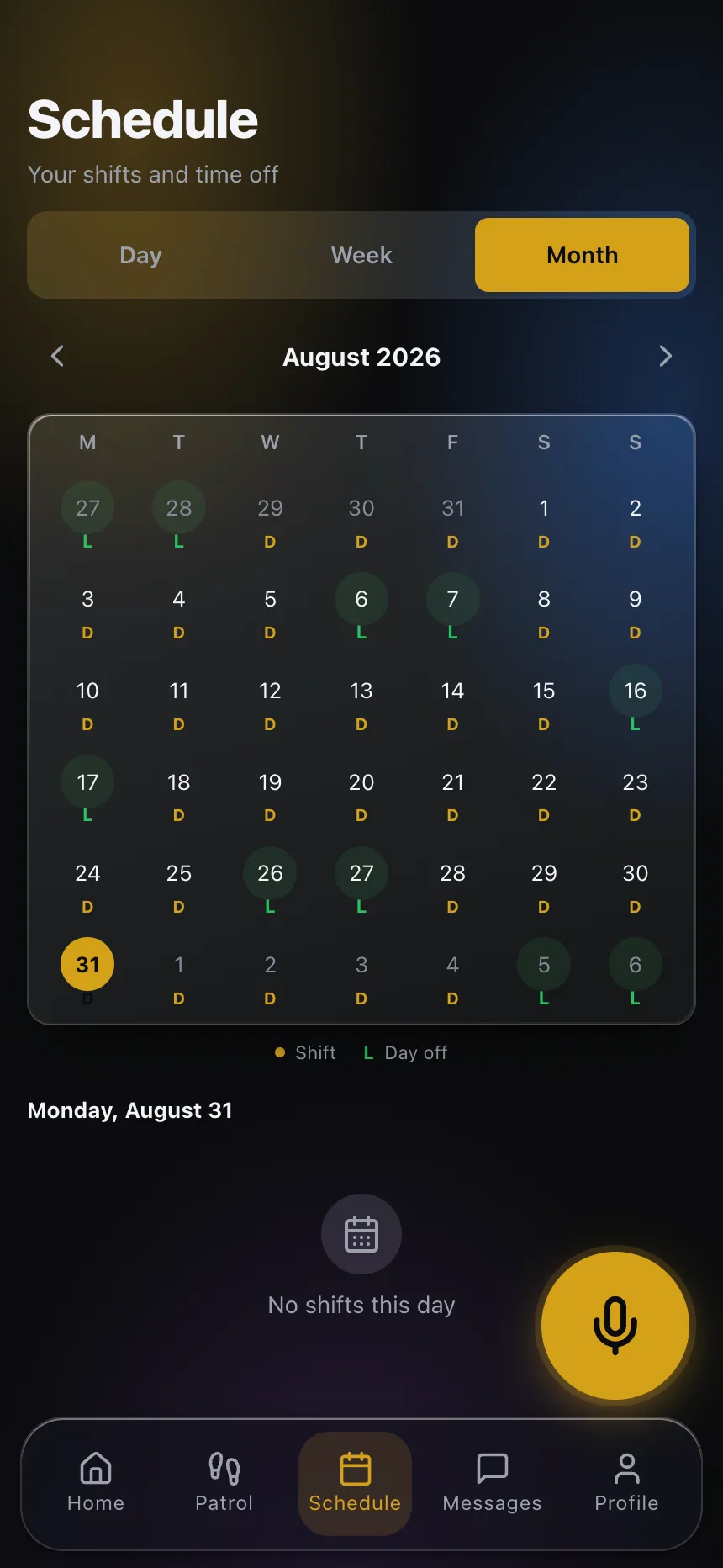
Step 3 and step 4 are the same phone call with a very different cost, and the dispatcher cannot tell them apart without live hour totals. If clock data only becomes visible when timesheets are collected, every callout is priced blind. When officers clock in and out from the app at the post, the week-to-date picture is current at 3 a.m. instead of on Monday afternoon. That is the whole argument for real-time guard time and attendance — not catching people, but knowing what you are buying before you buy it.
Ask people in advance
The strongest callout list is built from officers who have said, in a calm moment, that they want extra hours and under what conditions. Someone who has told you “call me any night except Wednesday” is a different asset from someone you are cold-calling at 3 a.m. Ask during onboarding, ask again quarterly, and record the answer where dispatch can see it.
Write down who can authorize what
This is the cheapest fix on the list and the one most often skipped. A one-page authority matrix that answers:
- Who can approve premium hours, and above what threshold?
- Who can approve a hold-over, and what is the maximum consecutive time you will allow anyone to work?
- Who can authorize a field supervisor to stand a post instead of supervising the district?
- Who calls the client, and at what point does the client have to be told?
- Who can decline to cover — because sometimes the right answer is that you cannot safely staff it, and someone has to be allowed to say so.
Give the dispatcher real authority inside defined limits. A dispatcher who must wake a manager for every routine fill will either stop covering posts or stop calling the manager, and both are bad.
Reach people faster than a phone tree
Sequential calling is the bottleneck. Sending a single message to the qualified group and taking the first “yes” changes the shape of the problem — you are no longer betting the post on whether the third person on the list is a light sleeper.
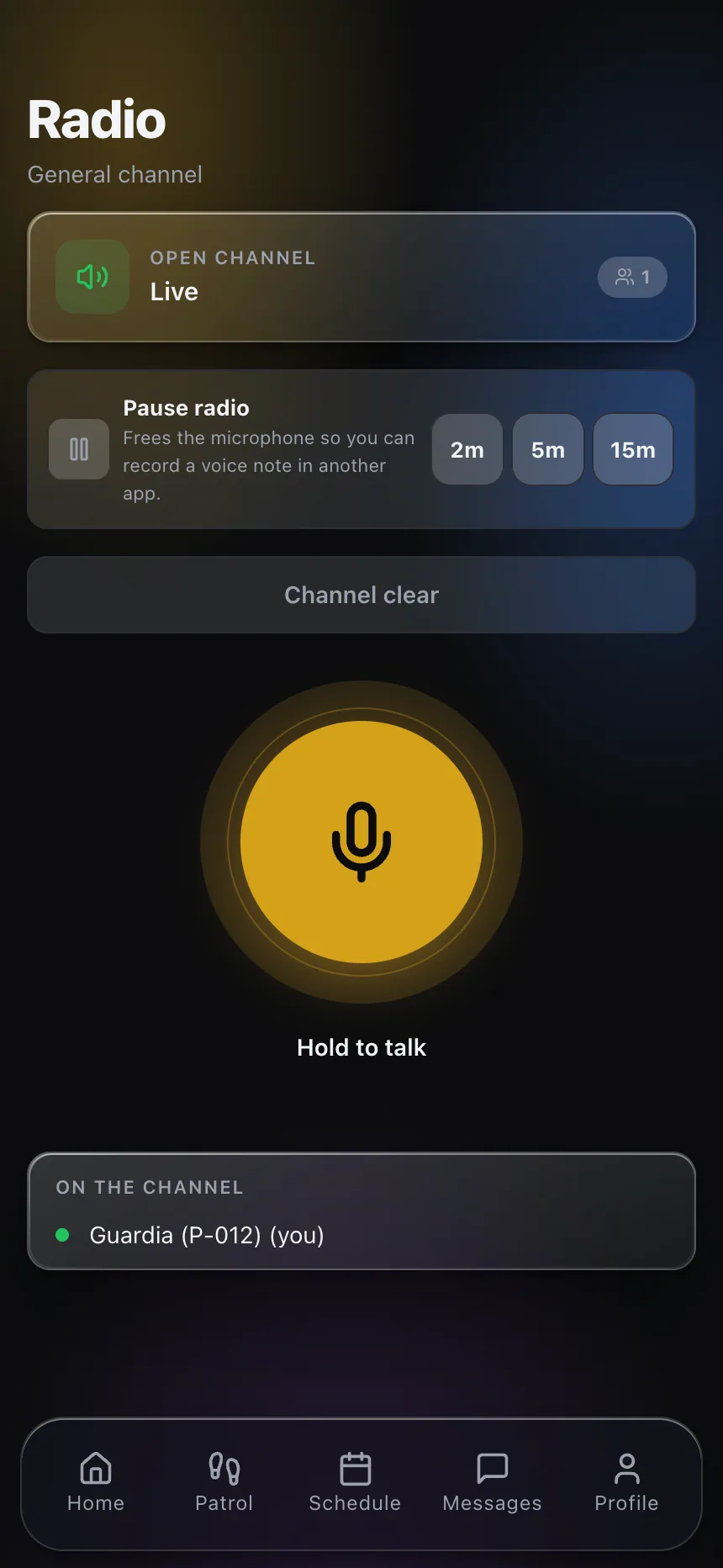
Live channels serve a related purpose. Officers already on duty are awake by definition, and they know who is reliable and who lives nearby. A quick call over push-to-talk radio to the officers currently working an account frequently produces a name faster than a phone list does, and it keeps the outgoing officer informed about whether relief is coming — which matters, because the fastest way to lose an officer is to leave them stranded past shift end with no information.
The decision tree
Print it. Put it next to the on-call phone. It should fit on one page and read roughly like this:
- Confirm the callout. Try the scheduled officer twice. People oversleep; a second call has recovered more posts than any policy.
- Check the clock. How long until the post is uncovered? Under 30 minutes changes your options.
- Hold over if safe. Ask the on-duty officer first. Confirm the extension does not breach your maximum consecutive hours rule.
- Work the list in order. Message the qualified group, then call in sequence.
- Escalate at the trigger point. Define it in time, not in feeling — for example, “if no coverage is confirmed 45 minutes before shift start, call the operations manager.”
- Notify the client at a defined threshold. Clients forgive gaps they were told about. They do not forgive discovering one from the property manager’s morning walkthrough.
- Log everything. Who called out, when, who was contacted, who covered, who authorized. That record is what tells you next quarter whether one account, one shift or one officer is generating most of your callouts.
Reduce the callouts you are planning for
Coverage planning is triage. Prevention is a separate program: publish schedules far enough out that people can plan, send shift reminders so “I forgot” stops being a category, keep patterns that officers can live with, and pay attention when one account produces more callouts than the rest — that usually means something about the post, the supervisor or the commute, not the people.
Track callouts as a metric per account and per officer, and review them. A pattern that is invisible in the moment is obvious in a quarter of data.
Employment obligations around scheduling, predictive scheduling notice, rest periods and overtime vary by state and municipality and can change. Verify your requirements with counsel before writing policy; this article is operational advice, not legal advice.
The goal is not a night with no callouts. It is a night where the dispatcher already knows the next three moves. If you want to see how scheduling, live coverage and officer communication fit together in one operation, explore CGuardPro or get in touch.