Officer of the Month starts the same way at almost every guard company. Someone proposes it in a management meeting, a plaque gets ordered, the first winner is a genuinely excellent officer everyone agrees on, and there is a nice photo. By month four the selection is a scramble ten minutes before the deadline. By month seven it rotates by account so nobody feels left out. By month ten nobody remembers to do it, and the plaque has three names on it.
That failure is not an argument against recognition. It is an argument against recognition designed as an event rather than as a system. Security guard recognition works when it is specific, frequent, tied to observable behavior, and visible to the people whose opinion the officer cares about. It fails when it is generic, occasional, subjective and announced into a void.
Start with what the job actually feels like
Contract security is structurally short on feedback. An officer works alone, often overnight, often at a site where the client’s staff barely acknowledges them. Nothing they do produces visible results — a shift where nothing happened is a successful shift, and it looks identical to a shift where they slept. Weeks pass with no contact from the company except a schedule and a pay statement.
In that environment, the scarce resource is not money. It is evidence that anyone noticed. An officer who prevented something, wrote a genuinely useful report, or covered a shift nobody else would cover, and heard nothing about it, learns a specific lesson: effort and non-effort produce the same response.
Recognition programs work by breaking that equivalence. Everything else is implementation detail.
Why cash bonuses underperform
Cash is the default reward and the weakest one, for reasons that are mechanical rather than mysterious.
Cash gets compared to pay, not to nothing. An officer receiving a bonus does not evaluate it against zero; they evaluate it against their hourly rate and their weekly earnings. A one-time payment is measured in hours worked, and the comparison rarely flatters it.
Cash is private. It arrives in a paycheck, alone, with no witnesses. Recognition draws much of its power from being seen by peers and by the client contact, and a line item on a pay statement is seen by nobody.
Cash becomes expected. A quarterly bonus paid twice is a bonus; paid six times it is compensation, and the quarter it does not arrive it is a pay cut. Programs built on cash tend to ratchet — the amount has to grow to produce the same effect, until it is simply an expensive part of payroll delivering no recognition at all.
Cash is ambiguous. It says “we approve” without saying what was approved. An officer who gets a bonus often cannot name the behavior that produced it, so it cannot be repeated deliberately.
None of this means never pay bonuses. It means do not confuse a bonus with recognition. If pay is below market, fix pay — a recognition program layered over uncompetitive wages reads as an insult and will be received that way. Recognition is what you do after pay is defensible, not instead of it.
What officers actually value
Ask officers directly and the answers cluster in ways that surprise owners who expected the list to be about money.
Being told specifically what they did well, by name, by someone whose opinion counts. Specificity is the whole thing. “Great job out there” is noise. “The way you documented the propped door at the loading dock — you included the time, the photo and the fact you’d reported it twice before, and that’s what got the client to fix it” is recognition. The second version also teaches the behavior to everyone who hears it.
The client hearing about it. An officer’s daily reality is the client site. A note from the property manager praising them, forwarded and acknowledged by the company, carries more weight than an internal award because it comes from the environment they actually live in.
Schedule and post preference. This is the most valuable reward most companies never use. Getting first pick of open shifts, getting the post you asked for when it opens, getting the shift pattern that fits your life — these are things officers organize their lives around, and they cost the company nothing but a policy decision. Making preference an earned thing rather than a seniority default is a strong lever.
A path to something. Field training officer, lead officer, supervisor. A visible route out of standing post is worth more than most awards, and companies that promote from within and say so publicly get retention from the announcement itself, not just from the promotion.
Being trusted with something. Training the new hire. Being the one who handles the difficult tenant. Being asked what the post orders should say. Responsibility is recognition.
The popularity contest problem
The reason Officer of the Month decays is selection. Whoever picks the winner picks the officer they saw most recently, on the account they visit most, on the shift they work. Overnight officers at remote sites are structurally invisible to that process, and they know it. Within a few cycles the program is teaching the exact opposite of what it intended: what gets rewarded is proximity to management.
Three design choices prevent this.
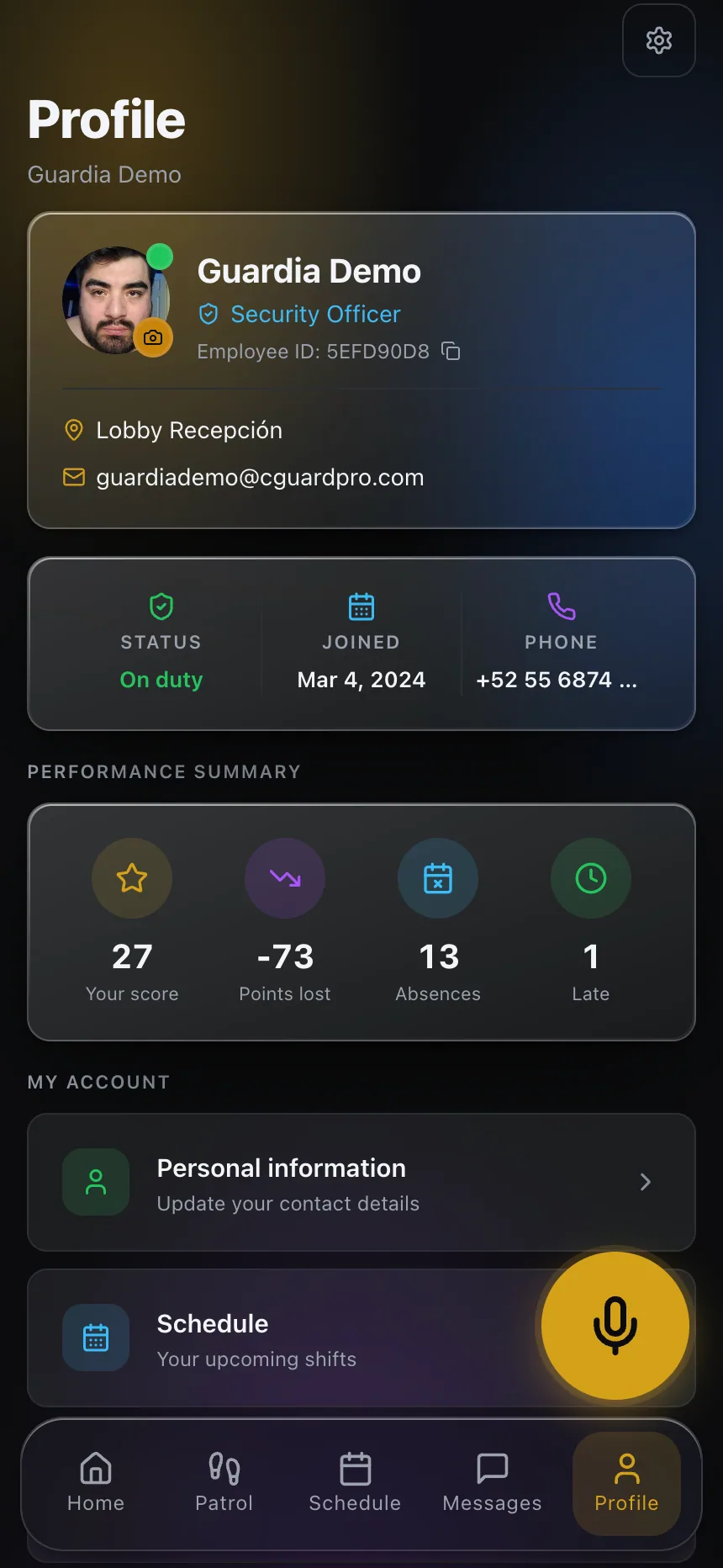
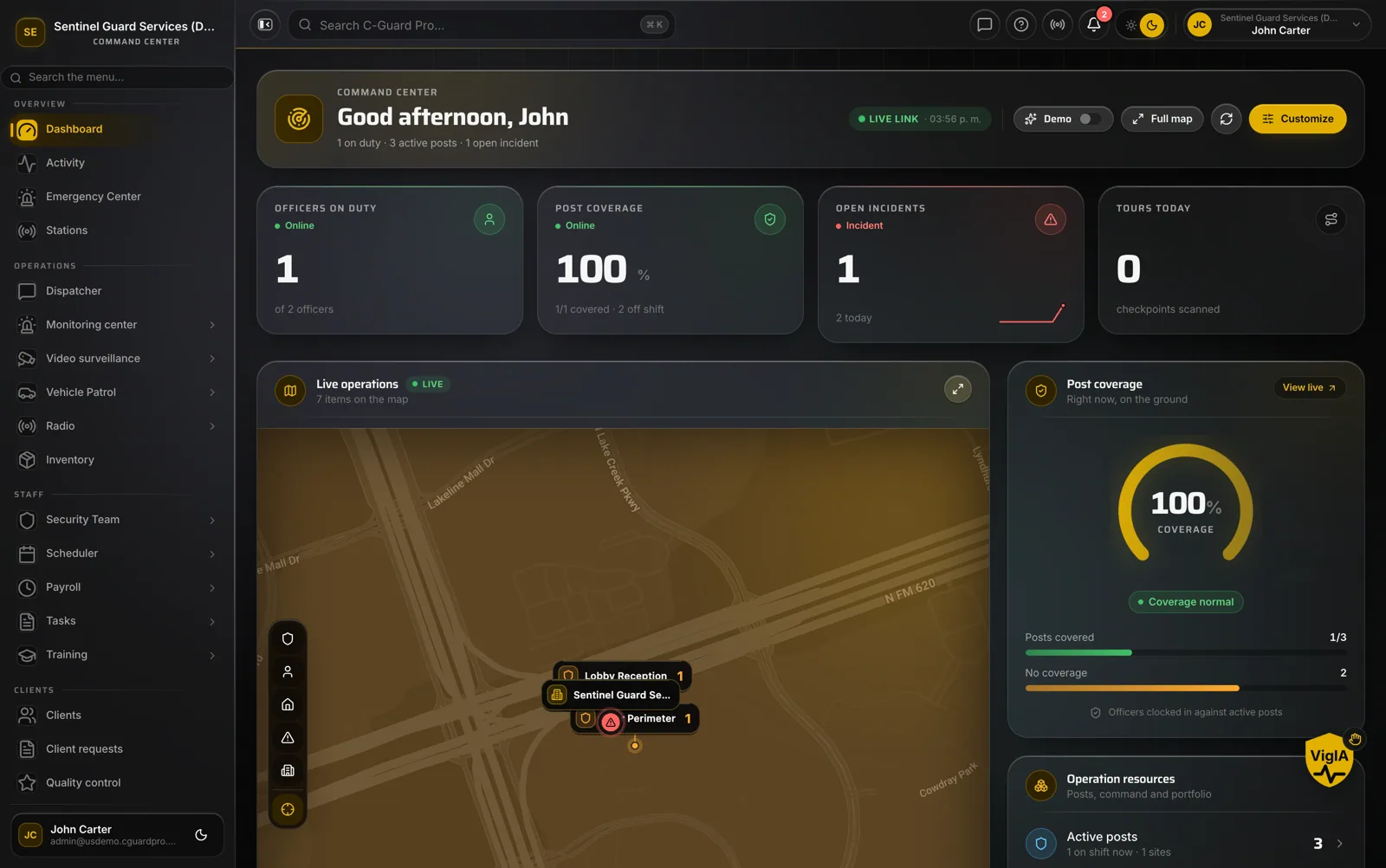
Base selection on observable work product, not impressions. You already generate a record of who is doing the job well: tour completion, on-time starts, report quality, incidents handled, inspection results. Not as an automated scoreboard — that gets gamed — but as the evidence a human uses when deciding. A supervisor who reviews the last month’s daily activity reports before nominating anyone will nominate different people than one going on memory.
Recognize behaviors, not rankings. “Best officer” is a comparison and produces losers. “The report of the month” or “the catch of the month” is an award for a specific act, can go to anyone including a brand-new officer, and can be awarded several times to several people without diluting anything.
Deliberately audit for shift and site coverage. Once a quarter, look at who has been recognized. If nobody from the graveyard shift or the two remote accounts appears, the problem is your visibility, not their performance. Go look at their work.
Frequency beats magnitude
A program with one large annual award and nothing in between is a program almost nobody experiences. Recognition works on the same principle as feedback generally: small, frequent and close in time to the behavior.
Practical cadence for a working guard company:
Immediate. The supervisor mentions the specific thing on the post visit, same shift or next shift. Cost: nothing. This is the highest-return recognition available and it fails only because supervisors do not read the officer’s recent work before arriving.
Weekly. A short internal note — a shared message to the force, a line in the shift brief — naming two or three specific things that went right that week. Names, sites, what happened. If your force communicates through the app or a group channel, this takes minutes and is read by everyone.
Monthly. Something with a little weight: a written commendation into the officer’s file, first pick on the next open shift, a note to the client contact copying the officer.
Occasional and unscheduled. An officer who handled something hard at 3 a.m. gets a call from the owner the next day. Unpredictability keeps a program from becoming a routine that stops registering.
Put it in the record
A commendation that exists only in a conversation disappears. Recognition should land in the officer’s file the same way discipline does — most companies have a thorough record of every write-up and no record at all of anything good, which quietly tells you what the file is for.
Keeping commendations, client compliments and notable incidents in the officer’s own record does three practical things: it gives the supervisor context before a promotion decision, it gives you something to point to during a performance conversation that is not entirely negative, and it means a long-tenured officer’s history is not just a list of the days they were late.
The honest limit
Recognition does not fix an uncompetitive pay rate, an unstable schedule, a hostile client contact, or a supervisor nobody respects. Officers leaving for those reasons will leave with a plaque in the car. Recognition is a multiplier on a decent job, not a substitute for one.
Where it does earn its keep is with the officers who are already reasonably content and who would stay if the job gave them any reason to feel that staying was noticed. That group is larger than most owners think, and it includes most of the people you would be sorriest to lose.
If you want to see how officer records, reports and post activity come together so the good work is visible, explore CGuardPro or get in touch.