Almost every contract security company has a website, and almost none of them produce business. The site was built once, by a cousin or an agency, it has a stock photo of a man in a suit with an earpiece, a paragraph about integrity and professionalism, and a contact form nobody has tested in two years. It is a brochure that nobody asked for, sitting at an address nobody types, and it has never produced a single one of the security company website leads it was supposedly built for.
The gap between that and a site that generates real inquiries is not design. It is understanding what a buyer is doing in the ten minutes before they decide whether to call you.
What the buyer is actually doing on your site
Two very different visitors arrive.
The first found you by searching. A property manager whose current vendor just failed, an HR director whose construction site got hit, a business owner who had an incident on Friday night. They are searching a service plus a place, they have three tabs open, and they are scanning for reasons to eliminate you. Wrong city, no armed service, no evidence you are licensed, no visible phone number — eliminated in fifteen seconds.
The second was referred. Someone gave them your name and they are checking whether you are real. This visitor is far more valuable and far more fragile. A referral is a small act of vouching, and a site that looks abandoned makes the person who referred you look careless. This visitor is not looking for reasons to call; they are looking for permission.
Both visitors are answering the same three questions: do you do the specific thing I need, do you do it where I am, and are you a real company with people who answer the phone. Everything on your site should be judged against those three questions. Almost nothing on a typical guard company website addresses any of them.
The five pages that matter
1. A home page that answers the three questions above the fold
Service, geography, and how to reach a human. Not a mission statement. A property manager in a hurry should be able to tell within one screen that you provide the kind of coverage they need, in their metro, and that a phone number exists.
The most common failure is geography. Guard companies write “serving the greater metropolitan area” instead of naming the cities and counties they actually cover. The buyer wants to know if you cover their building, and vagueness reads as a company that will say yes and then subcontract.
2. A page per service, not one page listing everything
Unarmed officers, armed officers, mobile patrol, construction site security, event security, fire watch, executive protection, front desk and concierge coverage. Each is a different buyer with a different urgency, and each is a different search.
A single “Our Services” page with a bulleted list serves none of them. A construction manager whose site is being stripped of copper wants a page about construction site security that talks about vacant property, material theft, gate control and night coverage. That page can rank, and more importantly it converts, because it demonstrates you have done this specific thing before.
3. A page per market you actually serve
If you cover multiple metros, each one deserves a page with real substance about operating there — not the same paragraph with the city name swapped. Local search rewards genuine local relevance, and buyers can smell a template.
The honesty constraint matters here: only build a page for a market where you can actually staff a post. A page for a city you cannot serve produces leads you have to decline, which wastes your time and burns the referral value of every one of those conversations.
4. A proof page
This is the page nobody builds and the one that converts referred visitors. It answers: are you licensed, are you insured, how do you supervise, what does your reporting look like, what happens when the client calls at 2 a.m.
Show the artifacts. A redacted sample daily activity report. A description of how patrols are verified. What the client sees in their portal. Buyers who have been burned by a previous vendor — which is most of the ones actively searching — are looking specifically for evidence of operational control, and almost no guard company website provides any.
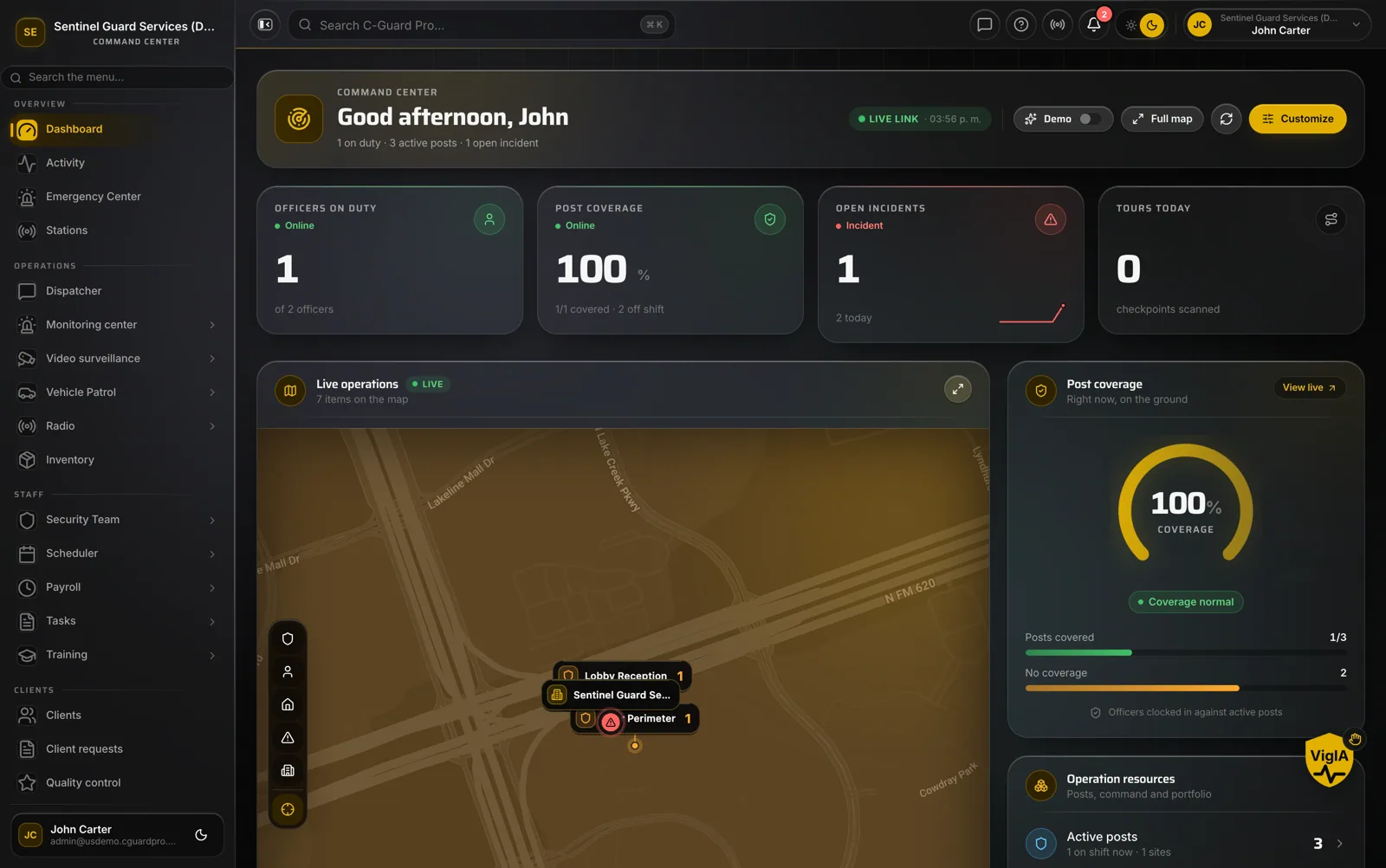
If your officers file structured daily activity reports and your clients can check their own site through a client portal, say so plainly and show it. This is the single strongest differentiator available to a mid-sized guard company, because the low-cost competition cannot demonstrate it.
5. A contact page that respects urgency
Phone number first, large, clickable on mobile. Hours you actually answer. A short form with as few fields as possible — a name, a phone number, the site location, and one open box. Every additional required field costs you inquiries, and asking a stranger for their budget before you have spoken is a good way to never speak.
Test the form. Then test it again in six months. A meaningful share of dead guard company websites are dead because the form has been silently failing to deliver mail since a hosting change.
Local search basics, without the mythology
You do not need a content marketing operation. You need the fundamentals to be present, because a large share of your competitors have not done them either.
Claim and complete your business profile on the major map services. Correct category, correct service area, real hours, real phone. This is frequently the entire source of inbound calls for a local service company, and it costs nothing.
Keep name, address and phone identical everywhere — your site, your profile, directories, your proposals. Inconsistency is a signal of an unmaintained business.
Make the site fast and usable on a phone. Your buyer is often standing in a parking lot when they search. A site that takes several seconds to render loses them before it appears.
Get reviews, carefully. Ask satisfied clients directly. Never incentivize, never write them yourself, and respond to negative ones factually rather than defensively.
Write for the search that has intent. “Security guard company” plus a city has intent. “Importance of security” does not. Service-plus-place is where the calls are.
What actually blocks security company website leads
Two things, usually.
The first is that the site describes the company instead of the buyer’s problem. Years in business, values, a photo of the ownership team. None of that answers “will you cover my garage from 10 p.m. to 6 a.m. starting Monday.”
The second is that there is no proof of anything. Claims of professionalism are free, and every competitor makes the identical claim, which means the claims cancel out and the buyer defaults to price. The only way out of a price comparison is to show something the price competitor cannot show.
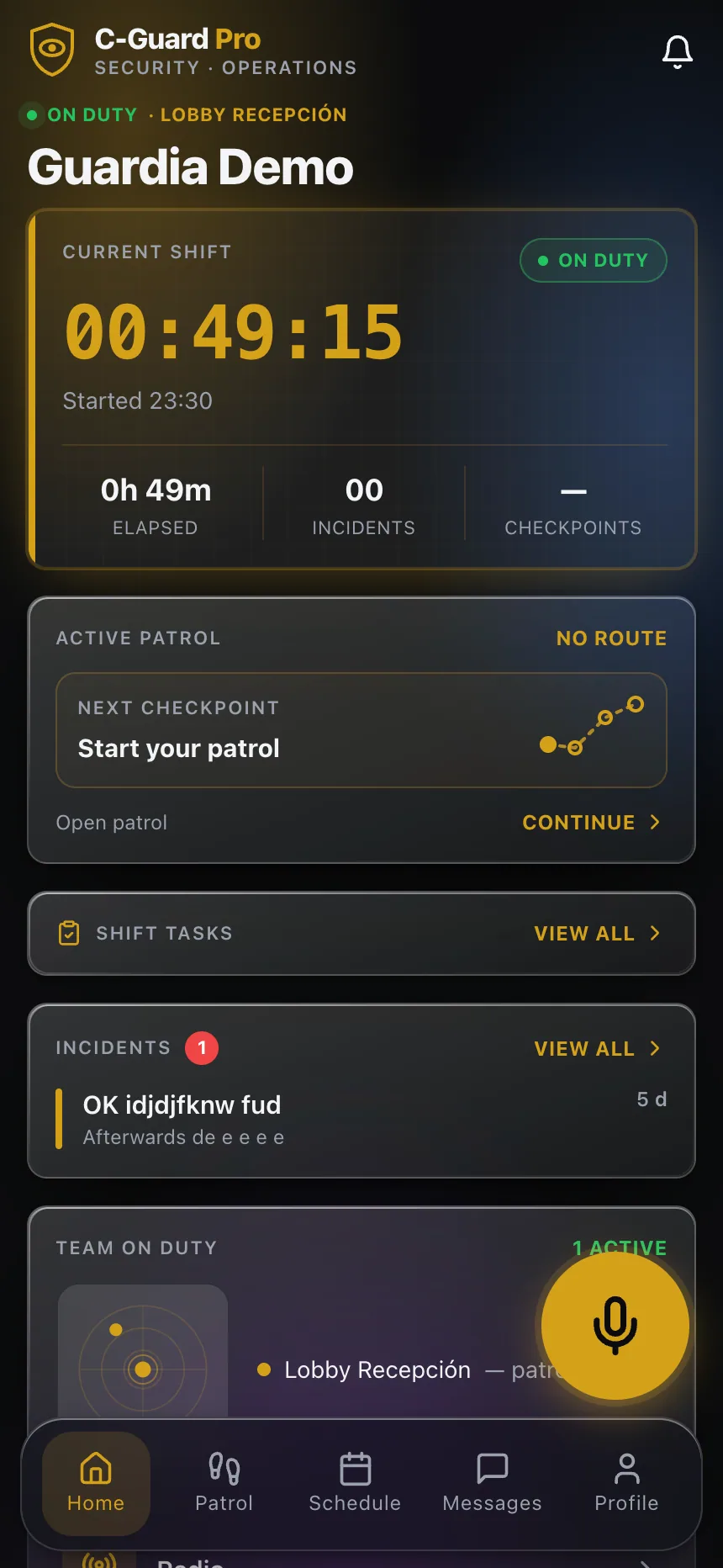
That is why demonstrating how you operate — verified attendance, verified patrols, reporting clients can see themselves — belongs on your website rather than being saved for the proposal. It reframes the buying decision from “who is cheapest” to “who can actually show me what happened last night,” and that is a question a well-run company wins.
Start with the contact page and the phone number, because those are broken more often than anyone believes. Then build one real service page for the work you most want more of. A site does not have to be large to produce leads. It has to be specific, current, and honest about what you can actually deliver — including your pricing approach, if you are willing to be transparent about it, which by itself sets you apart from most of the field.
If you want to see how operational proof gets produced automatically, explore CGuardPro or get in touch.