Every property manager, facility director and HR manager in your metro already has a guard company. They are contacted by other guard companies constantly, with the same email, promising the same things: professional, reliable, licensed and insured, competitive rates, family owned since whenever. The message is indistinguishable from the last six, so it is deleted with the last six. That is the fate of most security sales outreach.
It fails not because cold outreach does not work in this industry — it works better here than in most — but because the standard approach ignores the one thing that actually determines whether a prospect can act: where they are in their contract cycle.
In security sales outreach, timing beats wording
A guard contract is usually an annual or multi-year commitment with a renewal date and often an automatic renewal clause with a notice window. On any given day, the overwhelming majority of your prospects are structurally unable to buy from you, no matter how good your pitch is. They are locked in.
This changes the entire logic of outreach. The purpose of a first contact is not to win the account. It is to be the company they remember when the window opens — and to find out when that is.
Which means the highest-value information you can extract from a cold conversation is not a meeting. It is a date.
“I understand you’re covered. When does that agreement come up for review?” is a question people answer, because it costs them nothing and it politely ends the conversation. And it converts an anonymous name on a list into a dated, actionable entry.
The moments when accounts genuinely move
Contracts change hands at predictable junctures. Outreach aimed at these moments performs dramatically better than outreach spread evenly across the year.
Renewal windows and budget cycles. Especially for organizations on a fiscal calendar that requires bids at a defined interval.
A new property manager or facility director. New people review vendors. This is arguably the single strongest buying signal in the industry, and it is publicly observable if you pay attention to who has changed roles.
A change of ownership or management company. New owners re-bid almost everything.
An incident. A break-in, an assault, a fire watch order, a serious liability event. Approach these with real care — arriving as an opportunist immediately after something bad is a good way to be remembered badly.
A new building, a major tenant move-in, a construction phase, a vacancy. These create coverage needs that did not exist before, and they are frequently not covered by the incumbent contract at all.
An incumbent’s visible failure. Unfilled posts, high turnover, a vendor that has been acquired and changed. This information circulates among trades working the same buildings.
What to lead with
Assume the prospect gives you one sentence of attention. That sentence should be about them, and it should be specific enough that it could not have been sent to anyone else.
Things that earn the second sentence:
- A specific observation about their property that you could only have made by looking at it. Not criticism — observation. “I noticed the east garage entrance is uncovered after the lobby closes at six” is legitimate and it is the kind of thing they hear about from tenants.
- A relevant reference in their exact niche and geography. Not a client list. One comparable property, named if you have permission.
- A response to a public event they are dealing with.
- A genuine introduction from someone they know, which is not cold outreach at all and outperforms everything else by a wide margin.
Things that earn deletion: your years in business, your values, “just checking in,” “I wanted to reach out,” attachments in a first email, and any claim of being professional and reliable, which every competitor also claims and which therefore carries no information.
The hard discipline is to make no unverifiable claims. Do not cite response times you cannot measure or savings you cannot substantiate. Sophisticated buyers discount them instantly, and unsophisticated buyers will hold you to them.
Lead with proof, not adjectives
The most effective differentiator available to a mid-sized guard company is not price and not tenure. It is demonstrable operational control — the ability to show, rather than assert, what happened at a post last night.
Most prospects have been burned by exactly this. They had a vendor whose officers may or may not have been walking the property, whose reports arrived late and said nothing, and who could not answer a simple question about whether anyone was on site when a tenant’s car was broken into.
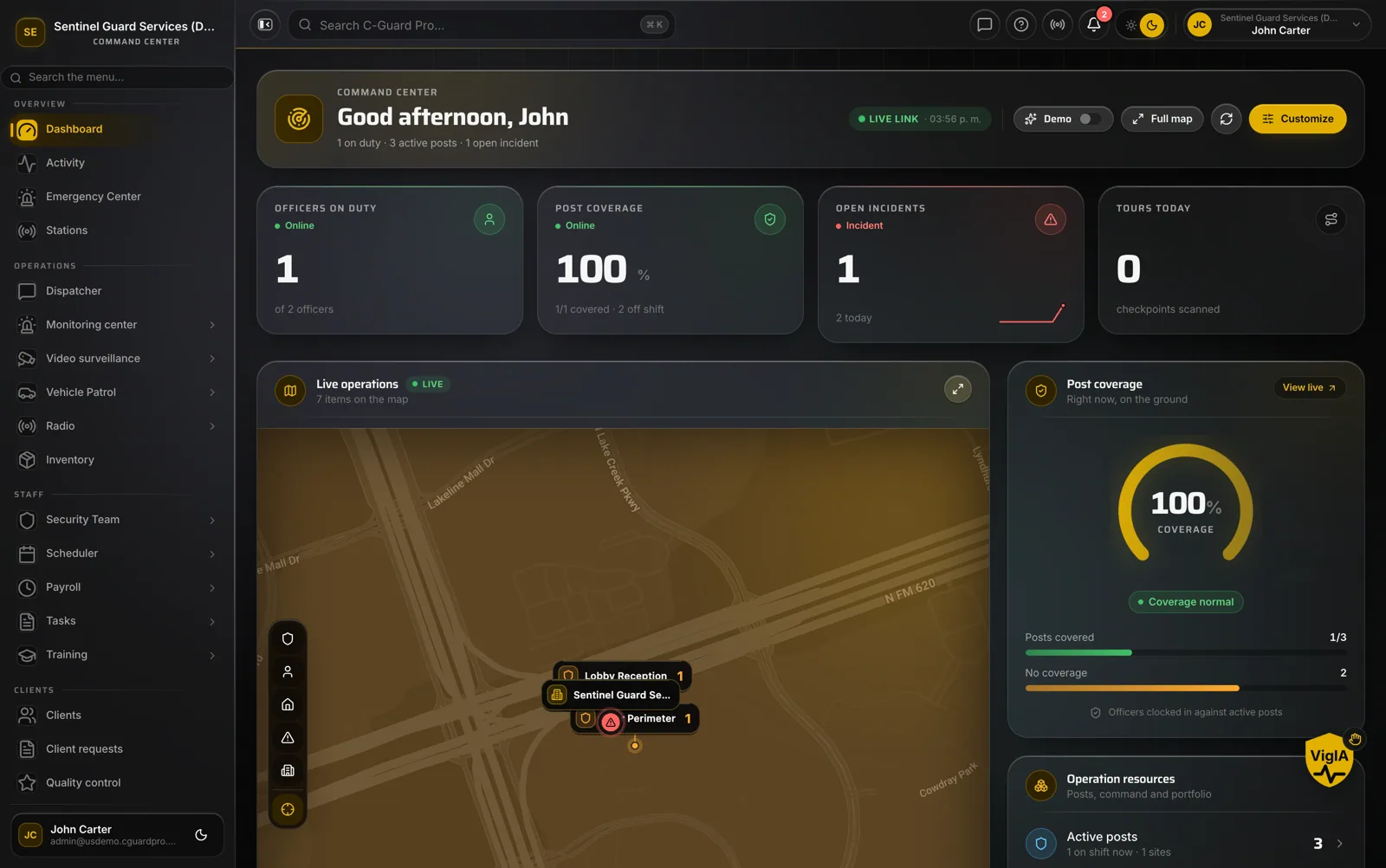
So lead with the artifact. Offer to show a redacted sample daily activity report. Explain in one sentence how patrols are verified and how a client can check for themselves without calling you. This is a concrete, checkable thing, and it moves the conversation off price, which is the only ground where a low-cost competitor can beat you.
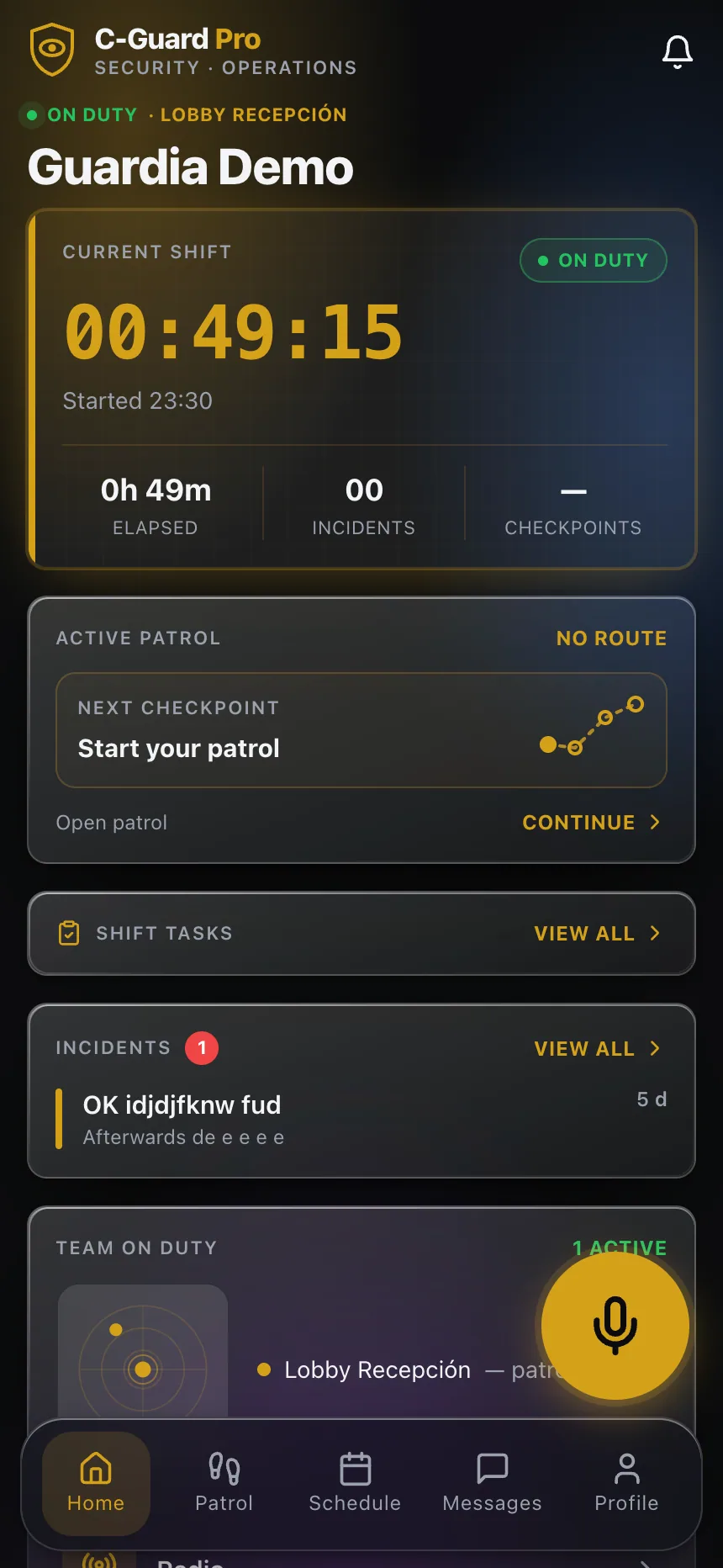
If your clients can log into a client portal and see their own site’s activity, say that early. It answers a question the prospect has been carrying since their last vendor and has probably given up on asking.
The cadence that turns a list into a pipeline
A pipeline is not a list of names. It is a set of dated commitments to make contact again. The distinction is everything, and it is where most guard company sales efforts collapse: outreach happens in bursts when work is slow, then stops entirely when a big account is won.
A workable cadence looks like this:
First contact. Short, specific, one ask. Either a brief call or the renewal date. Not both.
Follow-up within a week or so, adding something rather than repeating. A relevant observation, a piece of useful information, an offer to do a walk of the property at no charge.
A second follow-up, then stop the sequence. Continuing past the point of no response converts a neutral prospect into an annoyed one.
Then the long game. Move them to a dated re-contact tied to their renewal window, and touch them a few times a year with something genuinely useful in between. Most wins in contract security come on the third or fourth cycle, twelve to thirty-six months after first contact, and they come to the company that was still politely present when the incumbent finally failed.
Restart on triggers. New contact person, ownership change, incident, expansion — these reset the clock regardless of where the cadence stood.
The mechanics matter less than the fact that they are recorded somewhere that survives a salesperson leaving. A pipeline held in one person’s head evaporates the day they do.
The offer that opens doors
The most reliably accepted opening in this business is not a meeting. It is a site walk.
Offer to walk the property with them for thirty minutes and give a written summary of what you observed — lighting, access points, blind spots, gaps in coverage hours, post placement. Give it to them regardless of whether they buy anything.
This works for three reasons. It costs the prospect almost nothing and gives them something usable. It puts you on their property, where you learn more in half an hour than in six months of emails. And it is a demonstration of competence rather than a claim of it, which is exactly what a buyer who has been disappointed before is looking for.
Do it well enough and you will not need to ask for the business. You will be the company they call when the incumbent misses a post.
If you want to see how operational proof gets produced as a byproduct of normal work, explore CGuardPro or get in touch.