Every guard company starts with the same org chart: the owner does everything. Sales, scheduling, payroll, callouts, post visits, the 2 a.m. phone call, the client who wants to renegotiate the bill rate. It works, and it works better than most people expect — right up until it stops, usually somewhere between the point where the phone rings during dinner every night and the point where a good account is lost for reasons the owner never had time to notice.
The question of security company org structure is really a question about sequence. Not “what should the chart look like at scale,” which is easy to draw and useless, but “what is the next role I add, and how do I know it is time?”
The signal is not revenue, it is dropped balls
Owners tend to tie hiring decisions to revenue thresholds. That is the wrong trigger, because revenue is lagging and because two companies with the same revenue can have wildly different operational loads. Twelve posts across three accounts in one office park is a manageable operation. Twelve posts across nine accounts spread over a metro, with four of them running 24 hours, is a different animal at identical billings.
The reliable signal is a dropped ball with a pattern. Not one missed invoice — three in a quarter. Not one late fill, but a month where every fill was late because the same person was doing all of them while also handling a client escalation. When a category of work is consistently late or consistently done badly, and the reason is always “no time,” that category is the next role.
The first hire is almost always scheduling and dispatch
Owners resist this one because it feels like giving away the steering wheel. But scheduling is the function with the worst ratio of time consumed to strategic value, and it is the one that most reliably prevents the owner from doing anything else.
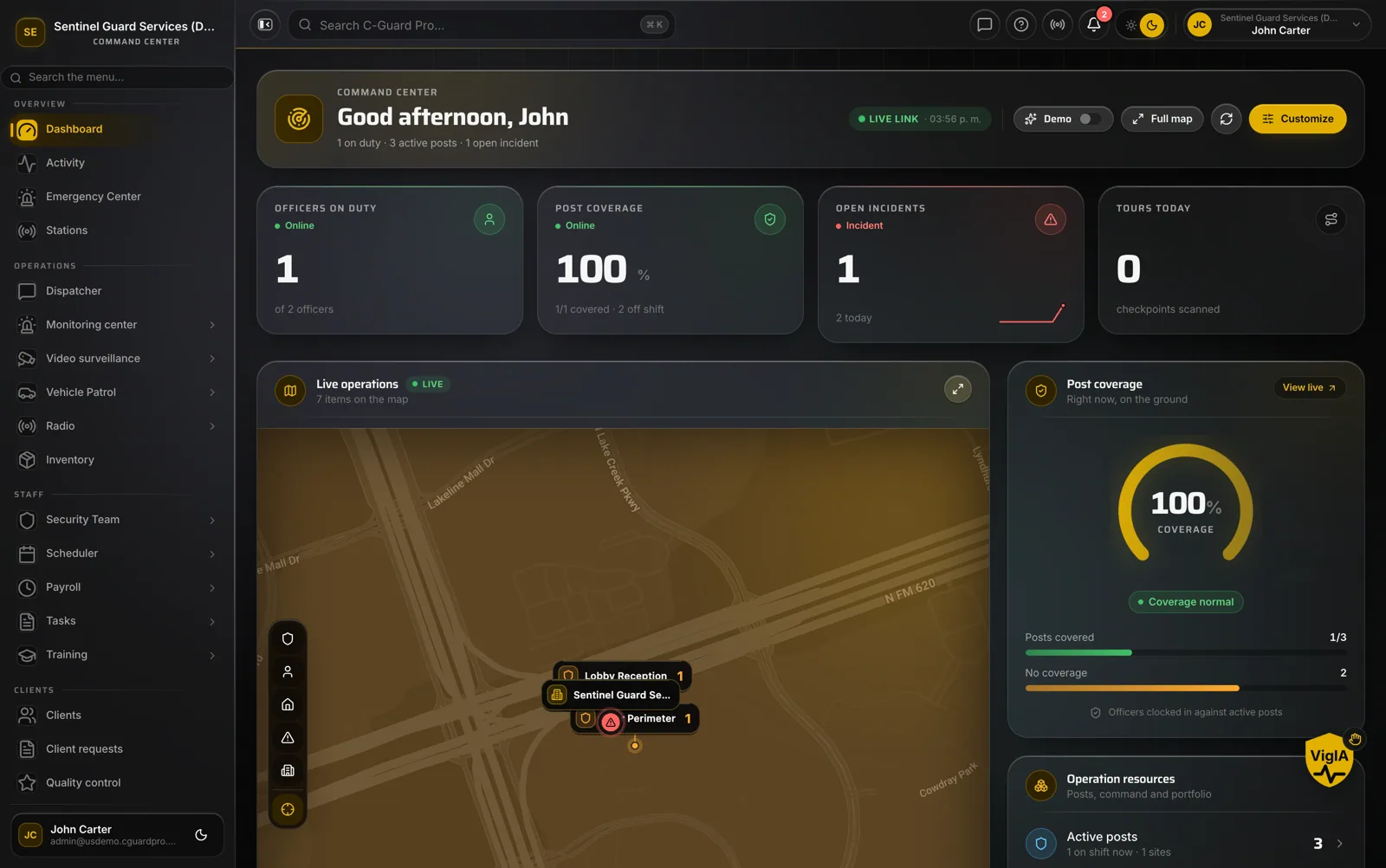
The scheduling and dispatch role owns the master schedule, the callout list, fills, overtime approval and the after-hours phone. Everything downstream depends on it: billing accuracy, payroll accuracy, client satisfaction, officer retention. It is also the function that benefits most from being one person’s actual job rather than an interruption to someone else’s.
Two warnings. First, hire for temperament, not resume. A dispatcher’s real skill is staying calm and organized while three things go wrong at once at 11 p.m., and being willing to make the tenth phone call after nine people said no. Second, do not hand over scheduling without handing over the tools. If the schedule lives in the owner’s head and a spreadsheet only they can read, the new dispatcher will spend six months asking questions and the owner will conclude the hire failed. Put the schedule somewhere it can be seen, edited and audited by more than one person before you hire the person who will run it.
The rule that comes with this hire
When you hire dispatch, the owner has to actually stop dispatching. Officers will keep calling the owner directly, because that is the number they have and because the owner has always answered. If the owner keeps answering, the dispatcher never becomes the authority and you now pay for two dispatchers, one of whom is your most expensive employee.
The transition is mechanical, not emotional: publish the dispatch number, put it in every officer’s app and on every post order, and route the after-hours line to dispatch. When an officer calls the owner anyway, the owner says “call dispatch” and hangs up. It takes about three weeks and it is uncomfortable the entire time.
The second hire: field supervision
Once someone else is filling shifts, the next thing that falls apart is quality. Accounts drift. Post orders go stale. Officers on the quiet accounts stop being visited and start doing whatever they want, which is usually nothing.
Field supervision is the first role that is genuinely about the product rather than about logistics. A field supervisor visits posts, inspects, coaches, catches problems before clients do, and maintains the relationship with the site-level client contact. It is also the natural promotion path for a good officer, which matters more than it sounds — a company with no visible promotion path bleeds its best people to companies that have one.
The trap is hiring a supervisor and then using them as a floater. If the supervisor spends their week covering shifts, you did not add supervision; you added an expensive relief officer and you still have no quality function. Protect the inspection hours or the role collapses.
The third hire depends on how you are growing
Here the sequence branches, and the right answer depends on where the pressure is.
If you are winning accounts faster than you can staff them, the next role is recruiting. Not HR — recruiting specifically. Sourcing, screening, license verification, onboarding paperwork, first-day logistics. In a business where turnover is structural, the ability to reliably produce qualified officers is a competitive advantage, and it is a full-time job long before most owners admit it.
If you are staffing fine but not winning, the next role is sales. And a real one — someone who prospects, walks properties, writes proposals and handles renewals. Owners are usually the best salespeople in their own company and the worst at doing it consistently, because operations always feel more urgent than a cold call.
If both are fine but the numbers are a mess, the next role is administrative: billing, payroll, accounts receivable, license and insurance compliance. This is the role owners defer longest and regret deferring most, because unbilled hours and payroll errors are invisible losses. Nobody complains about an hour you forgot to bill.
The layer that appears around the same time: an operations manager
At some point you have a dispatcher, two supervisors, a recruiter and an admin, and the owner is now managing five people while also selling. That is the moment an operations manager becomes real: someone who owns service delivery end to end, so the owner owns growth and the business.
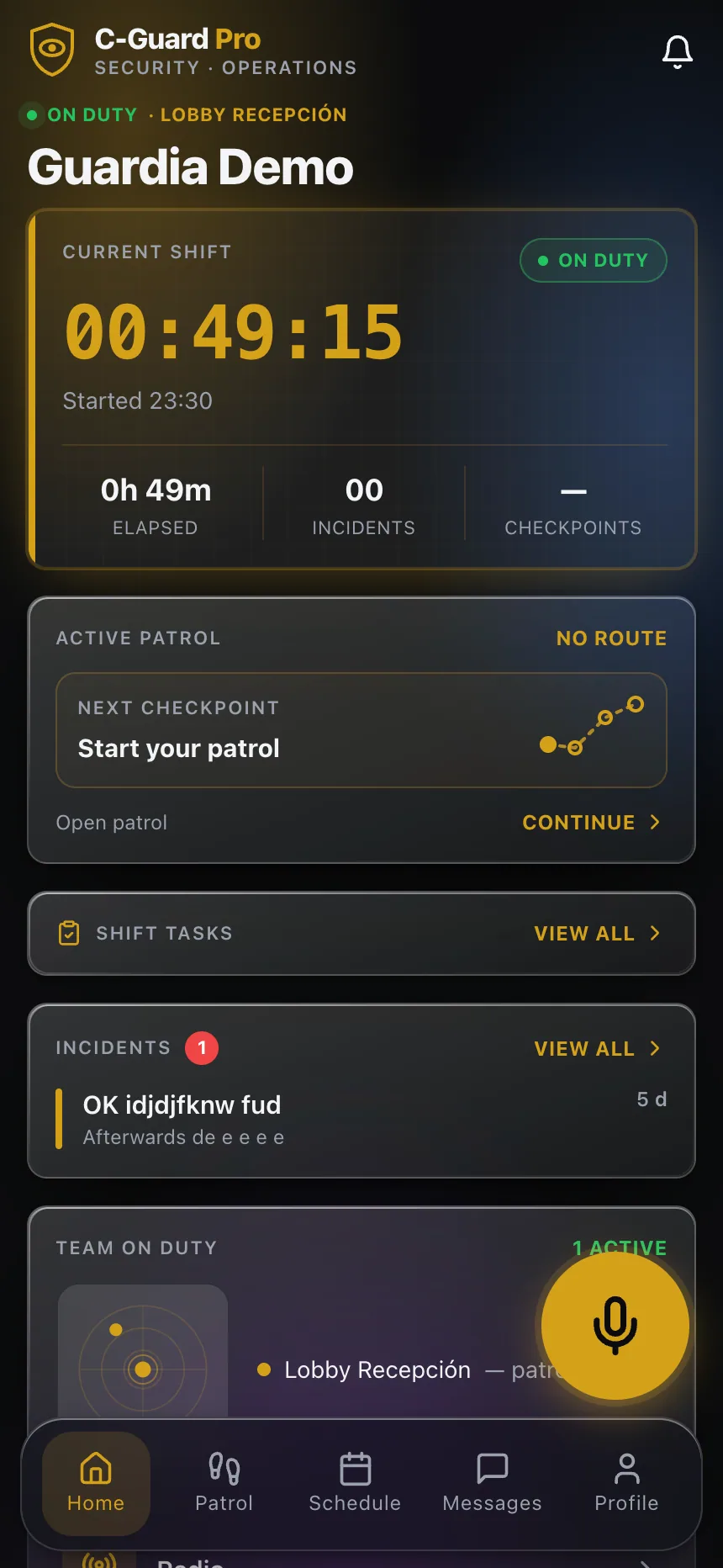
This is the hardest hire in the sequence because the job requires judgment rather than execution, and because it is the first hire where the owner has to give up the daily view. It only works if there is a shared, honest picture of the operation that both people are looking at — coverage, incidents, open items, client-facing activity. Without that, the owner defaults to spot-checking, the ops manager defaults to reporting upward, and you have added a layer without adding capacity.
Structure follows visibility, not the other way around
The pattern underneath all of this: you can only delegate what you can see. An owner who is the only person who knows which posts are covered, which officers are reliable, which accounts are unhappy and which reports went out cannot delegate anything, regardless of how many people they hire.
That is why the operational system usually has to come slightly before the org change, not after it. When coverage, time and attendance, incidents and client-facing reporting live in one place that several people can look at, handing off a function means handing off a screen and a set of decisions. When they live in the owner’s phone and memory, handing off a function means a month of interrogation followed by a quiet takeback.
Roles you probably do not need yet
A few positions that get added too early and rarely pay for themselves in a small guard company: a dedicated trainer before you have consistent onboarding to teach, a marketing hire before you have a repeatable sales motion, a middle layer of “account managers” who sit between supervisors and clients without owning anything specific, and a second dispatcher on a schedule that one competent dispatcher plus a documented after-hours rotation could cover.
The test for any new role is simple and unglamorous: name the work that is currently late or undone, name who will stop doing it, and name what you will measure in ninety days. If you cannot answer all three, the role is not ready.
If you want to see how coverage, supervision and client reporting look when more than one person can run them, explore CGuardPro or get in touch.