The software was selected in March. The kickoff email went out in April. It is now August and dispatch still gets a phone call for every callout, half the sites still submit paper daily activity reports, and the operations manager has started saying “the system doesn’t work” in meetings. The system works fine. Guard app adoption failed, and it failed for reasons that were entirely predictable from the first week — reasons that have almost nothing to do with the software and everything to do with how the rollout was designed.
Why the memo approach fails
The standard rollout is an announcement. An email goes to all officers, a PDF quick-start is attached, supervisors are told to “make sure their people are using it,” and a go-live date is set for the whole company.
This fails for structural reasons.
Officers do not read company email. Many do not have a company email address they check. The ones who do check it on a phone, between other things, once. An announcement is not training.
Supervisors are given responsibility without capability. A field supervisor covering a dozen sites across a metro cannot personally train eighty officers in a week, and has not been trained themselves beyond the same email. So they do what any rational person does: they mention it, and they revert to the old process whenever there is friction, because their actual job is keeping posts filled tonight.
The old process stays available. This is the fatal one. If paper reports are still accepted, paper reports will continue, because paper is what people know and there is no consequence for using it. Dual-running a manual process alongside a new one guarantees the manual one wins, since it requires no learning.
Nobody owns the first week per post. Adoption is decided in the first two or three shifts an officer works with the app. If those shifts go badly — a login that will not take, a scan that will not register, a supervisor who cannot help — the officer concludes the tool is broken and stops. Recovering from that conclusion takes far more effort than preventing it.
Roll out post by post, not company-wide
The unit of adoption is the post, not the company and not the officer.
A post has a fixed set of officers who cover it, a specific set of tasks, a supervisor who visits it, and a client who cares about it. That is small enough to fix problems in real time and coherent enough that the fix generalizes. Ten posts done properly, one at a time, produces better outcomes than a whole portfolio done by memo — and produces a set of officers who can vouch for the tool to their peers, which is worth more than anything management says.
Choosing the first post
Pick deliberately. The right first post has:
- A stable roster. Officers who work it regularly, not a rotating cast of relief. You want the same people on shifts two and three.
- A supervisor who is genuinely available, not the one with the largest territory.
- A client who wants better reporting. Their enthusiasm creates air cover when something goes wrong, and it gives you a reason to fix things fast.
- Adequate cell coverage, at least for the first post. You will eventually need to handle basements, parking structures and remote industrial sites where the phone has no signal, but do not make connectivity your first problem.
Do not pick the hardest site to prove the tool. Pick the site where success is likely and visible.
The first shift is a ride-along, not a training session
Send someone — a supervisor, an operations manager, the person who owns the project — to the post at the start of the shift. Not to lecture. To stand there while the officer logs in, clocks in, runs the first tour, and files the first report.
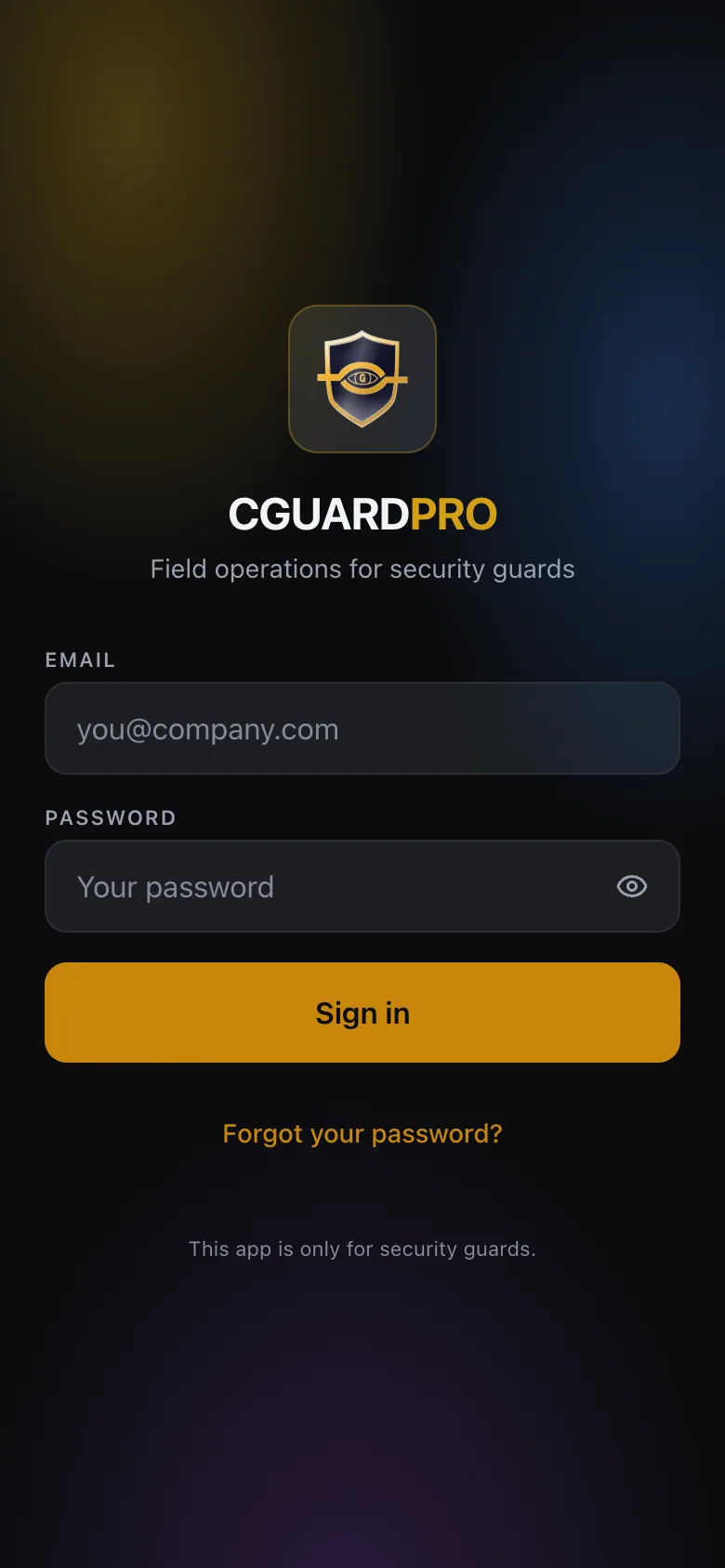
You will learn more in that hour than in three weeks of status meetings. You will find out that the officer’s phone is on a plan that throttles, that the badge photo used for verification is eight years old, that the checkpoint tag by the loading dock is behind a gate that is locked at night, that the officer’s login was set up with a misspelled name. Every one of those is a five-minute fix on site and a permanent objection if discovered secondhand.
Do this for the first shift of each of the first several posts. The pattern of problems stabilizes quickly, and after a handful of sites you will have a real deployment checklist built from actual failures rather than from a vendor’s template.
The officers to convert first
Not the most enthusiastic. The most respected.
Every guard force has officers whose opinion carries. They are usually the long-tenured ones at the anchor accounts, the people other officers call when they have a question about a post they have never worked. They are frequently not the ones who volunteer for new things, and they are sometimes openly skeptical.
Convert them first, individually, with their time respected. Show them what the tool does for them — proof they were on post when a client claims otherwise, an end to filling out the same information twice, a record that protects them in a dispute. Ask what they think will not work, and take the answer seriously. If they tell you the tour route in the app does not match how the building is actually walked, fix the route.
An officer like this who says “it’s fine, it actually saves time” ends the debate at a site. A supervisor saying the same thing does not, because the supervisor is management.
Avoid the temptation to lead with the officers who love technology. They will adopt regardless, they will not surface the real friction because they route around it instinctively, and their endorsement carries no weight with the skeptics.
The objections that are usually right
Officers raise the same handful of objections everywhere, and most of them are legitimate. Treating them as resistance is the most common and most expensive mistake in a rollout.
“I don’t want to use my own phone.” This is a real issue with a real cost to the officer, and the rules on expense reimbursement for personal devices used for work vary by state and are not uniform. This post is not legal advice — check with counsel and your state labor agency before setting a BYOD policy, and be aware that “everyone else does it this way” is not a defense. Operationally, you need a clear, disclosed answer: company devices at some posts, a stated reimbursement or stipend policy, or both. An unanswered version of this objection will quietly sink adoption regardless of what the policy says on paper.
“There’s no signal in the basement.” Almost always true, and the answer must be that the app works offline and syncs when the officer comes back up. If your tool does not do that, this objection is fatal and the officer is right to raise it. Test it at the actual site before you promise anything.
“It’s going to be used to write me up.” Also frequently correct, and the honest response is to be explicit about what the record is used for. If GPS and clock-in verification exist to substantiate billing and defend officers against false claims, say that, and then behave that way. If the first thing management does with the new data is discipline three people for being four minutes late, adoption is finished and it deserves to be. The data will be accurate and nobody will trust it.
“This takes longer than paper.” Sometimes true at first, and sometimes true permanently if the workflow was designed badly. If a report that took two minutes on paper takes six in the app because it demands twelve required fields, the problem is the form, not the officer. Cut fields. Every required field must earn its place by being something somebody actually reads.
“My battery dies.” A twelve-hour shift with GPS running is a genuine battery load. The answer is car chargers, a charging cable at the post, and configuration that does not track more aggressively than the account requires.
Close the old door
Once a post is running, the paper process has to end at that post. Not “discouraged.” Ended.
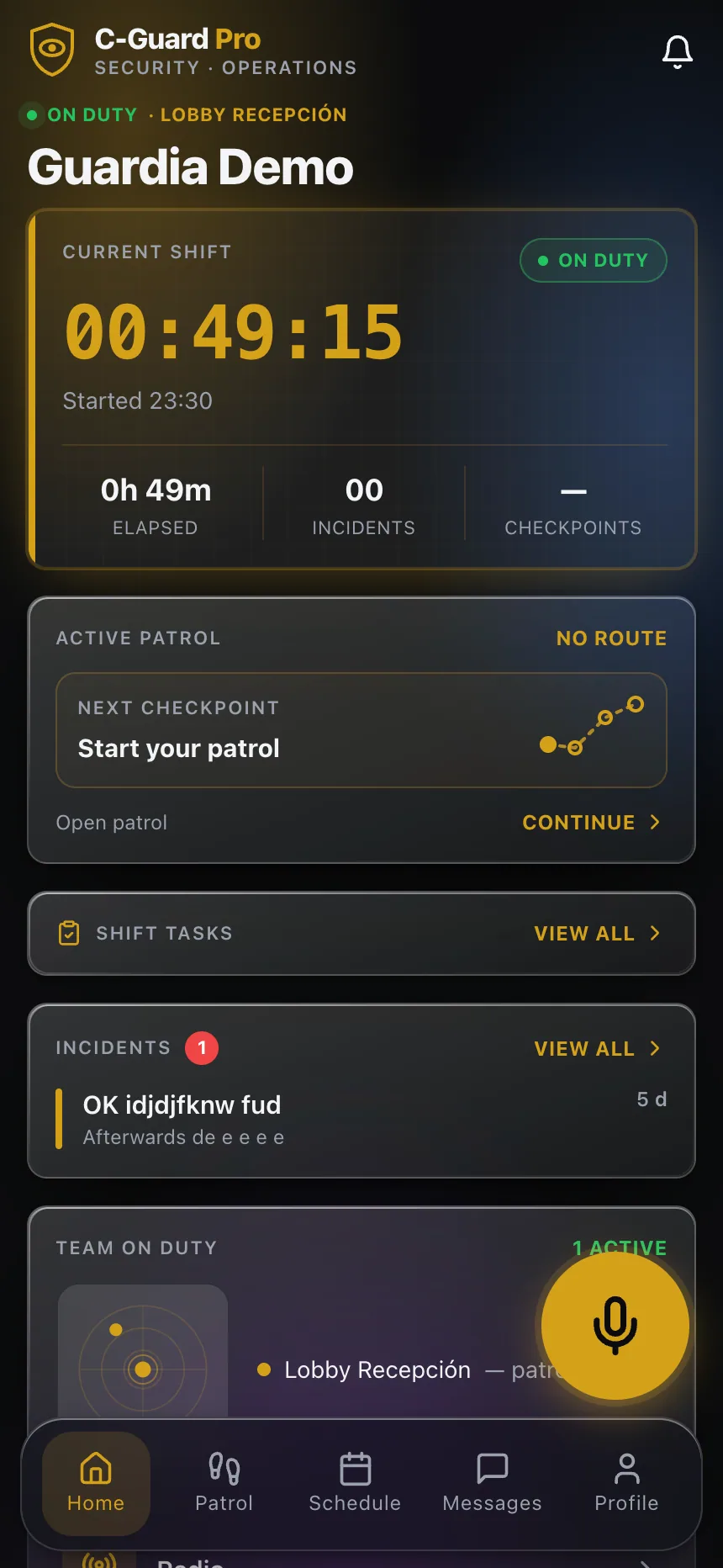
The way to do this without a fight is to make the digital record the only one that produces the thing people want. If the client’s report is generated from the app, a paper DAR does not reach the client. If payroll is built from the app’s time and attendance records, a handwritten sign-in sheet does not get anybody paid. When the new path is the only path to the outcome, the debate ends without anyone having to enforce anything.
Be careful and humane about this. Announce it in advance, verify that every officer who works that post can actually log in, and have a documented fallback for the genuine failure — a dead phone, a broken device — so that no officer is ever in a position where the honest answer is “I couldn’t record it, so I didn’t get paid.” One incident like that will cost you more adoption than a month of good rollout will buy.
Measure adoption, not activity
Do not track how many reports were filed. Track which posts and which officers are running the process end to end, and go look at the ones that are not.
Non-adoption is almost never defiance. It is a login that never worked, a phone that cannot install the app, a relief officer who was never trained, a checkpoint tag that fell off a wall in June. Each of those is a specific, fixable thing, and the only way to find them is to notice a gap and call the person.
That is the whole method, really. Roll out in units small enough to see what goes wrong, fix what goes wrong immediately, convert the officers whose opinion travels, take the objections seriously, and then close the old door. The guard mobile app is not the hard part. The rollout is.
If you want to see what a post-by-post rollout looks like in practice, explore CGuardPro or get in touch.