Most post orders are written for the ninety-eight percent of a shift that is routine: tour times, access rules, key control, who gets a visitor badge. Then something happens — a fire alarm, a medical, an active threat, a chemical spill — and the officer opens a binder that has one paragraph about emergencies, written three years ago, ending in “contact the supervisor.” That paragraph is not emergency post orders. It is a note to self.
An emergency annex fixes this. It is a separate, deliberately short section of the post orders, one page per scenario, written to be read while standing up under stress by someone whose hands are shaking.
Why the annex has to be separate
Officers do not read post orders during an emergency. They read them in the twenty seconds before they act, if at all. Anything that requires flipping past sixteen pages of routine procedure to find the fire response will not get used.
Separating the annex does three things. It makes the emergency content findable in one motion. It lets the annex be revised on a different cycle than the main orders, which matters because emergency content changes when the building changes, not when the contract changes. And it makes the annex portable — the same core scenarios apply across many sites, with site-specific details filled in, so you are not rewriting fire response from scratch for every account.
One page, six blocks
Every page in the annex uses the same six blocks, in the same order. Consistency of format is worth more than elegance of prose, because an officer who has read one page knows exactly where to look on any other page.
1. Trigger. What situation this page covers, in one line. “Fire alarm activation, any device.” Not a definition — a recognizable event.
2. First three actions. Numbered. Physical. What the officer does in the first sixty seconds, before thinking about anybody else. Keep it to three. If you write seven, none get done.
3. Who to call, in order. Not a general instruction to notify. Specific: 911 first or dispatch first, and the client contact after. The order should be explicit, because “notify appropriate parties” produces a different sequence from every officer you employ.
4. What to say. A short script. Site address as the responding agency knows it — not the client’s marketing name, the address on the street sign. Nature. Location within the site. Whether anyone is hurt. Gate or entry instructions for responders.
5. What NOT to do. The most-skipped block and often the most valuable one. Do not enter the room. Do not attempt to disarm. Do not move the injured person. Do not open the electrical closet. Do not speak to media. Officers make better decisions when the prohibitions are as explicit as the instructions.
6. Site specifics. Where the panel is. Where the shutoff is. Which stairwell is the designated egress. Which gate the fire department uses and what the Knox box code arrangement is. Where the AED lives. This block is the reason the annex cannot be generic.
Scenarios worth having
Do not try to cover everything. Cover what is plausible at this site: fire alarm, medical emergency, active threat or shots fired, severe weather appropriate to the region, power failure, water leak or flood, hazardous material release, bomb threat or suspicious package, protest or civil disturbance, elevator entrapment, and unauthorized person refusing to leave. Some sites will need a couple more — a chemical plant, a hospital, a data center each carry scenarios nobody else has. Some sites need fewer.
A page an officer will never plausibly use is a page that makes the useful pages harder to find.
Where it lives
Two copies, always. A physical one at the post, and a digital one in the officer’s phone.
The physical copy matters because networks fail exactly when the power does. Print it, laminate it if the post is outdoors, and put it somewhere an officer can reach without unlocking anything.
The digital copy matters because it is the one that is actually current, and because it is the copy the fill-in officer has on his first night at a site he has never worked. When post orders and their annex ride along in the guard mobile app, the officer who got called in at 2200 for a callout has the same information as the regular, which is the entire point.
The reporting tail
An emergency page should not end at “the incident is over.” Every scenario page ends with what gets documented and by when.
This is where most annexes trail off, and it costs companies later. The narrative written at 0300 while it is fresh is worth vastly more than the reconstruction written at 1400 the next day after the officer has slept and talked to four people. Make the last block of each page say plainly: file the incident report before end of shift, include times, include who was notified and when, include photographs if it is safe and appropriate.
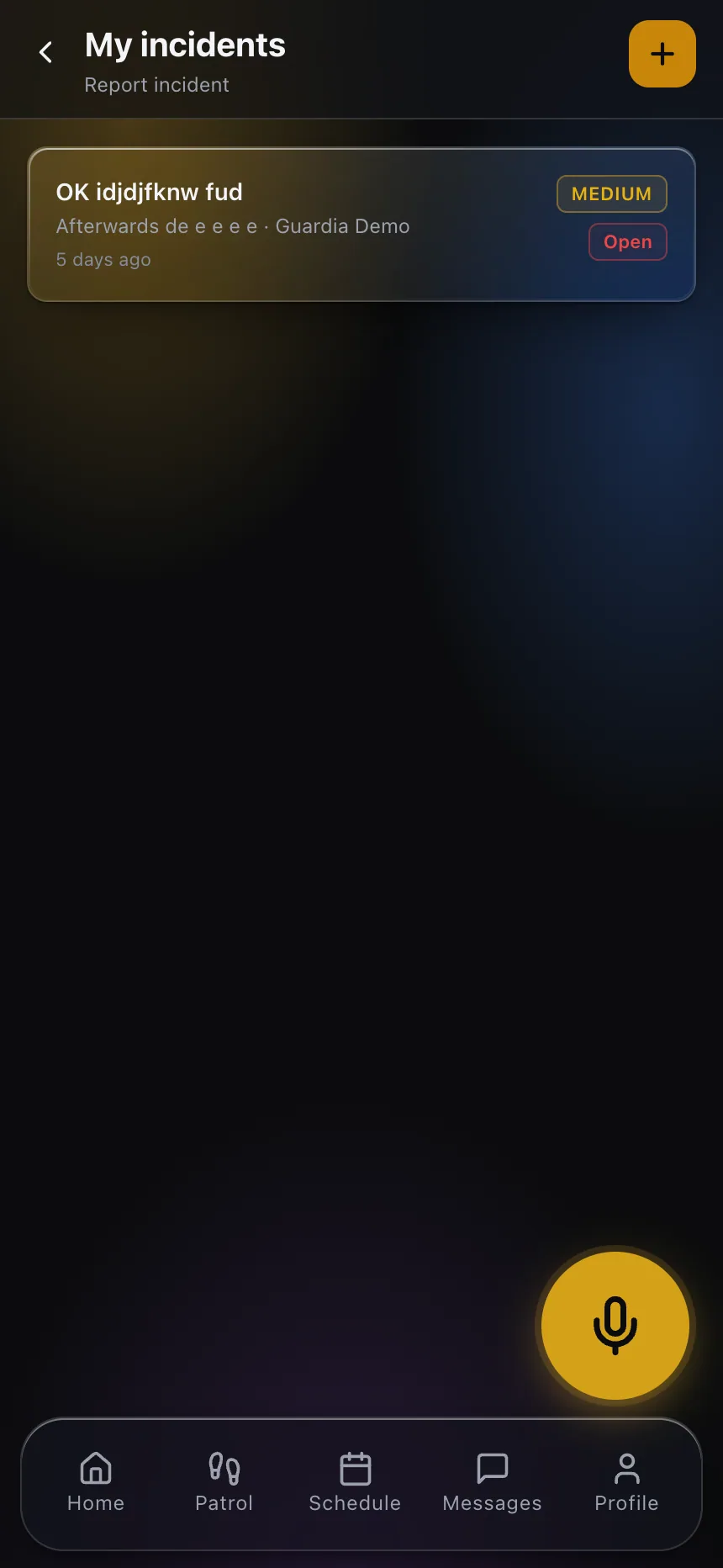
Structured daily activity reports and incident reports help here for an unglamorous reason — the fields prompt for what the officer would otherwise forget. Time of first notification. Time responders arrived. Name and title of the client contact reached. Those three items are the ones asked about later, and they are the three most likely to be missing from a free-text narrative typed by an exhausted officer.
Keeping it from going stale
An emergency annex decays faster than the rest of the post orders because it depends on physical facts about a building, and buildings change. A stale annex is worse than none, because it produces confident wrong action.
Review on a fixed cadence and on triggers. Set a periodic review, and additionally review whenever any of these happen: construction or renovation at the site, a change of client contact, a change in alarm or fire system, a real activation of that scenario, or a change in post coverage.
Make the last-reviewed date visible on every page. An officer who can see that the fire page was reviewed last month trusts it. One who sees no date at all has no way to judge.
Walk it, do not read it. The only reliable test of an annex is physical. A supervisor stands at the post with the page and walks the route: is that stairwell still the egress, is the panel still where the page says, does the gate code still work, is the AED still mounted there. Reading the page at a desk finds nothing. Walking it finds everything.
Debrief after real use. After any activation, the supervisor asks the officer one question: what did the page not tell you that you needed? That answer is the revision.
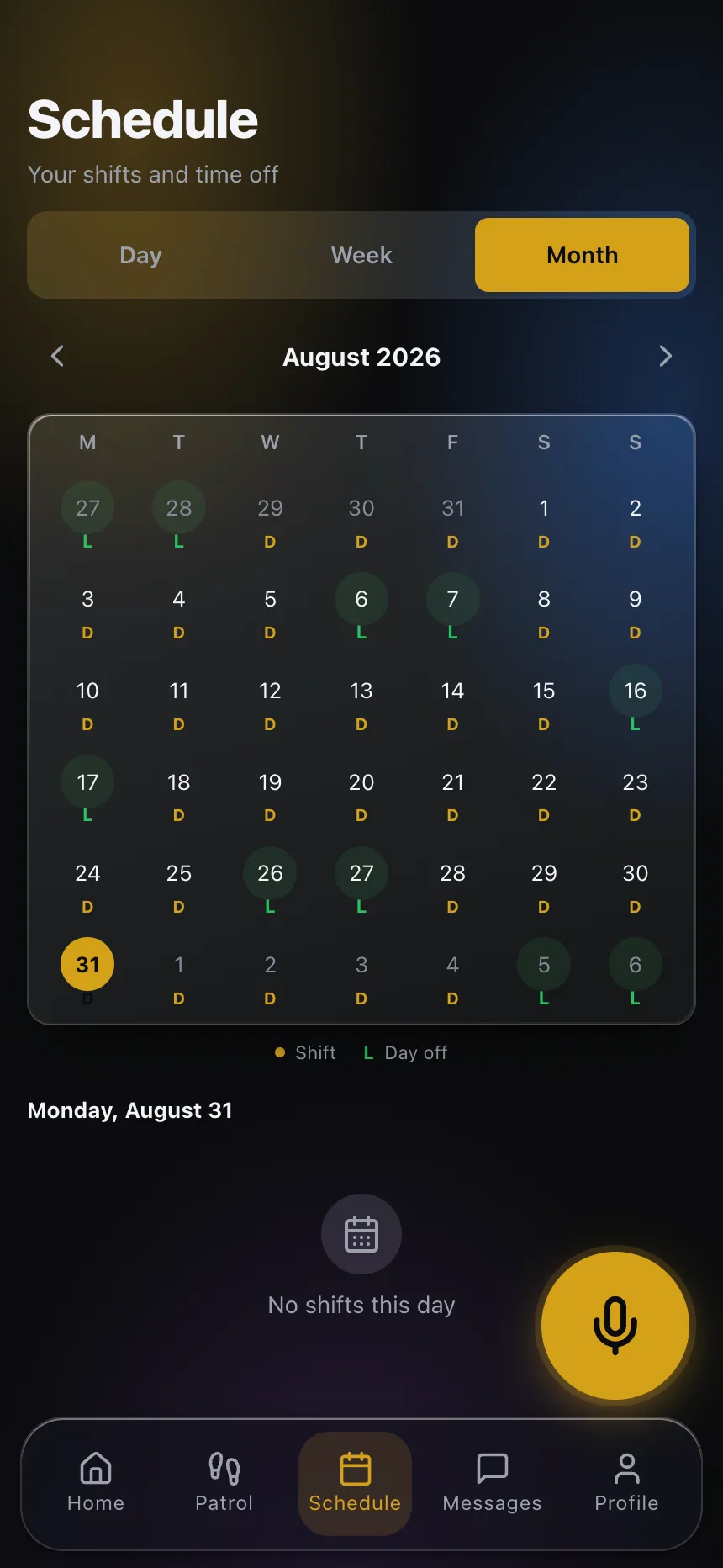
Verify at handoff, not just at hire. Sites with heavy relief traffic get the most exposure to stale annexes, because the fill-in officer has no local memory to compensate with. If the schedule shows that a post is being covered by different people week to week, that post is the one whose annex review matters most, not the one with the stable five-year officer who knows the building by heart.
Train it in five minutes at a time
Nobody sits down and reads an emergency annex cover to cover. So teach it in fragments. At briefing, a supervisor picks one page and asks one question: what are your first three actions on a medical? Where does the fire department come in? Who do you call second on a water leak?
Five minutes, once a week, per post. Over a quarter, an officer has walked through every scenario at his site conversationally, which is a far better retention mechanism than a signature on an acknowledgment form.
The standard to hold it to
A new officer, at this post, on his first night, alone at 0300, with no cell service and no supervisor reachable, should be able to open the annex and act correctly on any scenario in it within thirty seconds.
If your current emergency post orders would not pass that test, the fix is not more pages. It is fewer, shorter, better-placed ones.
If you want to see how post orders, reports and schedules stay together in the officer’s hands, explore CGuardPro or get in touch.